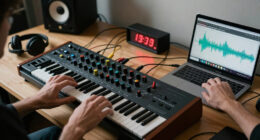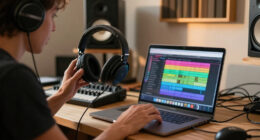
The most common mistake that hurts every mix is placing your listening position too close to walls or in an uneven spot, which creates problematic sound reflections and standing waves. This setup distorts your perception of tone, clarity, and balance. When your position isn’t optimized, you can’t accurately judge frequencies or stereo imaging. To improve your mixes, you need to understand the impact of room acoustics and proper setup—keep exploring to learn more.

Get audio and creator gear delivered free with Prime
- Fast, free delivery on millions of items
- Prime Video, Amazon Music and more included
- Member-only deals all year
Key Takeaways
- Sitting too close or too far from monitors skews sound perception and reduces accuracy.
- Positioning yourself outside the optimal sweet spot causes inaccurate frequency balance.
- Ignoring proper speaker placement leads to uneven soundstage and distorted imaging.
- Failing to account for room reflections at the listening position creates muddiness and clarity issues.
- Not adjusting the listening position for room acoustics hampers accurate mixing decisions.

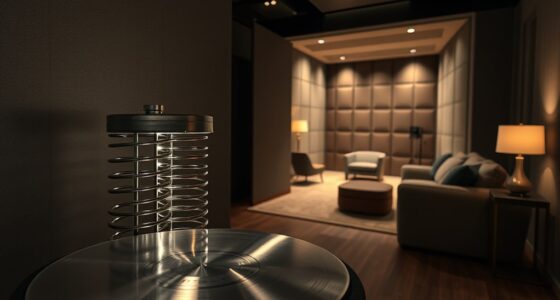
Your room’s acoustics are more influential than you might realize. Hard surfaces like glass, concrete, or bare walls reflect sound waves, creating echoes and standing waves that distort your perception of clarity and balance. Soft furnishings like carpets, curtains, and acoustic panels help absorb excess reflections, but they need to be thoughtfully placed to smooth out the sound. When your room isn’t treated properly, certain frequencies will either boom or fade, making it difficult to judge the true tonality of your mix. Additionally, room treatment can help mitigate these issues and improve overall sound clarity. Proper room acoustics are essential for creating an accurate listening environment, ensuring your mixes translate well across different systems. Adjusting your room’s setup and speaker positioning can also prevent common issues related to sound reflections and standing waves. Implementing effective sound absorption techniques is crucial for achieving a balanced and clear sound.
As an affiliate, we earn on qualifying purchases.
Frequently Asked Questions
How Do I Find the Optimal Listening Position in My Room?
To find the most suitable listening position, start by placing your speakers at ear level and equidistant from your listening spot, forming an equilateral triangle. Adjust your position until you notice balanced sound, avoiding reflective surfaces. Use acoustic treatment like bass traps and diffusers to reduce room resonances. Regularly move around and listen critically, ensuring your position minimizes early reflections and maximizes clarity for accurate mixing.
Can Small Changes in Position Significantly Impact My Mix?
Yes, small changes in your listening position can considerably impact your mix. Moving slightly can alter how you perceive panning adjustments and EQ tweaks, making your mix sound different. Even shifting a few inches can change the stereo image or bass response. So, experiment carefully with your placement, and listen critically after each move to find the spot where your panning and EQ tweaks translate best across different systems.
What Equipment Can Help Improve My Listening Environment?
You need to get your ducks in a row, and that starts with the right equipment. Focus on proper speaker placement and invest in acoustic treatment to tame reflections and improve clarity. Quality monitors, bass traps, and diffusers create a balanced sound environment. These tools help you hear your mix accurately, preventing costly mistakes and ensuring your mixes translate well across different systems.
How Does Room Acoustics Influence the Listening Position Mistake?
Room acoustics directly influence your listening position by affecting sound reflections and clarity. Poorly managed room reflections can create misleading frequency responses, prompting you to misjudge your mix. Acoustic treatment helps control these reflections, ensuring a more accurate listening environment. Proper placement of panels and bass traps minimizes echo and standing waves, so you can sit in the best position and make better mixing decisions without being misled by acoustic issues.
Are There Common Signs Indicating I’M in the Wrong Listening Spot?
If you’re in the wrong spot, you’ll notice your mixes sound off, with uneven balance and strange echoes. Signs include inconsistent speaker placement, where sound reflection distorts clarity, and a lack of stereo image accuracy. If certain frequencies seem overly pronounced or muted, it’s a red flag. Trust your ears—if things feel off, it’s time to move your listening position and optimize for better sound reflection and speaker placement.
Conclusion
If you keep your listening position misplaced, your mixes will drift off course like a boat without a compass. Remember, your ears are your best guide—trust them by setting your monitor at ear level and equidistant from your speakers. When your listening position is right, your mixes will flow like a well-tuned instrument, hitting every note with clarity. Fix this mistake, and you’ll steer your sound to perfection rather than drifting into muddy waters.
Halloween Picks
halloween
As an affiliate, we earn on qualifying purchases.