To prevent random audio dropouts with Thunderbolt docks, make certain you use shielded, high-quality cables and keep them away from electromagnetic sources like routers or motors. Check that your dock and OS drivers are up to date, and select the correct audio output in your settings. Minimizing interference and maintaining an organized setup help stabilize your connection. If you want to learn more about optimizing your setup for reliable audio performance, keep exploring your options.

Get audio and creator gear delivered free with Prime
- Fast, free delivery on millions of items
- Prime Video, Amazon Music and more included
- Member-only deals all year
Key Takeaways
- Use high-quality, shielded cables and organize them away from electromagnetic interference sources.
- Ensure your dock and audio drivers are up-to-date and compatible with your system.
- Select the correct external audio device as the default output in system settings.
- Minimize electromagnetic interference by keeping cables and devices away from routers and motors.
- Verify the dock supports audio pass-through and troubleshoot with firmware updates if dropouts occur.
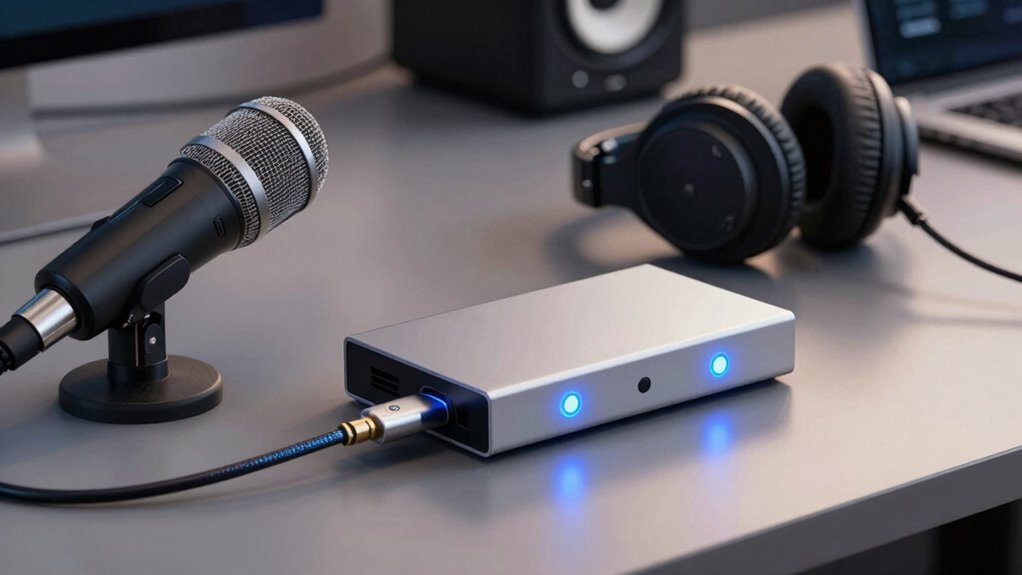
Have you ever wondered how Thunderbolt docks enhance your audio experience? These sleek devices are designed to expand your connectivity options and improve your workflow, but they can also influence the quality of your audio. One common issue users face is audio dropouts, which can be frustrating during calls, recordings, or streaming. Understanding how Thunderbolt docks impact your audio and what you can do to prevent disruptions is key to enjoying seamless sound.
One major factor that affects audio quality when using a Thunderbolt dock is audio interference. Interference can stem from various sources, including electromagnetic noise from other electronic devices or poorly shielded cables. When interference occurs, it can cause crackling sounds, static, or momentary dropouts, disrupting your listening or recording experience. To minimize this, ensure your dock and connected peripherals are of good quality and are properly shielded against electromagnetic interference. Using high-quality, shielded cables also plays a crucial role in maintaining a clean audio signal, reducing the risk of interference-induced dropouts. Additionally, understanding electromagnetic interference and how it impacts your setup can help you better prevent audio disruptions.
Another essential aspect to consider is dock compatibility. Not all Thunderbolt docks are created equal, and compatibility issues can lead to inconsistent audio performance. Some docks may lack proper driver support or may not fully support the audio standards of your devices, resulting in choppy sound or intermittent dropouts. Before purchasing or connecting a Thunderbolt dock, check that it is compatible with your operating system and audio hardware. Confirm whether it supports audio pass-through or external sound devices without conflicts. Keeping your dock’s firmware and drivers up to date is also vital, as manufacturers often release updates to improve compatibility and fix bugs that could cause audio issues.
Proper configuration can make a difference too. In your device settings, ensure that the correct audio output is selected and that your system recognizes the dock as the primary audio device if applicable. Sometimes, interference or compatibility issues can cause your system to default to the internal speakers or other unintended audio sources, leading to dropouts. Adjusting audio settings to prioritize your external audio device connected via the Thunderbolt dock can help stabilize your sound.
Lastly, consider your setup’s physical environment. Keep cables organized and avoid running your Thunderbolt cable near sources of electromagnetic interference, such as routers or large motors. Proper placement and cable management can greatly reduce the chances of interference affecting your audio signal.
high-quality shielded Thunderbolt cables
As an affiliate, we earn on qualifying purchases.
As an affiliate, we earn on qualifying purchases.
Frequently Asked Questions
Can Thunderbolt Docks Support Multiple Audio Devices Simultaneously?
Yes, thunderbolt docks can support multiple audio devices simultaneously. You benefit from their multiple device support capabilities, which enable you to connect various audio sources without issues. To guarantee smooth operation, focus on proper audio channel management, so each device gets the necessary bandwidth and reduces dropouts. This setup allows you to efficiently manage your audio workflow, making your experience seamless and uninterrupted across all connected devices.
Do All Thunderbolt Docks Have Built-In Audio Interfaces?
Imagine plugging into a sleek, futuristic hub—does every Thunderbolt dock come with a built-in audio interface? Not always. Many docks focus on data transfer and video output, leaving audio compatibility up to external interfaces. You should check each model’s specs for audio support to avoid compatibility concerns. Some docks do include built-in audio interfaces, but if you need high-quality sound, an external one might be your best bet.
How Do I Troubleshoot Persistent Audio Dropouts on Thunderbolt Docks?
To troubleshoot persistent audio dropouts on your Thunderbolt dock, start by ensuring your firmware is up to date, as updates often fix bugs and improve stability. Next, check your cable quality—use a high-quality, certified Thunderbolt cable to prevent connection issues. Also, try reconnecting the dock or switching ports. If problems persist, test with different cables or devices to identify whether hardware or software is causing the dropouts.
Are There Compatibility Issues Between Thunderbolt Docks and Specific Audio Software?
You might face compatibility issues between thunderbolt docks and specific audio software due to driver conflicts or outdated firmware. To prevent problems, make certain your dock’s firmware is up-to-date and check for driver updates tailored to your audio software. Sometimes, updating firmware and drivers resolves compatibility issues, reducing dropouts. Also, verify your software’s compatibility list, and consider testing different versions if issues persist, to find the best setup.
Does Using a Thunderbolt Dock Affect Overall Audio Latency?
Using a Thunderbolt dock can increase audio latency if driver compatibility isn’t ideal. The dock adds a layer of data transfer, which might slow down audio processing. To minimize this, guarantee your drivers are up-to-date and specifically designed for your hardware. Proper configuration helps keep audio latency low, ensuring smoother performance for recording or live playback. Regularly checking for driver updates is essential to maintain peak audio performance.
Conclusion
To keep your audio smooth and reliable, treat your Thunderbolt dock like a delicate wire—avoid unnecessary bends and kinks. Regularly update your drivers and firmware, and consider using a powered dock to prevent power hiccups. Think of your setup as a finely tuned orchestra; when each instrument plays in harmony, your sound remains clear and steady. With these simple steps, you’ll prevent dropouts and enjoy seamless audio performance every time.
Halloween Picks
halloween
As an affiliate, we earn on qualifying purchases.