
To leave room to master, you should aim for about 3 to 6 dB of headroom on your mix bus. This space prevents clipping and distortion during loudness normalization, ensuring your track sounds polished and professional. Proper gain staging helps you maintain clarity while leaving enough room for adjustments later. Managing headroom effectively allows the mastering process to enhance your mix without degrading quality—keep exploring to learn how to optimize this critical step.
Key Takeaways
- Aim for 3-6 dB of headroom on the master bus to allow effective loudness adjustments during mastering.
- Proper gain staging throughout the mix prevents clipping and preserves audio quality for final mastering.
- Monitoring meters regularly helps maintain levels within the optimal headroom range.
- Excessive loudness or clipping in the mix reduces available headroom, complicating the mastering process.
- Maintaining appropriate headroom ensures a cleaner, more dynamic mix ready for professional mastering.
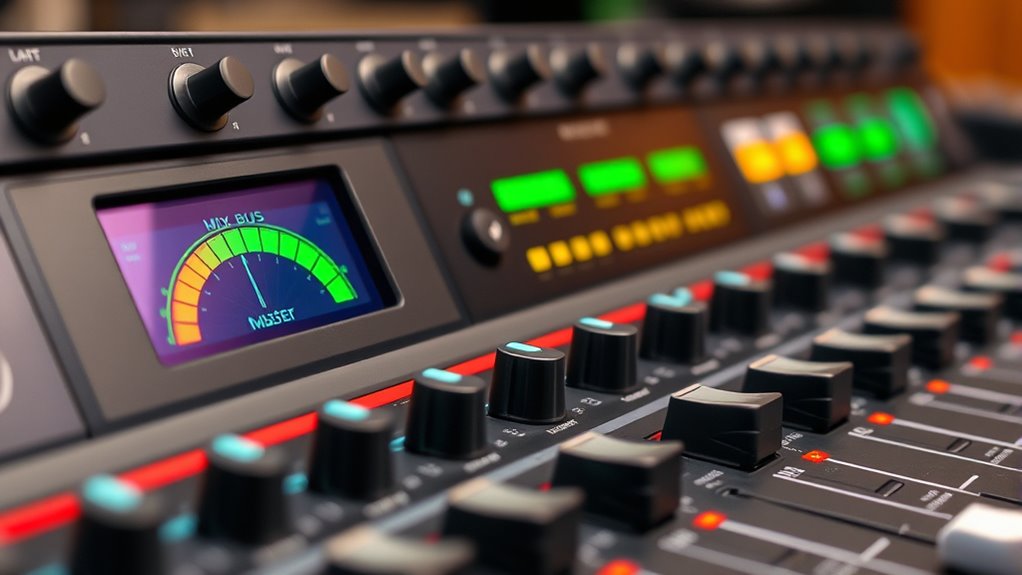
When mixing audio, understanding and managing mix bus headroom is essential for achieving a balanced and professional sound. Headroom refers to the space between your mix’s peak levels and the maximum level your equipment or digital system can handle without clipping. If you don’t leave enough headroom, your mix may distort when you push it to loudness normalization standards or during mastering. Conversely, too much headroom can make your mix sound dull or unpolished. Striking the right balance starts with proper gain staging, which involves setting your levels at each stage of the mix to prevent clipping and maintain clarity. By carefully adjusting your track levels and ensuring your mix bus isn’t peaking too high, you preserve enough headroom for the mastering engineer to work with.
Proper gain staging and headroom management ensure a balanced, professional mix ready for mastering.
Gain staging is a foundational step. You want each individual track and bus to sit comfortably within a healthy level range, typically around -18 dBFS to -12 dBFS in digital systems. This ensures that when all elements combine, they don’t push the master bus into clipping territory. It also helps prevent distortion and preserves the integrity of your audio signals. As you mix, constantly monitor your meters and adjust faders accordingly. Doing so keeps your mix clean and allows for more flexibility during the final stages. Proper gain staging is crucial for maintaining consistent levels and avoiding unintended clipping throughout the process.
Loudness normalization plays a critical role in modern audio production, especially with streaming platforms imposing loudness standards. When your mix has sufficient headroom, it’s easier to meet loudness targets without sacrificing quality. If your mix is too loud or clipped, loudness normalization algorithms will reduce its volume, often exposing distortion or unwanted artifacts. Conversely, if your mix has too much headroom, it may sound weak or undercooked once normalized, requiring unnecessary adjustments. Maintaining proper headroom ensures your mix can be loud enough to compete with other professionally produced content without losing fidelity.
In practice, you should aim to leave around 3 to 6 dB of headroom on your master bus. This provides ample space for loudness normalization and mastering processes. During mixing, use your meters diligently, keep levels under control, and avoid pushing your master bus into the red. Remember, your goal isn’t just to make the mix sound loud but to create a balanced, dynamic, and professional sound that can be seamlessly finalized during mastering. Proper gain staging and headroom management ultimately give you more control, better sound quality, and a smoother path to achieving a polished, broadcast-ready final product.
Frequently Asked Questions
How Does Headroom Affect Overall Mix Clarity?
Headroom directly impacts your mix clarity by preserving dynamic range and preventing distortion. When you leave enough headroom, it allows for cleaner adjustments, ensuring the frequency balance remains clear and well-defined. Without proper headroom, your mix can sound congested or muddy, making it harder to distinguish individual elements. By maintaining adequate headroom, you give your mix room to breathe, resulting in a transparent, balanced sound that’s easier to master.
What Are Common Mistakes When Setting Mix Bus Headroom?
Like a wise old bard once said, “Don’t put all your eggs in one basket.” When setting mix bus headroom, common mistakes include not maintaining proper gain staging, which can limit dynamic range, or leaving too little headroom, causing distortion during mastering. You might also over-compress, reducing clarity. Always leave enough space to preserve dynamics, ensuring your mix stays clean and ready for mastering.
How Much Headroom Should I Leave for Mastering?
You should leave about 3 to 6 dB of headroom for mastering. This allows you to perform proper gain staging, ensuring the mix has enough dynamic range without clipping. By leaving this space, you give mastering engineers room to work with, optimize loudness, and enhance clarity. Avoid pushing your mix too close to 0 dB, as it reduces your dynamic range and limits the mastering process.
Does Headroom Vary Across Different Music Genres?
Yes, headroom varies across genres because of genre-specific dynamics and stylistic headroom. For example, genres like pop often require more consistent loudness, so you might leave less headroom. Conversely, genres like jazz or classical benefit from more headroom to preserve dynamic range. Adjust your mix accordingly, considering the style’s typical dynamics, and leave enough room to make certain the mastering engineer can enhance your track without compression-induced distortion.
Can Excessive Headroom Impact Mix Loudness?
Think of your mix as a garden—excessive headroom is like leaving too much empty space, which can drown out the vibrant blooms. When you leave too much headroom, it limits your gain staging options, causing your mix to lose dynamic range and sound quieter. This can impact your final loudness, making it harder to achieve a powerful master. Proper headroom guarantees your mix stays lively and ready to shine without sacrificing loudness.
Conclusion
Leaving headroom on your mix bus isn’t just about technical perfection; it’s about giving your tracks room to breathe and evolve. Many believe that proper headroom liberates potential and prevents your mix from sounding squashed or muddy. When you leave space, you’re allowing your mix to breathe, evoke emotion, and resonate with listeners. Trust the theory—embrace that headroom, and watch your mixes come alive with clarity and power. Your music deserves that room to master.