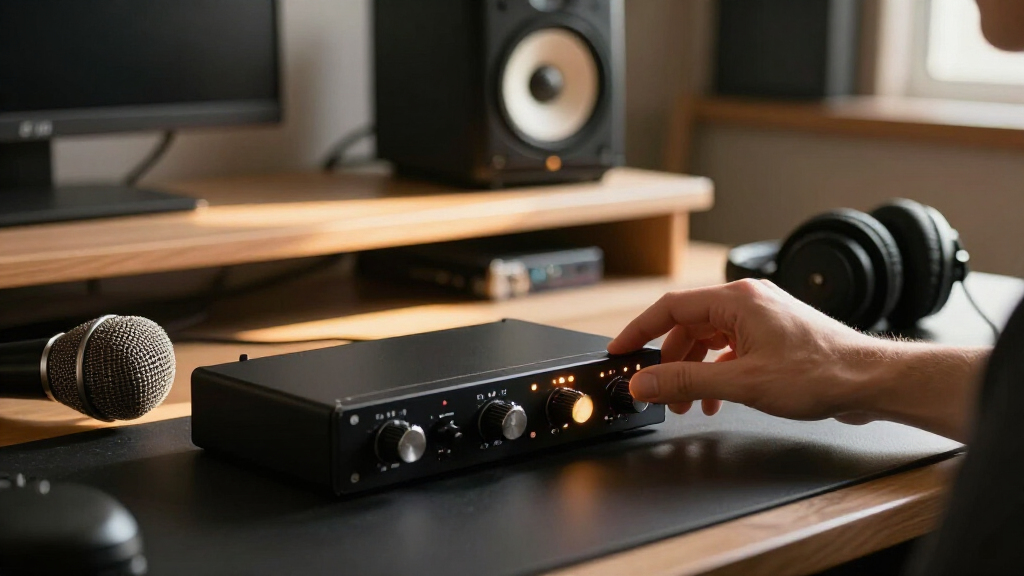

When hunting for Black Friday audio interfaces, the Focusrite Scarlett Solo 3rd Gen stands out as the best overall choice due to its reliable preamps and industry-standard software bundle. For those seeking premium fidelity, the Audient iD14 MKII offers superior Class-A preamps that rival high-end console hardware, while the JOLGOO 2×2 provides exceptional value for beginners needing solid basic connectivity. The primary tradeoff in this category is between input flexibility and preamp quality; higher-end units often sacrifice channel count for cleaner gain stages. Continue reading to see which of these fifteen options aligns with your specific recording or streaming workflow.

Get audio and creator gear delivered free with Prime
- Fast, free delivery on millions of items
- Prime Video, Amazon Music and more included
- Member-only deals all year
Complete the kit


Key Takeaways
- Preamp headroom separates the MAONO P1 from budget competitors, making it ideal for dynamic microphones like the SM7B without external preamps.
- The Focusrite Vocaster One introduces a specialized control ecosystem for podcasters that general-purpose interfaces like the M-Audio M-Track Duo lack.
- Hybrid interfaces like the MAONO P2 offer analog-style compression that digital-only units like the PIYONE Q2 cannot replicate in real-time.
- Build quality varies sharply; the Audient iD14 MKII features metal chassis and rotary controls, whereas the Synido 2×2 relies on plastic construction to hit lower price points.
- Direct monitoring latency is consistently low across all picks, but software mixing capabilities differ vastly between the Focusrite Scarlett and the IK Multimedia iRig Stream.
| JOLGOO 2×2 USB Audio Interface, 24-Bit/192 kHz with 48V Phantom Power |  | Best for Flexible Device Compatibility | Inputs: 2 XLR/line combo inputs | Audio resolution: 24-bit | Maximum sample rate: 192 kHz | VIEW LATEST PRICE | See Our Full Breakdown |
| Audient iD14 MKII USB-C Audio Interface with Two Class-A Microphone Preamps |  | Best Premium Desktop Pick | Microphone preamps: 2 Class-A | Number of channels: 4 | Maximum sample rate: 96 kHz | VIEW LATEST PRICE | See Our Full Breakdown |
| PIYONE Q2 2×2 USB-C Audio Interface, 24-bit/192 kHz |  | Best Compact USB-C Pick | Inputs: 2 XLR/TRS combo | Channels: 2 | Resolution and sample rate: 24-bit/192 kHz | VIEW LATEST PRICE | See Our Full Breakdown |
| MAONO P1 USB Audio Interface with 70 dB Gain |  | Best for Dynamic Microphones and Streaming | Channels: 2 | Maximum sample rate: 192 kHz | Audio resolution: 24-bit | VIEW LATEST PRICE | See Our Full Breakdown |
| USB Audio Interface with 48V Phantom Power and Direct Monitoring |  | Best for Simple 48 kHz Setups | Inputs: 2 XLR/TRS combo inputs and 1 instrument input | Channels: 4 | Maximum sample rate: 48 kHz | VIEW LATEST PRICE | See Our Full Breakdown |
| BOMGE 22M 2-Channel USB Audio Interface with XLR Inputs and 48V Phantom Power |  | Best for a Simple Two-Mic Setup | Inputs: 2 combo XLR/MIC/LINE inputs | Outputs: RCA stereo and 1/4-inch stereo | Phantom power: 48V | VIEW LATEST PRICE | See Our Full Breakdown |
| M-Audio M-Track Duo USB Audio Interface |  | Best Value for a Starter Recording Rig | Inputs: 2 combo XLR/line/instrument | Preamps: Crystal preamps with phantom power | Audio resolution: Up to 48 kHz | VIEW LATEST PRICE | See Our Full Breakdown |
| Focusrite Scarlett Solo 3rd Gen USB-C Audio Interface |  | Best for Solo Vocalists and Instrumentalists | Channels: 2 | Audio inputs: XLR and instrument | Maximum sample rate: 192 kHz | VIEW LATEST PRICE | See Our Full Breakdown |
| MAONO P2 Hybrid USB Audio Interface with Dual XLR Inputs |  | Best for Hybrid Streaming and Recording | Inputs: Dual XLR | Channels: 2 | Connectivity: USB-C | VIEW LATEST PRICE | See Our Full Breakdown |
| IK Multimedia iRig Stream Stereo Audio Interface |  | Best Compact Pick for Stereo Streaming | Inputs: Stereo RCA | Channels: 2 | Maximum sample rate: 96 kHz | VIEW LATEST PRICE | See Our Full Breakdown |
| MAONO PS22 Lite USB Audio Interface for Guitar, Vocals, and Streaming |  | Best for Flexible Home Recording | Channels: 2 | Recording resolution: 24-bit | Maximum sample rate: 192 kHz | VIEW LATEST PRICE | See Our Full Breakdown |
| Synido 2×2 USB-C Audio Interface for Recording, Streaming, and Podcasting |  | Best for Monitoring Flexibility | Channels: 2 | Audio resolution: 24-bit | Maximum sample rate: 48 kHz | VIEW LATEST PRICE | See Our Full Breakdown |
| M-Audio M-Track Solo USB Audio Interface |  | Best for a Simple Starter Setup | Recording: 2-channel | Audio resolution: 48 kHz | Inputs: 1 combo XLR/line input with phantom power; 1 switchable line/instrument input | VIEW LATEST PRICE | See Our Full Breakdown |
| Behringer UFO202-BK USB Audio Interface for Vinyl Recording |  | Best for Digitizing Vinyl and Tapes | Model: UFO202-BK | Channels: 2 | Connectivity: USB | VIEW LATEST PRICE | See Our Full Breakdown |
| Focusrite Vocaster One USB Podcasting Audio Interface | 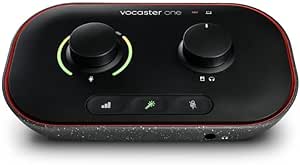 | Best for Solo Podcasting | Channels: 1 | Microphone gain: Over 70 dB | Maximum sample rate: 48 kHz | VIEW LATEST PRICE | See Our Full Breakdown |
| Black Friday audio interface | Maximum sample rate | Connectivity | Inputs | Channels |
|---|---|---|---|---|
| JOLGOO 2×2 USB Audio Interface | 192 kHz | USB | 2 XLR/line combo inputs | — |
| Audient iD14 MKII USB-C Audio | 96 kHz | USB-C | — | — |
| PIYONE Q2 2×2 USB-C Audio Inte | — | USB-C | 2 XLR/TRS combo | 2 |
| MAONO P1 USB Audio Interface w | 192 kHz | — | — | 2 |
| USB Audio Interface with 48V P | 48 kHz | USB-C | 2 XLR/TRS combo inputs and 1 instrument input | 4 |
| BOMGE 22M 2-Channel USB Audio | 48 kHz | USB | 2 combo XLR/MIC/LINE inputs | — |
| M-Audio M-Track Duo USB Audio | — | — | 2 combo XLR/line/instrument | — |
| Focusrite Scarlett Solo 3rd Ge | 192 kHz | USB | — | 2 |
| MAONO P2 Hybrid USB Audio Inte | 192 kHz | USB-C | Dual XLR | 2 |
| IK Multimedia iRig Stream Ster | 96 kHz | — | Stereo RCA | 2 |
| MAONO PS22 Lite USB Audio Inte | 192 kHz | USB | — | 2 |
| Synido 2×2 USB-C Audio Interfa | 48 kHz | USB-C | XLR and 6.35 mm | 2 |
| M-Audio M-Track Solo USB Audio | — | — | 1 combo XLR/line input with phantom power; 1 switchable line/instrument input | — |
| Behringer UFO202-BK USB Audio | 48 kHz | USB | Phono input switchable to line input | 2 |
| Focusrite Vocaster One USB Pod | 48 kHz | USB | — | 1 |
More Details on Our Top Picks
JOLGOO 2×2 USB Audio Interface, 24-Bit/192 kHz with 48V Phantom Power
The JOLGOO 2×2 is a practical pick for a small recording setup that may move between a computer and a mobile device. Its two combo inputs, independent gain controls, and 48V phantom power cover a solo musician or two-person recording session, while direct monitoring lets you hear a live input without relying on software playback. The listed 24-bit/192 kHz capability matches the PIYONE Q2, but JOLGOO specifies both USB-C and USB-A cables, which can make connecting to different host ports simpler. Its metal housing is another plus for a portable desktop unit. The tradeoff is less certainty around compatibility: the product data flags possible Mac setup variation, and its claimed driver-free use may depend on the system. Choose a better-documented option if plug-and-play reliability is your priority.
Pros:- Two combo inputs with independent gain controls and peak indicators
- 48V phantom power supports compatible condenser microphones
- Direct monitoring supports real-time input listening
- Metal housing and included USB-C and USB-A cables suit a portable setup
Cons:- Mac compatibility may vary and could require reformatting
- Driver-free operation is claimed, but compatibility may depend on the connected system
Best for: Home musicians who need two microphone or instrument inputs and expect to connect the interface to different computers or mobile devices.
Not ideal for: Mac users who want clearly documented, consistent setup behavior, or buyers who need dependable driver-free operation across systems.
- Inputs:2 XLR/line combo inputs
- Audio resolution:24-bit
- Maximum sample rate:192 kHz
- Phantom power:48V
- Connectivity:USB
- Housing:Metal
- Weight:0.81 kg
- Included cables:USB-C and USB-A
- Warranty:1 year
Our verdict“Pick the JOLGOO if you want two inputs, direct monitoring, and flexible USB cable options in a compact interface, and can tolerate some setup uncertainty.”
Audient iD14 MKII USB-C Audio Interface with Two Class-A Microphone Preamps
The Audient iD14 MKII earns its premium role through its two Class-A microphone preamps, sturdy all-metal desktop build, and monitor mix and panning controls. Those controls give you more say over how inputs and playback are balanced while recording, a useful step up from simpler interfaces such as the JOLGOO 2×2. The iD14 MKII also lists two headphone outputs, making it a stronger fit for sessions where two people need to monitor at once. Its 96 kHz maximum sample rate is lower than the 192 kHz figures listed for JOLGOO and PIYONE, though that difference may matter less than preamp and workflow features for many home studios. The main tradeoffs are its desktop-oriented footprint and conflicting listed weights; buyers seeking a lightweight mobile unit may prefer the PIYONE Q2.
Pros:- Two Class-A microphone preamps
- Monitor mix and panning controls support hands-on session monitoring
- Two headphone outputs accommodate two listeners
- All-metal housing and a listed three-year warranty
Cons:- Maximum sample rate is 96 kHz, below the 192 kHz listed for the JOLGOO and PIYONE
- Product details list different weights: 907 g and 1250 g
Best for: Home-studio musicians and voice creators who value two microphone preamps, hands-on monitor mixing, and two headphone connections.
Not ideal for: Travel-focused creators who want a lighter, smaller interface, or buyers prioritizing a listed 192 kHz maximum sample rate.
- Microphone preamps:2 Class-A
- Number of channels:4
- Maximum sample rate:96 kHz
- Connectivity:USB-C
- Headphone outputs:2
- Dimensions:173 × 120 × 62 mm
- Housing:All-metal
- Included cable:1 m USB-C cable
- Warranty:3 years
Our verdict“Choose the Audient iD14 MKII for a more feature-rich desktop recording workflow, especially when two headphone outputs matter more than portability or a 192 kHz rate.”
PIYONE Q2 2×2 USB-C Audio Interface, 24-bit/192 kHz
The PIYONE Q2 makes the most sense for creators who want a compact, USB-C interface with useful recording basics and minimal setup steps. It pairs two XLR/TRS combo inputs with Hi-Z support for instruments, 48V phantom power for compatible condenser mics, and direct monitoring for low-latency tracking. Its loopback feature also gives streamers a way to capture computer audio alongside an input. Like the JOLGOO 2×2, it lists 24-bit/192 kHz recording and two combo inputs, but PIYONE specifies class-compliant, driver-free operation and a two-year limited warranty. That said, its compatibility details are not fully aligned: the description lists PC, Mac, and iOS, while the operating-system field mentions Windows only. The 3.5 mm headphone jack may also call for an adapter if your headphones use a larger plug.
Pros:- Two XLR/TRS combo inputs with Hi-Z support
- 24-bit/192 kHz audio and 48V phantom power
- Direct monitoring and loopback support recording and streaming tasks
- USB-C bus power and class-compliant operation are listed as driver-free
Cons:- Operating-system details conflict: the compatibility list includes Mac and iOS, while the OS field names Windows only
- 3.5 mm headphone jack may require an adapter for standard-size headphone plugs
Best for: Mobile and desktop creators who need two inputs, loopback for streaming, and a USB-C interface with direct monitoring.
Not ideal for: Buyers who need an unambiguous compatibility listing or use headphones with a standard-size plug and do not want an adapter.
- Inputs:2 XLR/TRS combo
- Channels:2
- Resolution and sample rate:24-bit/192 kHz
- Phantom power:48 V
- Monitoring:Direct monitoring and loopback
- Headphone jack:3.5 mm
- Connectivity:USB-C
- Weight:0.74 kg
- Warranty:2-year limited
Our verdict“Pick the PIYONE Q2 for a compact USB-C setup with loopback and direct monitoring, provided its mixed compatibility details fit your devices.”
MAONO P1 USB Audio Interface with 70 dB Gain
The MAONO P1 is the most purpose-built option here for voice recording and streaming, with up to 70 dB of gain, a listed -130 dB EIN, direct monitoring, and loopback. That gain gives quieter dynamic microphones more room to reach usable recording levels, while loopback helps creators capture computer audio alongside a mic or instrument. Compared with the PIYONE Q2, which also lists loopback and two combo inputs, the P1 puts more emphasis on high-gain voice use and offers dedicated headphone and monitor controls. Its 24-bit/192 kHz specification is generous for the stated tasks, but the two-channel setup is not aimed at recording a larger ensemble. The broad device and software lists are useful, though compatibility still depends on the particular host and app. This is a focused creator tool, not a substitute for a multi-input studio interface.
Pros:- Up to 70 dB of gain supports quieter dynamic microphones
- Listed -130 dB EIN
- Loopback and direct monitoring suit streaming and voice workflows
- Metal housing and dedicated headphone and monitor controls
Cons:- Two-channel design limits simultaneous multi-microphone or full-band recording
- 48V phantom power is for compatible condenser microphones and does not expand the input count
Best for: Solo podcasters, streamers, and voice creators using a quieter dynamic microphone who want loopback and direct monitoring.
Not ideal for: Bands, multi-microphone podcasts, or anyone who needs more than two channels for simultaneous recording.
- Channels:2
- Maximum sample rate:192 kHz
- Audio resolution:24-bit
- Gain:Up to 70 dB
- Equivalent input noise:-130 dB EIN
- Phantom power:48 V
- Monitoring features:Direct monitoring and loopback
- Dimensions:5.9 × 5.98 × 3.46 in
- Housing:Metal
Our verdict“Choose the MAONO P1 for a solo voice or streaming rig that benefits from high gain and loopback, not for larger recording sessions.”
USB Audio Interface with 48V Phantom Power and Direct Monitoring
This USB-C audio interface is a straightforward fit for basic home recording where familiar controls matter more than a high sample-rate ceiling. It has two XLR/TRS combo inputs plus a separate instrument input, with individual gain and monitor controls, direct monitoring, and an adjustable echo effect. That extra effect control gives it a different angle from the PIYONE Q2, whose listed features instead include loopback and 24-bit/192 kHz recording. Here, the maximum is 48 kHz, which can suit ordinary voice and instrument projects but leaves less headroom on paper than the other interfaces in this batch. The short three-month warranty is another substantial compromise, especially beside Audient’s three-year coverage. I would shortlist this model only if its input arrangement and onboard echo suit your workflow.
Pros:- Two XLR/TRS combo inputs plus a separate instrument input
- 48V phantom power supports compatible condenser microphones
- Direct monitoring and individual gain and monitor controls
- Adjustable echo effect is available without relying solely on software
Cons:- Maximum sample rate is 48 kHz, below the 96 kHz Audient and 192 kHz JOLGOO, PIYONE, and MAONO
- Three-month warranty is shorter than the coverage listed for the other interfaces in this batch
Best for: Beginners recording a microphone and instrument who want direct monitoring, a simple echo effect, and do not need recording above 48 kHz.
Not ideal for: Creators who want higher sample-rate recording, loopback, or longer warranty coverage for a frequently used interface.
- Inputs:2 XLR/TRS combo inputs and 1 instrument input
- Channels:4
- Maximum sample rate:48 kHz
- Phantom power:48V
- Connectivity:USB-C
- Monitoring:Direct monitoring
- Effects:Adjustable echo
- Weight:1.5 pounds
- Warranty:3 months
Our verdict“Consider this interface for basic voice-and-instrument recording if its echo control is useful and 48 kHz recording meets your needs.”
BOMGE 22M 2-Channel USB Audio Interface with XLR Inputs and 48V Phantom Power
The BOMGE 22M is a straightforward pick for recording with two microphones or mixing microphone and instrument sources without extra routing features. Its two combo inputs accept mic, line, or instrument signals, while 48V phantom power supports compatible condenser microphones. Direct monitoring helps you hear the input without the delay of a computer playback path. Compared with the M-Audio M-Track Duo, it offers RCA as well as 1/4-inch stereo outputs, which may suit an existing RCA-based setup, but the M-Track Duo provides a named preamp design and bundled MPC Beats software. The BOMGE is limited to two channels and 48 kHz, so it is better for basic recording than a setup expected to grow or use higher sample rates. Its stereo speaker connection also calls for RCA cables when using those outputs.
Pros:- Two combo inputs accept microphone, line-level, and instrument signals.
- 48V phantom power supports compatible condenser microphones.
- Direct monitoring lets you hear inputs with minimal delay.
- Compact USB design supports portable recording on Mac and Windows.
Cons:- Two channels and a 48 kHz maximum sample rate limit room for more demanding workflows.
- RCA is required for the described stereo speaker outputs.
- The listed operating-system support is dated, naming Windows XP or later and Mac OS X.
Best for: Home podcasters or musicians who need two flexible inputs, phantom power, and a compact interface for a basic computer recording setup.
Not ideal for: Producers who want higher sample rates, more input channels, or streamlined balanced monitor connections.
- Inputs:2 combo XLR/MIC/LINE inputs
- Outputs:RCA stereo and 1/4-inch stereo
- Phantom power:48V
- Maximum sample rate:48 kHz
- Headphone output:1/4 inch
- Connectivity:USB
- Weight:0.32 kg
- Compatible operating systems:Mac OS X; Windows XP or later
Our verdict“Choose the BOMGE 22M for a compact, basic two-input setup, but pick the M-Audio M-Track Duo if bundled recording software matters more than RCA outputs.”
M-Audio M-Track Duo USB Audio Interface
The M-Track Duo covers the essentials for a first recording setup: two combo inputs, phantom power, direct monitoring, and stereo outputs in a USB-powered unit. Its USB/Direct monitoring control lets you balance computer playback against live input, a useful touch for recording vocals or instruments without distracting latency. Unlike the BOMGE 22M, the M-Track Duo includes MPC Beats, giving new users software to start making recordings; both remain two-channel, 48 kHz options rather than higher-resolution choices like the Focusrite Scarlett Solo 3rd Gen. One limitation is that the Scarlett has a single mic preamp, while the M-Track Duo gives you two combo inputs, but the Focusrite offers 24-bit/192 kHz conversion. The M-Track is portable and simple, though iOS use needs an adapter and headphone connections may need another adapter.
Pros:- Two combo inputs handle microphones, instruments, and line-level sources.
- USB-powered design keeps a basic recording setup portable.
- USB/Direct control supports low-latency monitoring with adjustable balance.
- MPC Beats is included for getting started with music production.
Cons:- Maximum audio resolution is 48 kHz.
- iOS connection requires a separate Lightning to USB 3 Camera Adapter.
- The 1/4-inch headphone output may require an adapter for other plug sizes.
Best for: New home recordists who want two mic or instrument inputs, USB power, direct monitoring, and starter production software in one package.
Not ideal for: iPhone-first creators who want a ready-to-connect setup, or producers seeking higher-resolution recording than 48 kHz.
- Inputs:2 combo XLR/line/instrument
- Preamps:Crystal preamps with phantom power
- Audio resolution:Up to 48 kHz
- Monitoring:USB/Direct switch
- Outputs:Stereo 1/4-inch outputs and 1/4-inch headphone output
- Power:USB-powered
- Compatible platforms:Mac, Windows, and iOS with a Lightning to USB 3 Camera Adapter
- Bundled software:MPC Beats
Our verdict“Pick the M-Track Duo for an affordable-feeling starter workflow with two inputs and bundled software, and choose the Scarlett Solo if higher-resolution conversion is the priority.”
Focusrite Scarlett Solo 3rd Gen USB-C Audio Interface
For a singer or player recording one source at a time, the Scarlett Solo 3rd Gen puts its effort into the recording path rather than offering two microphone preamps. Its 24-bit/192 kHz conversion, switchable Air mode, and gain Halo metering give solo users tools to shape and monitor a vocal or instrument take. Balanced outputs are also useful when connecting studio monitors. Compared with the M-Audio M-Track Duo, the Scarlett supports a much higher maximum sample rate and adds Air mode, but the M-Track Duo has two combo inputs that can suit simultaneous microphone and instrument recording better. That single mic preamp is the Solo’s main constraint: it is not the right choice for two-mic interviews or duets. The included software and plug-ins add a starting toolkit, though accessing them requires registration and downloads.
Pros:- 24-bit/192 kHz conversion supports high-resolution recording.
- Switchable Air mode adds a tonal option for vocals and acoustic sources.
- Gain Halo metering helps users keep track of input levels.
- Balanced outputs support connection to compatible studio monitors.
Cons:- Only one microphone preamp is available for recording.
- Included software and plug-ins require registration and downloads.
- Higher sample-rate capability may be unnecessary for simple spoken-word recording.
Best for: Solo singers, guitarists, and bassists who want high-resolution recording, monitor connections, and clear input-level feedback in a compact interface.
Not ideal for: Two-microphone podcasts, duets, or anyone who needs two mic preamps available at once.
- Channels:2
- Audio inputs:XLR and instrument
- Maximum sample rate:192 kHz
- Bit depth:24-bit
- Connectivity:USB
- Dimensions:1.71 × 5.65 × 3.77 in (D × W × H)
- Weight:12.32 oz
- Warranty:3 years
Our verdict“Choose the Scarlett Solo if you record one vocal or instrument at a time and value its higher-resolution conversion, but take the M-Track Duo for two combo inputs.”
MAONO P2 Hybrid USB Audio Interface with Dual XLR Inputs
The MAONO P2 is the most streaming-focused choice here: its dual USB ports can connect a computer and a phone or tablet at the same time, while loopback and independent mute controls help combine microphone audio with desktop sound. That makes it more adaptable for live content than the simpler BOMGE 22M or M-Audio M-Track Duo, which center on conventional two-input recording. The P2 also lists 24-bit/192 kHz recording and up to 56 dB of gain, so it can serve as a recording interface beyond streaming. Its tradeoff is a more specialized setup and a footprint that is fairly large for a compact model. The listed frequency response gives only a 20 kHz figure, without a lower limit, so buyers have less complete response information than the other headline specs suggest.
Pros:- Two USB ports support simultaneous connection to a computer and a phone or iPad.
- Loopback, mute controls, and direct monitoring suit streaming and recording workflows.
- 24-bit/192 kHz recording and up to 56 dB gain support flexible input use.
- Aluminum-alloy housing and a 15-degree tilt support a sturdy, desktop-oriented setup.
Cons:- Its listed dimensions make it relatively large beside simpler compact interfaces.
- The frequency-response specification lists 20 kHz but does not provide a lower limit.
- Dual-device routing may add complexity for users recording only to one computer.
Best for: Streamers and podcasters who route audio between a computer and phone or tablet and want loopback, mute controls, and dual XLR inputs.
Not ideal for: Minimal desktop recording setups that need only one computer connection, or buyers who prioritize a very small interface with clearly specified frequency response.
- Inputs:Dual XLR
- Channels:2
- Connectivity:USB-C
- Maximum sample rate:192 kHz
- Bit depth:24-bit
- Gain:Up to 56 dB
- Dimensions:6.42 × 8.27 × 3.23 in
- Weight:0.5 kg
- Operating systems:Android, ChromeOS, Windows, iOS, and macOS
Our verdict“Choose the MAONO P2 when your Black Friday setup needs computer-and-phone routing for streams, but choose a simpler interface if you only record to one device.”
IK Multimedia iRig Stream Stereo Audio Interface
The iRig Stream takes a different route from the microphone-first interfaces in this roundup. Its stereo RCA inputs are suited to feeding a mixer or other stereo source into a livestream, while loopback and direct headphone monitoring help creators combine playback and listen to the signal as they record. At just 2.4 oz, it is much easier to carry than the MAONO P2, but it does not offer the P2’s dual XLR inputs, gain specification, or dedicated routing controls. The iRig is also less flexible than the Focusrite Scarlett Solo for connecting a microphone or instrument directly, since its input is RCA stereo rather than an XLR/instrument setup. Its 24-bit/96 kHz recording capability is ample for many streaming tasks, but this is a specialized stereo capture tool, not a general-purpose mic interface.
Pros:- Stereo RCA input suits mixers and other stereo audio sources.
- Loopback supports combining playback audio with a recording or stream.
- Direct headphone monitoring provides real-time listening.
- Compact 2.4-ounce design is easy to carry with mobile gear.
Cons:- RCA input is less suitable than combo inputs for directly connecting microphones and instruments.
- Its specialized stereo workflow is less flexible than the dual-XLR MAONO P2.
- The listed frequency-response figure is 24 kHz.
Best for: Mobile livestreamers, DJs, and podcasters who need to capture stereo audio from an RCA-equipped mixer or playback device.
Not ideal for: Vocalists who need a direct XLR microphone input, or musicians who want instrument inputs and conventional recording controls.
- Inputs:Stereo RCA
- Channels:2
- Maximum sample rate:96 kHz
- Bit depth:24-bit
- Compatible devices:iPhone, iPad, Android, Mac, and PC
- Dimensions:4.1 × 1.15 × 1.25 in
- Weight:2.4 oz
- Warranty:2 years
Our verdict“Pick the iRig Stream for portable stereo capture from RCA gear, but choose the Scarlett Solo or MAONO P2 for direct microphone recording.”
MAONO PS22 Lite USB Audio Interface for Guitar, Vocals, and Streaming
For a compact interface that can serve both recording and streaming setups, the MAONO PS22 Lite offers more routing flexibility than the M-Audio M-Track Solo. Its two-channel design records at up to 24-bit/192 kHz, while 56 dB of preamp gain and 48 V phantom power cover a range of microphones and instruments. Direct monitoring helps keep performance latency out of your headphones, and the included routing software adds virtual channels and loopback for managing computer audio during a stream. The tradeoff is extra setup: compatible DAW users may need to select MAONO’s ASIO driver, so the M-Track Solo may suit someone who wants a simpler, more basic recording path. I’d skip the PS22 Lite if you need more than two channels or want to avoid software configuration.
Pros:- Records at up to 24-bit/192 kHz.
- Up to 56 dB of preamp gain and 48 V phantom power support a range of microphones.
- Direct monitoring and routing software with virtual channels and loopback suit streaming as well as recording.
- Compact body works across Mac, Windows, iPad, and other compatible devices.
Cons:- Compatible software may require selecting the MAONO ASIO driver for proper connection.
- Two channels limit simultaneous recording compared with interfaces built for larger sessions.
- The listed frequency response specification reaches 20 kHz.
Best for: Home musicians and solo streamers who want two-channel recording, phantom power, direct monitoring, and software loopback in one compact unit.
Not ideal for: Buyers who need more than two recording channels or want a plug-in-and-record setup without selecting a manufacturer-specific ASIO driver in compatible software.
- Channels:2
- Recording resolution:24-bit
- Maximum sample rate:192 kHz
- Dynamic range:106 dB
- Microphone preamp gain:Up to 56 dB
- Phantom power:48 V
- Connectivity:USB
- Dimensions:6.29 × 5.19 × 2 in
Our verdict“Choose the PS22 Lite if you want high-resolution two-channel recording plus software routing for a home studio or stream.”
Synido 2×2 USB-C Audio Interface for Recording, Streaming, and Podcasting
The Synido’s clearest advantage is its choice of Stereo, Mix, and USB monitoring modes, giving streamers and podcasters more ways to hear their sources than the straightforward direct-monitoring setup on the M-Audio M-Track Solo. It pairs XLR and 6.35 mm inputs with switchable line and instrument operation, plus 48 V phantom power, so a small recording setup can accommodate a mic and instrument. Color-coded level indicators make input activity easier to read at a glance. Its ceiling is 24-bit/48 kHz, though, well below the PS22 Lite’s 192 kHz maximum; buyers focused on higher sample-rate recording should choose the MAONO instead. The Synido is a practical fit when monitoring choices and a compact USB-C connection matter more than extended recording specifications.
Pros:- Three monitoring modes accommodate different recording and live-broadcast workflows.
- XLR and 6.35 mm inputs, switchable line/instrument operation, and 48 V phantom power offer useful source flexibility.
- Color-coded level indicators make signal activity easy to check.
- Compact USB-C unit includes a USB-C-to-USB-A cable and an audio adapter.
Cons:- Maximum sample rate is 48 kHz, lower than the MAONO PS22 Lite’s 192 kHz capability.
- A third-party ASIO driver is recommended for best DAW compatibility.
- Two-channel recording does not suit larger multi-microphone sessions.
Best for: Podcasters and home streamers who want selectable monitoring modes, an XLR mic input, and an instrument-ready connection in a compact interface.
Not ideal for: Musicians seeking sample rates above 48 kHz or DAW users who want to avoid installing or configuring a third-party ASIO driver.
- Channels:2
- Audio resolution:24-bit
- Maximum sample rate:48 kHz
- Monitoring modes:Stereo, Mix, USB
- Inputs:XLR and 6.35 mm
- Phantom power:48 V
- Connectivity:USB-C
- Dimensions:4.53 × 5.51 × 1.77 in
Our verdict“Pick the Synido if its selectable monitoring modes matter more to your podcast or stream than high sample-rate recording.”
M-Audio M-Track Solo USB Audio Interface
The M-Audio M-Track Solo keeps the basics clear: one combo XLR/line input, a second switchable line/instrument input, and a USB/Direct balance control for zero-latency monitoring. That makes it a straightforward starting point for recording a microphone and guitar or keyboard without needing a more feature-heavy interface like the MAONO PS22 Lite, which adds high-resolution recording and software loopback. The M-Track Solo instead tops out at 48 kHz and records two channels, a sensible fit for simple home projects but a limit for users planning to expand. Its headphone and stereo RCA outputs also support basic listening and speaker connections. MPC Beats is included, and USB power keeps the setup portable; iOS recording, however, needs a separate Lightning-to-USB 3 Camera Adapter.
Pros:- Combo XLR/line input with phantom power and a switchable line/instrument input support common starter setups.
- USB/Direct balance control provides zero-latency monitoring.
- USB-powered design does not need a separate power supply.
- Includes MPC Beats software and offers headphone and stereo RCA outputs.
Cons:- Recording is limited to two channels and 48 kHz audio resolution.
- iOS use requires a separate Lightning-to-USB 3 Camera Adapter.
- Its basic feature set lacks the routing software and higher sample-rate support of the MAONO PS22 Lite.
Best for: First-time home recordists who want a USB-powered interface for one microphone plus a guitar, keyboard, or other line-level source.
Not ideal for: Creators who need sample rates above 48 kHz, more simultaneous inputs, or iOS connectivity without buying a separate adapter.
- Recording:2-channel
- Audio resolution:48 kHz
- Inputs:1 combo XLR/line input with phantom power; 1 switchable line/instrument input
- Monitoring:Zero-latency direct monitoring with USB/Direct balance switch
- Outputs:1/8-inch headphone output; stereo RCA outputs
- Power:USB-powered
- Included software:MPC Beats
- Compatibility:Mac, PC, and iOS with a separate Lightning-to-USB 3 Camera Adapter
Our verdict“Choose the M-Track Solo for uncomplicated, portable recording with one mic and one instrument or line-level source.”
Behringer UFO202-BK USB Audio Interface for Vinyl Recording
The Behringer UFO202-BK serves a narrower purpose than the other interfaces here: it connects a turntable or cassette player to a computer for transferring analog recordings. Its built-in phono preamp means a compatible turntable can connect without a separate phono stage, and the switchable line input accommodates other playback equipment. By contrast, the M-Audio M-Track Solo is a better match for recording a microphone or instrument; the UFO202 is not a general-purpose choice for that kind of session. Its two-channel, 48 kHz ceiling is adequate for straightforward transfers but offers less headroom on paper than the MAONO PS22 Lite’s 192 kHz maximum. Audacity and other listed software add editing options, but buyers should choose this mainly for archiving records or tapes, not for a growing music studio.
Pros:- Built-in phono preamp supports turntable transfers without a separate phono stage.
- Switchable line input can connect cassette players and other line-level sources.
- USB connection links playback equipment to a computer for recording and editing.
- Audacity and other listed software support recording and editing workflows.
Cons:- Its purpose-built inputs make it less suitable than the M-Audio M-Track Solo for recording microphones and instruments.
- Maximum sample rate is 48 kHz, compared with the MAONO PS22 Lite’s 192 kHz.
- Two-channel design is limited to stereo transfers.
Best for: Vinyl and cassette owners who want to transfer two-channel analog recordings to a Windows or macOS computer.
Not ideal for: Musicians, podcasters, and streamers who need microphone preamps, instrument recording, or a versatile everyday studio interface.
- Model:UFO202-BK
- Channels:2
- Connectivity:USB
- Inputs:Phono input switchable to line input
- Maximum sample rate:48 kHz
- Supported operating systems:Windows, macOS
- Supported software:Audacity
- Weight:16 oz
Our verdict“Buy the UFO202-BK for transferring vinyl or cassette audio to a computer, not as your main interface for recording performances.”
Focusrite Vocaster One USB Podcasting Audio Interface
For a solo host using an XLR microphone, the Focusrite Vocaster One prioritizes quick voice setup over the two-input flexibility of the M-Audio M-Track Solo. It provides over 70 dB of microphone gain, along with Auto Gain, one-button audio enhancement, and a mute control, which can make a spoken-word recording workflow simpler. Stereo loopback captures computer audio, while phone and camera connections support remote conversations and vlog production. Those connections need separate TRRS and TRS cables, so the listed USB cable alone does not cover every setup. The single-channel design is the main dividing line: it suits a one-host podcast, not two microphones recorded at once. Its 48 kHz maximum is also below the PS22 Lite’s 192 kHz, but sample-rate range is less central for a voice-first use.
Pros:- Over 70 dB of microphone gain supports a wide range of XLR microphones without a separate booster.
- Auto Gain and one-button audio enhancement simplify spoken-word setup.
- Stereo loopback captures computer audio for podcast and streaming workflows.
- Phone and camera connections support remote conversations and video production.
Cons:- Single-channel design is intended for solo recording, unlike the two-input M-Audio M-Track Solo.
- Phone and camera connections require separate TRRS and TRS cables.
- Maximum sample rate is 48 kHz, below the MAONO PS22 Lite’s 192 kHz capability.
Best for: Solo podcasters and vloggers who use an XLR microphone and want straightforward gain setting, voice enhancement, and computer-audio loopback.
Not ideal for: Co-hosts recording two microphones at once, musicians needing instrument inputs, or buyers who expect phone and camera cables to be included.
- Channels:1
- Microphone gain:Over 70 dB
- Maximum sample rate:48 kHz
- Connectivity:USB
- Computer-audio capture:Stereo loopback
- Compatible operating systems:Mac OS, Windows OS, iOS
- Dimensions:4.45 × 7.66 × 1.99 in
- Weight:349 g
Our verdict“Choose the Vocaster One if you record a solo XLR-mic podcast and value voice-focused controls over extra inputs.”
How We Picked
I evaluated these interfaces based on preamp quality, driver stability, and build durability. The ranking prioritizes units that offer clean gain at low cost, ensuring that budget-conscious buyers do not sacrifice signal integrity. I also weighed the software bundle value, as included DAWs and plugins can offset the hardware cost significantly.
Ranking logic favors versatility for the majority of home studio users. Interfaces with balanced XLR inputs outrank line-only devices unless the specific use case, such as vinyl digitization with the Behringer UFO202-BK, demands it. Premium picks were reserved for models with discrete analog circuitry, distinguishing them from integrated circuit designs found in entry-level gear.
Factors to Consider When Choosing Black Friday Audio Interfaces
Choosing the right interface during sales events requires looking beyond the price tag. Here are the critical factors that determine long-term satisfaction with your purchase.Preamp Gain and Noise Floor
Not all preamps are created equal. Dynamic microphones require substantial gain, often exceeding 60 dB, which many budget interfaces struggle to provide without introducing hiss. The MAONO P1 excels here with 70 dB of gain, making it a rare budget option that handles low-output mics effectively. In contrast, the M-Audio M-Track Solo may require a cloudlifter or inline preamp for similar microphones, adding hidden costs. Always check the maximum gain spec if you plan to use dynamic mics, as condenser mics generally demand less gain due to their active electronics.
I/O Configuration vs. Future Growth
Buying for today’s needs is smart, but buying for tomorrow’s ambitions saves money. A 2×2 interface like the JOLGOO 2×2 is sufficient for a solo musician, but it limits you if you ever want to record a drum kit or a live band session. The Audient iD14 MKII offers more flexible inputs, including a dedicated instrument input that sounds more natural than the generic Hi-Z inputs on cheaper models. If you anticipate expanding your setup, consider whether the interface supports ADAT expansion or if you will need to buy a second unit and sync them, which is rarely seamless.
Direct Monitoring and Latency
Latency is the delay between playing a note and hearing it. All modern USB interfaces offer direct monitoring, which bypasses the computer to provide zero-latency playback. However, the quality of this monitoring mix varies. The Focusrite Scarlett Solo 3rd Gen allows you to blend dry and wet signals via software, offering flexibility. The IK Multimedia iRig Stream is designed for simplicity, often lacking complex routing options. If you need to hear effects while recording, ensure the interface’s control software allows for this blend; otherwise, you will hear only the dry signal, which can be discouraging for vocalists.
Build Quality and Portability
Home studio gear often stays on a desk, but if you travel, build quality matters. The Audient iD14 MKII features a heavy metal chassis that resists slipping on a desk, whereas plastic units like the BOMGE 22M may slide around during aggressive knob adjustments. Check for balanced outputs on the back; unbalanced RCA outputs, found on some very basic models, are prone to interference over long cable runs. For mobile podcasting, compact units like the MAONO PS22 Lite are easier to pack, but they may lack the robust connectors needed for frequent plugging and unplugging.
Software Ecosystem and Driver Support
Hardware is only half the equation. The Focusrite and Audient brands invest heavily in driver stability and include valuable software bundles like Ableton Live Lite or Pro Tools First. Budget brands like PIYONE or Synido often rely on generic Class-compliant drivers, which work but lack advanced features or control panels. If you use a Mac, verify that the interface is explicitly supported for macOS updates, as generic drivers can break during OS upgrades. A robust software suite can save you hundreds of dollars in initial plugin purchases.
Frequently Asked Questions
Do I need an audio interface for streaming if I already have a USB microphone?
A USB microphone functions as a microphone and interface in one, so you technically do not need a separate interface for a single-source stream. However, an interface like the Focusrite Vocaster One allows you to connect multiple sources, such as a guest microphone, a phone line, or a gaming console, all of which a single USB mic cannot handle. If you plan to upgrade to an XLR microphone for better sound quality later, an interface becomes necessary. For now, stick with the USB mic unless you need multi-input capability.What is the difference between 24-bit/192 kHz and 16-bit/44.1 kHz in real-world recording?
While 24-bit/192 kHz offers a higher theoretical dynamic range and frequency response, most listeners and streaming platforms cap at 16-bit/44.1 kHz. The primary benefit of recording at higher specs is headroom; it allows you to record quieter signals with less noise floor before normalizing. For home studios, 24-bit/48 kHz is the sweet spot, providing ample headroom without creating massive file sizes that strain your computer’s storage. The JOLGOO 2×2 supports high specs, but your hard drive speed and CPU will likely limit your ability to use them effectively in large sessions.Can I use a vinyl turntable directly with any audio interface?
No, most audio interfaces do not have built-in phono preamps. You must connect your turntable to a phono preamp first, or use a turntable with a built-in preamp, before connecting to the line inputs of an interface like the M-Audio M-Track Duo. The Behringer UFO202-BK is an exception because it includes a dedicated phono preamp, making it specifically designed for vinyl digitization. If you buy a standard interface, budget for an external preamp or ensure your turntable has a ‘Line/Phono’ switch set to Line.Is phantom power dangerous for dynamic microphones?
Phantom power (48V) is generally safe for most dynamic microphones, such as the Shure SM57 or SM58, provided you use balanced XLR cables. However, it can damage ribbon microphones or older unbalanced dynamic mics if used with unbalanced cables. The Audient iD14 MKII and Focusrite Scarlett allow you to toggle phantom power per channel, so you can turn it off when not in use to be safe. Always check your microphone’s manual before engaging phantom power to avoid accidental damage.Why are some interfaces more expensive if they have the same number of inputs?
Price differences usually reflect preamp quality, analog-to-digital converter (ADC) performance, and build materials. The Audient iD14 MKII is more expensive than the PIYONE Q2 because it uses discrete Class-A preamps that add warmth and lower distortion, whereas the PIYONE uses integrated circuits that are cleaner but less musical. Higher-end units also feature better jitter rejection in their clocking, resulting in a more precise stereo image. If you are recording acoustic instruments or vocals, these analog nuances are audible and worth the investment.Conclusion
Choosing the right interface depends on your specific recording goals. For the majority of users, the Focusrite Scarlett Solo 3rd Gen remains the Best Overall pick due to its balance of reliability, software support, and resale value. If you prioritize pristine audio quality and have the budget, the Audient iD14 MKII is the Best Premium choice, offering console-grade preamps. Beginners on a tight budget should look at the JOLGOO 2×2 as the Best Value option, providing essential features at a minimal cost. For podcasters specifically, the Focusrite Vocaster One is the Best for Podcasting due to its specialized mixing controls. Finally, if you need high gain for dynamic mics without breaking the bank, the MAONO P1 is the Best for Dynamic Mics. Evaluate your input needs and microphone type before committing to a purchase this Black Friday.