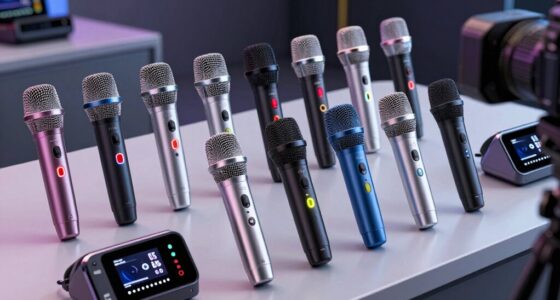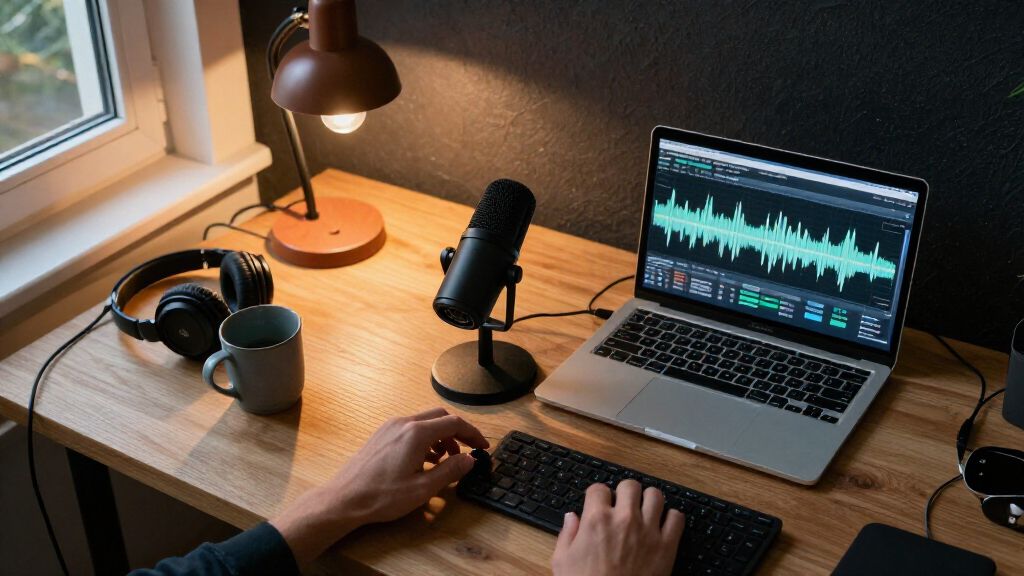
For most people choosing among desktop USB microphones, the Sennheiser Professional Profile is the best overall pick: it pairs a focused cardioid pickup with a straightforward desktop setup. The Logitech Blue Yeti stands out for buyers who want more pickup-pattern flexibility, while the Razer Seiren V3 Mini suits a compact, speech-focused setup. The main tradeoffs are focused voice pickup versus capturing a group, and simple controls versus more recording flexibility. Gooseneck and conference models serve different desk layouts than studio-style condensers, so the right fit depends on who needs to be heard. Read on for the full breakdown of all 15 options and how I’d match each one to a use case.

Get audio and creator gear delivered free with Prime
- Fast, free delivery on millions of items
- Prime Video, Amazon Music and more included
- Member-only deals all year
Complete the kit


Key Takeaways
- The Sennheiser Profile is the strongest all-round fit: its cardioid design favors one speaker at a desk without adding the complexity of a multi-pattern microphone.
- The Blue Yeti offers more pickup flexibility than the compact or gooseneck options, but its broader use cases come with a larger footprint and more controls to manage.
- Gooseneck microphones prioritize placement and convenience over studio-style recording versatility; CMTECK, JOUNIVO, CMOCIIY, and FIFINE K054 models make that form factor a major point of comparison.
- Conference microphones solve a different problem from solo voice mics: omnidirectional options such as the AIRHUG 21 and TONOR G11 are meant to hear several people around a table.
- Extra controls do not replace choosing the right pickup pattern: gain, mute, noise reduction, and echo features on models such as the ZealSound K66 are useful only when they fit the room and recording task.
| Sennheiser Professional Profile USB Cardioid Condenser Microphone with Table Stand and 1.2 m USB-C Cable |  | Best for Hands-On Voice Control | Connectivity: USB; USB-C cable included | Polar pattern: Unidirectional (cardioid) | Controls and features: Mute, gain, mix, volume, and headphone jack | VIEW LATEST PRICE | See Our Full Breakdown |
| CMTECK USB Gooseneck Computer Microphone with Mute Button |  | Best for Flexible Desk Positioning | Connectivity: USB | Form factor: Adjustable metal gooseneck | Polar pattern: Omnidirectional | VIEW LATEST PRICE | See Our Full Breakdown |
| Mini USB Microphone for Laptop and Desktop |  | Best Compact Travel Pick | Connectivity: USB 2.0, USB Type-A | Microphone type: Condenser | Polar pattern: Omnidirectional | VIEW LATEST PRICE | See Our Full Breakdown |
| JOUNIVO JV-601 USB Gooseneck Microphone |  | Best Gooseneck for a Fixed PC Setup | Model: JV-601 | Connectivity: USB | Microphone type: Omnidirectional condenser | VIEW LATEST PRICE | See Our Full Breakdown |
| CMTECK Conference USB Microphone with Mute Button |  | Best for Small-Group Calls | Connectivity: USB, Micro USB connector | Form factor: Boundary microphone | Polar pattern: Omnidirectional | VIEW LATEST PRICE | See Our Full Breakdown |
| AIRHUG 21 USB Omnidirectional Conference Microphone |  | Best for Small Group Calls | Connectivity: USB; USB-A to USB-C cable | Pickup pattern: Omnidirectional | Pickup range: Up to 6 ft | VIEW LATEST PRICE | See Our Full Breakdown |
| CMTECK G009 USB Desktop Microphone with Mute Function |  | Best for Adjustable Positioning | Model: G009 | Microphone type: Condenser | Pickup pattern: Conflicting product details: omnidirectional in description, unidirectional in specifications | VIEW LATEST PRICE | See Our Full Breakdown |
| Logitech Blue Yeti USB Condenser Microphone, Blackout |  | Best for Versatile Recording | Microphone type: Condenser | Capsule array: Three-capsule | Pickup patterns: Cardioid, omnidirectional, bidirectional, stereo | VIEW LATEST PRICE | See Our Full Breakdown |
| AIRHUG Magnetic USB Microphone for PC and Mac |  | Best for Flexible Placement | Model: AIRHUG 28 | Connectivity: USB-C | Cable length: 2 m USB-C to USB-A cable | VIEW LATEST PRICE | See Our Full Breakdown |
| CMOCIIY USB Desktop Microphone with Flexible Gooseneck and Mute Button |  | Best for Close Desk Calls | Connectivity: USB | Pickup pattern: Omnidirectional | Form factor: Gooseneck | VIEW LATEST PRICE | See Our Full Breakdown |
| TONOR G11 USB Conference Microphone |  | Best for Shared-Desk Meetings | Microphone type: Condenser | Polar pattern: Omnidirectional | Connectivity: USB | VIEW LATEST PRICE | See Our Full Breakdown |
| Razer Seiren V3 Mini USB Microphone, Supercardioid Condenser Mic, Black | 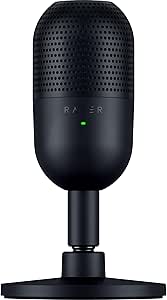 | Best Compact Mic for Solo Speakers | Microphone type: Condenser | Polar pattern: Supercardioid | Connectivity: USB Type-A | VIEW LATEST PRICE | See Our Full Breakdown |
| FIFINE K054 USB Gooseneck Condenser Microphone with Mute Button and Volume Knob |  | Best for Adjustable Desktop Positioning | Microphone type: Gooseneck condenser | Polar pattern: Cardioid | Connectivity: USB Type-A | VIEW LATEST PRICE | See Our Full Breakdown |
| FIFINE AmpliGame AM8 USB/XLR Dynamic Microphone for Gaming Streaming |  | Best for a Growing Streaming Setup | Microphone type: Dynamic | Polar pattern: Cardioid | Connectivity: USB and XLR | VIEW LATEST PRICE | See Our Full Breakdown |
| ZealSound K66 USB Condenser Microphone with Noise Reduction, Gain and Echo Controls |  | Best for On-Mic Recording Controls | Microphone type: USB condenser | Pickup pattern: Cardioid | Frequency response: 40 Hz–18 kHz | VIEW LATEST PRICE | See Our Full Breakdown |
| desktop USB microphone | Connectivity | Compatibility | Microphone type | Polar pattern |
|---|---|---|---|---|
| Sennheiser Professional Profil | USB; USB-C cable included | — | — | Unidirectional (cardioid) |
| CMTECK USB Gooseneck Computer | USB | Windows, macOS, PS4/PS5 | — | Omnidirectional |
| Mini USB Microphone for Laptop | USB 2.0, USB Type-A | Windows, Mac, Linux, Chromebook, Raspberry Pi | Condenser | Omnidirectional |
| JOUNIVO JV-601 USB Gooseneck M | USB | Windows 7, 8, 10, 11; macOS | Omnidirectional condenser | — |
| CMTECK Conference USB Micropho | USB, Micro USB connector | Windows and macOS | — | Omnidirectional |
| AIRHUG 21 USB Omnidirectional | USB; USB-A to USB-C cable | Windows 7–11 and Mac OS | — | — |
| CMTECK G009 USB Desktop Microp | USB | — | Condenser | — |
| Logitech Blue Yeti USB Condens | — | — | Condenser | — |
| AIRHUG Magnetic USB Microphone | USB-C | Personal computers; Windows 7–11 and Mac OS | — | — |
| CMOCIIY USB Desktop Microphone | USB | — | — | — |
| TONOR G11 USB Conference Micro | USB | Windows, macOS | Condenser | Omnidirectional |
| Razer Seiren V3 Mini USB Micro | USB Type-A | — | Condenser | Supercardioid |
| FIFINE K054 USB Gooseneck Cond | USB Type-A | Laptop, PC | Gooseneck condenser | Cardioid |
| FIFINE AmpliGame AM8 USB/XLR D | USB and XLR | — | Dynamic | Cardioid |
| ZealSound K66 USB Condenser Mi | — | Windows PC, Mac, PS4, PS5, iPhone, iPad, and compatible USB-C devices | USB condenser | — |
More Details on Our Top Picks
Sennheiser Professional Profile USB Cardioid Condenser Microphone with Table Stand and 1.2 m USB-C Cable
The Sennheiser Profile suits desktop users who want to adjust their voice setup at the microphone rather than through software. Its cardioid pickup favors sound from the front, making it a more focused choice for one-person calls and recordings than the omnidirectional CMTECK Conference USB Microphone, which is designed to pick up people around a table. On-mic mute, gain, mix, and volume controls, plus a headphone jack, make quick changes easier during a session. The USB-C connection and plug-and-play setup keep installation simple, while its metal body and included table stand give it a sturdier desktop presence than the lightweight Mini USB Microphone. The tradeoff is a single pickup pattern and a stand-only setup: buyers who need broader room coverage or flexible boom-arm positioning should look elsewhere.
Pros:- On-mic mute, gain, mix, and volume controls support quick adjustments without software.
- Cardioid pickup is suited to a single speaker facing the microphone.
- USB-C plug-and-play connection requires no software.
- Metal construction and included table stand provide a substantial desktop setup.
Cons:- Only one cardioid pickup pattern is available.
- No boom arm is included, limiting placement flexibility.
- Its heavier, larger desktop format is less portable than the Mini USB Microphone.
Best for: Solo streamers, remote workers, and podcasters who want direct control over mic level and headphone monitoring at their desk.
Not ideal for: Conference groups needing room-wide pickup, or users who want multiple polar patterns or a boom arm included.
- Connectivity:USB; USB-C cable included
- Polar pattern:Unidirectional (cardioid)
- Controls and features:Mute, gain, mix, volume, and headphone jack
- Construction:Metal enclosure
- Included stand:Compact table stand
- Weight:717 g
- Dimensions:4.37 × 4.37 × 7.95 in
- Signal-to-noise ratio:60 dB
Our verdict“Choose the Profile for a sturdy solo-speaking setup with convenient on-mic controls, but skip it if you need room-wide pickup or flexible multi-pattern recording.”
CMTECK USB Gooseneck Computer Microphone with Mute Button
The CMTECK USB Gooseneck is a practical pick when a desktop microphone needs to move between speaking positions without taking up much desk area. Its adjustable metal neck lets users bring the capsule closer for calls, dictation, or classes, unlike the low-profile CMTECK Conference USB Microphone, which is intended to sit flat and cover a shared table. The one-touch mute and status light make it easier to confirm when the mic is off, while its omnidirectional pattern is forgiving if the speaker shifts position. Plug-and-play support for Windows, macOS, and PS4 keeps setup straightforward. That room-friendly pickup can also capture nearby noise, though the listed noise suppression is meant to help. The six-foot cable limits where it can reach, and it does not support Xbox or Raspberry Pi.
Pros:- Adjustable metal gooseneck makes it easy to position the mic near the speaker.
- One-touch mute has a visible status indicator.
- Plug-and-play compatibility includes Windows, macOS, and PS4.
- Omnidirectional pickup accommodates speakers who move around the desk.
Cons:- Omnidirectional pickup can capture more surrounding sound than the Sennheiser Profile’s cardioid pattern.
- The six-foot cable restricts placement distance.
- Not compatible with Raspberry Pi or Xbox.
Best for: Desktop users on Windows or macOS who want a repositionable mic for calls, dictation, or online classes, plus PS4 users seeking a simple USB setup.
Not ideal for: Xbox or Raspberry Pi users, and anyone who needs focused voice pickup that rejects surrounding room sound.
- Connectivity:USB
- Form factor:Adjustable metal gooseneck
- Polar pattern:Omnidirectional
- Cable length:6 ft
- Mute indicator:One-touch mute with LED indicator
- Compatibility:Windows, macOS, PS4/PS5
- Not compatible with:Raspberry Pi, Xbox
- Weight:7.36 oz
Our verdict“Pick this CMTECK for flexible positioning and clear mute status on supported systems, but choose a cardioid mic if you need more directional voice pickup.”
Mini USB Microphone for Laptop and Desktop
For a desk that doubles as a travel setup, this tiny USB-A microphone is the lineup’s easiest option to pack. At 50 g and less than two inches long, it occupies far less space than the upright CMTECK USB Gooseneck and comes with a metal carrying case to protect it in transit. Plug-and-play support across Windows, Mac, Linux, Chromebook, and Raspberry Pi gives it unusually broad compatibility for a small desktop mic. Its omnidirectional condenser design suits voice calls and online classes, but the compact form does not offer the positioning controls or on-mic mute and level adjustments found on the Sennheiser Profile. The stated pickup distance of up to 10 feet may appeal for casual group calls, though this is not a substitute for a studio-oriented recording microphone. USB-A may also call for an adapter on newer devices.
Pros:- Very small and light, making it simple to carry between workspaces.
- Metal carrying case is included.
- Driver-free compatibility includes Windows, Mac, Linux, Chromebook, and Raspberry Pi.
- Omnidirectional pickup suits casual calls and online classes.
Cons:- USB Type-A may require an adapter for devices without that port.
- Its tiny form offers less positioning flexibility than the CMTECK USB Gooseneck.
- Not designed for studio-grade recording and has no listed on-mic mute or level controls.
Best for: Students, travelers, and Raspberry Pi users who want a lightweight plug-in mic for calls or classes and need broad operating-system support.
Not ideal for: Streamers or recording-focused users who need on-mic controls, flexible positioning, or a more substantial desktop microphone.
- Connectivity:USB 2.0, USB Type-A
- Microphone type:Condenser
- Polar pattern:Omnidirectional
- Frequency range:50–15,000 Hz
- Compatibility:Windows, Mac, Linux, Chromebook, Raspberry Pi
- Weight:50 g
- Dimensions:0.71 × 0.31 × 1.89 in
- Included accessory:Metal carrying case
- Warranty:12 months
Our verdict“Choose this Mini USB Microphone for portability and wide device compatibility, not for adjustable desktop controls or demanding recording work.”
JOUNIVO JV-601 USB Gooseneck Microphone
The JOUNIVO JV-601 is aimed at people who want a desktop microphone they can bend into position and leave ready for regular computer use. Its 360-degree adjustable gooseneck offers similar reach to the CMTECK USB Gooseneck, while the stated noise-canceling technology is intended to reduce background noise and echo during calls. A one-touch mute button with an LED indicator adds a useful visual cue, and no-driver USB setup keeps installation simple on Windows and macOS. The JV-601’s listed 20 Hz–20 kHz frequency range and 76 dB signal-to-noise ratio distinguish it on paper from the compact Mini USB Microphone, though specs alone do not settle which will sound better in a particular room. Its six-foot cable and omnidirectional pattern remain practical limits, and compatibility excludes Android, Raspberry Pi, and Xbox.
Pros:- 360-degree adjustable neck supports flexible positioning.
- Noise-canceling technology is designed to reduce background noise and echo.
- One-touch mute includes an LED status indicator.
- Driver-free USB setup works with Windows and macOS.
Cons:- Six-foot cable can restrict placement relative to the computer.
- Omnidirectional pickup may collect sound beyond the intended speaker.
- Not compatible with Xbox, Raspberry Pi, or Android.
Best for: Windows and macOS users who want a gooseneck mic that can stay positioned at a desktop for recurring calls or dictation.
Not ideal for: Android, Raspberry Pi, or Xbox users, and people who need a wireless or room-independent setup.
- Model:JV-601
- Connectivity:USB
- Microphone type:Omnidirectional condenser
- Form factor:360-degree adjustable gooseneck
- Frequency range:20 Hz–20 kHz
- Signal-to-noise ratio:76 dB
- Cable length:1.8 m (6 ft)
- Compatibility:Windows 7, 8, 10, 11; macOS
- Weight:7.06 oz
Our verdict“Choose the JV-601 for an adjustable, stay-at-your-desk mic on Windows or macOS, but avoid it if your device is outside its supported systems.”
CMTECK Conference USB Microphone with Mute Button
The CMTECK Conference USB Microphone makes the most sense for a desk where several people may speak from different positions. Its omnidirectional pickup is listed to reach up to 10 feet, a better fit for a small meeting than the Sennheiser Profile’s front-focused cardioid pattern. Built-in noise and echo cancellation aims to make shared-room calls more manageable, while the mute button’s status lights help prevent accidental open-mic moments. The compact boundary design sits low on the desk, unlike the taller JOUNIVO JV-601, which places its capsule at the end of a gooseneck. This is a microphone, not a speaker, so it will not play call audio on its own. Its Micro USB connection and six-foot cable also make it a wired, placement-limited choice, and it does not support Raspberry Pi or Android.
Pros:- Omnidirectional pickup is specified for a range of up to 10 feet.
- Built-in noise and echo cancellation is designed for shared-call settings.
- Mute button includes status indicator lights.
- Driver-free setup supports Windows and macOS.
Cons:- Does not include a speaker for playing call audio.
- Micro USB connection and six-foot cable limit connection and placement options.
- Not compatible with Raspberry Pi or Android.
Best for: Small teams and households who join Windows or macOS calls around one desk and need a compact mic to pick up more than one speaker.
Not ideal for: Solo speakers seeking focused pickup, users who need a built-in speaker, or anyone using Raspberry Pi or Android.
- Connectivity:USB, Micro USB connector
- Form factor:Boundary microphone
- Polar pattern:Omnidirectional
- Pickup range:Up to 10 ft (3 m)
- Cable length:6 ft (1.8 m)
- Compatibility:Windows and macOS
- Not compatible with:Raspberry Pi, Android
- Dimensions:5.5 × 4.7 × 1.1 in
- Warranty:24 months
Our verdict“Choose this CMTECK for small-group computer calls where broad pickup matters more than focused solo voice capture or built-in audio playback.”
AIRHUG 21 USB Omnidirectional Conference Microphone
The AIRHUG 21 suits a shared desk or small meeting better than a microphone meant to isolate one speaker. Its omnidirectional pickup can capture voices from around the unit, while selectable AI noise reduction offers a way to curb distractions such as keyboard clicks. Compared with the more recording-focused Logitech Blue Yeti, it is far simpler: there are no selectable pickup patterns or headphone monitoring, but setup is plug-and-play and the flat, compact body takes little desk space. The mute button and LED indicator make call status easy to check. The tradeoff is limited room coverage: it is intended for roughly one to three participants, and it has neither a speaker nor echo cancellation. I’d choose it for a small computer-based meeting, not a room-wide conference setup.
Pros:- Omnidirectional pickup can capture nearby speakers around the microphone.
- Selectable AI noise reduction can help reduce some background sounds.
- Plug-and-play USB connection needs no driver installation.
- Compact body, mute control, LED indicator, and anti-slip base suit a tidy desk.
Cons:- Designed for small groups rather than broad room coverage.
- No built-in speaker or echo cancellation.
- Plastic enclosure offers less substantial construction than metal-bodied alternatives.
Best for: People hosting calls or online lessons with one to three participants seated near a shared computer.
Not ideal for: Larger meeting rooms or buyers who need built-in playback and echo cancellation.
- Connectivity:USB; USB-A to USB-C cable
- Pickup pattern:Omnidirectional
- Pickup range:Up to 6 ft
- Sampling rate:48 kHz
- Signal-to-noise ratio:65 dB
- Compatibility:Windows 7–11 and Mac OS
- Dimensions:3.38 in diameter × 0.53 in thick
- Cable length:6.5 ft
Our verdict“Choose the AIRHUG 21 for simple calls with a few nearby participants, but skip it for larger rooms or recording setups that need more control.”
CMTECK G009 USB Desktop Microphone with Mute Function
The CMTECK G009 is a practical choice when a desktop mic needs to move between seated positions without moving its base. Its 360-degree flexible gooseneck lets the user bring the capsule closer, and the mute button’s red status light makes it clear when the mic is off. A pop filter also helps soften plosive sounds. Compared with the CMOCIIY USB Desktop Microphone, it shares the gooseneck format and straightforward USB setup, but the G009’s product information gives conflicting pickup patterns: omnidirectional in the description and unidirectional in the specifications. That ambiguity makes it harder to predict how much room sound it will capture. It is also listed as incompatible with Linux, Android, and Raspberry Pi. I’d favor it for a Windows or Mac desk where flexible placement matters more than certainty about pickup behavior.
Pros:- Flexible gooseneck can be adjusted to bring the microphone closer to the speaker.
- Mute button and red status indicator show when audio is cut.
- Pop filter helps reduce plosive sounds in speech.
- USB connection requires no drivers or external power supply.
Cons:- Product details conflict on whether pickup is omnidirectional or unidirectional.
- Not listed as compatible with Linux, Android, or Raspberry Pi.
- Gooseneck positioning is less suited to buyers seeking a fixed, polished recording setup.
Best for: Windows and Mac users who want a compact desktop mic they can angle toward their voice and mute quickly.
Not ideal for: Linux, Android, or Raspberry Pi users, and buyers who need a clearly specified pickup pattern.
- Model:G009
- Microphone type:Condenser
- Pickup pattern:Conflicting product details: omnidirectional in description, unidirectional in specifications
- Connectivity:USB
- Compatible devices:Desktop, laptop, PC, PS4
- Operating systems:Windows 7, 8, 10 and Mac OS
- Signal-to-noise ratio:76 dB
- Material:Metal enclosure
Our verdict“Pick the G009 if you value adjustable reach and use a supported computer, but avoid it if pickup direction must be predictable.”
Logitech Blue Yeti USB Condenser Microphone, Blackout
The Blue Yeti earns its place for buyers who want one desktop microphone to handle more than calls. Its four selectable pickup patterns cover solo speech, shared conversations, two-person recording, and stereo capture, giving it a broader role than the meeting-focused AIRHUG 21. Onboard gain, mute, pattern, and headphone-volume controls reduce the need to reach for software during a session, while zero-latency headphone monitoring helps speakers hear their input as they record. That versatility comes with more setup and desk commitment than simpler USB conference mics. Full Blue VO!CE functionality requires Logitech G HUB, and the supplied description lists corded power rather than a wireless option. I’d choose the Yeti for streaming, podcasts, or varied home recording; for occasional calls, its pattern selection and software features may be more than the job requires.
Pros:- Four pickup patterns support solo, group, two-person, and stereo recording setups.
- Onboard mute, gain, pattern, and headphone-volume controls provide direct access during use.
- Zero-latency headphone monitoring helps users hear their input while recording.
- Adjustable stand helps aim the microphone toward the sound source.
Cons:- Full Blue VO!CE functionality requires Logitech G HUB.
- Its broad feature set can be unnecessary for basic calls.
- Corded power and a desktop stand limit placement flexibility.
Best for: Podcasters, streamers, and home creators who want multiple recording patterns and direct monitoring from a desktop mic.
Not ideal for: People who only need a basic call microphone or prefer to avoid installing companion software for added features.
- Microphone type:Condenser
- Capsule array:Three-capsule
- Pickup patterns:Cardioid, omnidirectional, bidirectional, stereo
- Frequency response:20 Hz–20 kHz
- Channels:2
- Monitoring:Zero-latency headphone monitoring
- Controls:Headphone volume, pattern selection, mute, microphone gain
- Software:Blue VO!CE effects; Logitech G HUB required for full functionality
Our verdict“Choose the Blue Yeti if you’ll use its multiple pickup patterns and monitoring, rather than paying desk space and setup attention for call-only use.”
AIRHUG Magnetic USB Microphone for PC and Mac
The AIRHUG 28 stands apart from fixed desktop microphones by letting the user change where it sits: flat on a desk, clipped to clothing, or attached to a metal surface. A magnetic sheet and reusable adhesive dots extend those placement options, making it more adaptable than the fixed-base AIRHUG 21. It keeps the controls simple, with one-touch mute, an LED status indicator, and selectable AI noise reduction or original audio mode. That flexibility is most useful when a desk layout changes or the mic needs to sit closer to its speaker; it does not make the unit a wireless mic, since it still needs USB power and its included cable. Its listed compatibility is limited to personal computers, and the supplied details do not specify a pickup range or audio performance figures. I’d choose it for adaptable placement, not for a spec-driven recording workflow.
Pros:- Can be placed flat, clipped to clothing, or attached to a metal surface.
- Included magnetic sheet and reusable adhesive dots add mounting options.
- One-touch mute and LED status indicator make call control straightforward.
- Selectable AI noise reduction and original audio modes offer two sound options.
Cons:- Still needs a USB connection for power, so placement is tethered.
- Listed compatibility covers personal computers rather than a broad range of devices.
- Product information does not provide a pickup range or several common audio performance figures.
Best for: PC and Mac users who need to move a small omnidirectional mic between desk, clothing, and metal-surface positions.
Not ideal for: Buyers seeking a wireless microphone, detailed published audio specifications, or compatibility beyond personal computers.
- Model:AIRHUG 28
- Connectivity:USB-C
- Cable length:2 m USB-C to USB-A cable
- Pickup pattern:Omnidirectional
- Channels:1
- Audio modes:AI noise reduction and original mode
- Compatibility:Personal computers; Windows 7–11 and Mac OS
- Included accessories:USB-C to USB-A cable, magnetic sheet, three reusable nano adhesive dots, user guide
Our verdict“Choose the AIRHUG 28 if mounting flexibility matters more than a conventional fixed base or detailed audio specifications.”
CMOCIIY USB Desktop Microphone with Flexible Gooseneck and Mute Button
The CMOCIIY makes the most sense when a speaker can keep the mic within its stated 6–12-inch pickup range. Its metal gooseneck bends toward the user, and the compact base with a silicone pad helps keep it steady without taking over the desk. Compared with the CMTECK G009, it shares an adjustable gooseneck design but specifies its pickup pattern as omnidirectional, so buyers should expect it to capture sound from around the microphone rather than focus narrowly on one voice. The touch-sensitive mute button and LED provide quick call control, while plug-and-play USB avoids software setup. The tradeoffs are a fixed cable connection and the potential for nearby room sounds to enter the pickup. I’d pick it for close-range calls or streaming at a settled desk, not for a speaker who needs to work from across the room.
Pros:- Flexible metal gooseneck allows close positioning toward the speaker.
- Touch-sensitive mute button and LED indicate microphone status.
- Plug-and-play USB setup requires no drivers or software.
- Compact base with a non-slip silicone pad helps keep it stable on a desk.
Cons:- Corded USB connection limits movement and placement.
- Omnidirectional pickup may capture nearby sounds from around the microphone.
- Stated pickup range of 6–12 inches favors close use over room-wide capture.
Best for: Computer users who sit close to their microphone for calls, streaming, or speech recording and want adjustable positioning.
Not ideal for: People who need to move around, place the mic far from the speaker, or reduce surrounding room sound.
- Connectivity:USB
- Pickup pattern:Omnidirectional
- Form factor:Gooseneck
- Pickup range:6–12 inches
- Frequency range:20 Hz–20 kHz
- Signal-to-noise ratio:93 dB
- Cable length:1.8 m (6 ft)
- Materials:Metal gooseneck, ABS base, silicone pad
Our verdict“Choose the CMOCIIY for a close, adjustable desk setup, but skip it if you need wireless freedom or focused pickup in a noisy room.”
TONOR G11 USB Conference Microphone
The TONOR G11 suits calls where several people sit around one desk: its omnidirectional pickup is designed to capture voices from all sides, with a stated pickup distance of up to 11.5 feet. That makes it a better fit for group meetings than the Razer Seiren V3 Mini, whose supercardioid pattern is aimed more squarely at one speaker and reducing surrounding sound. USB plug-and-play setup, a mute button, and a blue status light keep everyday call controls simple, while the metal body and anti-slip base help it stay put. The tradeoff is that this is a microphone, not a speakerphone: it does not replace a separate speaker or headphones. Its broad pickup can also capture room noise, so solo streamers in a noisy space may prefer the more focused FIFINE AM8.
Pros:- Omnidirectional pickup is suited to speakers seated around a shared desk.
- Stated pickup distance reaches up to 11.5 feet.
- Mute button and blue status indicator provide straightforward call control.
- Metal body, anti-slip base, and shielded cable support stable desktop placement.
Cons:- Broad pickup can capture keyboard, room, and other background sounds.
- It is a microphone only and does not provide speakerphone playback.
- A computer may require manual selection of the mic as its input device.
Best for: Small teams and families who need one desktop mic to pick up multiple people during computer calls.
Not ideal for: Solo streamers in noisy rooms or anyone expecting an all-in-one speakerphone with built-in audio playback.
- Microphone type:Condenser
- Polar pattern:Omnidirectional
- Connectivity:USB
- Pickup distance:Up to 11.5 ft
- Compatibility:Windows, macOS
- Cable length:1.8 m
- Controls:Mute button with blue status indicator
- Weight:135 g
Our verdict“Choose the TONOR G11 for shared-desk calls where hearing several speakers matters more than isolating one voice.”
Razer Seiren V3 Mini USB Microphone, Supercardioid Condenser Mic, Black
For a small desk and a single speaker, the Razer Seiren V3 Mini has a clearer purpose than the wider-coverage TONOR G11. Its supercardioid pickup pattern focuses on sound from the front, helping keep some surrounding noise out of calls, streams, and recordings. The compact form, tilting stand, and built-in shock absorber also suit a setup where a full-size microphone or separate mount would take up too much room. A tap-to-mute sensor with LED indicator makes quick muting easy, though the source data lists a required AA battery despite corded USB power, so buyers should check that power requirement before choosing it. The USB Type-A connector may call for an adapter with newer devices. Compared with the FIFINE K054, this is less about a flexible stem and more about keeping the mic small and close to a single voice.
Pros:- Supercardioid pickup focuses on a speaker positioned in front of the mic.
- Compact body and tiltable stand suit space-conscious desktop setups.
- Tap-to-mute sensor has an LED indicator for visible status.
- Built-in shock absorber is designed to reduce handling noise.
Cons:- USB Type-A may require an adapter for newer devices.
- The listed AA battery requirement adds a power detail to check despite corded operation.
- Its focused pickup is less suited to group conversations than the TONOR G11.
Best for: Solo PC and laptop users with limited desk space who want a directional mic for calls, streaming, or voice chat.
Not ideal for: Meeting hosts who need to capture several people around a table, or users who want a native USB-C connection without adapters.
- Microphone type:Condenser
- Polar pattern:Supercardioid
- Connectivity:USB Type-A
- Frequency range:20 Hz–20 kHz
- Signal-to-noise ratio:110 dB
- Controls:Tap-to-mute sensor with LED indicator
- Stand features:Tiltable stand with built-in shock absorber
- Power:Corded electric; product data also lists one AA battery requirement
Our verdict“Pick the Seiren V3 Mini for a compact, front-facing solo setup, but choose the TONOR G11 for people gathered around one desk.”
FIFINE K054 USB Gooseneck Condenser Microphone with Mute Button and Volume Knob
The FIFINE K054 is the practical choice when a desktop mic needs to move closer to the speaker without taking up the space of a larger stand. Its gooseneck extends up to 12 inches, so users can reposition the capsule for calls or live chat while leaving the base in place. A cardioid pattern is more voice-focused than the TONOR G11’s omnidirectional pickup, which is better for gathering people around a table. The base adds a volume knob and an LED-indicated mute button, giving it more direct controls than the minimalist Razer Seiren V3 Mini. However, the USB cable is non-detachable, limiting replacement or routing options, and the listed compatibility is PC and laptop rather than a broad range of devices. Its flexible stem is useful, but buyers seeking a compact fixed mic may prefer the Razer.
Pros:- Gooseneck extends up to 12 inches for flexible positioning.
- Cardioid pickup favors speech in front of the microphone.
- Base-mounted volume knob and LED-indicated mute button offer accessible controls.
- Weighted base with non-skid rubber mounts is designed to stay stable.
Cons:- The 2 m USB cable is non-detachable.
- Listed compatibility is limited to PCs and laptops.
- The adjustable stem and base take more desktop space than the Razer Seiren V3 Mini.
Best for: PC and laptop users who want to adjust mic position frequently and control volume or mute from the desktop base.
Not ideal for: Buyers who need a replaceable cable, broad device compatibility, or a small fixed-position microphone.
- Microphone type:Gooseneck condenser
- Polar pattern:Cardioid
- Connectivity:USB Type-A
- Gooseneck length:Up to 12 in (32.5 cm)
- Cable length:2 m, non-detachable
- Controls:Volume knob and LED-indicated mute button
- Signal-to-noise ratio:78 dB
- Compatibility:Laptop, PC
Our verdict“Choose the K054 if flexible positioning and base-mounted controls matter more than a detachable cable or compact footprint.”
FIFINE AmpliGame AM8 USB/XLR Dynamic Microphone for Gaming Streaming
The FIFINE AmpliGame AM8 earns its place for buyers who want a desktop USB mic now but may add an audio interface later. Its USB and XLR connections provide that upgrade path, unlike the USB-only ZealSound K66, which instead offers onboard echo and level controls. The AM8’s cardioid dynamic design is aimed at one speaker, and its headphone jack with monitoring-volume control lets users listen while recording. A tap-to-mute control and RGB lighting suit a gaming or streaming desk, though the lighting and function keys are unavailable over XLR. The included stand threads support common 3/8-inch and 5/8-inch mounts, but the product data does not list a desktop stand, so buyers may need their own support. An XLR cable is also not included. This is a more expandable pick than the K66, but it asks for more setup planning.
Pros:- USB and XLR connections support both direct computer use and an interface-based setup.
- Headphone jack and monitoring-volume control enable on-mic listening.
- Cardioid dynamic design is suited to a single speaker.
- Built-in 3/8-inch and 5/8-inch threads fit common mic stands.
Cons:- A separate XLR cable is not included.
- RGB lighting and function keys are unavailable when connected through XLR.
- A desktop stand is not listed in the supplied product data.
Best for: Streamers and creators who want USB simplicity now, headphone monitoring, and the option to move to an XLR interface later.
Not ideal for: Buyers seeking a complete ready-to-place desktop package or anyone who needs RGB and onboard controls to work through XLR.
- Microphone type:Dynamic
- Polar pattern:Cardioid
- Connectivity:USB and XLR
- Frequency response:50 Hz–16 kHz
- Signal-to-noise ratio:80 dB
- Monitoring:Headphone jack with monitoring-volume control
- Mount threads:3/8 in and 5/8 in
- Controls and features:Tap-to-mute, volume control, RGB lighting
Our verdict“Choose the AM8 if you want a USB mic with an XLR upgrade path and can supply any missing cable or stand you need.”
ZealSound K66 USB Condenser Microphone with Noise Reduction, Gain and Echo Controls
The ZealSound K66 gives desktop users more sound adjustments on the microphone itself than the simpler TONOR G11 or the position-focused FIFINE K054. Its mic and monitoring volume controls, echo adjustment, one-touch mute, and zero-latency headphone monitoring let a speaker make changes without reaching for software controls. The cardioid pattern and noise-reduction mode are aimed at voice recording and streaming, while included USB-C and Lightning adapters add compatibility with listed mobile devices as well as computers. That flexibility is the K66’s main distinction in this group. The tradeoffs are that noise reduction is not a promise of silence, and the echo control may be unwelcome for users who want a dry, unprocessed voice. Compared with the FIFINE AM8, it offers more built-in vocal adjustments but lacks the AM8’s XLR connection for an interface-based setup.
Pros:- On-mic controls adjust microphone level, headphone monitoring, echo, and mute.
- Zero-latency monitoring is available through the 3.5 mm headphone jack.
- USB-C and Lightning adapters support compatible devices beyond standard computer setups.
- Noise-reduction mode is provided for reducing some background sound.
Cons:- Noise reduction is not described as removing all background noise.
- Echo adjustment may not suit users seeking a natural, unprocessed voice.
- It does not offer the XLR connection available on the FIFINE AM8.
Best for: Desktop creators and remote workers who want headphone monitoring and hands-on level, mute, and echo controls, with compatible mobile-device use as a bonus.
Not ideal for: Users who want an unprocessed vocal signal, a guaranteed quiet recording in a noisy room, or an XLR upgrade path.
- Microphone type:USB condenser
- Pickup pattern:Cardioid
- Frequency response:40 Hz–18 kHz
- Sampling rate:46 kHz
- Sensitivity:−45 dB ±3 dB
- Monitoring:Zero-latency headphone monitoring via 3.5 mm jack
- Controls:Microphone volume, monitoring volume, echo adjustment, mute
- Compatibility:Windows PC, Mac, PS4, PS5, iPhone, iPad, and compatible USB-C devices
Our verdict“Choose the K66 if you value direct monitoring and onboard voice controls more than an XLR upgrade path or a completely unprocessed signal.”
How We Picked
I ranked these desktop USB microphones by how well their designs match common desk uses: solo calls, streaming, voice recording, and small-group meetings. I weighed pickup pattern and microphone type against the intended job, then looked at practical factors such as onboard mute or gain controls, placement flexibility, connection simplicity, and likely desk footprint. A feature counted as a strength only when it gave a clear benefit for a particular buyer; extra controls or broader pickup were not treated as automatic upgrades.
The order favors versatility for everyday solo use first, then rewards models with a clear advantage for a specific need, such as conference pickup, compact placement, or a flexible gooseneck. Models with specialized uses rank below more broadly useful choices, not because they are poor fits, but because they serve fewer setups. I also account for tradeoffs: an omnidirectional conference mic is less suited to isolating one speaker, while a compact mic may offer less room for adjustment than a larger desktop model.
| desktop USB microphone | Polar pattern | Microphone type |
|---|---|---|
| Sennheiser Professional Profil | Unidirectional (cardioid) | — |
| CMTECK USB Gooseneck Computer | Omnidirectional | — |
| Mini USB Microphone for Laptop | Omnidirectional | Condenser |
| JOUNIVO JV-601 USB Gooseneck M | — | Omnidirectional condenser |
| CMTECK Conference USB Micropho | Omnidirectional | — |
| AIRHUG 21 USB Omnidirectional | — | — |
| CMTECK G009 USB Desktop Microp | — | Condenser |
| Logitech Blue Yeti USB Condens | — | Condenser |
| AIRHUG Magnetic USB Microphone | — | — |
| CMOCIIY USB Desktop Microphone | — | — |
| TONOR G11 USB Conference Micro | Omnidirectional | Condenser |
| Razer Seiren V3 Mini USB Micro | Supercardioid | Condenser |
| FIFINE K054 USB Gooseneck Cond | Cardioid | Gooseneck condenser |
| FIFINE AmpliGame AM8 USB/XLR D | Cardioid | Dynamic |
| ZealSound K66 USB Condenser Mi | — | USB condenser |
Factors to Consider When Choosing Desktop USB Microphones
Before choosing a model, match its design to your room, speaking position, and number of voices. A microphone that works well for a solo desk setup may be the wrong tool for a meeting table, and added controls cannot fix a mismatch in pickup pattern.
Choose the pickup pattern for the number of speakers
For one person speaking at a desk, a directional pattern such as cardioid or supercardioid can help prioritize the voice in front of the microphone. That does not make room noise disappear: keyboard clicks, fans, and reflections can still be picked up depending on distance and placement. An omnidirectional model is more appropriate when several people need to speak from different sides of a table, but it will also hear more of the room. A common mistake is buying a conference microphone for solo streaming because “more coverage” sounds useful. Decide who needs to be heard at once, then select the pattern that fits that conversation.
Treat placement as part of the microphone choice
A desktop mic has to fit your speaking posture as well as your available space. Gooseneck designs let you bring the capsule closer or move it around a screen, while a compact unit takes up less room but may offer fewer positioning choices. A tabletop stand can be convenient for a fixed setup, though it may put the microphone farther from your mouth than expected. Before buying, check whether the mic can sit where you naturally speak without blocking a monitor or forcing an awkward reach. Moving a mic closer often helps more than adding software processing, so arm reach and base stability matter even in a simple USB setup.
Separate mute and gain controls from sound-quality claims
On-mic mute controls are useful for calls because they let you cut audio quickly without hunting through an app. Gain controls can help set input level, but they do not improve a noisy room or repair poor mic placement. Noise reduction and echo controls may change how the signal sounds, so they are best treated as adjustment tools rather than guarantees of cleaner audio. Check whether a control is easy to reach and whether its status is clear, especially if you speak on frequent meetings. If you only need a dependable mute button, paying for a long list of processing features may not be the best use of your budget.
Match the microphone type to the room and task
Condenser microphones are common in this lineup and can suit detailed speech capture, but they may also pick up more of the surrounding environment than a buyer expects. Dynamic models, such as the FIFINE AmpliGame AM8, can appeal to people who want a different approach for streaming or a less sensitive-feeling desk setup, though the overall result still depends on distance and room acoustics. Do not choose based on microphone type alone; pickup pattern, placement, and speaking distance work together. A treated or quiet room gives you more options, while a reflective or busy space makes close placement and focused pickup more valuable. Think about your actual room rather than an ideal recording studio.
Check the connection and the rest of your setup
USB convenience depends on the devices and ports you plan to use, so confirm the connection type and any adapter needs before ordering. A USB microphone can simplify setup, but it does not automatically provide the monitoring, routing, or multi-mic options of a larger audio system. If you may want to connect through an audio interface later, a USB/XLR model offers a different path from a USB-only microphone. Cable reach matters on a crowded desk, and a short cable can restrict placement even when the mic itself is flexible. List the computers and ports you intend to use, then check compatibility and cable layout rather than assuming every USB setup is identical.
Pay for useful flexibility, not unused features
Broader pickup patterns and extra controls make sense when you regularly change between solo recording and group calls. For a single, repeatable voice setup, a simpler microphone can be easier to position and operate. Premium spending is most useful when it buys a capability you will use, such as more flexible recording modes, a connection option that supports future changes, or controls that fit your workflow. It is less compelling when the main problem is a loud room, poor mic distance, or a desk that cannot accommodate the product. Compare each model against your likely next use, not just the longest feature list.
Frequently Asked Questions
Should I choose a cardioid mic or an omnidirectional conference mic for video calls?
Choose cardioid for calls where one person speaks from a consistent position, especially if you want the microphone to favor the voice in front of it. Choose omnidirectional pickup when several people seated around a table need to be heard without passing a mic around. The tradeoff is that broader coverage also captures more room sound. If meetings are usually one-on-one, a conference model may provide little benefit. If you host shared-room calls, a solo-focused mic may leave participants off-axis or too far away.
Will a desktop USB microphone make my voice clearer if my room is noisy?
It can help, but the room and microphone position remain major factors. A directional mic placed close to your mouth can favor your voice more than a mic sitting far away on a table. Background noise, echoes, and keyboard sounds may still reach the capsule, and noise-reduction controls can alter the voice as well as the unwanted sound. Try reducing the distance to the mic and choosing a quieter location before relying on processing. For a busy room, a focused pickup pattern and close placement are usually better priorities than a long list of software features.
Is a gooseneck microphone a better choice than a desktop stand mic?
A gooseneck is useful when you need to position the capsule around a monitor or keep the base in a fixed spot. A stand-style mic may suit a more stationary recording setup where a larger body and a conventional desktop position are acceptable. Neither shape guarantees better sound; distance, direction, and room noise still matter. Check whether the gooseneck can hold the angle you need and whether its base fits your desk. Choose by placement constraints first, rather than assuming one form factor is inherently more professional.
Do I need USB/XLR connectivity if I only record through a computer?
A USB-only model is generally the simpler fit if you plan to connect directly to a computer and do not need external audio equipment. USB/XLR connectivity can provide a future route to an audio interface or mixer, which may matter if your recording setup grows. That flexibility adds little if you will always use the microphone over USB, so it should not outweigh basic fit, pickup pattern, and controls. Check what your current software and equipment support before paying for an unused connection option. The right choice depends on your likely setup, not a hypothetical studio upgrade.
Is a smaller microphone always better for a crowded desk?
A compact microphone can free up space, but size is only one part of desk fit. The base, cable route, speaking distance, and ability to position the capsule all affect how practical it is. A gooseneck may take less room around the screen while still reaching the right spot, whereas a small fixed mic may need to sit close to your keyboard. Check the product’s shape and placement needs against your desk layout before choosing by dimensions alone. If the mic will be moved often, ease of repositioning may matter more than the smallest footprint.
Conclusion
For a reliable all-purpose solo desk setup, I’d start with the Sennheiser Professional Profile as the best overall pick. The CMTECK G009 is a sensible value-oriented choice for buyers who want a straightforward desktop mic with mute functionality, while the Logitech Blue Yeti is my best premium-style choice for people who need more pickup-pattern options. Beginners who want a compact, speech-focused setup should look at the Razer Seiren V3 Mini. For specific needs, choose an AIRHUG 21 or TONOR G11 for shared-table calls, a gooseneck model for adjustable placement, or the FIFINE AmpliGame AM8 if USB/XLR flexibility fits a streaming setup. The best choice is the one whose pickup pattern, desk position, and controls match how you actually speak.