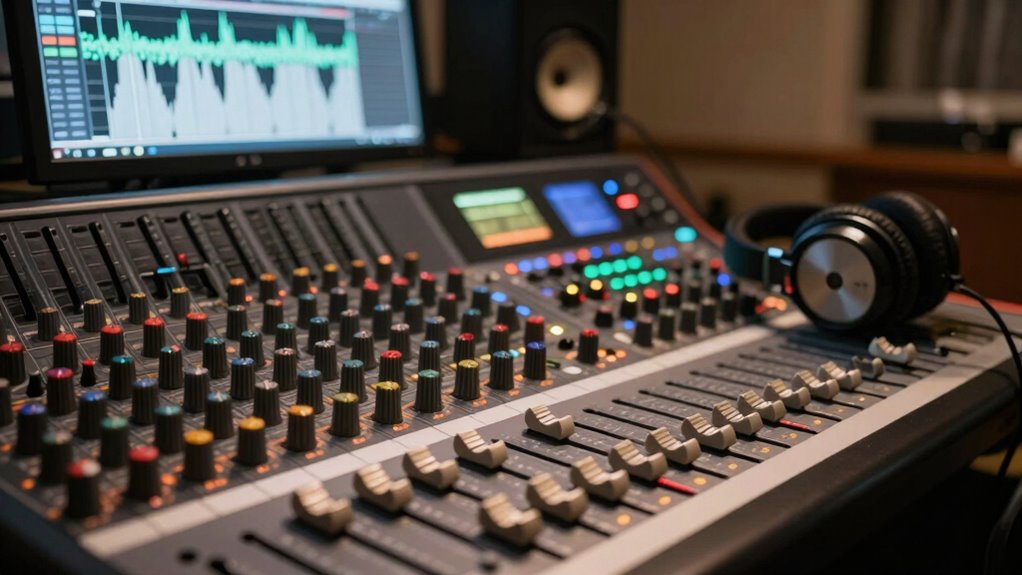

To improve punch without overusing transient tools, focus on proper gain staging, tight arrangement, and strategic EQ. Use high-quality microphones and minimize background noise to capture clear recordings, then EQ vocals and drums to carve out space and boost attack frequencies. Layer your kick and snare for fullness, and employ parallel compression to enhance sustain and punch naturally. By paying attention to balance and dynamics, you can achieve a lively, impactful mix—discover how these techniques work together for maximum effect.

Get audio and creator gear delivered free with Prime
- Fast, free delivery on millions of items
- Prime Video, Amazon Music and more included
- Member-only deals all year
Key Takeaways
- Focus on high-quality recording techniques and proper gain staging to naturally capture punch.
- Use EQ to carve out space, boosting presence frequencies (3-5 kHz) for clarity and attack.
- Layer drum samples and tighten editing to enhance natural punch without relying on transient shapers.
- Apply parallel compression subtly to blend sustain and attack for more impact.
- Ensure balanced frequency distribution and thoughtful arrangement to maximize perceived punch.
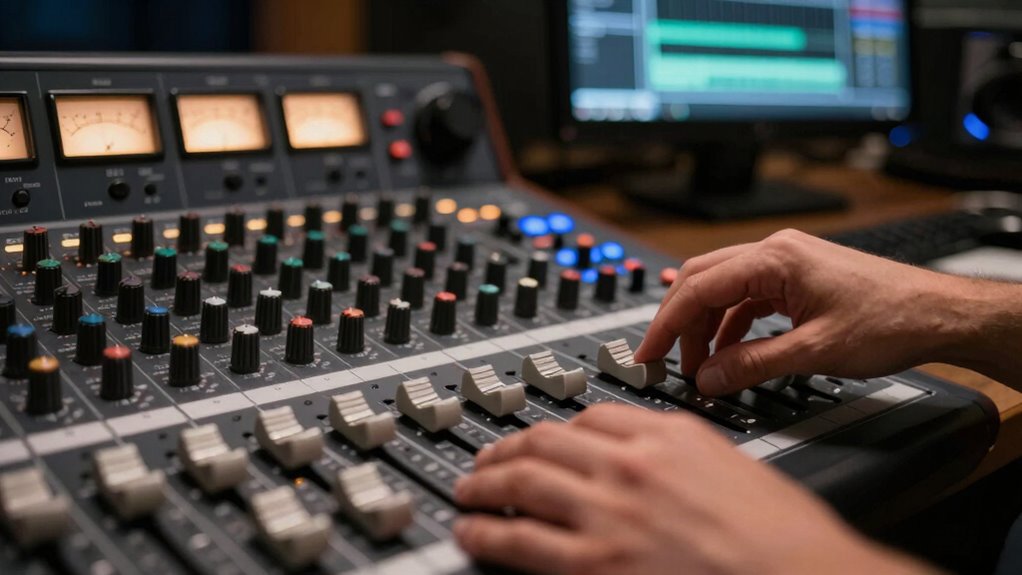
Achieving a punchy mix without relying heavily on transient-shaping tools requires a strategic approach. Instead of overusing compression or transient designers, focus on how you shape your individual elements, especially your drums and vocals. Vocal clarity plays a vital role here. When your vocals cut through clearly, they add perceived punch to the overall mix. To enhance vocal clarity, start with proper recording techniques—use high-quality microphones, set appropriate gain levels, and ensure minimal background noise. During mixing, EQ your vocals carefully; remove muddiness with a gentle cut around 200-300 Hz and boost presence around 3-5 kHz to add brightness. A well-defined vocal track can make the entire mix feel more energetic and punchy without relying solely on transient effects.
Turning to your drums, the drum tone is fundamental to creating a punchy mix. Instead of depending on transient shapers, focus on the fundamental sound of your drum recordings. Choose the right drum samples or drum sounds that naturally possess punch and clarity. During mixing, use EQ to carve out space for each drum element—cut unnecessary low frequencies from non-bass drums to reduce muddiness, and boost high-mid frequencies to add attack. Layering your kick and snare with additional samples can also enhance their presence without heavy transient processing. Additionally, paying attention to the drum arrangement, such as tight editing and proper timing, ensures your drums hit precisely where they should, naturally emphasizing their punch. Incorporating dynamic control techniques like parallel compression further helps you achieve punch without overusing transient tools, as it blends sustain and attack effectively. Also, proper gain staging ensures that each element maintains its punch and clarity throughout the mix. Moreover, understanding how frequency masking affects your mix can help you make more precise EQ decisions, allowing each element to stand out and contribute to the overall punch. Developing an awareness of how mix balance influences punch is essential for crafting a lively and impactful sound. Remember that mixing techniques such as careful arrangement and spacing play a crucial role in enhancing punch without relying on transient-specific tools. Trust your ears and use your ears as your guide. Subtle adjustments can make a significant difference. Focus on how the low-end interacts with the midrange and high frequencies, ensuring your kick and bass work together to give that thump and drive. When your drum tone is solid and your vocals are clear, your mix naturally feels more energetic and punchy—no heavy transient tools required. Instead, you craft punch through thoughtful arrangement, precise EQ, and effective use of dynamics, creating a lively, balanced mix that hits hard.
high quality condenser microphone for vocals
As an affiliate, we earn on qualifying purchases.
As an affiliate, we earn on qualifying purchases.
Frequently Asked Questions
Can EQ Adjustments Enhance Punch Without Transient Tools?
Yes, EQ adjustments can enhance punch through EQ sculpting and harmonic enhancement. You can boost specific midrange frequencies to make drums or vocals more prominent, adding clarity and presence. Subtle boosts or cuts shape the sound without overloading it, maintaining natural dynamics. Harmonic enhancement, through slight EQ boosts, adds richness and perceived punch, giving your mix more impact without relying heavily on transient tools, ensuring a balanced and lively sound.
What Role Does Arrangement Play in Punch?
Arrangement plays a vital role in punch by creating dynamic contrast and strategic rhythmic placement. When you carefully position elements within your track, you build anticipation and impact, making each punch hit harder. Think about spacing your hits to maximize their effect or contrasting dense sections with sparse ones. This deliberate structure guides the listener’s attention, making your punch feel more powerful without relying solely on transient tools.
How Does Compression Affect Punch Quality?
Compression affects punch quality by controlling the dynamic range of your audio. When you set the attack time appropriately, it allows the initial transient to pass through, preserving punch. A quick release helps the compressor reset quickly, maintaining the energy and sustain of the sound. Properly balancing attack and release ensures your mix retains its punch, making the drums and other elements sound lively without over-compression or dullness.
Are There Specific Instruments That Naturally Have More Punch?
Certain instruments naturally have more punch due to their characteristics and tonal balance. Drums like kick and snare typically deliver punchy sounds because of their transient-rich attack and solid tonal foundation. Electric guitars with aggressive tonal balance and bass instruments with deep, resonant qualities also contribute to punch. To enhance punch, focus on these instruments’ inherent qualities, and complement them with careful EQ and dynamics control to maintain clarity without overusing transient tools.
How Can Mixing Techniques Boost Punch During Mastering?
You can boost punch during mastering by using mixing techniques that enhance vocal clarity and preserve dynamic range. Focus on equalization to tighten the low-end and add presence, and apply gentle compression to control peaks without squashing dynamics. Use parallel compression to bring out punch without sacrificing natural feel. These methods help you achieve a more impactful sound while maintaining clarity and dynamic range, giving your track that energetic punch.
Conclusion
Remember, you don’t have to rely solely on transient shapers to add punch. Think of your mix like a sculptor shaping clay—you can enhance punch by carefully adjusting EQ, arrangement, and dynamics. Imagine a punchy drum hit not just loud, but perfectly balanced, like a punch in a well-choreographed fight scene—impactful yet controlled. With patience and subtlety, you’ll achieve clarity and power without muddying your mix or overusing tools.
Fall Picks
fall essentials
As an affiliate, we earn on qualifying purchases.