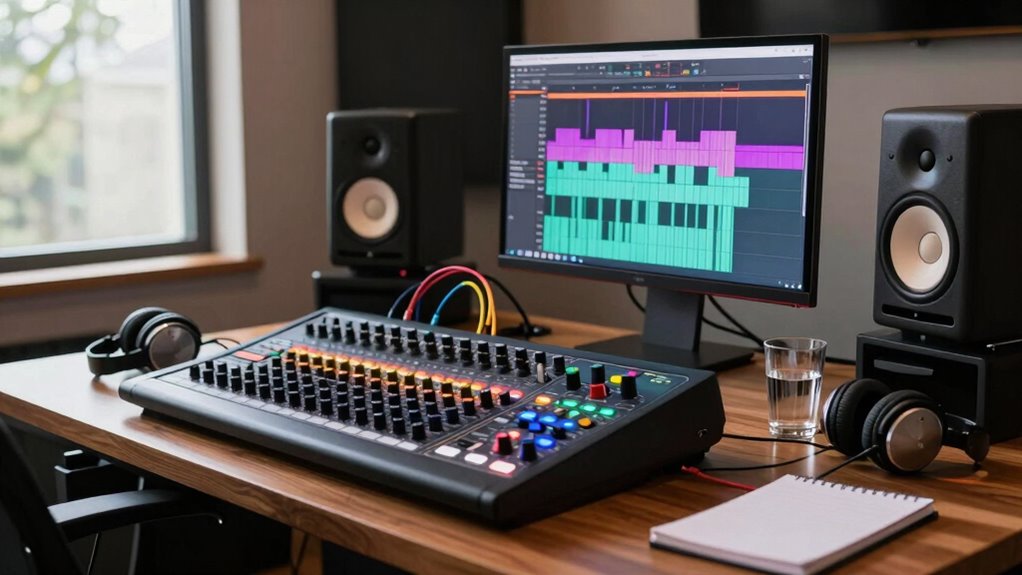

When your session hits a rough patch, use a quick 10-minute reset to regain control. Focus on a mental review of your key signatures, BPMs, and current tracks to match energy smoothly. Check your equipment and troubleshoot any technical issues, then prepare backup tracks to avoid scrambling. Stay calm, adjust your playlist strategically, and trust simple fixes over complicated overhauls. Keep going, and you’ll discover how to turn setbacks into seamless, engaging sets.

Get audio and creator gear delivered free with Prime
- Fast, free delivery on millions of items
- Prime Video, Amazon Music and more included
- Member-only deals all year
Key Takeaways
- Quickly review current track keys and BPMs to ensure smooth transitions and consistent energy.
- Prepare backup tracks and make small playlist adjustments to maintain flow during downtime.
- Upgrade or clean equipment to prevent technical issues and improve responsiveness.
- Stay calm, focused, and strategic, using brief pauses to reset and regain control of the set.
- Refresh your technical skills and signal flow knowledge for faster troubleshooting and adaptation.
When a DJ’s set starts to fall flat, it’s easy to feel stuck or overwhelmed, but just ten minutes can turn things around. Sometimes, the problem isn’t a lack of energy from the crowd but a disconnect in your mix that leaves everyone waiting for something better. During these moments, a quick reset focused on your skills and setup can be your best move. You don’t need to overhaul your entire collection or spend hours analyzing every track—sometimes, a simple shift in approach makes all the difference.
A quick reset can turn a flat set into an engaging experience—no extensive overhaul needed.
One of the most effective ways to refresh your mix quickly is to revisit your understanding of music theory. Even if you’re not classically trained, knowing basic concepts like key signatures, chord progressions, and tempo matching can drastically improve your transitions. When you’re able to identify compatible tracks on the fly, your mixes become smoother and more engaging. You might find that a quick mental review of your current tracks’ keys and BPMs helps you select the next song more confidently, avoiding abrupt or jarring changes that kill the vibe. This quick mental check can elevate your flow and keep the energy seamless, turning a sluggish session into a captivating experience.
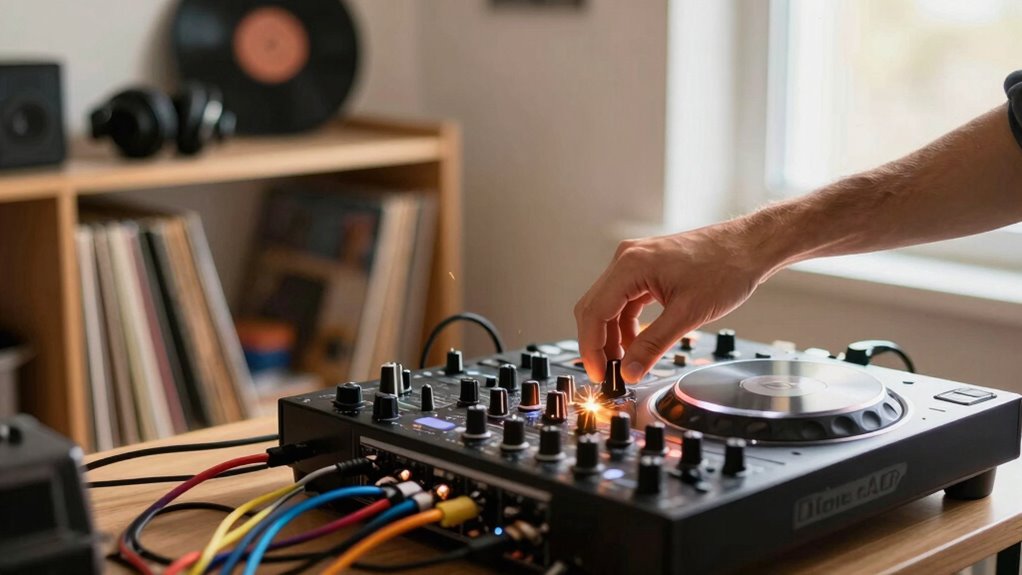
Alongside tuning into music theory, consider making small equipment upgrades that can instantly sharpen your performance. Upgrading your controller or mixer can improve responsiveness, giving you more precise control over effects, EQ, and crossfading. Sometimes, a simple clean of your equipment or replacing worn-out cables can eliminate audio issues that distract you and the crowd. Additionally, exploring new features or effects that your gear offers can introduce fresh elements into your set, inspiring spontaneous creativity. These upgrades don’t have to be expensive or extensive; even minor improvements can make a noticeable difference in how confidently you perform and how smoothly your transitions flow. Incorporating equipment maintenance into your routine can prevent unexpected issues during your set, ensuring a smoother performance. Furthermore, understanding and utilizing your gear’s fundamental features can help you troubleshoot and adapt quickly during live sessions. A quick review of your setup’s audio signal flow can also help identify potential issues before they affect your performance. Regularly practicing and refining your technical skills can also boost your confidence and responsiveness during live sets.
In just ten minutes, you can also adjust your playlist or prepare a few backup tracks that fit the current mood. This small step prevents you from scrambling at the worst moment, maintaining the energy without losing momentum. During this reset, focus on staying calm—and remind yourself that setbacks happen. By sharpening your music theory knowledge and making quick equipment tweaks, you’re giving yourself the tools to recover swiftly. The key is to keep it simple, stay present, and trust that a brief strategic pause can save your set. Remember, music theory knowledge can be the game-changer that elevates your DJ sessions from good to memorable. Before you know it, you’ll be back on track, delivering a dynamic, engaging performance that leaves the crowd wanting more.
DJ controller with responsive jog wheels
As an affiliate, we earn on qualifying purchases.
As an affiliate, we earn on qualifying purchases.
Frequently Asked Questions
Can the Mix Reset Technique Be Applied to All Music Genres?
Yes, you can apply the mix reset technique across various music genres, but you might need to adapt it with genre-specific techniques. For example, in electronic music, you could focus on creative remixing, while in rock, you might emphasize different instrument layers. The core idea is versatile, allowing you to refresh your session quickly, regardless of genre, helping you stay inspired and productive no matter what style you’re working on.
What Equipment Is Necessary to Perform a 10-Minute Mix Reset?
To perform a 10-minute mix reset, you mainly need an audio interface and headphones. The audio interface guarantees clear sound quality and allows you to connect your monitors or headphones easily. Your headphones are essential for accurate listening and detailed adjustments. No fancy equipment is necessary—just your computer, a DAW (Digital Audio Workstation), and these basic tools to quickly reset and refocus your mix during a session.
How Do I Know When a Session Needs a Reset?
You’ll know a session needs a reset when your music theory feels off, and your equipment setup causes more frustration than flow. If your passages sound awkward, beats don’t align, or the energy stalls despite effort, it’s time for a quick reset. Don’t ignore these signs—pause, analyze your setup, and realign your mix. Sometimes, a simple 10-minute reset can turn chaos into a seamless groove, saving the entire session.
Are There Any Risks of Disrupting the Flow With a Reset?
Resetting a session can temporarily disrupt your creative flow, but if done strategically, it enhances the listener experience without significant risks. You might feel a brief pause, but this allows you to refocus and improve the mix quality. By timing your reset well, you preserve the overall creative impact, ensuring your listeners enjoy a seamless, engaging experience. So, a reset, when done thoughtfully, actually strengthens your session’s effectiveness.
How Often Should I Perform a Mix Reset During a Session?
Picture your set as a flowing river, sometimes it needs a gentle nudge to stay clear. You should perform a mix reset every 15-20 minutes, especially when genre flexibility demands quick shifts or when equipment essentials like controllers and mixers start to feel off. This keeps your energy steady, prevents fatigue, and maintains a fresh vibe. Trust your intuition—if the flow feels sluggish, it’s time for a reset.
Conclusion
Just like a quick pit stop in a race, a 10-minute mix reset can turn your session from a crash to a smooth ride. Remember, even the best sailors adjust their sails when the winds shift—so don’t be afraid to recalibrate. When things go awry, take that brief moment to reset, and you’ll find yourself back on course, steering confidently toward success. Sometimes, a small pause is all you need to avoid a shipwreck.
Halloween Picks
halloween
As an affiliate, we earn on qualifying purchases.