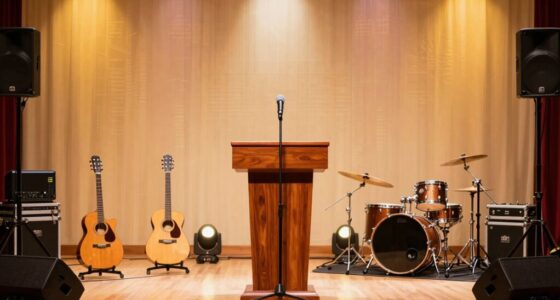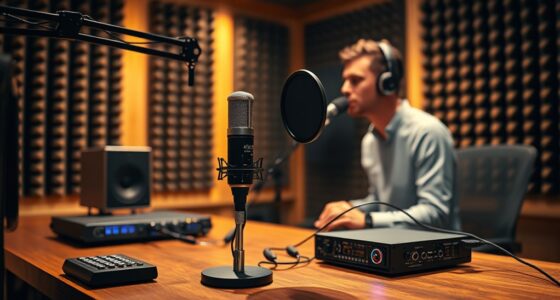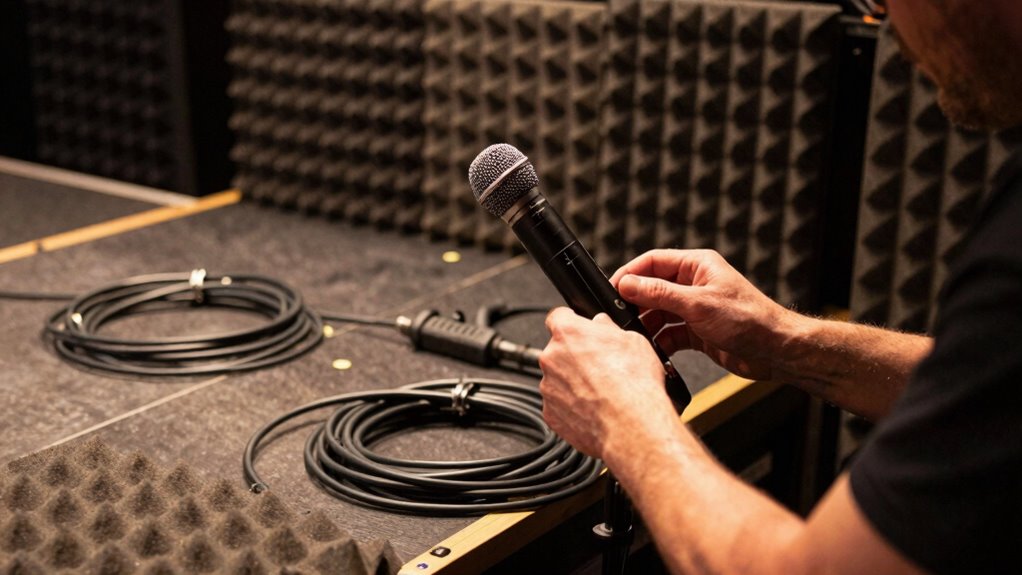

To reduce stage noise before it starts, start by evaluating the space thoroughly for noise sources like equipment and structural flaws. Use soundproof barriers, curtains, and acoustic panels to contain sound. Isolate noisy gear on vibration pads and maintain equipment regularly to minimize hums. Arrange sound-dampening surfaces and optimize acoustics with bass traps and diffusers. Finally, perform thorough sound checks to catch remaining issues early. Continuing with these steps will help you create a quiet, professional performance environment.

Get audio and creator gear delivered free — and shop member deals
- Fast, free delivery on millions of items
- Access to Prime Big Deal Days deals on October 6–7
- Prime Video, Amazon Music and more included
Key Takeaways
- Conduct thorough sound assessments to identify and address potential noise sources in the space.
- Isolate noisy equipment on vibration pads and perform regular maintenance to minimize vibrations and hums.
- Install soundproof barriers, curtains, or dividers to contain stage noise and prevent leakage.
- Use acoustic treatments like bass traps and diffusers to optimize room sound quality before the event.
- Perform comprehensive sound checks and make final adjustments to equipment and soundproofing measures.
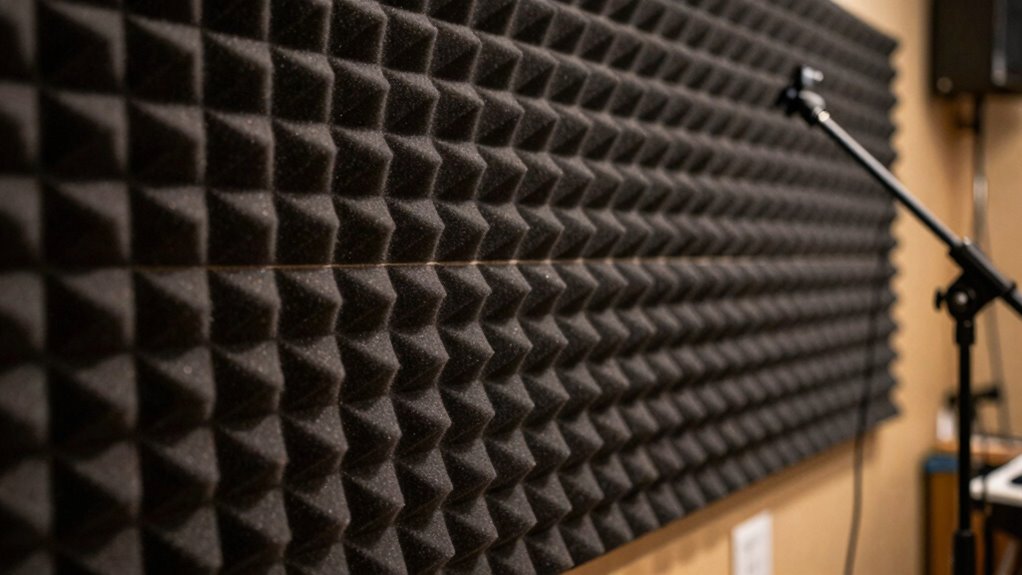
Before a performance begins, minimizing stage noise is essential to guarantee seamless shifts and a professional atmosphere. When you focus on soundproofing techniques and equipment noise control, you create an environment where performers can concentrate, and audiences stay engaged without distractions. The first step is to evaluate the space thoroughly, pinpointing sources of noise that could interfere with the show. Walls, floors, and ceilings are common culprits, and soundproofing these surfaces effectively can make a considerable difference. Use materials like mass-loaded vinyl, acoustic panels, or dense insulation to block and absorb unwanted sound waves. These soundproofing techniques help prevent noise from leaking into the performance area or escaping into adjacent spaces, confirming that everything stays contained and controlled. Incorporating proper soundproofing materials is crucial to achieving optimal noise reduction. Controlling equipment noise is equally critical. Stage gear, lighting rigs, and audio equipment often generate vibrations or hums that can disrupt the performance atmosphere. To manage this, consider isolating noisy equipment on vibration pads or mounting them on sound-dampening platforms. Regular maintenance also plays a role—loose parts and worn-out components tend to produce excessive noise. Upgrading to quieter models or adding mufflers and silencers to fans and motors can greatly reduce equipment noise control issues. Additionally, strategically positioning equipment away from microphones and main audience areas minimizes the chance of noise bleed. Using directional microphones and sound shields can further contain sound and prevent equipment noise from contaminating the audio feed. Good stage management includes establishing clear protocols for noise control. For example, instruct crew members to operate quietly during critical moments and avoid unnecessary movements that could generate sound. Installing soundproof curtains or booth dividers can help create a physical barrier between noisy backstage areas and the performance zone. These barriers not only serve as soundproofing tools but also help in visually segregating different parts of the stage, reducing distractions. Furthermore, using soundproofing techniques such as bass traps and diffusers can improve the overall acoustic quality of the space, ensuring that sound remains clear and controlled. It’s also beneficial to consider the room acoustics and how different surfaces can reflect or absorb sound, influencing the overall noise levels. To optimize the acoustic environment, conducting a comprehensive sound assessment prior to the event can identify potential problem areas. Finally, testing your setup before the actual performance is essential. Conduct sound checks, listen carefully for any residual noise, and make adjustments accordingly. The goal is to ensure that all soundproofing techniques and equipment noise control measures work harmoniously, providing a quiet, controlled environment. By paying attention to detail—using proper soundproofing methods and managing equipment carefully—you set the stage for a smooth, professional show, free from unexpected disruptions that could detract from the performance.
soundproof acoustic panels for stage
As an affiliate, we earn on qualifying purchases.
As an affiliate, we earn on qualifying purchases.
Frequently Asked Questions
What Are Common Sources of Stage Noise During Setup?
Common sources of stage noise during setup include equipment vibrations, airflow, and nearby traffic. To minimize these, you can add acoustic treatments around the stage area to absorb sound reflections. Installing soundproof barriers helps block external noise from interfering with your setup. Make sure to secure loose cables and equipment to prevent vibrations. These steps create a quieter environment, ensuring your performance starts smoothly without unexpected noise disruptions.
How Can I Identify Equipment Causing the Most Noise?
You can identify equipment causing the most noise by systematically testing each piece during setup, listening carefully for loud or unusual sounds. Regular equipment maintenance helps prevent unexpected noise issues, while soundproofing techniques like isolating noisy gear or installing barriers can pinpoint specific sources. By isolating and testing equipment individually, you’ll quickly spot the loudest offenders, allowing you to address them before the performance begins.
Are There Specific Materials That Absorb Stage Noise Effectively?
Imagine you’re wrapping the stage in a cozy blanket—soundproofing materials like dense foam panels, mass-loaded vinyl, and acoustic treatments absorb sound waves, reducing noise and echo. These materials trap and dampen sound, preventing it from bouncing around. Using a combination of soundproofing materials and acoustic treatments creates a quiet, controlled environment, making your performances clearer and more professional. You’ll notice the difference immediately.
What Safety Precautions Should I Take When Reducing Stage Noise?
When reducing stage noise, you should prioritize safety by wearing protective gear like earplugs or earmuffs to prevent hearing damage. Make certain that soundproof curtains and acoustic panels are securely installed to avoid accidents. Keep walkways clear of obstructions, and avoid blocking fire exits or emergency equipment. Regularly inspect equipment and materials for damage, and follow manufacturer instructions for installation. These precautions keep you safe while effectively minimizing noise.
How Does Stage Layout Influence Noise Levels?
Your stage layout considerably influences noise levels by affecting sound flow and absorption. Incorporate acoustic treatment like diffusers and absorbers to minimize reflections, and use soundproof barriers to contain loud sounds within specific areas. Position speakers strategically, avoiding direct lines to sensitive zones, and create buffer zones with barriers. These adjustments help control noise, ensuring a quieter environment and enhancing overall sound quality during performances.
Conclusion
By taking proactive steps like soundproofing, managing equipment, and controlling the environment, you can substantially reduce stage noise before it begins. Remember, isn’t it better to create a smooth, distraction-free performance rather than scrambling to fix issues mid-show? Visualize your perfect stage—quiet, focused, and professional. With these strategies, you’ll set the stage for success from the start, ensuring your audience stays engaged and your performance shines.
Fall Picks
fall essentials
As an affiliate, we earn on qualifying purchases.