Music production headphones need to balance useful detail with comfort and the right amount of sound isolation. My best overall pick is the Audio-Technica ATH-M40x, a versatile closed-back option for recording and everyday studio work; the beyerdynamic DT 770 Pro 80 Ohm stands out for isolation, while the open-back DT 990 Pro 250 Ohm suits listeners who prioritize spacious playback at a stationary setup. The main tradeoff is between closed-back headphones that help limit microphone bleed and open-back designs that leave sound less contained. Fit, impedance, cable setup, and how you plan to use your mixes also matter. Read on for the full breakdown of all 15 picks and the criteria behind their order.

Get audio and creator gear delivered free with Prime
- Fast, free delivery on millions of items
- Prime Video, Amazon Music and more included
- Member-only deals all year
Complete the kit


Key Takeaways
- The ATH-M40x earns the overall spot because its closed-back design and practical studio versatility make it a balanced choice across recording and listening tasks.
- Open-back listening is a specialized advantage, not a recording default: the DT 990 Pro models suit stationary playback, but their sound leakage makes them a poor fit for tracking near a microphone.
- The DT 770 Pro 80 Ohm favors isolation for recording and shared spaces, while its closed design makes it less suited to listeners seeking the open presentation of the DT 990 Pro.
- The ATH-M20x and ATH-M30x create a straightforward entry path into wired studio headphones; the M50x is the more flexible step up, while the M40x is the more balanced all-rounder in this lineup.
- Several picks serve overlapping budget and DJ-style use cases: the MAONO MH601, TASCAM TH-02, and OneOdio models are practical alternatives, but buyers should choose by fit, cable needs, and workflow rather than assume every studio label means the same thing.
| MAONO MH601 Wired Studio Headphones |  | Best Value for Flexible Studio Connections | Driver size: 50 mm | Design: Wired over-ear | Cable: Detachable, 9.8 ft spring cable | VIEW LATEST PRICE | See Our Full Breakdown |
| OneOdio A71D Wired Over-Ear DJ Headphones |  | Best for Basic DJ Cueing | Driver size: 40 mm | Impedance: 32 ohm | Sensitivity: 110 dB | VIEW LATEST PRICE | See Our Full Breakdown |
| OneOdio A71 Wired Over-Ear Studio Headphones |  | Best for Shared Listening | Driver type: 40 mm dynamic | Frequency response: 20 Hz–40,000 Hz | Impedance: 32 ohm | VIEW LATEST PRICE | See Our Full Breakdown |
| beyerdynamic DT 990 Pro 250 Ohm Open-Back Studio Headphones |  | Best for Open-Back Mixing | Design: Open-back, over-ear | Driver type: Dynamic | Impedance: 250 ohm | VIEW LATEST PRICE | See Our Full Breakdown |
| Audio-Technica ATH-M50x Professional Studio Monitor Headphones | 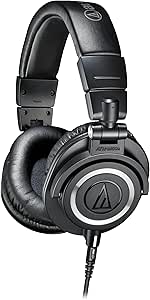 | Best Overall for Closed-Back Production | Driver size: 45 mm | Driver type: Dynamic | Frequency response: 20 Hz–28,000 Hz | VIEW LATEST PRICE | See Our Full Breakdown |
| Audio-Technica ATH-M20xWH Professional Studio Monitor Headphones, White |  | Best for Bass-Focused Tracking | Driver size: 40 mm | Driver type: Dynamic | Impedance: 47 ohms | VIEW LATEST PRICE | See Our Full Breakdown |
| TASCAM TH-02 Closed-Back Over-Ear Studio Headphones |  | Best for Portable Studio Sessions | Driver: 50 mm dynamic | Frequency response: 18 Hz–22 kHz | Impedance: 32 ohms | VIEW LATEST PRICE | See Our Full Breakdown |
| Audio-Technica ATH-M30x Professional Studio Monitor Headphones |  | Best for Midrange Clarity | Driver size: 40 mm | Driver type: Dynamic | Frequency response: 20 Hz–20,000 Hz | VIEW LATEST PRICE | See Our Full Breakdown |
| Sony MDR-7506 Professional Studio Headphones | 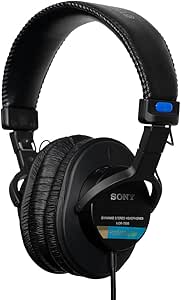 | Best for Studio and Broadcast Monitoring | Driver size: 40 mm | Frequency response: 10 Hz–20 kHz | Design: Closed-ear, over-ear, foldable | VIEW LATEST PRICE | See Our Full Breakdown |
| Audio-Technica ATH-M40x Professional Studio Monitor Headphones |  | Best for Accurate Monitoring | Driver size: 40 mm | Driver type: Dynamic | Frequency response: 15 Hz (upper limit not specified) | VIEW LATEST PRICE | See Our Full Breakdown |
| beyerdynamic DT 990 Pro X 48 Ohm Open-Back Studio Headphones | 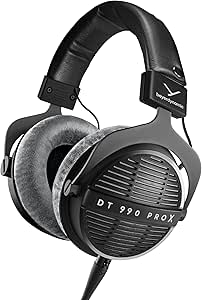 | Best for Open-Back Editing | Design: Open-back, over-ear | Driver: 45 mm dynamic STELLAR.45 | Impedance: 48 ohms | VIEW LATEST PRICE | See Our Full Breakdown |
| Audio-Technica ATH-M20x Professional Studio Monitor Headphones |  | Best for Entry-Level Tracking | Design: Closed-back, over-ear | Driver: 40 mm dynamic | Frequency response: 15–20,000 Hz | VIEW LATEST PRICE | See Our Full Breakdown |
| beyerdynamic DT 770 Pro 80 Ohm Closed-Back Studio Headphones |  | Best for Recording Isolation | Design: Closed-back, over-ear | Driver type: Dynamic | Impedance: 80 ohms | VIEW LATEST PRICE | See Our Full Breakdown |
| Sennheiser HD 280 Pro Wired Over-Ear Headphones |  | Best for Noise Attenuation | Design: Closed, around-the-ear | Transducer: Dynamic | Frequency response: 8–25,000 Hz | VIEW LATEST PRICE | See Our Full Breakdown |
| OneOdio Pro-10 Wired Over-Ear DJ Headphones, Black |  | Best for DJ-Style Single-Ear Monitoring | Type: Wired, over-ear | Driver size: 50 mm | Impedance: 32 ohms | VIEW LATEST PRICE | See Our Full Breakdown |
| music production headphone | Impedance | Sensitivity | Frequency response | Cable |
|---|---|---|---|---|
| MAONO MH601 Wired Studio Headp | — | — | — | Detachable, 9.8 ft spring cable |
| OneOdio A71D Wired Over-Ear DJ | 32 ohm | 110 dB | — | — |
| OneOdio A71 Wired Over-Ear Stu | 32 ohm | 110 dB | 20 Hz–40,000 Hz | Coiled, 6.6–9.8 ft |
| beyerdynamic DT 990 Pro 250 Oh | 250 ohm | 96 dB | 5 Hz–35,000 Hz | Fixed 3 m coiled cable |
| Audio-Technica ATH-M50x Profes | 38 ohm | 99 dB | 20 Hz–28,000 Hz | Detachable |
| Audio-Technica ATH-M20xWH Prof | 47 ohms | 96 dB | — | Single-side cable exit |
| TASCAM TH-02 Closed-Back Over- | 32 ohms | 98 dB | 18 Hz–22 kHz | Retractable |
| Audio-Technica ATH-M30x Profes | 38 ohms | 100 dB | 20 Hz–20,000 Hz | Single-sided |
| Sony MDR-7506 Professional Stu | — | — | 10 Hz–20 kHz | — |
| Audio-Technica ATH-M40x Profes | 35 ohms | 98 dB | 15 Hz (upper limit not specified) | — |
| beyerdynamic DT 990 Pro X 48 O | 48 ohms | 97 dB | 5 Hz (as listed) | Detachable 3 m mini-XLR |
| Audio-Technica ATH-M20x Profes | 47 ohms | 96 dB | 15–20,000 Hz | 3 m, single-side |
| beyerdynamic DT 770 Pro 80 Ohm | 80 ohms | 96 dB | 5 Hz (as listed) | 3 m straight, fixed |
| Sennheiser HD 280 Pro Wired Ov | — | — | 8–25,000 Hz | Coiled, 1–3 m |
| OneOdio Pro-10 Wired Over-Ear | 32 ohms | 110 dB | 40 kHz (as listed) | — |
More Details on Our Top Picks
MAONO MH601 Wired Studio Headphones
The MAONO MH601 is a practical pick for a home setup that moves between a computer, mixer, and other audio gear. Its included cable supports both 3.5 mm and 6.35 mm connections, so you can plug into common consumer devices or studio equipment without relying on a separate adapter. The 50 mm drivers and 90° swiveling cups suit general monitoring and one-ear cueing, while the foldable design is easier to store than the beyerdynamic DT 990 Pro.
The tradeoff is a straightforward passive wired design: there is no built-in microphone, battery, or wireless option, and the cable still ties you to your source. I’d choose the MH601 for connection flexibility; the Audio-Technica ATH-M50x is the stronger alternative for buyers who specifically want sound isolation and a detachable cable.
Pros:- 50 mm drivers suit general studio monitoring.
- Cable supports both 3.5 mm and 6.35 mm connections.
- 90° swiveling cups allow single-ear monitoring.
- Foldable construction helps with storage and transport.
Cons:- Passive wired operation requires a connected audio source.
- No built-in microphone for calls or voice recording.
- Closed-back isolation and sound characteristics are not specified in the supplied data.
Best for: Home producers who switch between a computer, mixer, and other gear with different headphone jack sizes.
Not ideal for: Producers who need wireless listening, a headset microphone, or an open-back soundstage for judging spacious mixes.
- Driver size:50 mm
- Design:Wired over-ear
- Cable:Detachable, 9.8 ft spring cable
- Connectivity:3.5 mm and 6.35 mm
- Ear cup swivel:90°
- Foldable:Yes
- Weight:14.08 ounces
- Built-in microphone:No
Our verdict“Choose the MH601 if you want a flexible wired studio pair with both common connector sizes included.”
OneOdio A71D Wired Over-Ear DJ Headphones
The OneOdio A71D makes the most sense for producers who also cue tracks or monitor one ear at a time. Its 90° swiveling ear cups support that workflow, and the foldable frame is convenient when the headphones need to travel between a desk and a rehearsal space. A 3.5 mm-to-6.35 mm adapter covers common connections to laptops, controllers, and studio gear.
Compared with the MAONO MH601, the A71D has a shorter 7.2 ft cable and a non-detachable connection, which makes cable replacement less convenient. Its 40 mm drivers are smaller than the MH601’s 50 mm units, though driver size alone does not determine monitoring accuracy. Choose this model for basic cueing and portability, not for a removable-cable setup or a specifically documented mixing response.
Pros:- 90° swiveling cups support single-ear monitoring.
- Included adapter connects the 3.5 mm plug to 6.35 mm equipment.
- Foldable design is convenient for carrying and storage.
- Padded ear cups and adjustable headband provide a configurable fit.
Cons:- Non-detachable cable cannot be easily replaced if damaged.
- The 7.2 ft cable offers less reach than the MAONO MH601’s 9.8 ft cable.
- Supplied description does not establish a reference-oriented tuning for critical mixing.
Best for: Beginning DJs and home producers who want foldable wired headphones with single-ear monitoring and broad jack compatibility.
Not ideal for: Studio users who need a detachable cable for replacement, longer reach, or a headphone response documented for critical mixing.
- Driver size:40 mm
- Impedance:32 ohm
- Sensitivity:110 dB
- Cable length:2.2 m (7.2 ft)
- Connectivity:Wired 3.5 mm jack; 3.5 mm-to-6.35 mm adapter included
- Ear cup swivel:90°
- Weight:0.34 kg
- Warranty:1 year
Our verdict“Pick the A71D for portable cueing and basic studio use if a fixed cable is acceptable.”
OneOdio A71 Wired Over-Ear Studio Headphones
The OneOdio A71 has a useful extra for collaborative production: an audio-sharing port that lets another pair connect, making it easier for a collaborator to follow playback without a separate splitter. Its coiled cable stretches from 6.6 to 9.8 ft and includes both 3.5 mm and 6.35 mm plugs, a versatile arrangement for moving between a computer and studio equipment. The 90° swiveling cups also make one-ear cueing possible.
Against the A71D, the A71’s listed frequency response runs from 20 Hz to 40,000 Hz, and its included coiled cable is specified with a longer maximum reach. Both remain wired, and neither supplied description lists active noise cancellation. The sharing port is the main reason to choose this model; solo producers may prefer the MAONO MH601’s detachable cable instead.
Pros:- Audio-sharing port allows another pair of headphones to connect.
- Coiled cable extends from 6.6 to 9.8 ft.
- 3.5 mm and 6.35 mm plugs support common audio connections.
- 90° swiveling earcups support one-ear monitoring.
Cons:- Wired operation limits movement around the studio.
- Cable is not listed as detachable.
- Active noise cancellation is not listed.
Best for: Collaborative home producers who want a second listener to monitor playback and need both common connector sizes.
Not ideal for: Producers seeking a detachable cable, wireless freedom, or documented active noise cancellation.
- Driver type:40 mm dynamic
- Frequency response:20 Hz–40,000 Hz
- Impedance:32 ohm
- Sensitivity:110 dB
- Cable:Coiled, 6.6–9.8 ft
- Connectors:3.5 mm and 6.35 mm
- Monitoring:90° swiveling earcups
- Extra connection:Audio-sharing port
Our verdict“Choose the A71 when shared playback matters more than a removable cable or wireless convenience.”
beyerdynamic DT 990 Pro 250 Ohm Open-Back Studio Headphones
For a producer who wants to hear a broad stereo presentation while working at a quiet desk, the beyerdynamic DT 990 Pro stands apart from the closed, practical OneOdio A71D. Its open-back design and wide stereo image are aimed at mixing and mastering decisions where spacious playback matters more than isolation. Replaceable velour ear pads and an 8.8-ounce listed weight also suit longer sessions.
The central limitation is its 250-ohm impedance: a headphone amplifier or capable audio interface is the better match, unlike the 32-ohm OneOdio models. Open backs also leak sound in both directions, so they are a poor fit for recording near a microphone or working around others. I’d select the DT 990 Pro for a quiet, properly equipped mix room, not as an all-purpose or travel pair.
Pros:- Open-back construction provides a wide stereo image for mix work.
- Replaceable velour ear pads support long studio sessions.
- Includes a 3 m coiled cable and 6.35 mm connection option.
- Listed weight is 8.8 ounces.
Cons:- 250-ohm impedance benefits from a headphone amplifier or audio interface.
- Open-back sound leaks to nearby people and does not isolate the listener.
- Fixed coiled cable is less convenient to replace than the detachable cable on the ATH-M50x.
Best for: Mixers and mastering-focused producers with a headphone amp or audio interface who work in a quiet room.
Not ideal for: Vocalists recording beside a microphone, producers in shared spaces, or laptop users without a suitable headphone output.
- Design:Open-back, over-ear
- Driver type:Dynamic
- Impedance:250 ohm
- Frequency response:5 Hz–35,000 Hz
- Sensitivity:96 dB
- Cable:Fixed 3 m coiled cable
- Ear pads:Replaceable velour
- Weight:8.8 ounces
Our verdict“Choose the DT 990 Pro for open-back mixing in a quiet room with an audio source suited to its 250-ohm impedance.”
Audio-Technica ATH-M50x Professional Studio Monitor Headphones
The Audio-Technica ATH-M50x is the most adaptable closed-back choice in this group for producers who record and mix in the same room. Its sound-isolating earcups help limit outside noise and headphone spill, while the 90° swiveling cups allow one-ear monitoring. Compared with the open-back beyerdynamic DT 990 Pro, the ATH-M50x is better suited to tracking near a microphone and working in shared spaces; it also has a more accessible 38-ohm impedance.
The tradeoff is that isolation comes without the DT 990 Pro’s open-back presentation. The ATH-M50x’s detachable cable helps with replacement and setup changes, but the supplied specifications do not list its cable length or identify multiple included cables. It is the strongest all-rounder here for mixed production tasks, though buyers focused on open stereo listening should choose the beyerdynamic instead.
Pros:- Sound-isolating over-ear design suits tracking and shared rooms.
- Detachable cable is easier to replace or adapt to a setup.
- 90° swiveling earcups support one-ear monitoring.
- 38-ohm impedance suits a wider range of headphone outputs than the DT 990 Pro’s 250 ohms.
Cons:- Closed-back isolation does not provide the open presentation of the DT 990 Pro.
- Not water resistant.
- Supplied specifications do not state cable length or included cable options.
Best for: Home producers who record vocals or instruments and need one pair for tracking, monitoring, and general mixing.
Not ideal for: Mixers whose main priority is an open-back stereo presentation or producers who need water resistance.
- Driver size:45 mm
- Driver type:Dynamic
- Frequency response:20 Hz–28,000 Hz
- Impedance:38 ohm
- Sensitivity:99 dB
- Ear placement:Over-ear
- Cable:Detachable
- Noise control:Sound isolation
- Warranty:2 years on parts and labor
Our verdict“Choose the ATH-M50x if you need a versatile, isolating production headphone for both tracking and everyday studio monitoring.”
Audio-Technica ATH-M20xWH Professional Studio Monitor Headphones, White
The ATH-M20xWH suits home producers who want closed-back isolation and a little extra low-frequency emphasis while recording. Its 40 mm drivers are tuned for enhanced bass, which can make kick and bass parts easier to follow during tracking, though that emphasis is less neutral for final mix decisions than the ATH-M30x, whose clear midrange is better suited to judging vocal and instrument balance. The circumaural earcups help limit sound spill into a microphone, and the single-side cable keeps the lead out of the way during sessions. At 261 g, it is a practical wired option, but it lacks the foldable design and detachable cables found on some alternatives. I’d choose it for monitoring and recording, not as my only reference for precise tonal balance.
Pros:- 40 mm drivers tuned for enhanced low-frequency performance
- Circumaural design helps isolate sound during recording
- Single-side cable exit reduces cable clutter around the listener
- 261 g weight suits extended studio sessions
Cons:- Bass emphasis can make tonal balance decisions less dependable
- Wired-only connection limits movement
- Not water resistant
Best for: Home producers recording vocals or instruments who want closed-back isolation and extra bass presence in a straightforward wired headset.
Not ideal for: Mix engineers seeking a more neutral midrange reference, or musicians who need wireless listening or detachable cables.
- Driver size:40 mm
- Driver type:Dynamic
- Impedance:47 ohms
- Sensitivity:96 dB
- Design:Over-ear
- Connectivity:Wired, 3.5 mm jack
- Cable:Single-side cable exit
- Weight:261 g
- Warranty:2 years
Our verdict“Choose the ATH-M20xWH for isolated tracking with pronounced bass; pick the ATH-M30x if clearer midrange monitoring matters more.”
TASCAM TH-02 Closed-Back Over-Ear Studio Headphones
The TASCAM TH-02 is a sensible pick for producers who move between a home setup, rehearsal space, and recording sessions. Its foldable frame packs down more conveniently than the non-folding ATH-M20xWH, while the included 3.5 mm-to-6.3 mm adapter lets it connect to common headphone outputs on interfaces and mixers. Closed-back construction helps contain playback around microphones, and the 50 mm dynamic drivers are described as offering rich bass and crisp highs. That lively presentation can make casual monitoring enjoyable, but it gives less reason to favor it for neutral mix judgments than the ATH-M40x, which is specified for flat, accurate monitoring. The retractable cable is handy, yet the headphones remain wired, and the listed 0.3 kg weight may feel substantial during long sessions.
Pros:- Foldable design makes transport and storage easier
- Includes a 3.5 mm to 6.3 mm adapter for studio equipment
- Closed-back construction helps limit sound leakage
- Padded headband and ear pads support extended wear
Cons:- Rich bass and crisp highs may be less useful for neutral mix decisions
- Wired connection restricts movement
- Listed weight of 0.3 kg may feel heavy during long sessions
Best for: Mobile producers and recording musicians who need foldable closed-back headphones that can connect to both standard and quarter-inch outputs.
Not ideal for: Mixers prioritizing a flat monitoring presentation or listeners who want a lighter headset for lengthy sessions.
- Driver:50 mm dynamic
- Frequency response:18 Hz–22 kHz
- Impedance:32 ohms
- Sensitivity:98 dB
- Design:Wired, closed-back over-ear
- Connector:3.5 mm jack
- Adapter:3.5 mm to 6.3 mm
- Cable:Retractable
- Weight:0.3 kg
Our verdict“Pick the TH-02 for a foldable, adapter-ready recording headset; choose the ATH-M40x when accurate monitoring takes priority.”
Audio-Technica ATH-M30x Professional Studio Monitor Headphones
For producers who need to hear what is happening around vocals, guitars, and other midrange-heavy parts, the ATH-M30x offers a more focused case than the bass-emphasized ATH-M20xWH. Its 40 mm drivers are described as detailed with clear midrange, making it a practical choice for editing and tracking where intelligibility matters. Circumaural earcups provide passive sound isolation, while the collapsible design helps it travel between a desk and a session. Compared with the ATH-M40x, it does not list the same flat-tuning claim or swiveling earcups for one-ear monitoring, so it is less adaptable for DJ-style cueing and detailed mixing workflows. The single-sided wired cable also limits movement, and there is no active noise cancellation; isolation comes from the earcups rather than electronic processing.
Pros:- 40 mm drivers tuned for detailed sound and clear midrange
- Circumaural earcups provide passive sound isolation
- Collapsible design helps with storage and transport
- Single-sided cable suits studio tracking
Cons:- Wired cable can restrict movement around a studio
- No active noise cancellation
- Does not list the ATH-M40x’s swiveling earcups for one-ear monitoring
Best for: Vocal producers, podcasters, and home-studio editors who want clear midrange monitoring with passive isolation and a collapsible frame.
Not ideal for: DJs who need swiveling earcups, or mix engineers seeking the stronger accuracy-oriented feature set of the ATH-M40x.
- Driver size:40 mm
- Driver type:Dynamic
- Frequency response:20 Hz–20,000 Hz
- Impedance:38 ohms
- Sensitivity:100 dB
- Noise control:Passive noise cancellation
- Cable:Single-sided
- Design:Collapsible over-ear
- Warranty:2 years on parts and labor
Our verdict“Choose the ATH-M30x for midrange-focused tracking and editing; step up to the ATH-M40x for flat-tuning claims and one-ear monitoring.”
Sony MDR-7506 Professional Studio Headphones
The Sony MDR-7506 makes the most sense for producers who also work in broadcast, video, or location audio and want a closed-ear design that folds for storage. Its 9.8-foot cord gives room to move around a workstation, and the included soft case and quarter-inch adapter make it ready for different studio setups. The listed 10 Hz–20 kHz response and 40 mm drivers provide useful monitoring specifications, but the product data does not claim flat tuning; for explicitly accuracy-focused production, the ATH-M40x is a clearer fit. A non-detachable cord is the main limitation: damage or wear means the cable cannot be swapped as readily as the ATH-M40x’s included detachable leads. This is a work-oriented wired option, not a choice for anyone who needs compact cable management or wireless freedom.
Pros:- Closed-ear design helps reduce external noise
- Foldable construction supports storage and travel
- Includes a soft case and 1/4-inch adapter
- 9.8-foot cord gives reach around a production workspace
Cons:- Non-detachable cord cannot be replaced with a spare cable
- Long wired cord can be awkward in compact setups
- Flat tuning is not specified, unlike the ATH-M40x
Best for: Producers and editors who split time between music monitoring, broadcast, and video work and value a long cord with included studio accessories.
Not ideal for: Users who need replaceable cables, a short tidy lead, or a product explicitly specified for flat mix monitoring.
- Driver size:40 mm
- Frequency response:10 Hz–20 kHz
- Design:Closed-ear, over-ear, foldable
- Connectivity:Wired
- Cord length:9.8 ft
- Cord:Non-detachable OFC cord
- Plug:Gold-plated plug; 1/4-inch adapter included
- Item weight:8 oz
- Included accessories:Soft case and Unimatch plug
Our verdict“Choose the MDR-7506 for versatile studio and broadcast monitoring with useful included accessories; choose the ATH-M40x for detachable cables and an explicit flat-monitoring focus.”
Audio-Technica ATH-M40x Professional Studio Monitor Headphones
The ATH-M40x is the strongest fit here for producers who want a headphone built around monitoring decisions rather than a more emphasized listening character. Its flat-tuning claim and sound-isolating circumaural earcups support tracking and mix work, while 90-degree swiveling earcups allow one-ear monitoring without removing the headphones. That makes it more flexible for cueing than the ATH-M30x, which instead emphasizes clear midrange and a collapsible design. The M40x also folds and includes both coiled and straight detachable cables, so users can match cable length to the session and replace a lead if needed. Its published frequency response is incomplete, listing only 15 Hz, which limits spec-to-spec comparison. It is still wired, and the available data does not list wireless use.
Pros:- Flat-tuning claim supports accurate monitoring decisions
- Circumaural earcups provide sound isolation
- 90-degree swiveling earcups enable one-ear monitoring
- Foldable design and two detachable cable options add session flexibility
Cons:- Wired-only connectivity limits movement
- Published frequency response is incomplete, listing only 15 Hz
- Extra cable options may be unnecessary for simple fixed-desk setups
Best for: Home-studio producers and tracking engineers who want a wired monitoring headphone with swappable cables and one-ear cueing flexibility.
Not ideal for: Wireless listeners or buyers who need a complete frequency-response specification before comparing monitoring headphones.
- Driver size:40 mm
- Driver type:Dynamic
- Frequency response:15 Hz (upper limit not specified)
- Impedance:35 ohms
- Sensitivity:98 dB
- Ear placement:Over-ear, circumaural
- Included cables:1.2–3.0 m coiled cable and 3.0 m straight cable
- Weight:0.24 kg
- Warranty:2 years on parts and labor
Our verdict“Choose the ATH-M40x for adaptable, accuracy-focused studio monitoring; the ATH-M30x is a simpler alternative if clear midrange and portability are the priorities.”
beyerdynamic DT 990 Pro X 48 Ohm Open-Back Studio Headphones
The DT 990 Pro X is the open-back choice here for producers who value an airy presentation while editing, balancing, or checking stereo placement in a quiet room. Its 48-ohm impedance is easier to drive from common sources than the 250-ohm DT 990 Pro, and the detachable cable is more convenient to replace than the fixed lead on the DT 770 Pro. The open construction gives sound a spacious feel, but it also leaks audio both ways: it is a poor fit for recording near a live microphone or working around other people. Velour pads and a 10.3-ounce build support longer sessions, though this is not an isolation-first headphone. I’d choose it over the closed-back ATH-M20x when mixing space matters more than keeping sound contained.
Pros:- Open-back design creates a wide, natural soundstage for monitoring
- 48-ohm impedance suits many interfaces and everyday audio sources
- Detachable 3 m mini-XLR cable is easier to replace than a fixed cable
- Velour ear pads support comfortable extended sessions
Cons:- Open cups leak sound and provide little isolation
- Not water resistant
- Less suitable for tracking than closed-back options such as the DT 770 Pro
Best for: Producers mixing or editing in a quiet home studio who want an open presentation and a headphone that does not demand a high-output amp.
Not ideal for: Vocalists recording beside a microphone, shared-room producers, or anyone who needs sound isolation.
- Design:Open-back, over-ear
- Driver:45 mm dynamic STELLAR.45
- Impedance:48 ohms
- Sensitivity:97 dB
- Frequency response:5 Hz (as listed)
- Cable:Detachable 3 m mini-XLR
- Connectors:3.5 mm and 6.35 mm
- Weight:10.3 oz
- Ear pads:Velour
Our verdict“Choose the DT 990 Pro X for quiet-room production and spacious monitoring, but pick a closed-back model if you record vocals or need isolation.”
Audio-Technica ATH-M20x Professional Studio Monitor Headphones
The ATH-M20x is a straightforward closed-back pick for new producers who need to track and monitor without sound escaping into a microphone. Its passive earcup isolation makes it more practical for recording than the open-back DT 990 Pro X, while the 47-ohm impedance is a manageable match for many interfaces. The 40 mm drivers are tuned for enhanced low-frequency performance, which can help when following bass-heavy material, but that emphasis is less neutral than a dedicated reference choice such as the Sennheiser HD 280 Pro. A durable build and contoured earcups suit routine studio sessions; the tradeoff is a fixed 3 m cable, which can feel cumbersome at a desk and cannot be swapped if damaged. I’d favor it as a basic tracking tool, not as my only judge of final tonal balance.
Pros:- Closed-back cups help limit headphone bleed during recording
- 40 mm drivers have enhanced low-frequency performance
- 47-ohm impedance works with many studio interfaces
- Contoured earcups provide passive sound isolation
Cons:- Fixed 3 m cable limits movement and is not user-replaceable
- Bass-focused tuning may be less useful for neutral mix decisions
- Passive isolation does not actively cancel room noise
Best for: New home-studio producers who need closed-back headphones for recording vocals or instruments and monitoring from an interface.
Not ideal for: Mixers seeking the most neutral tonal reference, or anyone who wants a detachable cable or wireless freedom.
- Design:Closed-back, over-ear
- Driver:40 mm dynamic
- Frequency response:15–20,000 Hz
- Impedance:47 ohms
- Sensitivity:96 dB
- Cable:3 m, single-side
- Noise control:Passive sound isolation
- Warranty:2 years on parts and labor
Our verdict“Pick the ATH-M20x for accessible closed-back tracking, but choose the HD 280 Pro if neutral monitoring is your higher priority.”
beyerdynamic DT 770 Pro 80 Ohm Closed-Back Studio Headphones
For recording sessions where headphone spill can reach a microphone, the DT 770 Pro offers a more suitable closed-back design than the open DT 990 Pro X. Its over-ear cups and replaceable velour pads make it a practical fit for monitoring and podcast work, while the 80-ohm load can perform well from an interface or headphone amp. That impedance is less forgiving than the ATH-M20x’s 47 ohms, so a weak laptop output may not give the same headroom. The 3 m cable is long enough for a studio setup, but it is fixed, unlike the DT 990 Pro X’s detachable lead. I’d put this ahead of the M20x for a more established recording station, while recognizing that the cable and amp demands make it less convenient as an all-purpose portable pair.
Pros:- Closed-back construction helps reduce sound spill during recording
- Replaceable velour ear pads support long-term upkeep
- Includes a 3 m cable and 6.35 mm adapter
- Over-ear design suits extended monitoring sessions
Cons:- Fixed cable cannot be replaced independently
- 80-ohm impedance may benefit from a headphone amp
- Closed-back presentation is less spacious than the DT 990 Pro X
Best for: Home-studio vocalists, instrumentalists, and podcasters who need closed-back monitoring and have an interface or headphone amp.
Not ideal for: Producers wanting a detachable cable, a compact travel pair, or easy operation from a low-output device.
- Design:Closed-back, over-ear
- Driver type:Dynamic
- Impedance:80 ohms
- Sensitivity:96 dB
- Frequency response:5 Hz (as listed)
- Cable:3 m straight, fixed
- Connectors:3.5 mm with 6.35 mm adapter
- Weight:9.5 oz
- Ear pads:Replaceable velour
Our verdict“Choose the DT 770 Pro for isolated recording and monitoring from a capable studio source, not for users who need a detachable cable or easy portability.”
Sennheiser HD 280 Pro Wired Over-Ear Headphones
The HD 280 Pro is the strongest fit here when external noise and headphone spill are central concerns: its closed cups offer up to 32 dB of ambient noise attenuation. That makes it more practical for tracking in a noisy room than the open DT 990 Pro X, and its stated 8–25,000 Hz response gives it a clear monitoring-oriented brief. Foldable, rotating earcups are useful for storage, while replaceable cable and pads make wear parts easier to service than on the ATH-M20x. The coiled cable can keep slack off the floor, but its pull and reach may bother producers who move around a desk. At 64 ohms, it also sits between the easier-to-drive M20x and the 80-ohm DT 770 Pro. I’d favor it for isolation and utility over cable simplicity.
Pros:- Up to 32 dB of ambient noise attenuation
- Closed design suits tracking and monitoring
- Foldable, rotating earcups make storage and transport easier
- Replaceable cable and earpads support maintenance
Cons:- Coiled cable can tug or feel restrictive during desk work
- Wired connection limits movement
- 64-ohm impedance may need more drive than lower-impedance options
Best for: Producers tracking in noisy spaces who want substantial passive attenuation, serviceable parts, and a headphone that folds for transport.
Not ideal for: People who dislike coiled cables or want the spacious, open presentation of the DT 990 Pro X.
- Design:Closed, around-the-ear
- Transducer:Dynamic
- Frequency response:8–25,000 Hz
- Noise attenuation:Up to 32 dB
- Nominal impedance:64 ohms
- Cable:Coiled, 1–3 m
- Connectors:3.5 mm and 6.3 mm stereo plugs
- Weight:7.8 oz (220 g)
- Total harmonic distortion:0.1%
Our verdict“Pick the HD 280 Pro when noise attenuation and replaceable parts matter more than a straight, lightweight cable.”
OneOdio Pro-10 Wired Over-Ear DJ Headphones, Black
The OneOdio Pro-10 is the most DJ-oriented option in this group: its 90-degree swiveling earcups support single-ear cueing, a feature the studio-focused DT 770 Pro and ATH-M20x do not offer. The 32-ohm impedance and 3.5 mm/6.35 mm jack compatibility make it easy to connect to a broad range of wired gear, while the shared-audio port can let another listener monitor alongside you. Its 50 mm drivers are described as delivering bass, clear vocals, and crisp highs, but that broad tuning brief is not the same as a stated neutral reference target. At 415 g, it is also heavier than the 7.8-ounce HD 280 Pro. I’d choose it for beatmaking or DJ workflows that use cue monitoring, not as my first pick for long, precision-focused mixing sessions.
Pros:- 90-degree swiveling cups support single-ear monitoring
- 32-ohm impedance and dual jack compatibility suit many wired sources
- 50 mm drivers are designed for bass, vocals, and high-frequency detail
- Shared-audio port allows connection to another pair
Cons:- At 415 g, it is heavier than the HD 280 Pro
- Wired-only design limits movement
- DJ-focused features do not make it the clearest choice for neutral mix checking
Best for: Bedroom DJs and beatmakers who need swiveling cups for one-ear cueing and compatibility with both 3.5 mm and 6.35 mm outputs.
Not ideal for: Mix engineers prioritizing neutral reference monitoring, or listeners seeking a light headset for long sessions.
- Type:Wired, over-ear
- Driver size:50 mm
- Impedance:32 ohms
- Frequency response:40 kHz (as listed)
- Sensitivity:110 dB
- Connectors:3.5 mm and 6.35 mm audio jacks
- Earcup rotation:90 degrees
- Weight:415 g
- Included items:Headphones, protective case, user manual
Our verdict“Choose the Pro-10 for DJ cueing and flexible wired connections, but opt for the HD 280 Pro or DT 770 Pro for studio tracking priorities.”
How We Picked
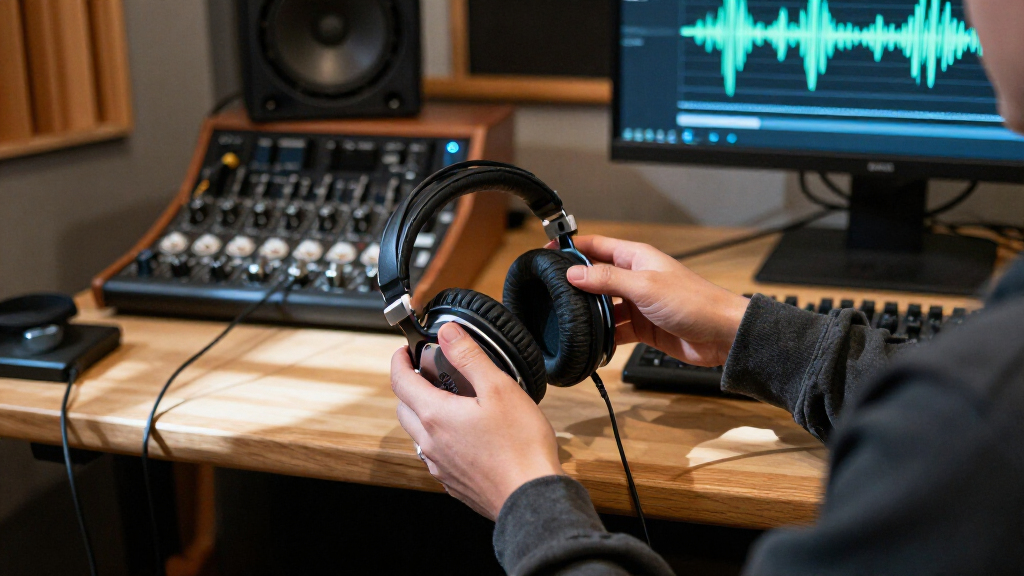
I ranked these headphones by how well their design matches real production tasks: tracking vocals and instruments, monitoring during recording, editing, and checking mixes. Isolation and sound leakage matter most when a microphone is nearby; for playback away from a mic, comfort and a presentation that helps reveal mix decisions carry more weight. I also considered impedance and whether a model is a sensible match for common interfaces and portable sources, alongside cable practicality, foldability, and replaceable or serviceable parts where applicable.
The ranking favors versatility for studio work over a single standout trait. That puts the ATH-M40x ahead as a balanced closed-back pick, while the DT 770 Pro earns a distinct place for isolation and the DT 990 Pro models are ranked for open-back listening rather than universal recording use. Entry-level and DJ-oriented options remain useful for specific budgets and workflows, but they rank lower when the lineup offers a more capable fit for broader production duties. No headphone makes every mix translate on its own, so the guide also weighs how each option fits into a monitoring setup.
Factors to Consider When Choosing Music Production Headphones
Choosing headphones for production is less about finding one model that does everything and more about matching its design to your room, source, and workflow. These factors can help prevent a common mismatch: buying a headphone that sounds appealing but makes recording or mix decisions harder.
Match open-back or closed-back design to the task
Closed-back headphones contain more sound, which helps reduce headphone bleed into a vocal or instrument microphone and can make them practical in shared spaces. Open-back models let sound escape and admit outside noise, so they are usually a poor choice for close-mic tracking. Their less-contained presentation can suit stationary editing and playback, but it does not automatically make mixes more accurate. A common mistake is buying open-back headphones for every studio task because they feel airy during listening. If you record and mix on one pair, closed-back designs are the safer starting point; if you already have tracking headphones, open-back can be a complementary second option.
Check impedance against your actual headphone output
Impedance is a system-matching detail, not a direct measure of sound quality. Higher-impedance models may need more voltage from the headphone output to reach a comfortable listening level, while lower-impedance designs are often easier to drive from laptops and portable devices. The source matters as much as the headphone: an audio interface with a capable headphone amp may handle a higher-impedance pair well, while a modest output can leave it quieter than expected. Do not choose by impedance alone or assume a studio interface can drive every model equally. Check the output specifications of the device you will use most, and leave headroom rather than turning the level up to its limit.
Treat tonal balance as a tool, not a guarantee
Headphones can reveal detail while still presenting frequency balance differently from speakers or other headphones. A strong bass or treble emphasis may make some sounds easier to notice but can also encourage mix choices that do not translate. Before making major equalization decisions, compare familiar tracks and check your work on another playback system. Avoid assuming that a model described as a monitor headphone is automatically neutral for your ears, fit, and room. Learning the sound of one pair over time is useful, but it works best when paired with reference listening and level discipline.
Prioritize comfort for the length of your sessions
Fit affects both comfort and consistent listening: pressure, heat, and a poor seal can make long editing sessions tiring or change perceived bass. Headband shape, earcup depth, clamping force, and pad material all matter, and product specifications cannot fully predict how a headphone will fit an individual. Glasses wearers should pay particular attention to clamp and pad compression, which can create pressure points. A foldable design is convenient for transport, but portability should not outweigh a secure, comfortable fit at your desk. If possible, check return terms before buying, since comfort is personal and difficult to judge from a feature list.
Plan cables, adapters, and replacement parts around your setup
Cable design can affect daily studio workflow more than it first appears. A detachable cable is convenient if it gets damaged or if you need a different length, while a fixed cable can be simpler but harder to replace. Coiled cables offer reach without excess slack, though their weight and pull may bother some users; straight cables are lighter but can trail across a desk. Check whether the package includes the plug adapter your interface needs and whether the cable can reach your chair without tension. For long-term ownership, replacement pads and service options can matter more than a small feature difference between models.
Spend for the limitation you need to solve
Paying more makes sense when it solves a real workflow problem, such as needing stronger isolation, a particular fit, a detachable cable, or a second open-back reference. A higher price or premium label does not guarantee better translation, and no headphone eliminates the need to check mixes elsewhere. Beginners often gain more from learning a consistent pair and keeping a reference playlist than from buying several overlapping models. If you record vocals, prioritize containment and comfort; if you mainly edit in a quiet room, listening preference and fit may matter more. Choose the least complicated option that supports your actual sessions, then add another monitoring style only when you can identify a specific gap.
Frequently Asked Questions
Can I use open-back headphones to record vocals?
You can, but sound escaping from open-back earcups may reach a sensitive microphone and appear in the recording. How noticeable it is depends on headphone level, mic placement, and the room, so a careful setup can reduce the problem without removing the risk. For close vocal tracking, a closed-back model is usually the more dependable choice. Open-back headphones make more sense for editing or playback when microphone bleed is not a concern. If you want both uses, choose a closed-back tracking pair first and add an open-back option later if your workflow benefits from it.
Will a 250-ohm headphone work with my laptop or audio interface?
It may work, but the listening level depends on the power available from the headphone output. Some laptops and interfaces can drive a 250-ohm model adequately; others may sound too quiet or lack comfortable headroom. Check the output specifications for your main device and compare them with the headphone’s requirements before buying. If you use several sources, a lower-impedance choice is often a simpler match. Avoid compensating for a weak output by listening at an unsafe level or running the source at its limit.
Are studio headphones enough to make mixes translate?
No single pair can guarantee that a mix will sound right on speakers, earbuds, and other systems. Headphones remove room acoustics from the listening chain, but they also present stereo placement and tonal balance differently from speakers. Use familiar reference tracks, keep playback levels moderate, and check important decisions on another system when possible. The comparison here includes closed-back and open-back designs, but that difference does not replace translation checks. A consistent workflow and familiarity with your chosen pair are more useful than changing headphones whenever a mix sounds uncertain.
Should I choose the ATH-M40x or ATH-M50x for general production?
Both are closed-back Audio-Technica options, but the lineup gives them different roles: the ATH-M40x is the more balanced all-round pick here, while the ATH-M50x is the step-up choice for buyers who want a more flexible, feature-rich option. Your decision should account for fit, listening preference, and how often you move between tracking and general listening, rather than assuming the higher model is automatically better for every mix. If your priority is a versatile first studio pair, the M40x is a straightforward choice. If you have a specific reason to favor the M50x’s presentation or features, it may be the better personal fit.
Can DJ headphones like the OneOdio models work for music production?
Yes, they can handle listening and basic monitoring, particularly if their cable setup or fit suits your routine. The label alone does not tell you whether a model is a strong fit for recording, editing, or mix decisions, so check isolation, comfort, and sound presentation against the task. DJ-oriented designs can prioritize handling and convenience, while a studio-focused option may be a better match for longer editing sessions. For vocal tracking, confirm that the earcups contain sound well enough to limit microphone bleed. If you are building a primary production setup, compare them with the ATH-M40x or DT 770 Pro rather than choosing on DJ styling alone.
Conclusion
For one pair to cover varied studio tasks, I recommend the Audio-Technica ATH-M40x as the best overall. The best value and beginner picks are the ATH-M20x or TASCAM TH-02 for straightforward wired monitoring, with the ATH-M30x as a step between entry-level and more flexible options. For a premium-oriented choice, consider the ATH-M50x if its features and presentation suit your workflow; the DT 990 Pro models are better reserved for stationary open-back listening. Choose the DT 770 Pro 80 Ohm for isolation, the Sony MDR-7506 for a familiar professional-style closed-back option, and a OneOdio model when its DJ-oriented cable setup fits your needs. My final rule is simple: pick closed-back for recording near a microphone, open-back for playback away from one, and prioritize fit and source compatibility before adding features you may not use.