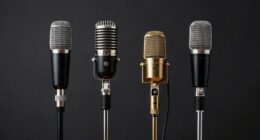
To use ribbon mics without regret, handle them gently and always start with low gain to avoid distortion or damage. Protect the delicate internal ribbon from impacts, moisture, and magnetic fields, and use appropriate preamps that provide clean, low-noise power. Be cautious with phantom power, as some ribbons aren’t designed for it. Proper handling, gain control, and safety measures guarantee you get that vintage warmth reliably—keep going to discover expert tips for flawless use.
Key Takeaways
- Always start with low gain settings and gradually increase to prevent distortion or damage.
- Handle ribbon microphones gently, avoiding impacts and sudden movements to protect delicate internal components.
- Use protective cases and windscreens, and keep microphones away from humidity and extreme temperatures.
- Confirm power and phantom power compatibility before connecting to preamps or mixers to avoid electrical damage.
- Choose robust, vintage-inspired models built with durable materials for long-lasting performance and safety.

Ribbon microphones offer a distinct sound quality that many audio professionals prefer, but they also require careful handling and proper gain settings to perform at their best. When you choose a ribbon mic, you’re embracing a piece of audio history that combines vintage aesthetics with modern durability. The classic look, with its slim profile and retro charm, adds visual appeal to your setup, making it ideal for those who want a touch of nostalgia. Yet, despite their vintage vibe, many newer ribbon microphones are built with robust materials and engineering improvements, guaranteeing they can withstand the rigors of modern studio use and live performance.
Handling a ribbon mic demands respect for its delicate internal components. You need to be gentle when positioning it, avoiding sudden movements or impacts that could damage the thin ribbon element inside. Proper handling extends beyond just physical care; you also have to pay attention to gain settings. Because ribbon microphones are inherently more sensitive to loud sounds and electrical overloads, setting the gain too high can quickly lead to distortion or even damage. Always start with lower gain levels and gradually increase until you reach the desired volume, making sure you don’t push the mic beyond its limits.
Handle ribbon mics gently and set gain carefully to prevent damage and distortion.
Another key aspect of maintaining a ribbon mic’s performance and longevity involves understanding its unique power requirements. Many ribbon mics benefit from the use of a clean, low-noise preamp with adequate headroom. This helps to preserve the natural warmth and smoothness of the sound, especially when capturing vocals or acoustic instruments. Proper phantom power, if applicable, must also be handled correctly; some ribbon mics are not phantom-powered, and applying phantom power to incompatible models can cause irreparable harm. Always consult your mic’s specifications before connecting it to a preamp or mixer. Additionally, selecting a preamp with appropriate gain structure can prevent overloads and ensure optimal audio quality.
In addition, taking steps to protect your ribbon microphone from environmental hazards is vital. Avoid exposing it to high humidity, extreme temperatures, or strong magnetic fields, which can compromise its delicate ribbon element. Use a pop filter or windscreen when recording vocals to prevent plosive sounds from damaging the ribbon, and always store it in a safe, padded case when not in use. By respecting the microphone’s sensitive components and providing proper gain settings, you guarantee it delivers the rich, vintage-inspired sound you seek without regret. Combining vintage aesthetics with modern durability, a well-cared-for ribbon mic becomes a long-lasting asset in your recording arsenal.
Frequently Asked Questions
Can Ribbon Mics Be Used Outdoors Safely?
Yes, you can use ribbon mics outdoors safely if you take proper precautions. Make sure they have good outdoor durability and protect them from wind with windshields or covers. Avoid exposing them to extreme weather or high humidity, as these can damage the delicate ribbon element. Handle them carefully, and always store them in a safe, dry place when not in use. With these measures, ribbon mics perform well outside.
How Do Ribbon Mics Compare to Condenser Mics?
Are ribbon mics the underdog in your studio? They often feature bidirectional polar patterns, capturing sound from front and back, while condenser mics usually offer versatile polar patterns like cardioid or omni. When comparing frequency response, ribbon mics excel in smooth, warm tones, but condenser mics deliver brighter, more detailed sound. You choose based on your need for warmth versus clarity, knowing each mic type plays a unique role in your recording arsenal.
Are Ribbon Mics Suitable for Live Performances?
Yes, ribbon mics can be suitable for live performances if you choose models with appropriate polar patterns like figure-8 or cardioid and a flat frequency response. They offer warm sound quality, but handle them carefully to avoid damage from high SPLs. Use their polar patterns to focus on the source and minimize feedback, making them versatile for live settings, especially with proper handling and safety precautions.
What Are Common Repair Issues With Ribbon Mics?
Common repair issues with ribbon mics include diaphragm repair and magnet misalignment. You might need to replace or realign the delicate ribbon diaphragm if it gets damaged or stretched. Magnet misalignment can cause uneven sound pickup, so verify the magnets stay properly aligned. Handling these mics carefully and avoiding sudden shocks help prevent these issues. Regular maintenance and cautious handling extend the life of your ribbon mic and keep it sounding great.
How Do I Choose the Right Ribbon Mic for Vocals?
Choosing the right ribbon mic for vocals means matching your needs with its durability and your recording techniques. Look for a mic with reliable durability that withstands handling while capturing clear, warm tones. Consider your vocal style—soft or powerful—and select a ribbon mic that complements it. You’ll want one that enhances your vocal recordings, offering finesse and finesse, ensuring your voice shines through with pristine, punchy precision.
Conclusion
Now that you know the ins and outs of ribbon mics, you can confidently incorporate them into your setup. Remember, while they demand careful handling and proper gain, their warm sound is worth the effort. Did you know that only about 10% of microphones worldwide are ribbon mics? This rarity makes them a unique choice for capturing rich, vintage tones. Embrace their quirks, stay safe, and enjoy the distinctive sound they bring to your recordings.