
To maintain ideal headroom and gain structure from tracking to mastering, you should set your levels conservatively early on, avoiding clipping and distortion. Use accurate metering tools to monitor signals continuously, adjusting gains across your gear for clean, balanced sound. Proper gain staging ensures every stage of your signal chain operates within ideal ranges, preserving audio fidelity. Keep an eye on headroom to prevent overloads, and you’ll reveal clearer, more professional results as you progress through the process.

Get audio and creator gear delivered free with Prime
- Fast, free delivery on millions of items
- Prime Video, Amazon Music and more included
- Member-only deals all year
Key Takeaways
- Start with proper input gain staging during tracking to avoid clipping and maintain optimal dynamic range.
- Use accurate digital metering to monitor peak levels, ensuring signals stay below 0 dBFS for headroom.
- Maintain consistent gain structure throughout the signal chain, adjusting hardware and plugins as needed.
- Reserve sufficient headroom at each stage to prevent distortion during mixing, processing, and mastering.
- Continuously monitor levels with reliable meters to preserve audio fidelity from recording to final master.
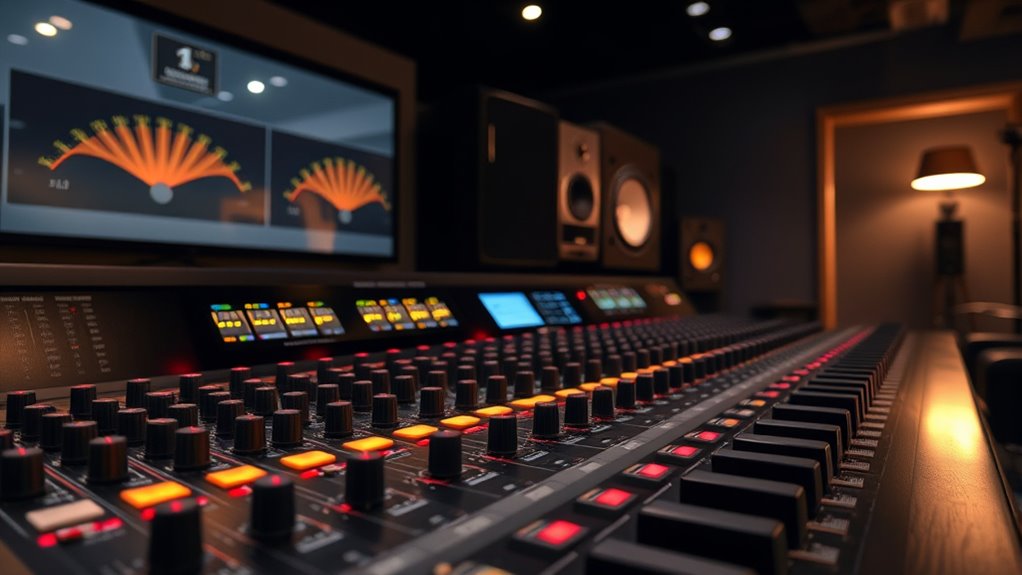
Understanding headroom and gain structure is vital for achieving clean, distortion-free sound in your audio setup. When you’re setting levels, mastering effective metering techniques helps you monitor your signals accurately. Whether you’re working with analog or digital gear, understanding the differences in metering is essential. Analog meters often have a ballistics that lag behind fast transients, making them less precise for digital signals. Digital meters, on the other hand, provide immediate feedback with peak and RMS readings, giving you a clearer picture of your levels. Recognizing these distinctions allows you to set proper levels from the start, avoiding overloads or excessive noise.
In an analog environment, gain staging involves carefully adjusting each piece of hardware so that signals stay within ideal ranges. You want to avoid pushing your input or output levels into distortion, which can happen if the meters aren’t correctly interpreted or if the gain is set too high. Because analog meters are often based on VU or PPM scales, you need to develop an ear for their readings, which may not reflect the actual peak levels exactly. Digital metering simplifies this process with precise peak meters that show you exactly where your signal is hitting the ceiling, ensuring you maintain enough headroom. This headroom acts as a safety buffer, preventing clipping and preserving audio fidelity as signals pass through different stages.
Gain structure becomes a balancing act across your entire signal chain. Proper gain staging ensures each device operates at its best level, giving you clean sound without unwanted distortion. It’s not just about avoiding overloads; it’s also about maintaining the right dynamic range. When you keep your levels in check, your recordings will sound more transparent and less compressed. Always start at the source, setting your input gain so the strongest signals stay below clipping. Then, adjust your mixing and processing levels accordingly, making sure each stage provides enough headroom for dynamic peaks.
Additionally, understanding the role of resources and tools such as metering plugins and hardware can greatly enhance your ability to maintain optimal levels throughout your project. From tracking through mixing and mastering, maintaining proper gain structure reduces noise and distortion, enabling clearer, more impactful audio. Whether you’re working in an analog or digital environment, understanding how to use metering techniques effectively is vital. With digital systems, you get instant, precise readings, making it easier to keep levels in check. Analog setups require a more nuanced approach, relying on experience with meter ballistics and listening skills. In either case, consistently monitoring and adjusting your levels ensures your sound remains clean, punchy, and distortion-free, giving your final mix the professional polish it deserves.
As an affiliate, we earn on qualifying purchases.
Frequently Asked Questions
What Equipment Influences Optimal Headroom and Gain Structure?
Your equipment dynamics and signal processing tools greatly influence ideal headroom and gain structure. High-quality preamps and interfaces help you maintain proper gain levels, preventing distortion. Compressors and EQs shape your signal before it hits the converter, ensuring clarity and headroom. By adjusting these components correctly, you control how your audio flows, avoiding clipping and distortion, and giving your mix the space it needs to sound balanced and professional.
How Do Different Genres Require Varied Gain Staging Techniques?
Did you know that rock vocals often peak at -6 dB, while electronic music might hit -12 dB? You should apply genre-specific techniques for gain staging, tailoring stylistic gain adjustments to suit each style. For instance, aggressive genres like metal need higher headroom, whereas ambient tracks benefit from lower levels. Adjust your gain structure appropriately to ensure clarity, punch, and avoid clipping across different musical styles.
What Are Common Mistakes in Gain Structure During Mixing?
A common mistake in gain structure during mixing is neglecting gain automation, which can cause uneven levels and reduce control over your mix. You might also overlook clipping prevention, risking distortion and audio quality loss. Always adjust gain thoughtfully, automate where needed, and keep levels within headroom limits. This guarantees your mix stays clean, balanced, and prevents unwanted distortion, leading to a more professional sound.
How Does Headroom Impact Digital Versus Analog Recordings?
Your headroom is like a giant safety net, vital for digital and analog recordings. It affects dynamic range and signal resolution, preventing distortion. In digital, limited headroom can cause clipping and reduce clarity, while in analog, excess headroom preserves warmth and character. Managing headroom carefully ensures your recordings stay crisp, vibrant, and true to life, avoiding the risk of losing detail or introducing unwanted noise.
What Are Best Practices for Maintaining Headroom During Mastering?
To maintain headroom during mastering, you should aim for a healthy dynamic range by keeping your levels below 0 dBFS, preventing clipping. Use gentle gain adjustments and avoid pushing the loudness normalization process too far, which can squash dynamics. This approach preserves clarity, ensures compatibility across streaming platforms, and maintains ideal headroom, allowing your track to sound balanced and punchy without sacrificing audio quality or risking distortion.
Conclusion
Remember, maintaining proper headroom and a solid gain structure isn’t just about technical rules—it’s about giving your mix room to breathe and sound professional. Some might worry it limits their loudness, but in reality, it offers clarity and headroom for mastering, ensuring your track hits hard without distortion. Trust the process, stay disciplined, and you’ll achieve a polished, balanced sound that stands out. Good gain structure sets the foundation for a truly great final product.
Fall Picks
fall essentials
As an affiliate, we earn on qualifying purchases.