
Record cleaning machines help improve sound quality by removing dust, dirt, and static, making your listening experience clearer and more detailed. They also protect your vinyl records from wear and surface contamination over time. However, they won’t fix scratches, warping, or deep gouges. Proper use and maintenance are key to getting the best results. Keep exploring to discover how these machines can fit into your record care routine and what they can’t do.

Get audio and creator gear delivered free with Prime
- Fast, free delivery on millions of items
- Prime Video, Amazon Music and more included
- Member-only deals all year
Key Takeaways
- Record cleaning machines improve sound clarity by removing dust, dirt, and static for a more detailed listening experience.
- They reduce surface noise, pops, and crackles caused by contaminants on vinyl records.
- These machines cannot repair physical damages like scratches, warping, or deep gouges.
- Proper maintenance and handling are essential to achieve optimal cleaning results and record safety.
- A record cleaning machine is part of a broader preservation strategy but doesn’t prevent deterioration from poor storage.
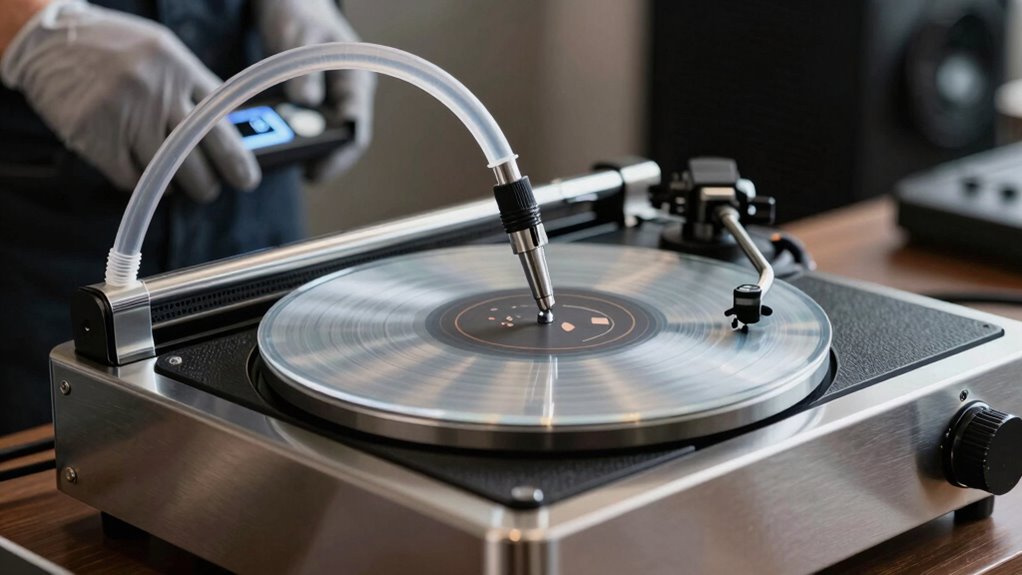
If you’re serious about enjoying the best sound quality from your vinyl collection, investing in a record cleaning machine can make a significant difference. These devices are designed to improve your listening experience by ensuring your records are free from dust, dirt, and static that can cause pops, crackles, and overall sonic degradation. When you use a record cleaning machine, you’re actively engaging in vinyl preservation—protecting your investment and maintaining the record’s original sound integrity over time. It’s not just about aesthetics; it’s about safeguarding the quality of your music and the longevity of your collection.
Using a record cleaning machine preserves your vinyl’s sound quality and protects your investment over time.
A good cleaning machine can dramatically enhance sonic performance by removing surface contaminants that a quick wipe or brush might miss. When your records are clean, your stylus can track the grooves more accurately, resulting in clearer, more detailed sound. This sonic enhancement means fewer unwanted noises and a richer listening experience. Plus, because these machines often use gentle cleaning solutions and controlled brushing or vacuuming techniques, they reduce the risk of scratches or damage that improper cleaning methods can cause. This careful approach ensures your records stay in excellent condition, helping you enjoy their sound at its best.
However, it’s important to understand what record cleaning machines can’t do. They won’t fix physical damage like scratches, warping, or broken records. If a record has deep gouges or severe warping, cleaning won’t restore the original surface quality or improve sound quality that’s already compromised. Additionally, while they remove dust and dirt from the surface, they can’t eliminate underlying issues like groove wear or manufacturing defects, which can still cause noise or distortion regardless of cleaning.
Furthermore, record cleaning machines aren’t a substitute for proper handling and storage. Even the best cleaning won’t prevent deterioration from poor storage conditions, such as high humidity or temperature fluctuations. They also require maintenance themselves—cleaning the machine regularly and replacing parts as needed to keep them functioning at their best. So, while a cleaning machine is a powerful tool for vinyl preservation and sonic enhancement, it’s not a cure-all. To truly enjoy your records, you need a combination of good cleaning practices, proper handling, and quality playback equipment.
Additionally, choosing a machine with high-quality technology and features like adjustable settings can further improve cleaning results and protect your valuable records.
As an affiliate, we earn on qualifying purchases.
Frequently Asked Questions
Can Record Cleaning Machines Damage Delicate Vinyl Records?
Record cleaning machines can potentially cause damage if used improperly, especially on delicate vinyl records. You might risk record surface damage or vinyl warping if the machine applies too much pressure or if the cleaning process is too aggressive. To avoid this, always follow the manufacturer’s instructions and handle your records carefully. Proper use minimizes the chances of harm, helping you preserve your vinyl’s quality and longevity.
How Often Should I Use a Record Cleaning Machine?
Think of your record collection as a delicate garden that needs just the right watering. You should clean your records regularly, about every 10-20 plays or once a month, whichever comes first. Follow the ideal usage intervals to prevent buildup and preserve sound quality. Over-cleaning can be like overwatering—harmful rather than helpful. Keep a steady rhythm, and your records will sing beautifully for years.
Do Cleaning Machines Remove All Types of Surface Noise?
Cleaning machines considerably reduce surface noise, but they don’t eliminate all types. Their surface noise reduction depends on the machine’s cleaning efficiency and the condition of your records. You might notice some residual crackles or pops, especially on heavily worn or damaged records. Regular cleaning improves overall sound quality, but for complete noise removal, you may need additional treatments or professional restoration.
Are Manual Cleaning Methods More Effective Than Machines?
Manual cleaning can often be more effective because you have greater control, like steering a ship through tricky waters. While machines speed up the process, their limitations mean they might miss stubborn dirt or delicate surfaces. Your manual effectiveness allows for careful, targeted cleaning, especially on fragile records. So, if you want thoroughness and precision, relying on your hands might just be the better route.
What Maintenance Is Required for a Record Cleaning Machine?
You need to perform regular maintenance essentials to keep your record cleaning machine running smoothly. Clean the brushes and nozzles regularly, and check for any buildup or debris. Lubricate moving parts as needed, and replace worn-out components promptly. Troubleshooting tips include inspecting for clogs or malfunctions and ensuring connections are secure. Proper upkeep ensures peak performance and extends your machine’s lifespan, making your record cleaning more effective.
Conclusion
A record cleaning machine is like a gentle gardener, tending to your vinyl garden and helping it blossom with clearer sound. While it can clear away dust and grime, it’s not a miracle worker—some scratches and deep damage still linger. Think of it as a tune-up for your records, opening the door to better listening experiences. With proper care, your collection will sing brighter, turning each spin into a smooth, harmonious journey.
Halloween Picks
halloween
As an affiliate, we earn on qualifying purchases.