Choosing the right studio monitor size depends on your room’s size and acoustics. Larger monitors produce deeper bass and higher volumes but can overwhelm small or untreated spaces, causing muddiness or bass boom. Smaller monitors fit tight rooms better but might lack enough low-end in larger spaces. Properly matching monitor size to your room’s dimensions and acoustic treatment helps you achieve clear, balanced sound. If you want to learn how to optimize this setup, keep exploring.

Get audio and creator gear delivered free with Prime
- Fast, free delivery on millions of items
- Prime Video, Amazon Music and more included
- Member-only deals all year
Key Takeaways
- Match larger monitors with spacious rooms to prevent overwhelming reflections and maintain accurate bass response.
- Use smaller monitors in tight spaces to avoid excessive bass build-up and acoustic issues.
- Proper acoustic treatment enhances monitor performance regardless of size, ensuring clearer low-end reproduction.
- Position monitors correctly at ear level and away from walls to optimize sound clarity and minimize room-induced distortions.
- Balance monitor size with room acoustics and placement to achieve accurate low-end translation and prevent muddiness.
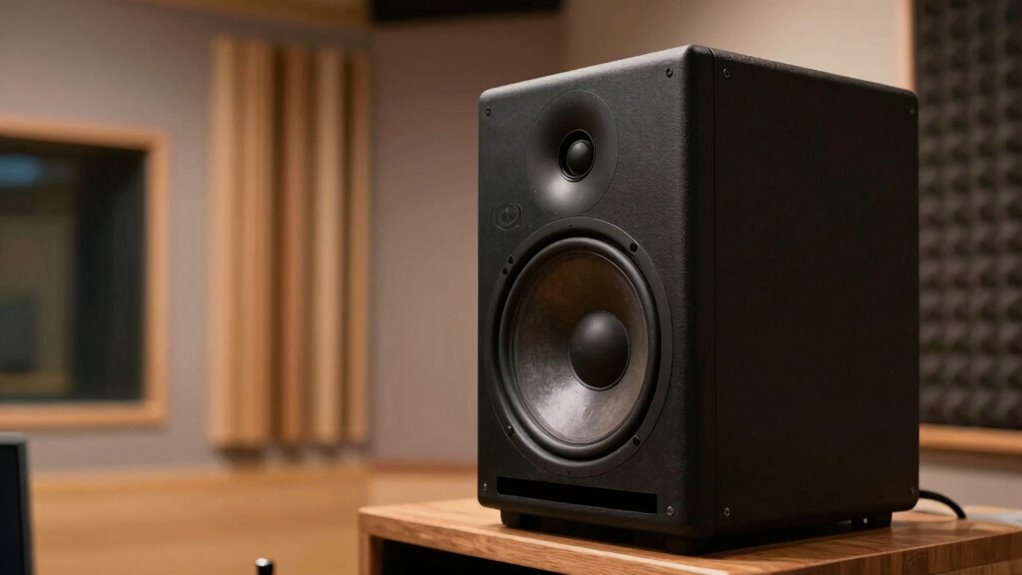
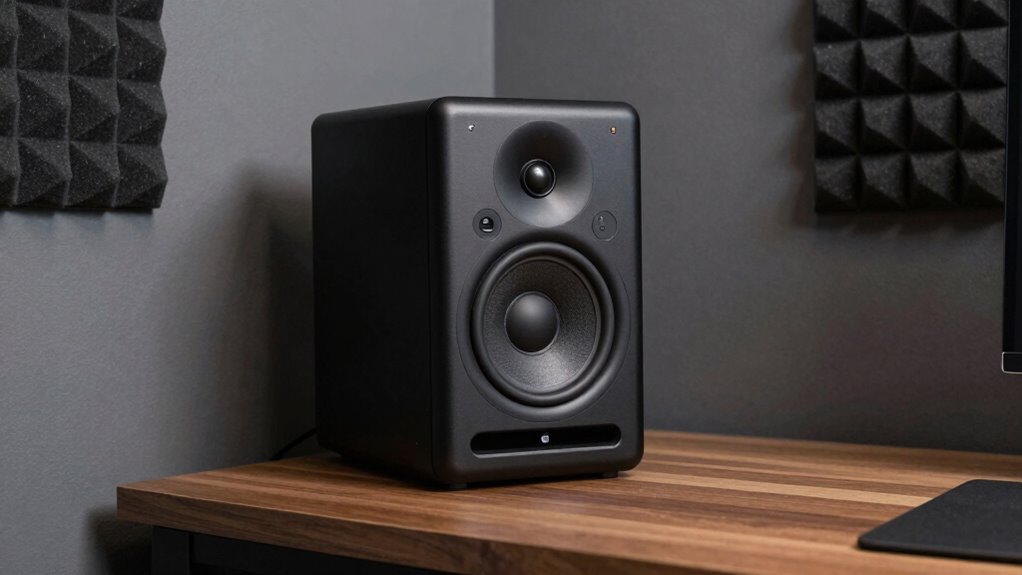
Choosing the right studio monitor size is essential because it directly impacts your audio clarity and mixing accuracy, especially when considering your room size. When selecting monitors, you must think about how your room’s acoustics and monitor placement influence sound reproduction. Larger monitors tend to produce deeper bass and higher volume levels, but if your room is small or poorly treated, those big speakers can overwhelm the space, causing muddiness and frequency masking. Conversely, small monitors may struggle to accurately reproduce low-end frequencies in larger rooms, leading to a thin or imprecise mix. The key is finding a size that complements your room’s dimensions and acoustic characteristics.
Your room acoustics play a significant role in how sound behaves within your space. Hard surfaces like walls, windows, and flooring reflect sound waves, creating unwanted echoes and standing waves that distort your monitor’s output. Proper acoustic treatment—such as bass traps, diffusers, and panels—can help control these reflections, but the monitor size you choose also needs to match your room’s capabilities. Larger monitors, for example, generate more bass energy, which can exacerbate room modes if your space isn’t adequately treated. That’s why selecting a monitor size that aligns with your room’s acoustic profile is vital for achieving a balanced and accurate sound. Additionally, understanding room acoustics can help you make more informed choices about monitor size and placement.
Monitor placement further influences how well your speakers perform. No matter the size, monitors should be positioned at ear level, pointed directly at your listening position, and spaced appropriately to form an equilateral triangle. If your monitors are too large for your space, you might find it difficult to place them correctly without causing reflections or standing waves that skew your sound. Smaller monitors, on the other hand, are easier to position in tight spaces, but you’ll need to ensure they’re capable of delivering enough low-end response for your mixing purposes. Proper placement also means avoiding placing monitors too close to walls or corners, which can boost bass frequencies artificially and create a boomy sound.
In essence, your ideal monitor size depends on balancing these factors—room acoustics and placement. Larger monitors in a small, untreated room can muddy your mixes, while small monitors in a large room might lack the punch needed for accurate low-end monitoring. By understanding how room acoustics influence sound and carefully positioning your monitors, you can optimize your setup. The right size, combined with strategic placement and acoustic treatment, guarantees your low end remains clear and your mixes translate well across different listening environments.
studio monitor size for small room
As an affiliate, we earn on qualifying purchases.
As an affiliate, we earn on qualifying purchases.
Frequently Asked Questions
How Does Desk Height Affect Monitor Performance?
Your desk height directly impacts monitor performance by influencing monitor placement and desk ergonomics. When your desk is too high or low, your monitors may be angled incorrectly, affecting sound clarity and imaging. Ideally, your monitors should be at ear level, with the tweeters aligned with your ears. Proper desk ergonomics ensures the best monitor placement, letting you hear accurate low-end response and improving your overall listening experience.
Can Multiple Monitor Sizes Be Used in One Room?
Yes, you can use multiple monitor sizes in one room. Just focus on proper monitor placement to guarantee each speaker’s position complements the others. Use speaker isolation techniques like pads or stands to prevent vibrations and sound interference. This setup helps balance low frequencies and ensures accurate sound reproduction, regardless of your room size. Keep in mind that correct placement and isolation are key to avoiding muddiness or imbalance.
What Are the Signs of an Improperly Matched Monitor and Room?
You’ll notice a poorly matched monitor and room when your sound feels unbalanced, with muddy lows or harsh highs. Poor monitor placement can cause uneven frequency response, while excessive acoustic reflections create comb filtering and echo. If your mixes don’t translate well on other systems, it’s a sign your room and monitor size aren’t properly matched. Addressing monitor placement and controlling acoustic reflections can markedly improve your sound clarity.
How Does Room Treatment Influence Low-End Response?
Think your low end’s fine? Think again. Room treatment, with soundproofing techniques and acoustic panels, drastically shapes your bass response. Without it, you might be drowning in muddy lows or booming bass. Proper treatment absorbs excess sound waves, reducing resonances and peaks. You’ll get a clearer, more accurate low end—so your mixes translate perfectly. Skip the acoustic panels, and your low frequencies stay a mystery, no matter how fancy your monitors are.
Is There an Ideal Room Shape for Optimal Sound?
You should choose a room with dimensions that avoid simple ratios, like 1:2 or 2:3, to minimize standing waves and acoustic issues. Incorporate acoustic treatment to further improve sound quality, especially in corners and reflective surfaces. A well-proportioned room combined with effective acoustic treatment balances bass response and clarity, making your studio environment more accurate and enjoyable for mixing and listening.
Conclusion
Think of your studio like a car’s engine and the room as the chassis. If the engine’s too big, it’ll struggle to fit and perform smoothly. I once set up a massive monitor in a tiny room—sound was muddy and overwhelming. When I matched my monitor size to my space, clarity skyrocketed, like tuning an engine for perfect performance. Choosing the right size isn’t just technical; it’s the key to revealing your room’s true potential.
Halloween Picks
halloween
As an affiliate, we earn on qualifying purchases.