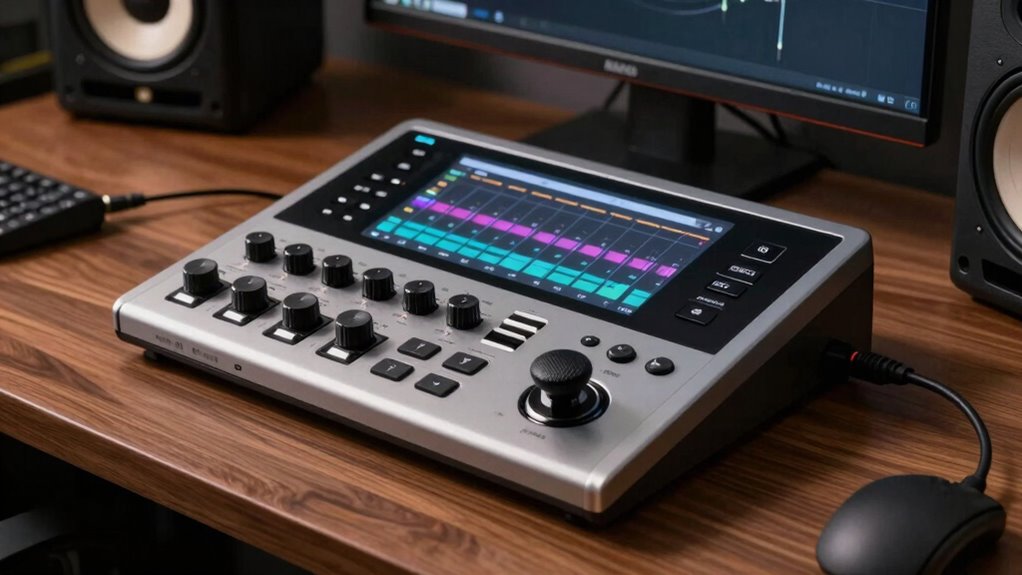
To make the most of your studio, focus on monitor controllers with Bluetooth connectivity for wireless flexibility, built-in headphone amps for clear audio, and sturdy build quality for durability. Look for intuitive controls and clear displays to simplify setup and adjustments. Versatile connectivity options and compatibility with future devices guarantee your setup stays relevant. Pay attention to additional features like high-resolution audio support. Keep exploring these essentials, and you’ll discover even more ways to upgrade your studio.

Get audio and creator gear delivered free — and shop member deals
- Fast, free delivery on millions of items
- Access to Prime Big Deal Days deals on October 6–7
- Prime Video, Amazon Music and more included
Key Takeaways
- Bluetooth connectivity for wireless device streaming and quick adjustments.
- Built-in headphone amp for accurate, high-quality monitoring and multiple headphone outputs.
- Durable build quality with intuitive controls and clear displays for ease of use.
- Versatile connectivity options ensuring compatibility with various devices and formats.
- Future-proof features like high-resolution audio support and seamless studio integration.
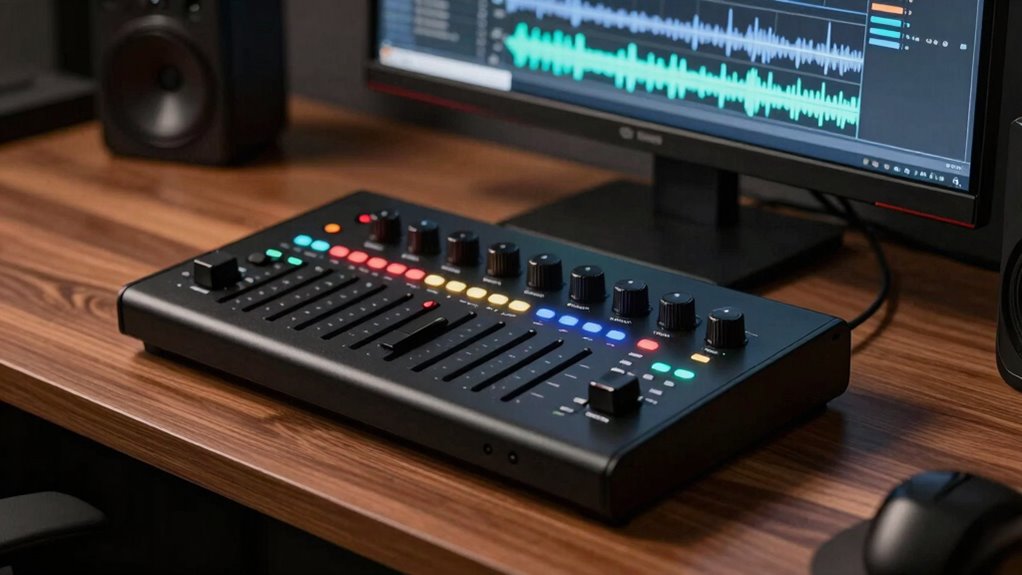
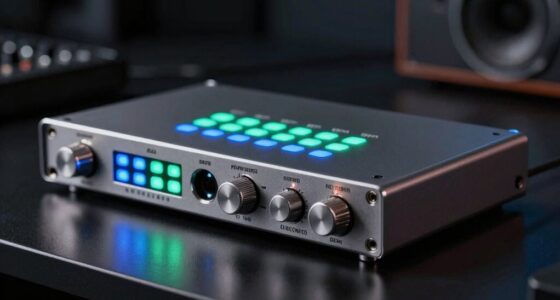
Are you familiar with the fundamental features of a monitor controller? If you’re serious about your audio setup, understanding which features are worth investing in can make a big difference. A good monitor controller acts as the central hub for your studio, giving you seamless control over multiple audio sources, speakers, and headphones. One feature to look for is Bluetooth connectivity. It might seem like a convenience rather than a necessity, but it can greatly streamline your workflow. With Bluetooth, you can easily connect your smartphone or tablet to listen to reference tracks, make quick adjustments, or even troubleshoot without fiddling with cables. It’s especially handy if you frequently switch between digital devices or want to integrate wireless streaming into your setup. Additionally, a monitor controller with proper connectivity options can ensure compatibility with various devices and audio formats. Choosing a model with versatile connectivity can also help future-proof your setup as new devices and formats emerge.
Bluetooth connectivity simplifies workflow by wirelessly streaming reference tracks and troubleshooting without cable clutter.
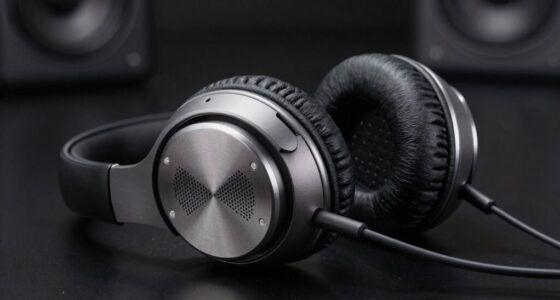
Another essential feature is a built-in headphone amp. Not all monitor controllers include this, but it’s well worth paying for. A dedicated headphone amplifier ensures that your headphones receive a clean, powerful signal, which is critical for accurate mixing and critical listening. When you’re working in a studio environment, the quality of your headphone feed can impact your ability to catch subtle nuances. A built-in headphone amp also allows you to switch between multiple headphone outputs easily, making it simple to collaborate with others or switch between different listening environments. This eliminates the need for separate headphone amplifiers, saving space and simplifying your setup. Furthermore, audio quality is crucial when evaluating monitor controllers to ensure your mixes translate well across different systems. Paying attention to audio fidelity can help you achieve more precise and reliable results in your mixes. High-quality audio components can also reduce distortion and noise, maintaining clarity throughout your workflow.
Beyond Bluetooth and headphone amps, you should consider the overall build quality and user interface. Look for a sturdy, well-constructed unit with intuitive controls. You want knobs, buttons, and switches that respond smoothly and feel durable for long-term use. A clear, easy-to-read display can help you monitor levels, source selection, and other settings effortlessly, reducing the chance of errors during critical listening sessions. Additionally, features like multiple input options, speaker switching, and mono summing are invaluable for a complete studio environment. Ensuring the device has a robust construction can prevent issues caused by wear and tear over time, especially in a busy studio setting.
Finally, think about future-proofing your setup. Features like multiple output options, compatibility with high-resolution audio, and integration capabilities with other studio gear can save you from replacing your monitor controller down the line. Paying attention to these features ensures you get a device that not only meets your current needs but also adapts to your evolving studio requirements. Overall, prioritizing Bluetooth connectivity and a built-in headphone amp can greatly enhance your control, convenience, and audio fidelity — essential elements for any serious audio engineer or producer.
monitor controller with Bluetooth
As an affiliate, we earn on qualifying purchases.
As an affiliate, we earn on qualifying purchases.
Frequently Asked Questions
How Does Monitor Controller Latency Affect Audio Quality?
Monitor controller latency can impact audio quality by affecting audio synchronization, causing a slight delay between your source and the output. Excessive latency may lead to timing issues during mixing or playback, making it harder to maintain precise audio alignment. To avoid this, choose a monitor controller with effective latency mitigation features, ensuring minimal delay and accurate audio reproduction, so your workflow remains smooth and your sound stays clear and synchronized.
Can Monitor Controllers Integrate With Digital Audio Workstations?
Imagine your studio as a symphony, where seamless integration keeps everything in harmony. Yes, many monitor controllers can connect directly with digital audio workstations, enhancing your workflow. They often feature analog integration options, allowing you to switch effortlessly between digital and analog gear. This integration improves studio ergonomics, enabling you to control levels, sources, and monitors smoothly, all from a single interface—making your mixing process more intuitive and efficient.
Are Wireless Monitor Controllers Reliable for Professional Use?
Wireless monitor controllers can be reliable for professional use if they offer strong wireless stability and minimize signal interference. You need devices that operate on stable frequencies and have robust encryption to prevent disruptions. When chosen carefully, these controllers can provide flexibility and ease of use without sacrificing reliability. However, it’s crucial to test them thoroughly in your environment to ensure consistent performance, especially in busy studio settings with potential interference.
What Is the Typical Lifespan of a Monitor Controller?
A monitor controller typically lasts between 5 to 10 years, depending on durability factors and material quality. If you choose a model made with high-quality components and sturdy materials, it’ll likely serve you well longer. Proper maintenance, like avoiding excessive heat and dust, also extends its lifespan. Investing in a well-built unit guarantees reliable performance over time, making it worth paying for a durable, high-quality monitor controller.
How Do Monitor Controllers Impact Workflow Efficiency?
Monitor controllers boost your workflow efficiency by providing precise volume control and enabling quick speaker calibration. With accurate speaker calibration, you guarantee consistent sound quality across different listening environments, saving time on adjustments. Volume precision allows you to make fine-tuned adjustments swiftly, keeping your focus on your project. These features streamline your process, reduce errors, and help you work more confidently and efficiently, ultimately enhancing your overall audio production experience.
Conclusion
Investing in a monitor controller with the right features can truly elevate your audio experience and streamline your workflow. Sure, some might say it’s an unnecessary expense, but think about the time and frustration it saves you by offering precise control and seamless switching. When your work depends on accurate sound, paying for quality features isn’t just worth it — it’s essential. Don’t settle for less; your ears and your projects will thank you.
Fall Picks
fall essentials
As an affiliate, we earn on qualifying purchases.