
To calibrate your monitoring setup without getting lost, start by ensuring your room’s acoustics are optimized with panels or diffusers to reduce reflections. Place your monitors at ear level, forming an equilateral triangle with your listening position, and keep them away from walls. Use calibration tools and test tones to measure system response, making small adjustments as needed. Regularly revisit your setup to maintain accuracy, and if you keep exploring, you’ll discover even more effective strategies.

Get audio and creator gear delivered free with Prime
- Fast, free delivery on millions of items
- Prime Video, Amazon Music and more included
- Member-only deals all year
Key Takeaways
- Establish clear baseline measurements and document each step to track progress and prevent confusion.
- Use dedicated calibration tools and software to streamline the process and maintain consistency.
- Focus on optimizing room acoustics first, then adjust equipment placement based on measurements.
- Break calibration into manageable stages, reviewing results before proceeding to the next step.
- Regularly revisit and recalibrate to avoid drifting from optimal setup and ensure ongoing accuracy.
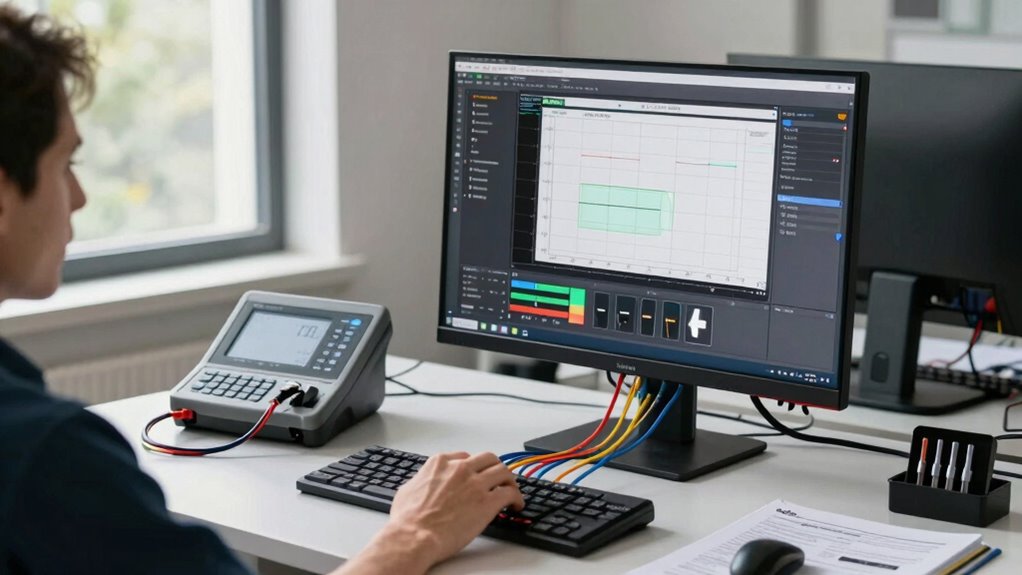
Calibrating your monitoring setup is essential to guarantee accurate and reliable readings, whether you’re working with audio, video, or environmental sensors. To do this effectively, you need to understand the importance of room acoustics and equipment placement. Your environment plays a critical role in how signals are captured and perceived. Poor room acoustics, such as echoes, standing waves, or uneven sound distribution, can distort your measurements or mix translations. Addressing these issues involves analyzing how sound interacts with your space and making adjustments, like adding acoustic panels, bass traps, or diffusers to improve sound clarity and reduce unwanted reflections.
Proper room acoustics and strategic equipment placement are key to accurate, reliable monitoring and measurements.
Equipment placement is equally crucial. Position your monitors or sensors where they can deliver the most accurate data without interference. For audio, this means placing speakers at ear level, forming an equilateral triangle with your listening position. Keep monitors away from walls or corners, as proximity can cause bass buildup and color the sound. For environmental sensors, avoid placing them near heat sources, vents, or reflective surfaces that could skew readings. Instead, choose a central, stable location with minimal external influence. When setting up video or visual monitors, ensure proper angle and distance to avoid distortion or eye strain, which can compromise calibration.
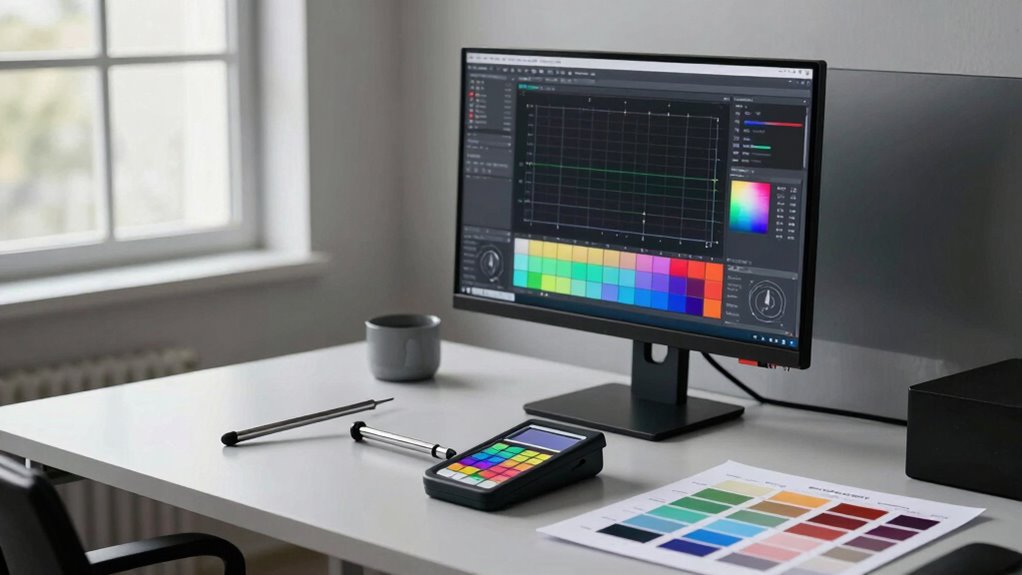
Once you’ve optimized room acoustics and equipment placement, you need to establish baseline measurements. Use calibrated reference signals or test tones to check the system’s response. In audio, pink noise or specific test tones help identify frequency imbalances or peaks caused by room effects. For environmental sensors, compare readings against known standards to verify accuracy. Make incremental adjustments, such as repositioning speakers or adding acoustic treatments, and re-measure until you achieve a balanced response. Remember, calibration isn’t a one-time task; revisit it regularly, especially if you change your environment or equipment. Additionally, understanding room acoustics can help you anticipate how sound behaves in your space and make more informed adjustments. Familiarizing yourself with the impact of environment on your setup can also guide you in making effective modifications. Recognizing the role of sound reflections is vital in achieving precise calibration results. To facilitate this process, utilizing calibration tools and software tailored to your setup can significantly streamline adjustments and improve accuracy. Moreover, taking into account the sound absorption properties of your space can further enhance calibration accuracy.
As an affiliate, we earn on qualifying purchases.
Frequently Asked Questions
What Tools Are Essential for Calibration?
You’ll need essential tools like calibration standards or reference signals to guarantee accuracy. Use calibration techniques such as signal generators and precision measurement devices to fine-tune your equipment. Regular equipment maintenance is vital, so keep tools like cleaning kits, sensor testers, and data loggers handy. These tools help you detect deviations early, maintain calibration integrity, and streamline the process, guaranteeing your monitoring setup stays reliable without getting lost in complex procedures.
How Often Should I Recalibrate My Setup?
You should recalibrate your setup regularly, ideally every few weeks or monthly, depending on sensor drift and usage conditions. Monitoring how your sensors perform over time helps you determine the right calibration frequency. If you notice inconsistent readings or drift, recalibrate sooner. Consistent recalibration guarantees accurate data, reduces errors, and maintains reliable performance, especially in environments where sensors are exposed to varying conditions or heavy use.
Can Calibration Fix Poor Initial Measurements?
About 80% of monitoring errors stem from incorrect readings caused by poor initial setup. Calibration procedures can’t fully fix inaccurate measurements taken at the start; they can only adjust and improve accuracy going forward. If your initial measurements are off, calibration helps correct them, but it’s essential to verify your setup first. Regular recalibration guarantees your data remains reliable, especially after changes or long-term use.
What Are Common Calibration Mistakes to Avoid?
You should avoid common calibration mistakes like neglecting sensor drift, which can lead to inaccurate readings over time. Don’t calibrate too infrequently, as that can cause your measurements to become unreliable; instead, set an appropriate calibration frequency based on usage. Also, make sure you follow manufacturer instructions carefully, avoid contamination during calibration, and verify calibration results regularly to maintain accuracy and prevent costly errors.
How Do Environmental Factors Affect Calibration Accuracy?
Environmental influences, like temperature, humidity, and atmospheric pressure, can notably impact calibration accuracy. These factors cause fluctuations in sensor readings, reducing calibration stability over time. To maintain accuracy, you should monitor environmental conditions regularly, guarantee stable settings during calibration, and perform periodic recalibrations. By controlling environmental influences, you guarantee your monitoring setup stays precise, reducing drift and maintaining consistent, reliable measurements.
Conclusion
As you fine-tune your monitoring setup, remember that precision often unfolds in small, unexpected moments—like catching a faint whisper of sound just as the sun slips behind the horizon. When calibration aligns perfectly, it’s as if everything clicks into place, revealing a clear, balanced picture. Trust the process, stay attentive, and you’ll find that, like a lighthouse guiding a ship through fog, your setup will lead you confidently to accurate, reliable results.
Halloween Picks
halloween
As an affiliate, we earn on qualifying purchases.