
To use mid-side processing without breaking the mix, start by making gradual adjustments to the mid and side signals, focusing on subtle changes. Enhance stereo width by gently increasing the side level, but watch for phase issues that can cause disconnection. Use gentle EQ tweaks on each component to maintain balance and clarity. Maintaining phase coherence is key to avoiding unnatural sound. Keep these tips in mind, and you’ll discover more ways to optimize your mix effectively.

Get audio and creator gear delivered free with Prime
- Fast, free delivery on millions of items
- Prime Video, Amazon Music and more included
- Member-only deals all year
Key Takeaways
- Make incremental adjustments to mid and side levels to prevent phase issues and maintain stereo coherence.
- Use gentle EQ changes on mid and side signals to preserve tonal balance and avoid unnatural sound.
- Regularly check phase relationships between mid and side to prevent cancellation and stereo image distortion.
- Widen the stereo image gradually, listening carefully to avoid overextension or disconnection.
- Trust your ears and focus on subtle enhancements for a balanced, natural, and well-controlled mix.
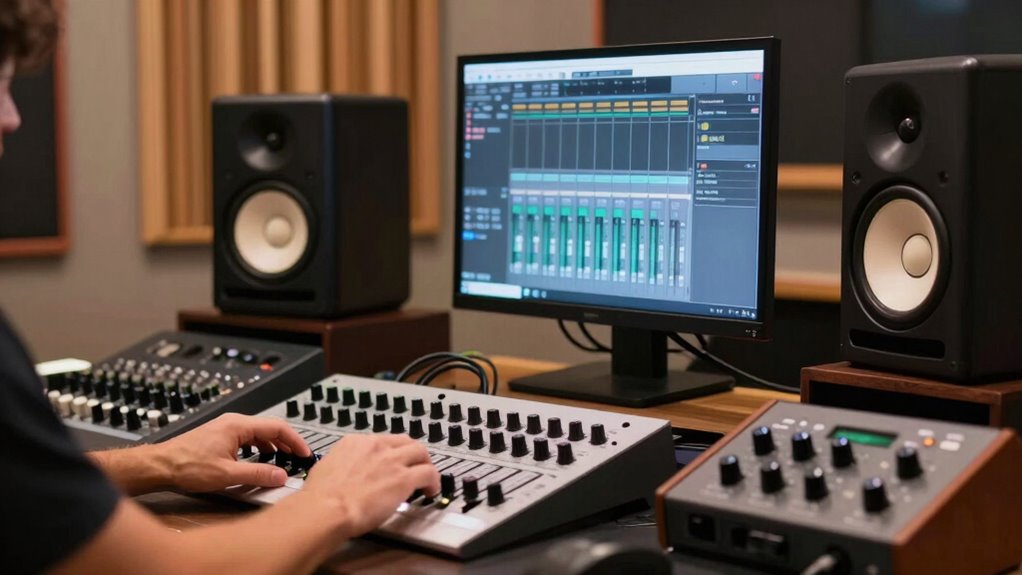
Mid-side processing is a powerful technique that allows you to control the stereo image of your audio more precisely. It works by splitting your stereo signal into two components: the mid, which contains the mono information centered in the mix, and the side, which captures the stereo spread or width. By adjusting these elements separately, you can enhance the stereo width without sacrificing clarity or balance. This method gives you greater control over how your mix sounds, especially when it comes to maintaining a balanced frequency spectrum. When using mid-side processing, your goal is to fine-tune the stereo width while preserving a natural sound. To do this effectively, start by isolating the mid and side signals in your DAW or plugin. Once separated, you can apply EQ adjustments to each component independently. For instance, if your side signal feels overly bright or muddy, you can reduce certain high or low frequencies without affecting the center of the mix. This way, you maintain a solid frequency balance across the stereo field, preventing the mix from becoming overly wide or chaotic. Adjusting the stereo width is straightforward with mid-side processing. By increasing the level of the side component, you make your mix sound wider and more spacious. Conversely, reducing the side signal brings the stereo image closer, creating a more focused or intimate sound. Be careful with these adjustments; too much widening can introduce phase issues or make the mix feel disconnected. Always listen carefully, and tweak gradually to find the right balance that complements your overall sound. It’s crucial to remember that mid-side processing isn’t just about stereo width; it’s also about preserving the frequency balance. If you over-process the side or mid signals, you risk skewing the tonal balance, resulting in a mix that sounds uneven or unnatural. Use EQ subtly on each component, emphasizing clarity and cohesion. For example, if the side signal adds unwanted high frequencies, a gentle dip can help maintain a smooth, balanced stereo image. Additionally, understanding the phase relationship between mid and side signals is essential to avoid potential issues in your mix. Paying attention to the phase coherence can help prevent phase cancellation and ensure your stereo image remains intact. Properly managing phase is vital for phase alignment, which ensures your mix translates well across different playback systems. When working with mid-side processing, it’s also helpful to be aware of how frequency content interacts within the stereo field, as this can impact the overall clarity. Making thoughtful, incremental adjustments rather than broad, sweeping changes is key. In essence, mid-side processing is a versatile tool that, when used carefully, enhances your mix without breaking it. It empowers you to sculpt the stereo image, refine the frequency balance, and create a more engaging, professional sound. Practice subtlety, trust your ears, and you’ll find that your mixes become more dynamic and well-controlled.
As an affiliate, we earn on qualifying purchases.
Frequently Asked Questions
Can Mid-Side Processing Cause Phase Issues in My Mix?
Yes, mid-side processing can cause phase issues if you’re not careful, impacting stereo imaging and phase alignment. When you adjust the mid or side signals, it might create phase discrepancies, leading to a collapsed stereo image or unnatural sound. To prevent this, always check your phase alignment after processing and listen critically. Properly managing phase ensures your mix remains clear, balanced, and maintains good stereo imaging.
What Genres Benefit Most From Mid-Side Processing Techniques?
You’ll find that genres like electronic, pop, and cinematic music benefit most from mid-side processing. Imagine the thrill of stereo widening, creating a lush, immersive soundstage that enthralls listeners. It also allows precise frequency balancing, ensuring vocals sit perfectly while the background remains spacious. With careful application, you can enhance depth and clarity, transforming your mix into a mesmerizing experience—without compromising the integrity of your sound.
How Do I Choose the Right Mid and Side EQ Settings?
To choose the right mid and side EQ settings, focus on stereo enhancement and frequency separation. Enhance the mid channel for clarity and punch, while adjusting the side for width and space. Use subtle boosts or cuts to avoid overpowering the mix. Listen carefully, and tweak your EQ until you achieve a balanced stereo image. Trust your ears to find the sweet spot where clarity and width complement each other naturally.
Is Mid-Side Processing Suitable for Live Recordings?
Yes, mid-side processing can be suitable for live recordings, especially when you want to control stereo width and enhance spatial clarity. It allows you to adjust the center and sides independently, giving you flexibility with recording techniques. By carefully processing the mid and side signals, you can improve the balance, reduce phase issues, and create a more natural, immersive sound without breaking the overall mix.
How Do I Automate Mid-Side Parameters Effectively?
Ever wondered how to make your stereo width feel alive? You automate mid-side parameters by creating dynamic control over stereo spread, adjusting width at specific moments for impact. Use automation lanes to subtly vary mid or side levels, enhancing clarity or width as needed. Think of it as painting with sound—gradually shifting the stereo image, keeping your mix engaging and balanced without losing cohesion.
Conclusion
Mastering mid-side processing is your secret weapon to a perfectly balanced mix. When you tweak the middle and sides with precision, you’re wielding a tool so powerful, it can elevate your sound to legendary status. Don’t be afraid to experiment—think of it as revealing a hidden superpower within your DAW. With patience and practice, you’ll craft mixes so compelling, they’ll captivate listeners and leave a lasting impression. Your sonic mastery awaits—go conquer it!
Halloween Picks
halloween
As an affiliate, we earn on qualifying purchases.