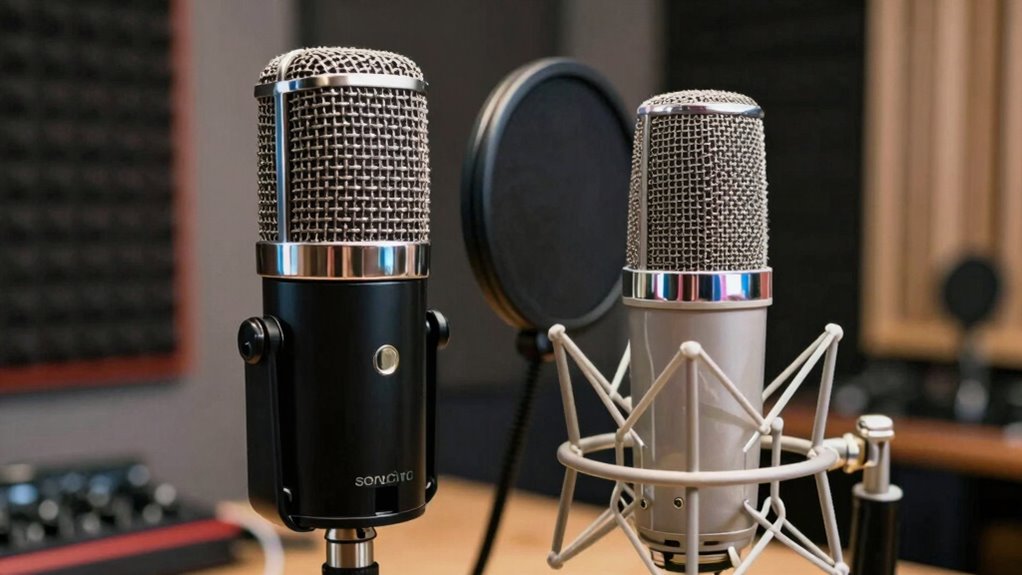

In your home studio, choosing between dynamic and condenser mics depends on your needs. Dynamic microphones are durable, don’t require power, and excel at handling loud sounds, making them great for live setups or loud instruments. Condenser mics offer better sound detail and sensitivity, ideal for vocals and studio recordings, but require phantom power and are more delicate. Understanding these differences helps you pick the right mic; explore further to find which fits your environment best.
Key Takeaways
- Dynamic mics are more durable, portable, and suitable for loud environments, requiring no external power.
- Condenser mics offer higher sound quality and detail, ideal for studio recordings and capturing subtle nuances.
- Condenser microphones need phantom power (48V), affecting compatibility and setup complexity in home studios.
- Dynamic mics handle high sound pressure levels better, making them ideal for live or loud instrument recordings.
- Choice depends on environment, budget, and recording goals; dynamic mics suit rougher use, condensers excel in controlled settings.
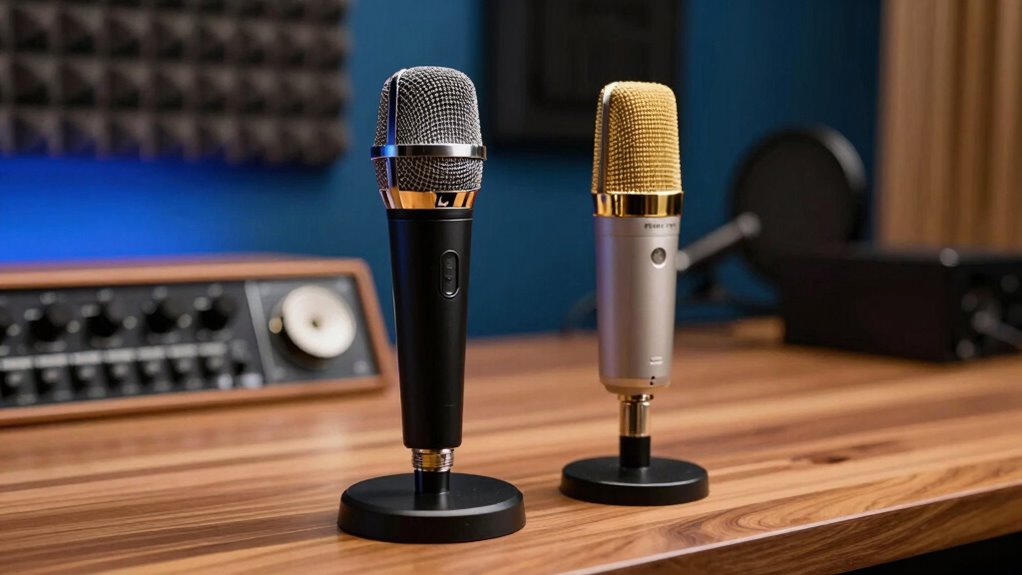
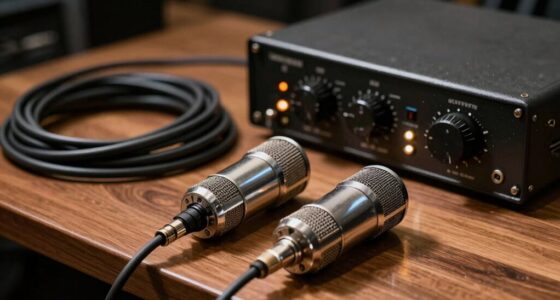
Another key aspect is power requirements. Dynamic microphones operate using electromagnetic induction and don’t need external power or batteries, making them more straightforward and rugged for home studio setups. Condenser microphones, however, require phantom power—usually 48 volts supplied through your audio interface or mixer—to operate their internal active circuitry and condenser capsule. This means you’ll need compatible equipment that can supply phantom power, adding a layer of complexity but also enabling the microphone to capture more nuanced, detailed sounds. The need for phantom power can influence your selection based on your existing equipment and setup. The differences in power requirements also influence portability and setup. Since dynamic mics don’t rely on external power, they’re typically more durable and easier to move around without worrying about power sources. Condenser mics, while more delicate, can deliver superior sound quality, especially for vocals, acoustic instruments, and studio recordings where detail matters. If your home studio is limited in space or equipment, dynamic mics might be more convenient and cost-effective, but if you aim for high fidelity and detailed capture, investing in a condenser with phantom power can be worthwhile. In terms of practical use, consider your typical recording environment. Dynamic mics excel in high-volume situations like live recordings or loud instruments because they handle SPL (sound pressure level) well and are less prone to distortion. Condenser mics are more sensitive and better suited for capturing subtle nuances in controlled environments, making them ideal for vocal recordings and studio work. Ultimately, your choice hinges on your specific needs, environment, and budget. If you want simplicity, durability, and decent quality, a dynamic mic with straightforward polar pattern options and no power requirements might be the best fit. But if you’re after crisp, detailed sound and have the appropriate equipment, a condenser mic with versatile polar pattern variations and phantom power will serve you better. Knowing these differences helps you make an informed decision that aligns with your home studio goals.
Frequently Asked Questions
Which Microphone Type Is Better for Live Performances?
For live performances, you should choose a dynamic microphone because it handles high sound pressure levels well and is more durable. Wireless options are available with dynamic mics, giving you freedom on stage. Their lower microphone sensitivity helps reduce background noise, ensuring your performance sounds clear. Dynamic mics are reliable, easy to use, and perfect for capturing vocals and instruments in a lively, unpredictable environment.
Can I Use a Condenser Mic Outdoors?
Using a condenser mic outdoors is like sending a delicate butterfly into a storm—you can, but you risk damage and poor sound quality. For outdoor recording, weather resistance is essential; most condensers lack this, making them vulnerable to humidity and rain. If you choose to use one, make sure it’s specially designed for outdoor use or protected by a weatherproof enclosure to keep your recordings clear and your gear safe.
How Do I Maintain and Care for My Microphones?
To maintain your microphones, regularly clean the grille with a soft cloth and avoid moisture. Store them in a dry, cool place using a dedicated case to guarantee microphon durability. Handle them gently during setup and transport to prevent damage. Follow storage best practices by keeping them away from extreme temperatures and dust. Proper care keeps your mics performing their best and extends their lifespan for reliable recordings.
Are There Any Compatibility Issues With Audio Interfaces?
Think of your microphone and audio interface as dance partners needing perfect harmony. Compatibility issues can arise if your condenser mic requires phantom power, which your interface must supply, or if impedance matching isn’t aligned. Always check if your interface provides phantom power and matches your mic’s impedance requirements. This guarantees smooth synchronization, letting your recordings flow effortlessly without technical missteps.
What’s the Cost Difference Between Dynamic and Condenser Mics?
You’ll find that dynamic microphones tend to be more budget options, typically costing less than condenser mics. Condenser microphones usually offer better sound quality, especially for vocals and studio recordings, but they come with a higher price tag. If you’re on a tight budget, dynamic mics are a great choice to get decent sound without overspending. For professional-quality recordings, investing in a condenser mic might be worth the extra cost.
Conclusion
Choosing between dynamic and condenser mics is like picking the right brush for your masterpiece. Each has its own voice, ready to paint your soundscape with vivid clarity or bold intensity. Trust your instincts, and don’t be afraid to experiment—your perfect mic is out there, waiting like a hidden gem in a treasure chest. When you find it, your home studio will transform into a vibrant domain where every note sings with life and passion.