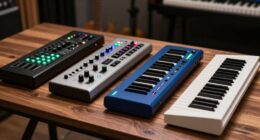
When choosing between weighted, semi-weighted, and synth action keys, consider how each feels and suits your playing style. Weighted keys mimic acoustic pianos, great for realism and developing finger strength; semi-weighted offers a balanced feel for comfort and responsiveness; synth action keys are lightweight and ideal for electronic music and fast play. Knowing these differences helps you avoid buying blindly. Keep exploring the options to find the perfect fit for your musical journey.
Key Takeaways
- Understand that weighted keys mimic acoustic pianos, ideal for authentic practice and finger strength.
- Semi-weighted keys offer a balanced feel, suitable for beginners and comfortable playing sessions.
- Synth action keys are lightweight and highly responsive, best for electronic music and fast passages.
- Choose based on your playing style: realistic feel for piano, responsiveness for electronic, or comfort for beginners.
- Knowing these differences prevents buying an instrument that doesn’t match your musical goals or playing preferences.
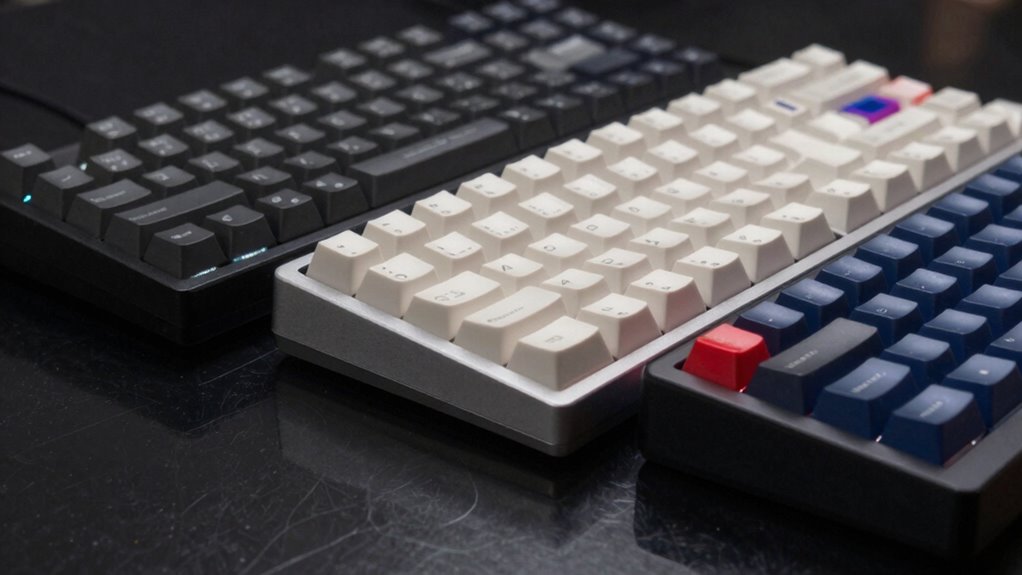
When choosing a piano keyboard, understanding the differences between weighted, semi-weighted, and synth action keys is essential for finding the right feel and response. These key differences directly impact your playing comfort and overall experience. Weighted keys mimic the feel of an acoustic piano, offering a heavier, more substantial touch that responds to your keystrokes with a realistic resistance. This feel is ideal if you’re aiming for authentic piano playing or shifting from an acoustic instrument, as it helps develop finger strength and proper technique. The key differences in weight and resistance mean you’ll notice a more natural response, making your practice sessions more comfortable and musically expressive.
Weighted keys replicate an acoustic piano’s feel, enhancing realism and finger strength development.
Semi-weighted keys, on the other hand, strike a balance between the heavier feel of weighted keys and the lighter response of synth action keys. They usually incorporate small weights or springs inside the keys, providing some resistance without the full heft of a traditional piano. This setup offers increased playing comfort for those who want a more dynamic touch than synth action keys but don’t need the full resistance of weighted keys. It’s particularly beneficial for beginners or players who prefer a lighter touch for faster passages or more delicate playing. The key differences here mean semi-weighted keys can be less tiring during long practice sessions, giving you a more natural, comfortable feel without sacrificing expressiveness.
Synth action keys are the lightest and most responsive, designed primarily for synthesizers and electronic music. They lack the mechanical resistance found in weighted or semi-weighted keys, making them feel more like a keyboard controller. This lightness can enhance playing comfort for fast, intricate passages, or for performers who need quick, repeated keystrokes. However, they don’t simulate the resistance of an acoustic piano, which might be a drawback if your goal is to develop finger strength or mimic authentic piano touch. The key differences in response and feel mean that synth action keys are best suited for electronic music, where speed and agility are prioritized over the tactile response of a traditional piano.
Ultimately, your choice depends on your playing style, goals, and comfort preferences. If you want authentic response and a realistic playing experience, weighted keys are the way to go. For a balanced feel that’s easier on your fingers, semi-weighted keys are ideal. If you’re focused on electronic music or fast passages, synth action keys provide the light, quick response you need. Knowing these key differences guarantees you pick a keyboard that enhances your playing comfort and helps you progress musically, rather than just choosing blindly.
Frequently Asked Questions
How Does Key Size Impact Playing Feel?
Your key size considerably impacts playing feel by affecting key responsiveness and playing dynamics. Larger keys generally offer more surface area, making it easier to strike with control and expressiveness. Smaller keys might feel more precise but can require more finger strength, influencing how dynamically you play. Consider your hand size and playing style when choosing, as the right key size enhances comfort and helps you achieve the desired responsiveness for your performance.
Can Semi-Weighted Keys Cause Finger Fatigue?
Semi-weighted keys can cause finger fatigue if you’re used to lighter digital keys or have a budget setup lacking resistance. They offer a middle ground, but if you’re playing for hours or prefer a more authentic feel, they might tire your fingers. Analog, more premium keyboards often provide better resistance, reducing fatigue, while budget digital options tend to be lighter. Choose based on your playing style and comfort needs.
Are Synth Action Keyboards Suitable for Beginners?
A synth action keyboard is like a light breeze—perfect for beginners. It offers quick, responsive keyboard sensitivity, making it easier to learn dynamics and playing techniques. These keyboards are generally more affordable and portable, helping you focus on fundamentals without feeling overwhelmed. If you’re just starting out, synth action is suitable because it provides a smooth learning curve and encourages practice, making it a smart choice for beginners.
How Does Action Type Affect Recording Quality?
Your action type considerably impacts recording quality by affecting key responsiveness and sound realism. Weighted keys offer a more authentic feel, helping you capture nuanced dynamics, while semi-weighted keys balance responsiveness with affordability. Synth action keys are lighter, which may limit expressiveness but can improve speed. Choosing the right action helps you record more naturally, capturing subtle variations in your performance and ensuring your recordings sound more true to life.
Do Weighted Keys Improve Long-Term Hand Health?
Weighted keys can help improve long-term hand health by mimicking acoustic piano feel, which promotes proper finger strength and technique. If you prefer digital instruments, choose models with adjustable key sensitivity to avoid strain. Unlike some semi-weighted or synth action keys, weighted keys provide more resistance, reducing the risk of injury over time. This setup encourages healthy hand positioning, making your playing more comfortable and sustainable in the long run.
Conclusion
So, next time you’re torn between weighted, semi-weighted, or synth action keys, remember—your choice might not make you a piano pro overnight. Ironically, the more you think you know, the more you might realize how little you actually do. Don’t buy blind; test them yourself. After all, what’s more weighted than a decision you didn’t make with your own hands? Happy playing—blind or not!