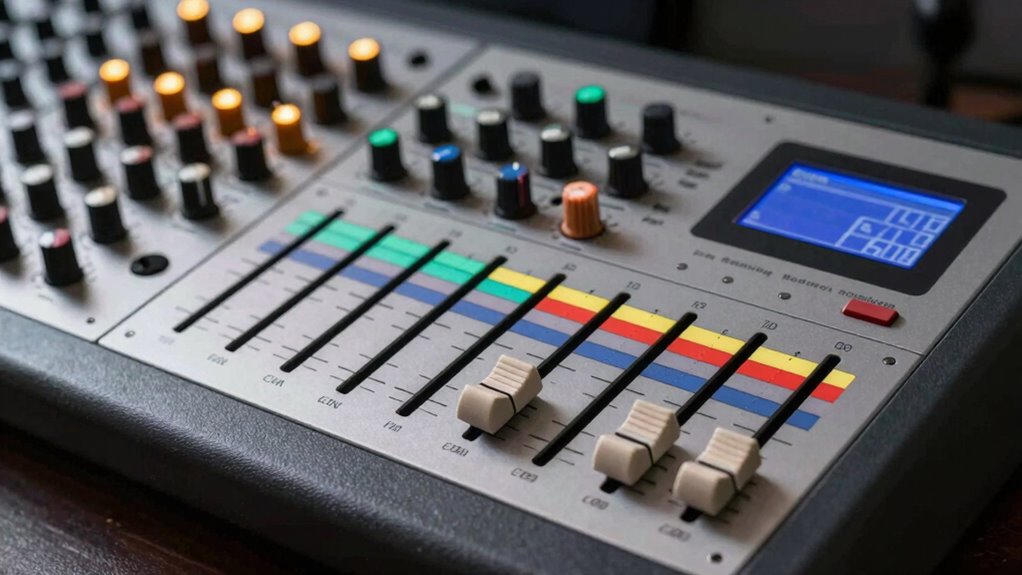

When building a vocal chain, start with the preamp to boost your signal and add character. Next, place the EQ to shape your tone and remove unwanted frequencies before compression. Finally, add the compressor to control dynamics and smooth out performance. This order helps preserve natural qualities while achieving a balanced, professional sound. Keep exploring this sequence to uncover even more tips for perfect vocal recordings.

Get audio and creator gear delivered free with Prime
- Fast, free delivery on millions of items
- Prime Video, Amazon Music and more included
- Member-only deals all year
Key Takeaways
- Start with the preamp to boost signal and add character before any tone shaping.
- Place EQ after the preamp to shape tone and remove unwanted frequencies early in the chain.
- Follow with the compressor to control dynamics and smooth the vocal performance.
- Maintain natural vocal qualities by placing EQ before compression to prevent over-raising resonances.
- The proper order (Preamp → EQ → Compressor) ensures a balanced, polished vocal sound suitable for mixing.
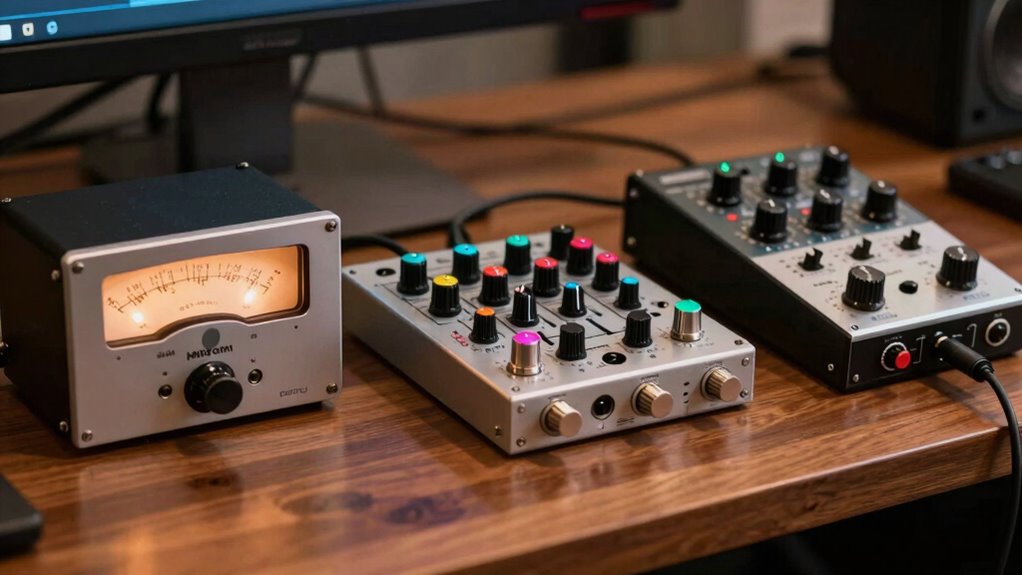
Ever wondered how professional vocal recordings achieve that polished, clear sound? It all starts with understanding how to craft your vocal chain effectively. One of the most critical aspects is shaping your vocal tone, which is heavily influenced by microphone placement. When you position your microphone correctly, you capture the natural qualities of your voice and minimize unwanted noise or resonances. Keep it too close, and you might get boomy or overly bass-heavy sounds; too far, and your vocals could sound distant or weak. Find that sweet spot where your voice sounds balanced and vibrant. This initial step sets the foundation for a professional recording, ensuring your vocal tone remains warm, clear, and expressive. Once you’ve nailed microphone placement, you can work on the other elements of your vocal chain with confidence, knowing your starting point is ideal. Proper gear order is essential because it determines how your sound is shaped and controlled throughout the process.
Moving forward, the order of your gear plays a big role in how your vocals develop. Typically, starting with a preamp is essential because it boosts your microphone signal to a usable level and adds character to your sound. A good preamp can add warmth or brightness, depending on its design, which shapes your vocal tone right from the beginning. After the preamp, you usually introduce EQ. This allows you to carve out unwanted frequencies—removing muddiness or harshness—while accentuating the qualities you want to stand out. Placing EQ after the preamp ensures you’re working with a strong, well-shaped signal, making your adjustments more precise. The final piece in the chain often is the compressor, which controls dynamics and evens out your vocal performance. It helps maintain consistency, ensuring your vocals sit well in the mix without abrupt volume jumps.
The sequence of preamp, EQ, then compressor is deliberate because it preserves the natural tone of your voice while allowing you to shape and control it effectively. The preamp sets the foundation, the EQ refines the tone, and the compressor manages dynamics. This order ensures each stage enhances the previous one, resulting in a clear, balanced, and professional-sounding vocal. When you understand how to properly position your microphone and follow this chain order, you’ll have a powerful tool to craft vocals that stand out. Whether you’re recording for a song, podcast, or voiceover, mastering this process gets you closer to that polished, radio-ready sound every time.
best microphone preamp for vocals
As an affiliate, we earn on qualifying purchases.
As an affiliate, we earn on qualifying purchases.
Frequently Asked Questions
Can I Customize the Order of the Vocal Chain?
Yes, you can customize the order of your vocal chain to suit your needs. Rearranging components like preamps, EQ, and compressors allows for different vocal tone shaping, depending on your desired sound. Keep in mind, your recording environment acoustics also influence how effective each setup is. Experimenting with the order helps you find the best balance, ensuring your vocals sit perfectly in the mix and sound great in various recording situations.
How Do I Choose the Right Preamp for Vocals?
Want to shape your vocal tone perfectly? Start by choosing a preamp with characteristics that complement your voice—warmth, clarity, or grit. The right preamp adds depth and personality, making your vocals stand out. Consider how its tone shaping qualities will blend with your style. Test different options, listen closely, and select one that enhances your natural sound, giving you that professional, polished vocal presence.
What Are Common EQ Settings for Vocals?
You should start with a narrow boost around 3-5kHz to enhance vocal clarity and sustain, then cut unwanted low frequencies below 80Hz to reduce rumble. Use a gentle dip around 200Hz if your vocals sound muddy, and boost slightly around 10-12kHz for brightness. Focus on vocal sustain by selecting the right EQ bands, emphasizing presence without making the vocals harsh or thin.
How Does Compression Affect Vocal Tone?
Compression shapes your vocal tone by controlling dynamic range, making softer parts more audible and taming loud ones. This process smooths out inconsistencies, resulting in a more balanced and polished sound. It allows you to focus on vocal tone shaping, adding warmth or punch as needed. By managing dynamics, compression guarantees your vocals sit well in the mix, giving you greater control over how your voice is perceived.
Should I Add Effects After the Vocal Chain?
Yes, you should add effects after the vocal processing chain to enhance your sound. Applying vocal effects like reverb, delay, or modulation at the end allows you to shape the final tone without interfering with the core processing chain. This approach gives you more control over your vocal sound, ensuring the effects complement your processed vocals and create a polished, professional mix.
Conclusion
Remember, the order of your vocal chain matters, but don’t get hung up on perfection. Experiment with different setups to find what sounds best for your voice and style. Some might worry about messing up the signal, but trust your ears—small adjustments can make a huge difference. Keep it simple, stay creative, and you’ll craft a vocal sound that’s polished and expressive. The right chain release your vocal potential, so have fun and trust your instincts!
Evergreen bestsellers Picks
bestsellers
As an affiliate, we earn on qualifying purchases.