Implementing version control for your music projects helps you track multiple edits, experiment safely, and collaborate smoothly. It prevents chaos by saving different versions, allowing you to revert or compare earlier states easily. Using tools and branch management techniques borrowed from software development, you can isolate ideas and work on them independently. This organized approach keeps your workflow efficient and less stressful. Keep exploring to discover how to set up and optimize your version control system effectively.

Get audio and creator gear delivered free with Prime
- Fast, free delivery on millions of items
- Prime Video, Amazon Music and more included
- Member-only deals all year
Key Takeaways
- Implement version control to track changes, manage multiple project iterations, and prevent work loss.
- Use branch management to experiment with ideas separately, merging successful edits back into the main project.
- Facilitate collaboration by allowing multiple contributors to work independently and review changes before integration.
- Utilize specialized tools and software to visualize, compare, and revert to different versions easily.
- Adopt structured strategies to streamline workflows, encourage experimentation, and maintain organized, flexible music projects.
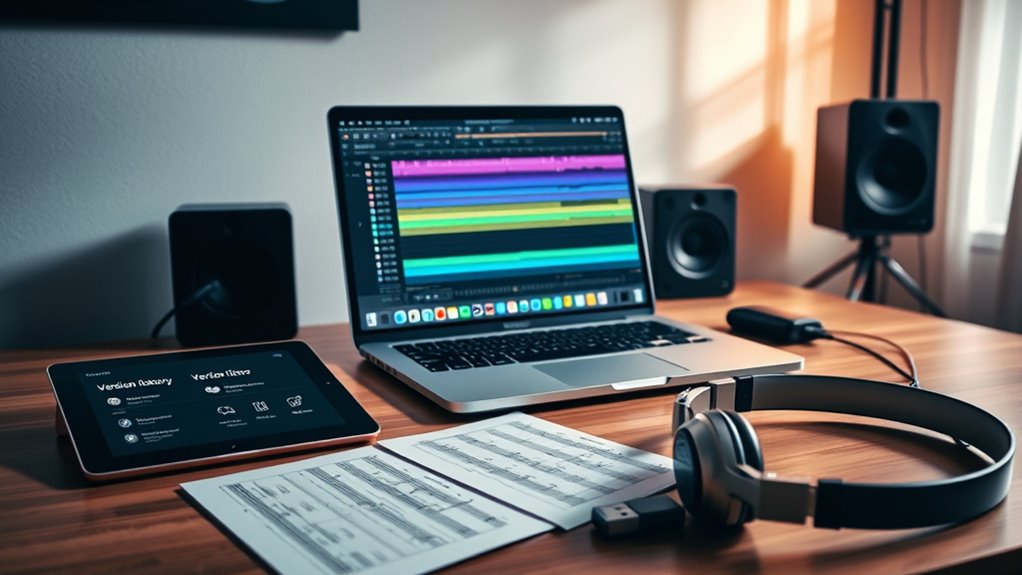
Managing music projects can become chaotic without a proper system in place, especially when multiple versions and edits are involved. Without a clear method for tracking changes, you risk losing valuable work, overwriting important files, or creating confusion among collaborators. That’s where version control comes into play, offering a structured way to manage different iterations of your project. Central to this system is branch management, a technique borrowed from software development, which allows you to create separate branches for various ideas, edits, or stages of your music production. By doing so, you can experiment freely without risking the integrity of your main project. If an idea proves successful, you can merge it back into your main branch; if it doesn’t work out, you simply discard that branch without affecting the core work. This approach provides clarity and flexibility, making it easier to explore creative options without losing track of what’s finalized.
Branch management also enhances collaborative workflows. When multiple producers, engineers, or artists work on the same project, managing who’s working on what becomes vital. With a well-structured version control system, each contributor can work on their own branch, making changes independently. This reduces conflicts and minimizes the chances of overwriting someone else’s work. When a contributor completes their part, they can submit a pull request or merge their branch into the main project, after review. This process ensures everyone stays on the same page and maintains a clear record of who made which changes and when. It’s especially useful in collaborative environments where multiple edits happen simultaneously, as it keeps the workflow organized and transparent. Additionally, understanding the importance of alimony laws in related legal contexts can help artists and producers navigate contractual and financial responsibilities during collaborative projects.
In practice, implementing branch management and collaborative workflows might involve using specialized software or platforms designed for version control. These tools provide visual interfaces to manage branches, track changes, and facilitate collaboration. They allow you to see the evolution of your project at a glance, compare different versions side-by-side, and revert to previous states if necessary. This level of control saves you time and prevents frustration, as you can easily backtrack and experiment without fear of losing critical work. By adopting these structured strategies, you’ll find that managing multiple versions and coordinating with others becomes much more straightforward, allowing your creative process to flow smoothly and efficiently. Ultimately, mastering branch management and collaborative workflows transforms a potentially chaotic process into a disciplined, productive, and inspiring journey.
music project version control software
As an affiliate, we earn on qualifying purchases.
As an affiliate, we earn on qualifying purchases.
Frequently Asked Questions
Can Version Control Handle Large Audio Files Efficiently?
Yes, version control can handle large audio files efficiently by using audio file compression to reduce file sizes and optimize storage. You should also consider cloud storage solutions, which make managing and backing up large files easier. These methods help you track changes without slowing down your workflow, ensuring smooth collaboration and secure storage for your music projects.
What Are the Best Tools for Music Version Control?
You should try tools like Git LFS and Melodyne, which excel at music version control. They offer strong branch management, letting you experiment without risking your main project. Collaboration features enable seamless teamwork, so you can easily share and sync changes with others. Imagine effortlessly managing multiple versions of your track, collaborating smoothly, and never losing your work—these tools make that vision a reality.
How Does Version Control Integrate With Digital Audio Workstations (DAWS)?
You can integrate version control with your DAWs through specialized tools or plugins that manage audio file management seamlessly. These integrations enable you to track changes, revert to previous versions, and streamline collaboration workflows. By storing project files and audio data in version-controlled repositories, you guarantee your work is organized, easily shared, and protected against data loss, making your music production process more efficient and collaborative.
Is There a Cost Difference Between Open-Source and Commercial Options?
You’ll find that open-source version control options typically have a lower cost comparison since they’re free and don’t require licensing fees. In contrast, commercial tools often come with licensing differences that can increase expenses but may offer dedicated support and advanced features. If budget is a concern, open-source solutions are a great choice, but if you need more professional support and features, investing in commercial options might be worth the extra cost.
How Do I Backup and Restore Previous Music Project Versions?
Imagine losing your entire music masterpiece just because you didn’t back it up! To avoid this nightmare, rely on file history and change tracking. Save your project regularly using version control tools or backup software, which lets you restore previous versions effortlessly. With a few clicks, you can revert to any earlier stage, ensuring your creative genius stays safe and sound, no matter what surprises come your way.
Conclusion
Embracing version control transforms how you manage music projects, saving you time and preventing lost work. Did you know that 70% of creators who use version control report fewer mistakes and easier collaboration? By adopting these tools, you stay organized and confident throughout your creative process. So, start integrating version control today—your music deserves a system as dynamic as your creativity, ensuring every version is just a click away.
Halloween Picks
halloween
As an affiliate, we earn on qualifying purchases.