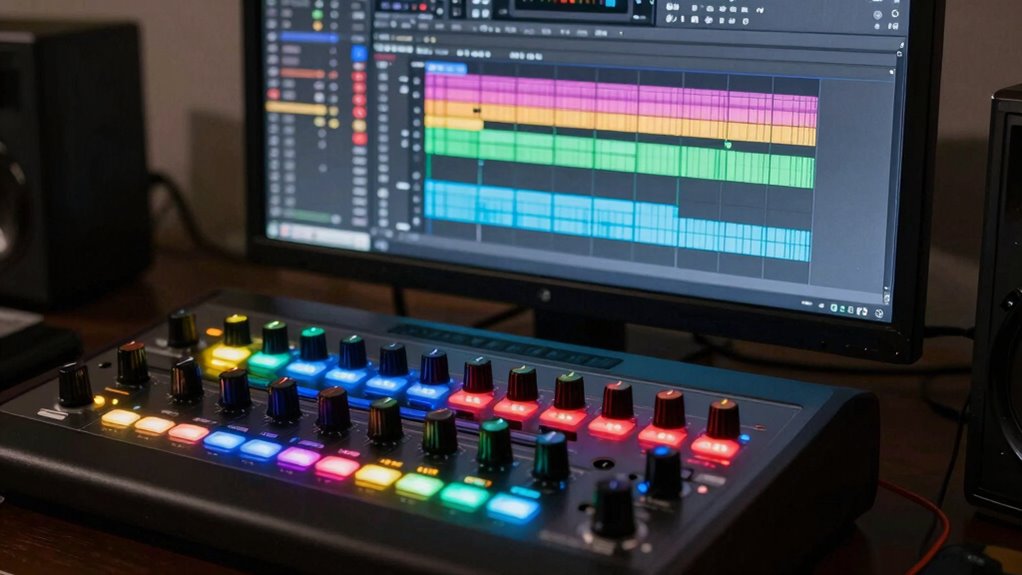

To keep plugin chains consistent across sessions, you should save plugin chain presets with clear naming conventions and store them in dedicated folders within your project directory. Use session recall features available in your DAW to restore plugin order and settings automatically. Regularly update and verify presets as you refine your sound. Organize your workflow carefully, ensuring all plugin parameters save correctly. If you want to master this process and maintain perfect consistency, you’ll find more effective strategies here.

Get audio and creator gear delivered free with Prime
- Fast, free delivery on millions of items
- Prime Video, Amazon Music and more included
- Member-only deals all year
Key Takeaways
- Save plugin chain presets with clear naming conventions for easy identification and retrieval.
- Use session recall features to automatically restore plugin order and settings when reopening projects.
- Store presets in dedicated folders within your project directory for organized access across sessions.
- Regularly update and verify presets to ensure all plugin parameters are correctly saved.
- Maintain consistent workflow practices, including session backups and parameter management, to prevent accidental changes.
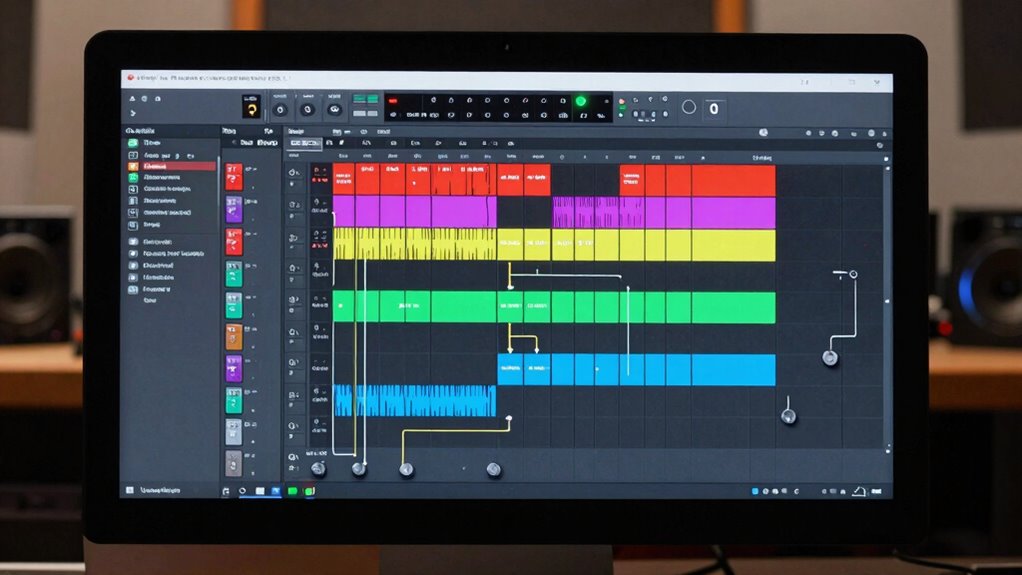
Keeping your plugin chains consistent across sessions is essential for maintaining a cohesive sound and workflow. When you develop a specific tone or processing style, it’s important to be able to reproduce it precisely each time you work on a project. One of the best ways to do this is by utilizing plugin chain presets. These presets allow you to save the exact settings for each plugin in your chain, making it easy to recall the same sound configuration later. Instead of manually tweaking plugins every time, you can simply load your preset, ensuring consistency and saving valuable time.
Save plugin chain presets to effortlessly reproduce your signature sound and streamline your workflow.
Most digital audio workstations (DAWs) now offer session recall features, which go a step beyond just saving plugin presets. These features enable you to save the entire state of your session, including plugin settings, mixer configurations, and even plugin chain order. When you reopen your project, everything is restored exactly as you left it, eliminating the guesswork and potential for accidental changes. This is especially useful when you’re collaborating with others or revisiting a project after some time. You won’t need to remember every tweak you made; instead, you can rely on session recall to bring back your precise setup. Understanding how plugin parameter management works in your DAW can help ensure that no crucial settings are overlooked during the save process. Additionally, being aware of session management features can further prevent missing important details that ensure consistent results.
To maximize the benefits of plugin chain presets and session recall features, you should organize your workflow around saving and naming presets systematically. Develop a naming convention that clearly describes the intended sound or purpose, so you can quickly find the right preset for each session. Additionally, it’s wise to create a dedicated folder within your plugin or project directory for storing these presets, keeping everything accessible and organized. This way, when you start a new project or resume work on an existing one, loading your preferred plugin chain becomes effortless, and your sound remains consistent. Using organization strategies can further streamline your process and prevent confusion when managing multiple presets and sessions.
Another tip is to regularly update and refine your presets as your skills and preferences evolve. Don’t hesitate to tweak and save new versions, but always keep the original presets intact for reference. When working with session recall features, double-check that all settings are correctly saved before closing your project. Sometimes, plugins may not save certain parameters by default, so it’s important to verify that your entire chain is stored accurately. Being familiar with digital audio workstation capabilities can help you understand how to ensure complete and reliable saves, preventing potential inconsistencies in your workflow.
DAW plugin chain preset organizer
As an affiliate, we earn on qualifying purchases.
As an affiliate, we earn on qualifying purchases.
Frequently Asked Questions
Can Automation Affect Plugin Chain Consistency?
Yes, automation can affect plugin chain consistency. When you automate parameters, it can cause variations in plugin calibration, leading to inconsistencies across sessions. Automation might change settings unexpectedly or disrupt session stability if not managed carefully. To keep your plugin chains consistent, double-check automation curves and guarantee your plugin calibrations remain stable, so your sound stays uniform, regardless of automation adjustments during different sessions.
How Do I Back up Plugin Chain Settings?
To back up plugin chain settings, you should save your plugin configuration files regularly. Most DAWs let you export or save plugin presets or configurations, ensuring session preservation. You can also back up your entire project folder, including plugin settings, to prevent data loss. Keep these backups in a separate location or cloud storage. This way, you can easily restore your plugin chains exactly as you set them up, maintaining consistency across sessions.
Are There Plugins That Help Synchronize Sessions?
You might find it surprising, but yes, some plugins help with session management and plugin synchronization, ensuring your settings stay consistent. Tools like Universal Audio’s console or certain DAW-specific features can automatically sync plugin states across sessions. These plugins prevent the frustration of manual adjustments, keeping your workflow smooth. They’re perfect for maintaining consistent plugin chains, so your sessions stay uniform, no matter when or where you open them.
What Issues Arise From Different Plugin Versions?
Plugin version conflicts can cause session variability, making your projects unpredictable. When you use different plugin versions across sessions, you might encounter issues like missing features, altered sound, or crashes. These conflicts can disrupt your workflow and compromise project consistency. To avoid this, always keep your plugins updated and maintain the same versions. Regularly backing up your plugin configurations also helps guarantee smooth, stable sessions.
How to Handle Plugin Updates Without Disrupting Chains?
Think of plugin updates like changing the gears on a bike—if you’re not careful, your chain can slip or get stuck. To handle plugin updates without disrupting chains, you should regularly back up your plugin chain configurations and use version control to prevent plugin version conflicts. When updates happen, restore your chain from saved settings, ensuring smooth operation and consistent sound across sessions.
Conclusion
Think of your plugin chains as a treasured playlist—each session, a new concert. To keep the harmony intact, save your settings like song notes, ensuring your mix remains a familiar melody. When you open your project again, it’s like tuning your instrument for a perfect performance. Consistency becomes your symphony, where every session echoes the same song, creating a seamless experience that resonates long after the last note fades.
Halloween Picks
halloween
As an affiliate, we earn on qualifying purchases.