
To master wavetable synthesis modulation strategies, focus on waveform interpolation and modulation depth. By smoothly blending between different waveforms, you can create evolving sounds that shift seamlessly over time. Adjusting modulation depth controls how dramatic these changes are, from subtle vibrato to wild spectral shifts. Combining these techniques gives you rich, dynamic textures and organic soundscapes. Keep exploring these concepts further to reveal even more expressive sound design possibilities.
Key Takeaways
- Modulation of wavetable position enables dynamic sound evolution through smooth waveform transitions.
- Increasing modulation depth results in more dramatic timbral shifts and expressive sound changes.
- Combining modulation depth with waveform interpolation ensures seamless transitions and complex textures.
- Precise control of modulation parameters allows for subtle vibrato or chaotic sonic effects.
- Exploring diverse waveforms and modulation strategies broadens creative sound design possibilities.
Have you ever wondered how digital instruments create dynamic, evolving sounds? Wavetable synthesis makes this possible by allowing you to transform a single waveform into a rich tapestry of sonic textures. At its core, wavetable synthesis involves steering through a series of waveforms stored in a table, each representing a different harmonic or timbral quality. The key to creating smooth, expressive sound changes lies in techniques like waveform interpolation and modulation depth. When you manipulate these elements, you can craft sounds that evolve seamlessly, making your music more engaging and lively.
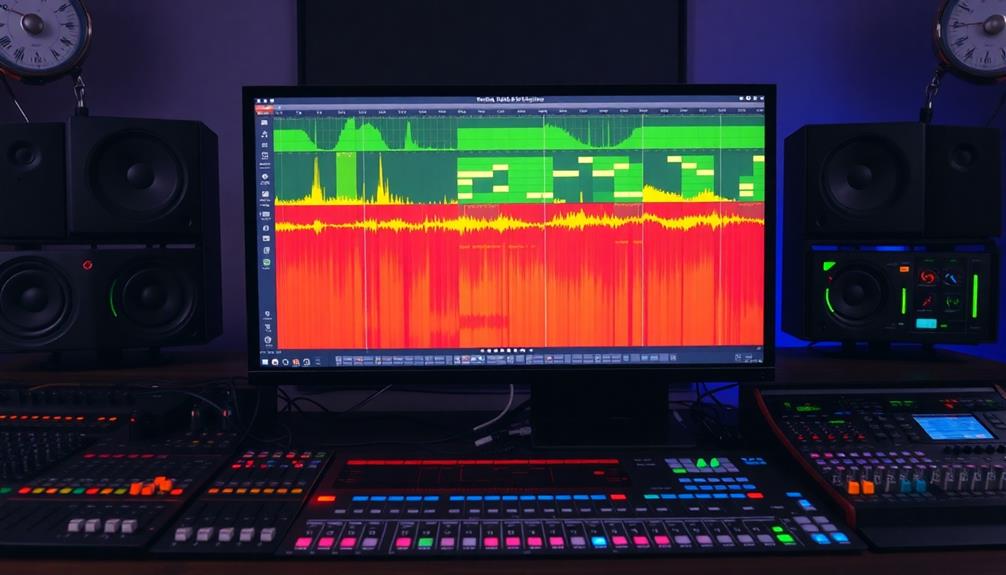
Waveform interpolation is the process of blending between two or more waveforms within a wavetable. Instead of jumping abruptly from one wave shape to another, interpolation smoothly transitions the sound, creating a continuous evolution. Think of it as morphing one image into another, but in the domain of sound. As you adjust the interpolation, you control how quickly or gradually the timbre shifts, giving you precise command over the character of your sound. This technique is essential for creating evolving pads, morphing leads, or complex textures that change over time, adding depth and interest to your compositions.
Modulation depth plays a critical role in shaping how dramatically your sound changes. It defines how far the modulation affects the parameter you’re controlling—be it pitch, filter, or wavetable position. When you increase modulation depth, the changes become more pronounced, resulting in more dramatic shifts in tone or texture. Conversely, a shallow modulation depth produces subtle, almost imperceptible variations, ideal for adding gentle movement or subtle vibrato. By carefully adjusting modulation depth, you can craft sounds that are expressive without becoming chaotic. For instance, tweaking the modulation depth when sweeping through a wavetable can produce shimmering effects or dramatic spectral shifts, depending on your intent.
In wavetable synthesis, modulation depth and waveform interpolation work hand-in-hand to create complex, evolving sounds. As you modulate the position within the wavetable, interpolation ensures the transition remains smooth, avoiding abrupt jumps that could disrupt the sound’s flow. By controlling the modulation depth, you determine how intense these transitions are, enabling you to craft everything from subtle warbles to wild, chaotic textures. This combination offers immense creative freedom, letting you design sounds that shift organically over time, much like a living organism. Mastering these strategies allows you to push the boundaries of digital synthesis, transforming static waveforms into expressive, dynamic sonic landscapes. Additionally, exploring the diverse waveform options can unlock even more unique sonic textures, enriching your sound design.
Frequently Asked Questions
How Does Wavetable Synthesis Differ From Subtractive Synthesis?
You’ll find wavetable synthesis differs from subtractive synthesis by using an oscillator that continuously scans through a table of waveforms, allowing dynamic timbre changes. Unlike subtractive synthesis, which filters harmonics from a static waveform, wavetable lets you modulate between waveforms and shape sounds with envelope shaping. This method grants more complexity and movement, as you can manipulate the oscillator’s position in the table to create evolving textures.
Can Wavetable Synthesis Emulate Acoustic Instrument Sounds?
Imagine the warm, rich tones of a piano or the breathy whisper of a flute. Wavetable synthesis can digitally emulate these sounds, offering an acoustic approximation through carefully crafted waveforms. You can manipulate the tables to mimic the dynamic nuances of real instruments, creating a convincing acoustic feel. While it may not fully capture all the subtleties, it’s a powerful tool for realistic digital emulation of acoustic instrument sounds.
What Are the Best Modulation Techniques for Creating Evolving Textures?
To create evolving textures, you should focus on dynamic modulation techniques like LFOs, envelopes, and MIDI controllers. These tools allow you to shape the wavetable’s position, amplitude, and filter parameters in real-time, fostering rich timbral evolution. Experiment with modulating multiple parameters simultaneously, adjusting rates and depths to craft complex, dynamic sounds that continuously shift and evolve, giving your textures a lively, organic feel.
How Do You Select the Optimal Wavetable for a Sound Design Project?
You select the ideal wavetable by considering its visual compatibility and waveform diversity. Look for wavetables that visually match the desired sonic texture, ensuring they complement your project’s aesthetic. Choose those with a broad range of waveforms to provide rich modulation options and evolving sounds. Test different wavetables in your context, focusing on how their visual and sonic characteristics align with your creative goals, for dynamic and expressive results.
Are There Hardware Synthesizers Specialized for Wavetable Modulation?
Imagine a spaceship cockpit, packed with controls — that’s what specialized hardware synthesizers with wavetable engines feel like. These devices often include dedicated hardware controllers that make modulation intuitive and hands-on. Brands like Waldorf, PPG, and Elektron create synths specifically designed for wavetable modulation, giving you precise control over complex wave changes. If you want deep, expressive sound design, investing in one of these synthesizers transforms your creative process into an epic voyage.
Conclusion
You’ve explored how modulation strategies can elevate wavetable synthesis, adding depth and expressiveness to your sounds. By experimenting with different techniques, you discover new sonic possibilities. Remember, “Variety is the spice of life”—so don’t be afraid to try wild modulations and push boundaries. Embrace the process, and soon you’ll craft unique tones that truly stand out. Keep exploring, and let your creativity lead the way to innovative sound design!