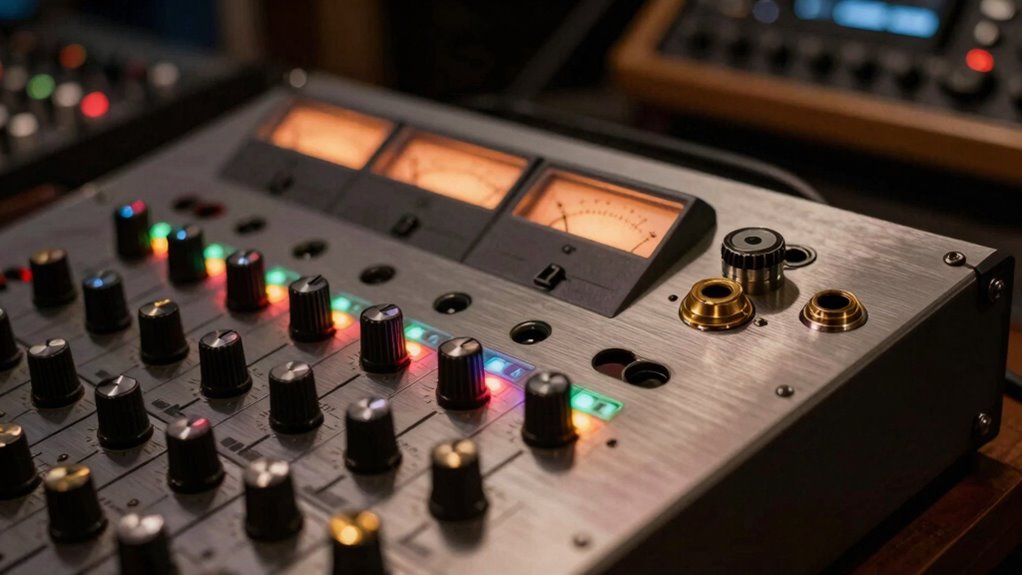

To keep punch while adding glue with hardware mix bus compression, use vintage gear for warmth and character, pairing it with modern compressors for control. Set gentle attack and release times to preserve transients and punch, avoiding over-compression. Focus on subtle settings that unify your mix without flattening dynamics, enhancing cohesiveness without sacrificing punch. By balancing these techniques, you’ll create a polished, lively sound—exploring more tips can help you achieve professional results.
Key Takeaways
- Use gentle, sub-3dB gain reduction to maintain punch while adding cohesion.
- Set attack times fast enough to preserve transients, preventing a flattened feel.
- Combine vintage hardware for warmth with modern compressors for precise control.
- Avoid heavy compression; aim for subtle glue to unify without sacrificing dynamics.
- Adjust release settings to complement the song’s rhythm, maintaining energy and punch.

Have you ever wondered how top-tier mixes achieve that polished, cohesive sound? One key element is the strategic use of hardware mix bus compression. Instead of relying solely on digital plugins, many professional engineers turn to vintage hardware and modern compressors to shape the overall dynamics of a mix. Using hardware on the mix bus provides a unique character and a tactile feel that’s hard to replicate with software alone. Vintage hardware, with its warm transformers and distinctive circuitry, imparts a subtle coloration that adds depth and richness. Modern compressors, on the other hand, offer precision and versatility, allowing you to dial in the perfect amount of glue without sacrificing punch.
Vintage hardware adds warmth and character, while modern compressors provide precision and control for a polished, cohesive mix.
When you incorporate vintage hardware into your setup, you tap into decades of sonic character that has been proven in countless hit recordings. These units often have a particular harmonic distortion and saturation that can make your mix sound more cohesive and lively. They add a sense of analog warmth and help glue disparate elements together, creating a unified sound. pairing vintage hardware with modern compressors gives you the best of both worlds: the color and personality of classic gear combined with the control and consistency of contemporary technology. For example, you might use a vintage opto compressor for gentle, musical compression, then follow it with a modern VCA compressor to fine-tune the dynamics and achieve a transparent, punchy result.
The key to effective hardware mix bus compression is subtlety. You don’t want to crush your mix; instead, aim for just enough compression to add cohesion and glue. Set your attack and release times thoughtfully to preserve transients and maintain punch. The vintage hardware can impart a slight coloration, so you’ll want to keep your settings conservative to avoid overt coloration that might muddy the mix. Modern compressors can help you dial in precise ratios and thresholds, ensuring your compression enhances the mix’s energy without flattening it out. Additionally, understanding the characteristics of analog hardware can help you make more informed choices in your signal chain.
Ultimately, the goal is to create a balanced, vibrant sound that feels unified and lively. Hardware mix bus compression, especially when combining vintage hardware with modern compressors, offers a tactile, musical approach to achieving that. It’s about adding just enough glue to hold everything together while preserving the punch and clarity of your individual tracks. With a careful blend of these tools, you can elevate your mixes from good to great, giving them that professional, polished finish that top engineers seek.
Frequently Asked Questions
Can Hardware Bus Compressors Be Automated for Recall Purposes?
Yes, hardware bus compressors can be automated for recall purposes through various methods. You can use automatic recall systems that save your preferred settings, making it easier to restore your mix quickly. Additionally, hardware customization options like MIDI control or automation interfaces allow you to program and recall specific compressor settings effortlessly. This way, you maintain consistency and efficiency in your workflow without sacrificing the unique qualities of your hardware.
What Are the Main Differences Between Hardware and Software Bus Compressors?
Think of hardware and software bus compressors as classic jazz and modern electronic music—both great, but with distinct qualities. Hardware units offer a tactile, warm sound with real-time operation, making them ideal for punch and glue. Software emulations aim to replicate this digitally, but may introduce latency concerns and less tactile control. Your choice depends on your workflow—hardware delivers immediacy, software offers flexibility.
How Do I Choose the Right Hardware Compressor for My Mix Bus?
To choose the right hardware compressor for your mix bus, consider vintage models for character and warmth, especially if you prefer a classic sound. Decide between tube and solid-state units: tubes add warmth and musicality, while solid-state offers cleaner, more transparent compression. Test different units to see how they glue your mix while preserving punch. Ultimately, pick a compressor that complements your style and enhances your mix’s cohesion.
Are There Specific Genres That Benefit Most From Hardware Bus Compression?
Certain genres, like jazz, classical, and vintage-inspired rock, benefit the most from hardware bus compression because they thrive on genre-specific dynamics and analog warmth. You’ll notice how hardware compressors add a natural punch and musical character, enhancing the overall warmth and cohesion of the mix. If you’re aiming for a rich, organic sound with preserved punch, hardware bus compression is a great choice, especially for these styles.
What Maintenance Is Required for Hardware Compression Units?
You should regularly perform calibration procedures to guarantee your hardware compression units maintain ideal performance and consistent sound. Check and adjust the calibration as needed, following the manufacturer’s guidelines. Additionally, maintain the power supply by inspecting for dust, ensuring proper connections, and replacing any faulty components. These steps help prevent issues like distortion or signal loss, keeping your gear reliable and preserving the punch and glue your mixes need.
Conclusion
Don’t shy away from using hardware mix bus compression; it’s a powerful tool to add punch and glue to your mixes. Some might worry it’s too tricky or limits flexibility, but with a little practice, you’ll find it straightforward and rewarding. Embrace the unique character hardware compressors bring, and you’ll notice your mixes become more cohesive and lively. Give it a try—you might just find your new go-to for that polished, professional sound.