Choosing between a DJ controller and a standalone setup depends on your style and gig environment. If you want portability, quick setup, and access to digital effects, a controller connected to a laptop may suit you best. For reliable, hardware-focused performances with less tech fuss, standalone systems are ideal. Consider where and how you’ll perform, then explore which option matches your needs for smooth, impactful gigs—more insights await to guide your decision.

Get audio and creator gear delivered free with Prime
- Fast, free delivery on millions of items
- Prime Video, Amazon Music and more included
- Member-only deals all year
Key Takeaways
- Choose a DJ controller for portability, affordability, and ease of setup in versatile or smaller venues.
- Opt for standalone systems for durability, high stability, and complex hardware-based performances in larger or high-stakes gigs.
- Use controllers when working within digital environments with extensive libraries and software effects.
- Select standalone setups for live, hardware-focused acts emphasizing reliability and minimal software dependency.
- Consider your gig environment, visual setup, and performance style to determine whether flexibility or robustness is more important.
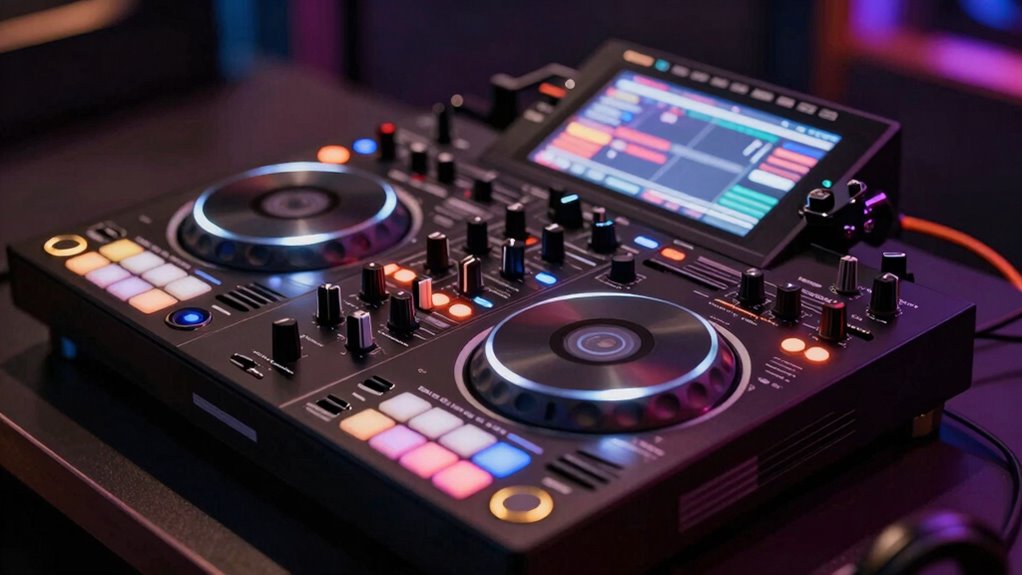
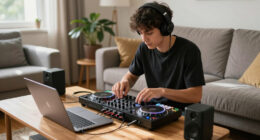
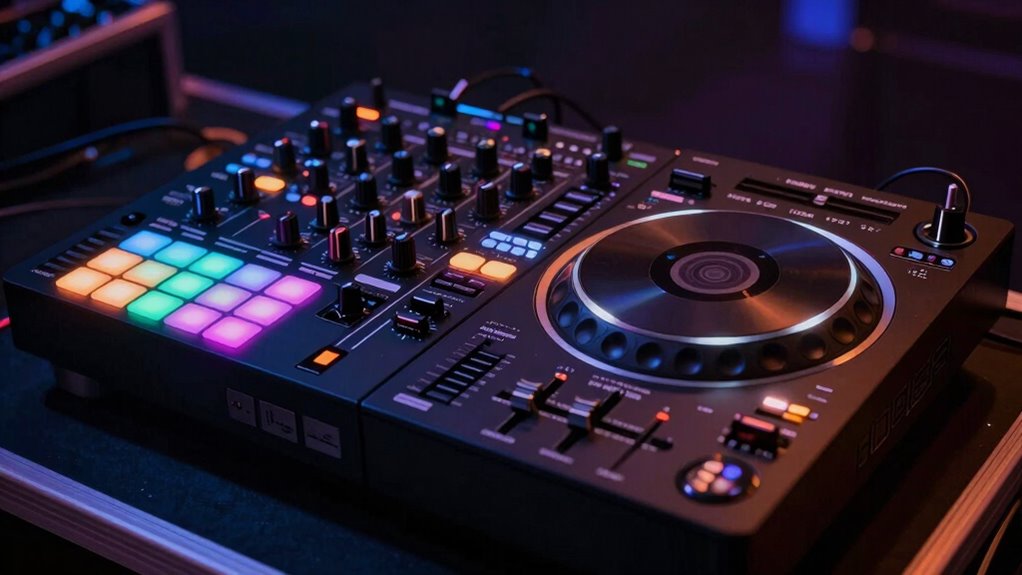
When choosing between a DJ controller and a standalone setup, understanding their differences is essential to finding the right fit for your mixing style. Both options serve distinct purposes and cater to different needs, especially when it comes to music production and live performance. A DJ controller acts as an interface that connects to a laptop or other digital devices, offering tactile control over software like Serato, Traktor, or Rekordbox. This setup is ideal if you prefer working within a digital environment, giving you access to extensive music libraries, effects, and customizable features. It’s portable, often more affordable, and easy to set up, making it perfect for gigs where quick setup and flexibility matter most.
A DJ controller connects to your laptop, offering tactile control over digital music software for versatile, portable mixing.
On the other hand, a standalone setup is a fully integrated system that doesn’t require a computer. It typically includes dedicated hardware units like CDJs, mixers, and performance pads. With this configuration, you’re directly interacting with the music, which can streamline your workflow and reduce technical issues related to software crashes or compatibility. Standalone systems shine in live performances, especially when you want to focus solely on the music without distractions from a laptop. They often feature high-quality audio outputs, robust build, and intuitive controls that let you perform complex mixes and effects on the fly. If your gigs demand quick transitions and high reliability, a standalone setup might be the better choice.
Your decision should also consider how you approach music production. If you’re heavily involved in creating and editing tracks, a DJ controller linked to your digital setup allows for seamless integration with your production tools. It grants you the flexibility to adjust tracks, add effects, and experiment creatively before performing live. Conversely, if your focus is on delivering polished, high-energy live performances with an emphasis on hardware control, a standalone system offers a more tactile and immediate experience. It minimizes dependence on software and enhances performance stability, making it easier to execute spontaneous improvisations.
Additionally, color accuracy in your setup can influence how well your visuals match your music experience, especially when integrating projectors or screens into your gigs. Ultimately, the right setup depends on your specific needs, style, and environment. If portability and software versatility are your priorities, a DJ controller paired with a laptop works well. If durability, reliability, and a hardware-centric approach are more important, then a standalone setup will serve you better. Both options have their strengths, but knowing how each aligns with your music production processes and live gigs will help you make an informed choice. Whichever you select, understanding their core differences ensures you’re prepared to deliver memorable performances tailored to your unique style.
Popular right now

Philips 4400 Series Fully Automatic Espresso Machine with LatteGo Milk System

Sony WH-1000XM4C Wireless Noise-Cancelling Headphones, Black

Breville Bambino Espresso Machine, Brushed Stainless Steel
As an affiliate, we earn on qualifying purchases.
Frequently Asked Questions
Can I Upgrade a DJ Controller Later to a Standalone System?
You can upgrade a DJ controller later, but it depends on its design and hardware compatibility. Some controllers offer limited upgrade options, while others provide modular flexibility, allowing you to add or replace components. If you want future-proofing, choose a controller with good upgrade options, but for true standalone systems, you’ll likely need to invest in a dedicated device. Always check the manufacturer’s specifications for possible upgrade paths.
Which Setup Offers Better Sound Quality for Professional Gigs?
You’ll find that standalone systems often deliver better sound quality, with many models boasting higher audio fidelity and enhanced sound clarity. Nearly 80% of professional DJs prefer standalone setups for their cleaner, more detailed audio output. This means your gigs will sound sharper and more polished, helping you impress the crowd. Standalones eliminate extra layers of processing, giving you more control over sound quality and ensuring your mixes are crystal clear.
Are There Specific Genres Better Suited for Each Setup?
You’ll find that certain genres suit each setup’s strengths. DJ controllers excel in electronic, hip-hop, and dance music, where performance versatility and quick access to effects matter. Standalone units shine in genres like house, techno, or live remixing, offering seamless, reliable performance without needing a laptop. Your choice depends on genre suitability and how much flexibility you want during gigs—controllers for versatility, standalone for simplicity and stability.
How Does Setup Size Impact Portability and Transport?
Did you know that smaller setups increase transport convenience by up to 50%? Your setup size directly impacts portability challenges, making compact gear easier to carry and set up. If you frequently move between gigs, opting for a smaller, lightweight controller or standalone unit minimizes transport hassle. Larger setups can be cumbersome, but they often offer more features. Choosing the right size depends on balancing your performance needs with ease of transport.
What Are the Initial Costs for DJ Controllers Versus Standalone Units?
You’ll find that DJ controllers typically cost less upfront, making them a good choice if you’re on a tight budget. Standalone units usually come with higher initial costs due to their advanced features and built-in hardware, which can also mean more technical complexity. Consider your budget and experience level carefully, as controllers are more affordable and easier to operate, while standalone gear offers more independence but at a higher price.
Conclusion
Ultimately, choosing between a DJ controller and a standalone setup depends on your style and needs. If you’re just starting out or want flexibility, a controller is like a trusty map guiding you through familiar territory. But if you crave independence and a seamless, all-in-one experience, a standalone system is your island. Remember, “A chain is only as strong as its weakest link,” so pick the setup that keeps your gigs smooth and your vibe strong.