To fix the low end quickly, place bass traps in your room’s corners, where bass energies build up the most. Install them along walls behind speakers and near your listening position to absorb excess low frequencies before they cause muddiness. Proper placement prevents tricky resonances and standing waves, creating tighter, clearer bass. If you continue exploring, you’ll discover even more strategies to fine-tune your sound environment effectively.
Key Takeaways
- Place bass traps in room corners where low-frequency energy naturally accumulates.
- Install traps along walls behind speakers and at the listening position for optimal absorption.
- Focus on treating reflection points and areas with standing waves to reduce resonances.
- Use bass traps strategically to prevent low-end buildup before it causes muddiness.
- Combine corner placement with wall and ceiling treatments for balanced, tight bass response.
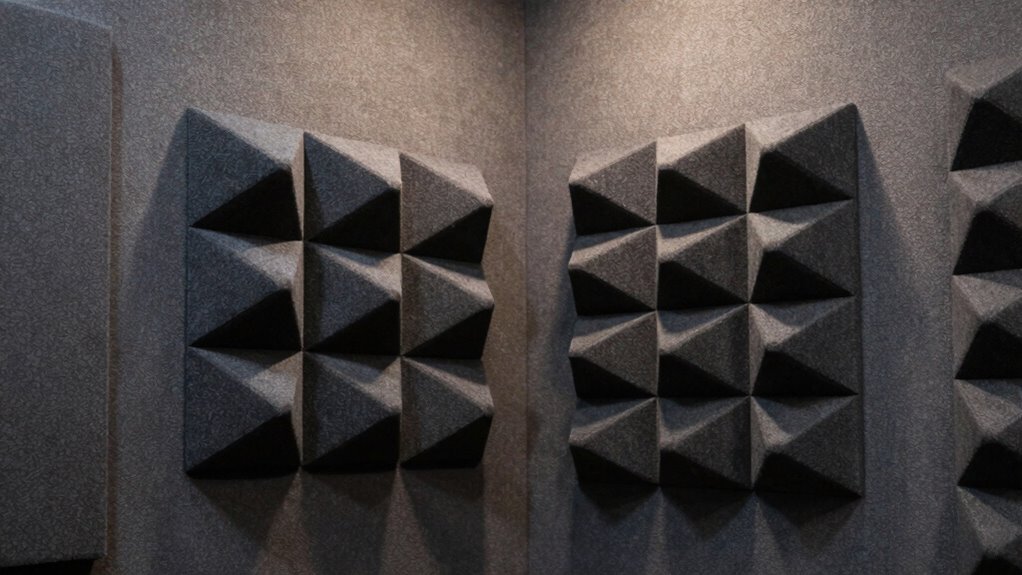
Have you ever noticed that your recordings or listening sessions sound muddy or boomy? That’s often a sign that your room’s acoustics aren’t helping the low frequencies settle properly. Low-end issues are common in home studios and listening spaces because bass frequencies tend to build up and resonate unevenly. To fix this, you need to understand how room acoustics and sound absorption influence your space. Bass traps are specifically designed to address these problems by absorbing excess low frequencies and smoothing out the sound. Properly understanding sound absorption is essential to making informed decisions about treatment. Room acoustics play a huge role in how you perceive bass. Hard surfaces like concrete, glass, or bare walls reflect sound waves instead of absorbing them. This causes low frequencies to bounce around, creating standing waves and resonances that result in a boomy or muddy sound. Bass traps help by controlling these reflections, especially in the corners of your room where bass tends to accumulate. They absorb and dampen the low-frequency energy, reducing standing waves and providing a more balanced sound. Sound absorption is key here. Unlike regular foam panels, which mainly target mid and high frequencies, bass traps are built to handle the lower end. You can think of them as the low-frequency engineers of your room, soaking up excess energy that causes issues. Proper placement of bass traps in corners and along walls is critical. When installed correctly, they prevent low frequencies from piling up and creating a muddy sound. This results in clearer, tighter bass that translates well on different audio systems. Placement is everything when it comes to bass traps. The most effective spots are the room’s corners, where two or three surfaces meet. These areas tend to amplify low frequencies, so treating them with bass traps reduces this buildup. You should also consider placing traps at points where sound reflections are strongest, such as along the walls behind your speakers or listening position. This strategic placement ensures that low-frequency energy gets absorbed before it can cause problems. Incorporating bass traps into your room’s setup isn’t complicated, but it makes a noticeable difference. They improve sound clarity, making your recordings punchier and your mixes more accurate. You’ll notice that your listening sessions become more natural and less boomy. By paying attention to room acoustics and sound absorption, especially through effective bass trap placement, you’re taking a vital step toward achieving a professional-quality sound environment. Once installed, you’ll wonder how you ever managed without them, as your low end becomes precise, controlled, and much more enjoyable to listen to.
Frequently Asked Questions
How Do Bass Traps Affect Overall Room Acoustics Beyond Low Frequencies?
Bass traps improve overall room acoustics by reducing room resonance and controlling sound diffusion. They absorb low frequencies, preventing echoes and muddiness, which enhances clarity across the entire spectrum. This results in a more balanced sound environment, making your audio sound clearer and more natural. You’ll notice better speaker response and fewer distortions, creating an ideal listening space where sound waves are well-managed and room resonance is minimized.
Can Bass Traps Be Installed in DIY Home Studios Effectively?
Yes, you can effectively install bass traps in your DIY home studio with proper acoustic treatment. Focus on strategic placement in corners and along walls to maximize low-frequency absorption. Follow tutorials and guidelines to guarantee correct installation, and use quality materials to improve sound. DIY installation is cost-effective and rewarding, helping you achieve clearer, more balanced audio without needing professional help. Just take your time and prioritize proper placement for best results.
What Are the Signs of Inadequate Bass Trapping in a Room?
You notice room resonances and sound muddiness, which signal inadequate bass trapping. These issues cause certain low frequencies to boom or ring, making your mixes unclear. If you experience uneven bass response or difficulty hearing tight, controlled lows, it’s a sign your room lacks sufficient bass traps. Proper placement helps absorb bass energy, reducing resonances and muddiness, so invest in effective trapping to achieve cleaner, more accurate sound.
How Often Should Bass Traps Be Maintained or Replaced?
You should inspect your bass traps every 6 to 12 months as part of your maintenance schedule. Look for replacement indicators like persistent low-end muddiness, visible damage, or reduced effectiveness. If you notice these signs, it’s time to replace them to maintain ideal sound quality. Regular checks ensure your room stays acoustically balanced, and proactive maintenance keeps your bass traps performing at their best.
Are There Budget-Friendly Alternatives to Professional Bass Trapping?
Think of DIY solutions as your creative toolkit for budget options in bass trapping. For example, I used thick blankets and foam panels from a local craft store to improve my room’s sound, and it made a noticeable difference. You can build your own bass traps using inexpensive materials like mineral wool or Owens Corning insulation. These DIY solutions are affordable, effective, and a great way to optimize your space without breaking the bank.
Conclusion
By placing your bass traps precisely, you’ll prevent poor sound and promote perfect performance. Proper placement not only solves the stubborn low-end struggles but also sharpens your sound system’s sensitivity and success. Remember, strategic setup is the secret to sonic satisfaction. So, take time, trust your technique, and tackle those tricky lows. With wise, well-placed traps, you’ll watch your sound transform, turning turbulence into tranquility and chaos into clarity.