For most music producers, I’d start with the Audio-Technica ATH-M40x: its practical closed-back design and balanced feature set make it a strong all-rounder for tracking and editing. The Sony MDR-7506 is a familiar, compact option for detail-focused work, while the Neumann NDH 30 stands out for open-back mixing when isolation is not needed. The main tradeoffs are open versus closed backs, comfort over long sessions, and whether your audio interface can drive a higher-impedance model. Read on for how all 15 options compare and which one best matches your room, workflow, and budget priorities.

Get audio and creator gear delivered free with Prime
- Fast, free delivery on millions of items
- Prime Video, Amazon Music and more included
- Member-only deals all year
Complete the kit


Key Takeaways
- The ATH-M40x is the most balanced starting point in this lineup: it offers a more production-focused mix of monitoring and practical use than the entry-level ATH-M20x, without the ATH-M50x’s stronger emphasis on versatility.
- Closed-back headphones suit recording rooms better: the MDR-7506, HD 280 Pro, and ATH-M40x are more appropriate for tracking near a microphone than open-back choices such as the DT 990 Pro or NDH 30.
- Open-back models serve a different job, not every job: the Neumann NDH 30 and DT 990 Pro models are better suited to mix decisions in a quiet space, but their sound leakage makes them poor recording companions.
- Impedance and device pairing can change the experience: the 250-ohm DT 990 Pro calls for more attention to amplification than the 48-ohm DT 990 Pro X or 32-ohm FiiO FT1.
- DJ-oriented designs are not automatic production picks: the V-MODA M-10, OneOdio Pro-10, and Sennheiser HD 25 emphasize monitoring utility and portability, while producers should check their tonal balance and comfort against longer editing sessions.
| Audio-Technica ATH-M20x Professional Studio Monitor Headphones |  | Best for Budget-Conscious Tracking | Type: Over-ear studio monitor headphones | Driver: 40 mm dynamic | Frequency response: 15–20,000 Hz | VIEW LATEST PRICE | See Our Full Breakdown |
| V-MODA M-10 Over-Ear DJ Headphones, Black |  | Best for DJ-Style Beat Production | Fit and design: Over-ear, closed-back | Driver: Dynamic, dual-diaphragm | Frequency response: 5 Hz–40 kHz | VIEW LATEST PRICE | See Our Full Breakdown |
| Sennheiser HD 280 Pro Closed-Back Studio Monitoring Headphones |  | Best for Noisy Tracking Rooms | Design: Closed-back, dynamic, around-ear | Frequency response: 8–25,000 Hz | Noise attenuation: Up to 32 dB | VIEW LATEST PRICE | See Our Full Breakdown |
| beyerdynamic DT 990 Pro 250 Ohm Open-Back Studio Headphones |  | Best for Open-Back Mixing | Design: Open-back, over-ear | Driver: Dynamic | Frequency response: 5 Hz–35,000 Hz | VIEW LATEST PRICE | See Our Full Breakdown |
| Sony MDR-7506 Professional Closed-Back Studio Headphones | 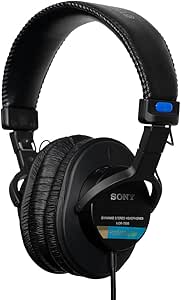 | Best for Portable Studio Monitoring | Type: Wired over-ear studio headphones | Driver size: 40 mm | Frequency response: 10 Hz–20 kHz | VIEW LATEST PRICE | See Our Full Breakdown |
| Audio-Technica ATH-M40x Professional Studio Monitor Headphones |  | Best for Flexible Studio Monitoring | Driver type and size: Dynamic, 40 mm | Frequency response: 15 Hz (upper limit not provided) | Impedance: 35 ohms | VIEW LATEST PRICE | See Our Full Breakdown |
| FiiO FT1 Over-Ear Headphones with 32Ω Dynamic Drivers and Solid Wood Cups |  | Best for Balanced Connectivity Options | Driver type and size: Dynamic, 6 cm | Impedance: 32 ohms | Enclosure material: Wood | VIEW LATEST PRICE | See Our Full Breakdown |
| Audio-Technica ATH-M50x Professional Studio Monitor Headphones, Black | 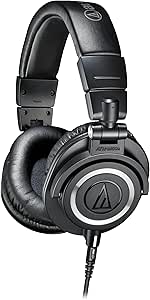 | Best for Detailed Closed-Back Monitoring | Driver type and size: Dynamic, 45 mm | Frequency response: 20 Hz–28,000 Hz | Impedance: 38 ohms | VIEW LATEST PRICE | See Our Full Breakdown |
| beyerdynamic DT 990 Pro X Open-Back Studio Headphones, 48 Ohm, Black | 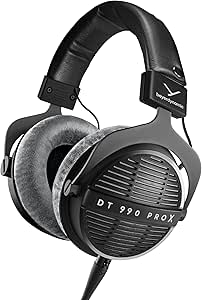 | Best Open-Back Pick for Spacious Listening | Design: Open-back, over-ear | Driver: STELLAR.45 dynamic, 45 mm | Frequency response: 5 Hz (upper limit not provided) | VIEW LATEST PRICE | See Our Full Breakdown |
| Audio-Technica ATH-M30x Professional Studio Monitor Headphones |  | Best for Straightforward Midrange Monitoring | Type: Closed-back over-ear | Driver size: 40 mm | Driver magnets: Rare earth | VIEW LATEST PRICE | See Our Full Breakdown |
| Sennheiser HD 25 Monitor Headphones Bundle with Case and Adjustable Headphone Holder |  | Best for Single-Ear Monitoring | Design: Over-ear monitor headphones | Driver type: Dynamic | Impedance: 70 ohms | VIEW LATEST PRICE | See Our Full Breakdown |
| Neumann NDH 30 Open-Back Studio Headphones |  | Best for Mixing and Editing | Design: Open-back, over-ear | Transducer size: 38 mm | Driver type: Dynamic | VIEW LATEST PRICE | See Our Full Breakdown |
| OneOdio Pro-10 Wired Over-Ear DJ Headphones, Black |  | Best for Shared Listening | Design: Wired over-ear | Driver size: 50 mm | Driver type: Dynamic | VIEW LATEST PRICE | See Our Full Breakdown |
| ADAM Audio H200 Closed-Back Studio Headphones |  | Best Closed-Back Production Pick | Design: Closed-back studio headphones | Driver size: 40 mm | Driver material: PEEK | VIEW LATEST PRICE | See Our Full Breakdown |
| Linsoul Kiwi Ears Altruva Open-Back 50mm Dynamic Driver Headphones |  | Best for Spacious Open-Back Listening | Design: Open-back, over-ear | Driver: 50 mm dynamic driver | Connectivity: Wired | VIEW LATEST PRICE | See Our Full Breakdown |
| studio headphones for music production | Impedance | Frequency response | Design | Sensitivity |
|---|---|---|---|---|
| Audio-Technica ATH-M20x Profes | 47 ohms | 15–20,000 Hz | — | 96 dB |
| V-MODA M-10 Over-Ear DJ Headph | 32 ohms | 5 Hz–40 kHz | — | — |
| Sennheiser HD 280 Pro Closed-B | 64 ohms | 8–25,000 Hz | Closed-back, dynamic, around-ear | — |
| beyerdynamic DT 990 Pro 250 Oh | 250 ohms | 5 Hz–35,000 Hz | Open-back, over-ear | 96 dB |
| Sony MDR-7506 Professional Clo | — | 10 Hz–20 kHz | Closed-back, foldable | — |
| Audio-Technica ATH-M40x Profes | 35 ohms | 15 Hz (upper limit not provided) | — | 98 dB |
| FiiO FT1 Over-Ear Headphones w | 32 ohms | — | — | — |
| Audio-Technica ATH-M50x Profes | 38 ohms | 20 Hz–28,000 Hz | — | 99 dB |
| beyerdynamic DT 990 Pro X Open | 48 ohms | 5 Hz (upper limit not provided) | Open-back, over-ear | 97 dB |
| Audio-Technica ATH-M30x Profes | 38 ohms | — | — | — |
| Sennheiser HD 25 Monitor Headp | 70 ohms | — | Over-ear monitor headphones | — |
| Neumann NDH 30 Open-Back Studi | 120 ohms | 34 Hz | Open-back, over-ear | — |
| OneOdio Pro-10 Wired Over-Ear | 32 ohms | 40 kHz | Wired over-ear | 110 dB |
| ADAM Audio H200 Closed-Back St | 32 ohms | 2 Hz–23.5 kHz | Closed-back studio headphones | 112.5 dB SPL |
| Linsoul Kiwi Ears Altruva Open | 32 ohms | — | Open-back, over-ear | 98 dB |
More Details on Our Top Picks
Audio-Technica ATH-M20x Professional Studio Monitor Headphones
The ATH-M20x makes the most sense for producers who need a straightforward closed-back pair for recording and basic monitoring. Its circumaural earcups help limit sound spill and outside noise, while the 40 mm drivers’ low-frequency emphasis suits beat-making and tracking. Compared with the Sennheiser HD 280 Pro, the M20x has a simpler feature set: the Sennheiser specifies stronger ambient-noise attenuation and replaceable wear parts, while the M20x keeps the setup uncomplicated. Its single-sided 9.8-foot cable gives room to move around a desk, but can leave excess cord in a compact workspace. I’d choose it for entry-level production and recording rather than critical mix decisions, where a more detailed or less bass-emphasized reference may be preferable.
Pros:- Circumaural design helps isolate the listener in noisy recording environments.
- 40 mm drivers are tuned for enhanced low-frequency performance.
- Single-sided cable keeps the connection routed from one earcup.
- Suspension headband and durable materials suit extended studio sessions.
Cons:- The 9.8-foot cable can be cumbersome at a small desk.
- The description emphasizes isolation but does not specify active noise cancellation.
- Low-frequency emphasis may be less useful than a more neutral presentation for critical mix balancing.
Best for: New home-studio producers who need closed-back headphones for tracking vocals, instruments, and beat-making.
Not ideal for: Mix engineers seeking a clearly specified, highly detailed reference or anyone who wants a short, detachable cable.
- Type:Over-ear studio monitor headphones
- Driver:40 mm dynamic
- Frequency response:15–20,000 Hz
- Sensitivity:96 dB
- Impedance:47 ohms
- Cable:9.8 ft (2.99 m), single-side exit
- Isolation:Circumaural design
- Warranty:2 years on parts and labor
Our verdict“Choose the ATH-M20x for affordable closed-back tracking and beat-making, but look to the HD 280 Pro for stronger specified noise attenuation and serviceable parts.”
V-MODA M-10 Over-Ear DJ Headphones, Black
The V-MODA M-10 is the most DJ-oriented option in this group, with a closed-back build and tuning described as emphasizing deep bass and high-end clarity. That combination can make kick-and-bass relationships easy to follow during beat creation, though it may be less dependable for judging tonal balance than the more studio-monitor-focused Sony MDR-7506. Its dual detachable cables offer a useful choice between a 3.0 m coiled lead and a shorter 1.5 m straight one, unlike the Sony’s fixed 9.8-foot cord. Memory foam cushions are intended for longer sessions, and the stainless-steel enclosure adds a sturdier material choice. The tradeoff is a presentation aimed at energetic monitoring rather than explicitly linear mixing; I’d pick it for production that overlaps with DJ work, not as my first choice for neutral mix checks.
Pros:- Closed-back design helps reduce external noise during tracking and DJ monitoring.
- Tuning emphasizes deep bass and high-end clarity for beat-driven work.
- Includes detachable 3.0 m coiled and 1.5 m straight cables.
- Memory foam cushions are designed for extended listening sessions.
Cons:- DJ-focused, bass-forward tuning may make neutral tonal-balance decisions harder.
- The 3.0 m coiled cable can be awkward for portable setups.
- Wireless connectivity is not specified.
Best for: Beat-makers and DJ-producers who want closed-back isolation, bass-forward monitoring, and cable options for studio and performance setups.
Not ideal for: Mixers prioritizing a neutral reference, or mobile producers who need a compact cable and wireless listening.
- Fit and design:Over-ear, closed-back
- Driver:Dynamic, dual-diaphragm
- Frequency response:5 Hz–40 kHz
- Impedance:32 ohms
- Connector:3.5 mm headphone jack
- Included cables:3.0 m coiled and 1.5 m straight, both detachable
- Enclosure material:Stainless steel
- Included accessory:Protective carrying pouch
Our verdict“Pick the M-10 if your production routine includes DJ monitoring and bass-driven beats; choose the MDR-7506 instead if you want a more traditionally studio-focused, foldable closed-back option.”
Sennheiser HD 280 Pro Closed-Back Studio Monitoring Headphones
For recording in a room where outside sound or headphone spill is a concern, the HD 280 Pro has the clearest practical advantage here: up to 32 dB of ambient noise attenuation. That makes it a stronger tracking-focused choice than the Audio-Technica ATH-M20x, whose description cites isolation without giving an attenuation figure. Its replaceable earpads, headband padding, and cable also give it a serviceability edge over the Sony MDR-7506, whose cord is non-detachable. The collapsible, swiveling earcups help with storage and positioning, while the locking 6.3 mm adapter fits common studio connections. This is a functional wired workhorse, not a freedom-of-movement pick: the coiled cable reaches 3 m at most, and the wired design keeps you tethered. I’d favor it for vocal and instrument tracking over casual portable listening.
Pros:- Specified ambient noise attenuation of up to 32 dB supports focused tracking.
- Replaceable earpads, headband padding, and cable can extend service life.
- Collapsible, swiveling earcups offer flexible positioning and compact storage.
- Locking 6.3 mm adapter supports studio and home stereo connections.
Cons:- Wired connection limits movement around the studio.
- The coiled cable extends to a maximum of 3 m.
- The around-ear closed-back design is less suited to listeners seeking an open, spacious mix presentation.
Best for: Home and project-studio producers recording vocals or instruments in rooms with noticeable ambient noise.
Not ideal for: Producers who need wireless movement, a long straight cable, or headphones mainly for casual portable listening.
- Design:Closed-back, dynamic, around-ear
- Frequency response:8–25,000 Hz
- Noise attenuation:Up to 32 dB
- Cable:Single-sided coiled cable, 1–3 m
- Connector:3.5 mm stereo plug with locking 6.3 mm adapter
- Impedance:64 ohms
- Sound pressure level:102 dB
- Replaceable parts:Earpads, headband padding, and audio cable
Our verdict“Choose the HD 280 Pro when isolation and replaceable wear parts matter more than cable freedom or an open-back mix image.”
beyerdynamic DT 990 Pro 250 Ohm Open-Back Studio Headphones
The DT 990 Pro takes the opposite approach from the closed-back HD 280 Pro and Sony MDR-7506: its open-back design is built around a wide stereo image for monitoring, mixing, and mastering, not blocking room noise. That more spacious presentation can help producers hear placement and separation, but sound escapes to the room and outside noise remains audible, so it is a poor fit for vocal tracking near a microphone. The 250-ohm impedance also makes an audio interface or headphone amplifier the sensible partner; a phone may not drive it to a useful level. Replaceable velour pads support long-term upkeep, while the fixed 3 m coiled cable is less flexible than the V-MODA M-10’s detachable cable options. I’d choose it for a quiet, equipped mix room, not as an all-purpose studio pair.
Pros:- Open-back design provides a wide stereo image for monitoring and mixing.
- Replaceable grey velour ear pads support upkeep over time.
- Includes 3 m coiled cable and a 1/4-inch adapter.
- Frequency response extends from 5 Hz to 35,000 Hz.
Cons:- Open-back construction leaks sound and offers little isolation from the room.
- The 250-ohm impedance is best paired with an audio interface or headphone amplifier.
- Fixed coiled cable cannot be detached.
Best for: Mixers and mastering-focused producers working in a quiet room with an audio interface or headphone amplifier.
Not ideal for: Vocal trackers needing isolation, producers monitoring in shared rooms, or users relying on a phone as their source.
- Design:Open-back, over-ear
- Driver:Dynamic
- Frequency response:5 Hz–35,000 Hz
- Impedance:250 ohms
- Sensitivity:96 dB
- Cable:Fixed 3 m coiled cable
- Connectors:3.5 mm and 6.35 mm headphone jacks
- Earpads:Replaceable grey velour
- Weight:0.4 kg
Our verdict“Choose the DT 990 Pro for spacious mix work in a quiet room with suitable amplification, but use the HD 280 Pro for isolated tracking.”
Sony MDR-7506 Professional Closed-Back Studio Headphones
The Sony MDR-7506 is a practical choice for producers who move between a home studio, a recording location, and a laptop setup. Its foldable closed-back design and included soft case make transport easier than with the larger fixed setup of the Audio-Technica ATH-M20x. The 40 mm drivers and stated 10 Hz–20 kHz response suit general monitoring, while the included 1/4-inch adapter supports common studio connections. Compared with the Sennheiser HD 280 Pro, however, the Sony does not list a specific ambient-noise attenuation figure or replaceable cable. Its non-detachable 9.8-foot cord can be handy at a console but awkward on the move, and a damaged cable cannot simply be swapped. I’d pick it for transportable wired monitoring, not for buyers who need modular parts or an open-back mix presentation.
Pros:- Closed-back design helps reduce external noise during monitoring.
- Foldable construction and soft case support storage and transport.
- Includes a 1/4-inch adapter for different audio connections.
- 40 mm drivers and a 10 Hz–20 kHz response suit general studio monitoring.
Cons:- The 9.8-foot cord is non-detachable and can be cumbersome in compact setups.
- The product data does not specify an ambient-noise attenuation level.
- Closed-back presentation may not suit users who prefer an open-back mix image.
Best for: Mobile producers and recording engineers who want foldable closed-back headphones with a case and studio adapter.
Not ideal for: Buyers who need a detachable cable, documented high noise attenuation, or an open-back headphone for spacious mixing.
- Type:Wired over-ear studio headphones
- Driver size:40 mm
- Frequency response:10 Hz–20 kHz
- Design:Closed-back, foldable
- Cord:9.8 ft, non-detachable OFC cable
- Connector:Gold-plated plug
- Adapter:1/4-inch adapter included
- Weight:8 oz
- Included accessory:Soft carrying case
Our verdict“Choose the MDR-7506 for transportable, wired closed-back monitoring, but favor the HD 280 Pro if replaceable parts and specified isolation matter more.”
Audio-Technica ATH-M40x Professional Studio Monitor Headphones
The ATH-M40x suits producers who want a closed-back monitor with practical studio handling rather than the larger drivers and stated frequency range of the ATH-M50x. Its circumaural earcups provide isolation for recording and focused editing, while the 90-degree swivels make one-ear monitoring easier during cueing. Two detachable cable options—a coiled cable and a straight cable—also let you adapt to different desk setups, though the coiled one can stretch to three metres and may feel bulky. The folding design helps when packing the headphones away. The listed frequency response gives only a lower limit, so it offers less specification detail than the M50x. I’d choose this model for flexible day-to-day monitoring, but not if a fully stated response range is a deciding factor.
Pros:- Circumaural earcups help reduce outside sound during recording and editing.
- 90-degree swiveling earcups support one-ear monitoring.
- Includes both coiled and straight detachable cables for setup flexibility.
- Collapsible design is convenient for storage and transport.
Cons:- The listed frequency response gives no upper limit.
- The coiled cable can extend to 3.0 m and may be cumbersome on a small workstation.
Best for: Home producers and recording musicians who want isolating headphones, one-ear monitoring, and cable options for different studio setups.
Not ideal for: Buyers who want a fully specified frequency-response range or need a lightweight, unobtrusive cable arrangement for a compact desk.
- Driver type and size:Dynamic, 40 mm
- Frequency response:15 Hz (upper limit not provided)
- Impedance:35 ohms
- Sensitivity:98 dB
- Fit and isolation:Circumaural over-ear; sound isolation
- Earcup movement:90-degree swiveling
- Included cables:1.2–3.0 m coiled cable and 3.0 m straight cable
- Design and weight:Collapsible; 0.24 kg
Our verdict“Choose the ATH-M40x for flexible, isolating studio monitoring; pick the ATH-M50x if a stated frequency range and 45 mm drivers matter more.”
FiiO FT1 Over-Ear Headphones with 32Ω Dynamic Drivers and Solid Wood Cups
The FiiO FT1 is the most connection-flexible choice here: it comes with both 3.5 mm single-ended and 4.4 mm balanced cables, plus a 6.35 mm adapter for common studio outputs. Its 32-ohm impedance makes it a practical match for a range of sources, while the wood-fibre and carbon-fibre composite diaphragm and W-shaped suspension set it apart from the more conventional Audio-Technica ATH-M30x. That design detail may appeal to listeners choosing on driver construction, but the supplied information does not establish a response range or noise-isolation performance, making it harder to judge suitability for mix decisions or recording next to a microphone. Each cable is only 1.5 m, which can restrict movement at a studio desk. I’d choose the FT1 for adaptable connections and fit adjustment, not for documented isolation.
Pros:- Includes both 3.5 mm single-ended and 4.4 mm balanced cables.
- A 3.5 mm-to-6.35 mm adapter supports connection to common studio equipment.
- The adjustable headband offers 11 notches and a breathable suede-covered contact area.
- Composite diaphragm construction distinguishes it from simpler driver designs in the lineup.
Cons:- Both supplied cables are 1.5 m long, limiting reach in some studio layouts.
- The product data does not specify noise control or a frequency-response range.
Best for: Producers switching between compatible single-ended and balanced headphone outputs who want a finely adjustable headband and included adapter.
Not ideal for: Recording musicians who need stated noise isolation or anyone whose interface sits more than 1.5 m from the listening position.
- Driver type and size:Dynamic, 6 cm
- Impedance:32 ohms
- Enclosure material:Wood
- Diaphragm:Wood-fibre and carbon-fibre composite, approximately 0.1 mm thick
- Cable connectors:3.5 mm single-ended and 4.4 mm balanced
- Cable length:1.5 m each
- Included accessories:3.5 mm-to-6.35 mm adapter and storage bag
- Headband adjustment:0–11 notches
Our verdict“Pick the FiiO FT1 if flexible output connections and headband adjustment lead your priorities, but choose the ATH-M30x for explicitly described passive isolation.”
Audio-Technica ATH-M50x Professional Studio Monitor Headphones, Black
For producers who want a clearly stated frequency range and a closed-back design, the ATH-M50x is the strongest all-rounder in this group. Its 45 mm drivers and 20 Hz–28,000 Hz specification give buyers more concrete information than the ATH-M40x listing, while sound-isolating circumaural cups help limit distractions during tracking and editing. Like the M40x, its 90-degree swiveling earcups support one-ear monitoring; the detachable cable also makes replacement or pack-away simpler. The tradeoff is that this remains a closed-back presentation, unlike the open-back beyerdynamic DT 990 Pro X, which is designed for a more spacious listening impression but leaks sound and offers no isolation. The M50x is not water resistant, so I’d keep it for studio and indoor use rather than treating it as an all-weather portable pair.
Pros:- 45 mm dynamic drivers and a stated 20 Hz–28,000 Hz frequency response.
- Circumaural earcups provide sound isolation for focused monitoring.
- 90-degree swiveling earcups support one-ear cueing.
- Detachable cable and durable earpad and headband materials suit regular studio use.
Cons:- Closed-back construction does not provide the open-back presentation of the DT 990 Pro X.
- Not water resistant.
Best for: Home and project-studio producers who need closed-back isolation, one-ear cueing, and a stated frequency range for regular monitoring.
Not ideal for: Mixers who prioritize an open-back listening presentation, or buyers who need headphones suitable for wet or outdoor conditions.
- Driver type and size:Dynamic, 45 mm
- Frequency response:20 Hz–28,000 Hz
- Impedance:38 ohms
- Sensitivity:99 dB
- Fit and isolation:Circumaural over-ear; sound isolation
- Earcup movement:90-degree swiveling
- Cable:Detachable
- Water resistance:Not water resistant
Our verdict“Choose the ATH-M50x for versatile closed-back production work with a clearly stated response range; choose the DT 990 Pro X if an open-back soundstage is the priority.”
beyerdynamic DT 990 Pro X Open-Back Studio Headphones, 48 Ohm, Black
The DT 990 Pro X takes a different approach from the closed-back Audio-Technica ATH-M50x: its open-back design is intended to give monitoring a wider, more natural sense of space, which can help when judging placement and stereo relationships. The 48-ohm impedance is specified for use across devices such as laptops and interfaces, and the detachable 3 m mini-XLR cable offers generous reach for a fixed studio position. Soft velour earpads add comfort for longer sessions. That spaciousness comes with a firm limitation: sound leaks out and external noise comes in, making this a poor choice for vocal tracking beside a microphone or noisy rooms. The listed frequency response gives only a lower figure, with no upper limit, so the ATH-M50x provides more complete response data. I’d reserve this pair for quieter mixing spaces.
Pros:- Open-back design offers a wide, natural soundstage for critical listening.
- 48-ohm impedance is specified for use with laptops, interfaces, phones, and consoles without a headphone amplifier.
- Soft velour ear pads are suited to longer listening sessions.
- Detachable 3 m mini-XLR cable, 1/4-inch adapter, and carrying pouch are included.
Cons:- Sound leaks out and outside noise is not isolated.
- The listed frequency response provides no upper limit.
Best for: Mixers and producers working in quiet rooms who want an open-back presentation for stereo placement and extended listening.
Not ideal for: Vocalists recording near a live microphone, people working in noisy spaces, or anyone needing headphones that keep sound contained.
- Design:Open-back, over-ear
- Driver:STELLAR.45 dynamic, 45 mm
- Frequency response:5 Hz (upper limit not provided)
- Impedance:48 ohms
- Sensitivity:97 dB
- Connectivity:Wired, 3.5 mm and 6.35 mm jacks
- Cable:Detachable 3 m mini-XLR
- Ear pad material:Velour
Our verdict“Choose the DT 990 Pro X for open-back mixing in a quiet room, but use the closed-back ATH-M50x for tracking or noisy spaces.”
Audio-Technica ATH-M30x Professional Studio Monitor Headphones
The ATH-M30x is a practical choice for producers focused on vocal and instrument detail, with tuning described as emphasizing clear midrange definition. Its closed-back circumaural cups provide passive isolation, making it better suited to recording and everyday monitoring than the open-back DT 990 Pro X when nearby sound leakage is a concern. Compared with the ATH-M40x, the M30x gives up swiveling earcups and multiple cable options, but its single-sided cable keeps the connection route simple and its folding design helps with storage. The included protective case and screw-on adapter are useful studio extras. Its 40 mm drivers are specified, but no frequency-response range is provided, so buyers seeking detailed published response data may prefer the ATH-M50x. This is a focused, uncomplicated pick rather than the most configurable model.
Pros:- Tuning is described as providing detailed sound and clear midrange definition.
- Circumaural cups offer passive sound isolation for recording and focused work.
- Folding design and included protective case support storage and transport.
- Single-sided cable exit keeps the cable routing straightforward.
Cons:- No swiveling earcups are specified, unlike the ATH-M40x and ATH-M50x.
- The supplied product data does not state a frequency-response range.
Best for: Beginning producers and home recordists who want closed-back isolation and a simple, foldable pair for vocal and instrument monitoring.
Not ideal for: DJs or engineers who rely on swiveling earcups for one-ear monitoring, or buyers who need a stated frequency-response range.
- Type:Closed-back over-ear
- Driver size:40 mm
- Driver magnets:Rare earth
- Voice coils:Copper-clad aluminum wire
- Impedance:38 ohms
- Noise control:Passive sound isolation
- Cable:Single-sided cable exit
- Design and accessories:Folding; protective case and screw-on adapter included
Our verdict“Choose the ATH-M30x for straightforward, isolating midrange monitoring; step up to the ATH-M40x if one-ear cueing and cable choice matter.”
Sennheiser HD 25 Monitor Headphones Bundle with Case and Adjustable Headphone Holder
The Sennheiser HD 25 is the most work-oriented pick here for producers who also DJ, record in busy spaces, or need to monitor with one ear free. Its rotatable earcup and lightweight build suit quick cue checks, while sound isolation and high-SPL handling make it useful around loud playback. Compared with the OneOdio Pro-10, it is lighter and more focused on monitoring practicality, though the OneOdio includes a shared audio port for connecting another pair. This bundle adds a case and clamp-on holder, which help keep the headphones organized at a fixed workstation. The tradeoff is a straight wired cable and a fit geared toward utility rather than open, spacious mixing. The holder also only clamps to surfaces up to 1.3 inches thick.
Pros:- Lightweight design is suited to extended monitoring sessions.
- Rotatable earcup supports single-ear listening.
- Sound isolation and high-SPL handling suit loud work areas.
- Bundle includes a protective case and adjustable headphone holder.
Cons:- Straight cable limits movement compared with wireless headphones.
- The bundled holder only fits surfaces up to 1.3 inches thick.
- Single-ear utility takes priority over an open, spacious mix presentation.
Best for: Producers and DJs who need lightweight, isolated monitoring and frequent single-ear cueing.
Not ideal for: Mixers seeking an expansive open-back presentation or anyone who needs wireless listening.
- Design:Over-ear monitor headphones
- Driver type:Dynamic
- Impedance:70 ohms
- Cable:Detachable, single-sided, straight
- Earcup feature:Rotatable for single-ear listening
- Noise control:Sound isolation
- Included accessories:Universal headphone case and adjustable padded holder
- Warranty:Headphones: 2 years; case and holder: 1 year each
Our verdict“Choose the HD 25 if one-ear cueing and practical isolation matter more than an open soundstage.”
Neumann NDH 30 Open-Back Studio Headphones
For focused mix decisions, the Neumann NDH 30 puts stereo placement and a linear presentation ahead of isolation. Its open-back design, detailed transducers, and precise imaging can help reveal where elements sit in a mix, making this a stronger editing and mastering fit than the closed-back ADAM Audio H200. The NDH 30 also has a detachable cable and works with 3.5 mm or 6.35 mm connections, so it can move between common studio sources. At 245 g, its spring steel and aluminum construction balances durability with a relatively light frame. The central compromise is inherent to open backs: sound leaks in both directions, making it a poor choice for tracking beside a microphone or working in a noisy room. It is also wired and not water resistant.
Pros:- Precise stereo imaging supports placement and editing decisions.
- Linear soundstage is suited to mixing and mastering work.
- Detachable cable and 3.5 mm or 6.35 mm compatibility suit studio setups.
- Spring steel and aluminum construction with a 245 g listed weight.
Cons:- Open-back cups provide no noise control and leak sound.
- Poor fit for recording near sensitive microphones or in noisy rooms.
- Not water resistant.
Best for: Mixers, mastering engineers, and editors working in quiet rooms who prioritize stereo localization.
Not ideal for: Vocalists recording near a microphone or producers who need strong isolation in a noisy space.
- Design:Open-back, over-ear
- Transducer size:38 mm
- Driver type:Dynamic
- Impedance:120 ohms
- Frequency response:34 Hz
- Connectivity:Wired
- Connector:3.5 mm jack; compatible with 6.35 mm jack devices
- Weight:245 g
- Materials:Spring steel, aluminum, and titanium enclosure
Our verdict“Pick the NDH 30 for quiet-room mix work when imaging matters more than isolation.”
OneOdio Pro-10 Wired Over-Ear DJ Headphones, Black
The OneOdio Pro-10 earns its place for producers who want a practical wired pair for playback, cueing, and sharing a session without adding a splitter. Its shared audio port lets another pair connect directly, while 90-degree swiveling cups support single-ear monitoring. The 50 mm drivers are described as delivering powerful bass and clear vocals, a useful character for checking low-end arrangements but less tailored to the spacious, localization-focused presentation of the Neumann NDH 30. Dual 3.5 mm and 6.35 mm connections add flexibility across interfaces and other gear. At 415 g, it is heavier than the NDH 30, and its DJ-oriented sound description offers less emphasis on linear mixing. The wired-only setup also requires a compatible jack.
Pros:- Shared audio port connects another pair without a splitter.
- 90-degree swiveling cups support single-ear monitoring.
- 3.5 mm and 6.35 mm connections suit common studio and DJ equipment.
- Padded cushions and an adjustable headband are designed for extended listening.
Cons:- At 415 g, it is heavier than the Neumann NDH 30 listed here.
- Wired-only use requires a compatible audio jack.
- Powerful-bass positioning may suit cueing better than neutral mix judgments.
Best for: Home producers who share playback with a collaborator and want swivel-cup cueing from one wired headset.
Not ideal for: Mixers prioritizing light weight, open-back imaging, or a clearly specified neutral reference tuning.
- Design:Wired over-ear
- Driver size:50 mm
- Driver type:Dynamic
- Impedance:32 ohms
- Sensitivity:110 dB
- Frequency response:40 kHz
- Ear cup rotation:90 degrees
- Connections:3.5 mm and 6.35 mm audio jacks
- Weight:415 g
Our verdict“Choose the Pro-10 for shared wired playback and DJ-style cueing rather than open-back precision mixing.”
ADAM Audio H200 Closed-Back Studio Headphones
The ADAM Audio H200 is the most versatile closed-back studio choice in this group for producers who need isolation without giving up tools aimed at headphone mixing. Its 40 mm PEEK drivers are designed for balanced sound and low distortion, while the included Headphone Utility plug-in adds sound optimization and spatialization options that the Sennheiser HD 25 bundle does not provide. Closed-back cups and memory foam pads also make it more suitable for tracking or shared rooms than the open-back Neumann NDH 30. The detachable 3 m cable can connect on either side, and replaceable pads support long-term upkeep. The tradeoffs are a wired-only connection and a cable length that may feel cumbersome away from a studio desk; the open-backed alternatives may better suit quiet-room spatial editing.
Pros:- Closed-back design and memory foam earpads provide isolation for tracking.
- Headphone Utility plug-in adds optimization and spatialization tools.
- Detachable 3 m cable connects on either side and includes a 1/4-inch adapter.
- Replaceable earpads and headband padding support ongoing use.
Cons:- Wired connection requires a compatible audio output.
- The 3 m cable may be inconvenient for portable listening.
- Closed-back presentation is less open than the Neumann NDH 30 or Kiwi Ears Altruva.
Best for: Producers who record and mix in the same room and want isolation plus headphone-focused software tools.
Not ideal for: Listeners who need wireless portability or prefer the airy presentation of an open-back headphone.
- Design:Closed-back studio headphones
- Driver size:40 mm
- Driver material:PEEK
- Frequency response:2 Hz–23.5 kHz
- Sensitivity:112.5 dB SPL
- Impedance:32 ohms
- Cable:Detachable, 3 m, connects to either side
- Connector:3.5 mm jack with 1/4-inch adapter
- Included software:ADAM Audio Headphone Utility plug-in
Our verdict“Choose the H200 if you need a closed-back studio headphone that can cover tracking and software-assisted headphone mixing.”
Linsoul Kiwi Ears Altruva Open-Back 50mm Dynamic Driver Headphones
The Kiwi Ears Altruva suits producers who want an open, spacious headphone presentation without moving to the Neumann NDH 30’s more explicitly mixing- and mastering-focused design. Its 50 mm dynamic driver and studio monitor-like tuning combine punchy bass with natural mids and clear treble, offering a broad listening perspective for arrangement and tonal checks. Compared with the ADAM Audio H200, the Altruva gives up isolation but gains the airy character of an open-back design; that makes it a better fit for quiet editing than for tracking near a microphone. The steel, wood, and vegan-leather construction gives it a distinct material profile, but wired 3.5 mm connectivity limits device flexibility. Its listed passive noise cancellation also does not change the practical sound leakage of an open-back design.
Pros:- Open-back design supports a spacious soundstage.
- Studio monitor-like tuning pairs punchy bass with balanced mids and clear treble.
- 50 mm dynamic driver is designed for broad, detailed playback.
- PVD-coated steel, wood, and vegan-leather materials.
Cons:- Open-back construction leaks sound and offers little practical isolation.
- Wired 3.5 mm connection limits use to compatible devices.
- Less explicitly targeted at mixing and mastering than the Neumann NDH 30.
Best for: Producers in quiet rooms who prefer a spacious, open presentation for editing and critical listening.
Not ideal for: People recording beside microphones, working in noisy rooms, or needing a headphone with strong isolation.
- Design:Open-back, over-ear
- Driver:50 mm dynamic driver
- Connectivity:Wired
- Headphone jack:3.5 mm
- Impedance:32 ohms
- Sensitivity:98 dB
- Noise control:Passive noise cancellation listed
- Materials:PVD-coated steel, wood, and vegan leather
- Warranty:1 year
Our verdict“Pick the Altruva if you want spacious open-back listening for quiet-room production and can work without isolation.”
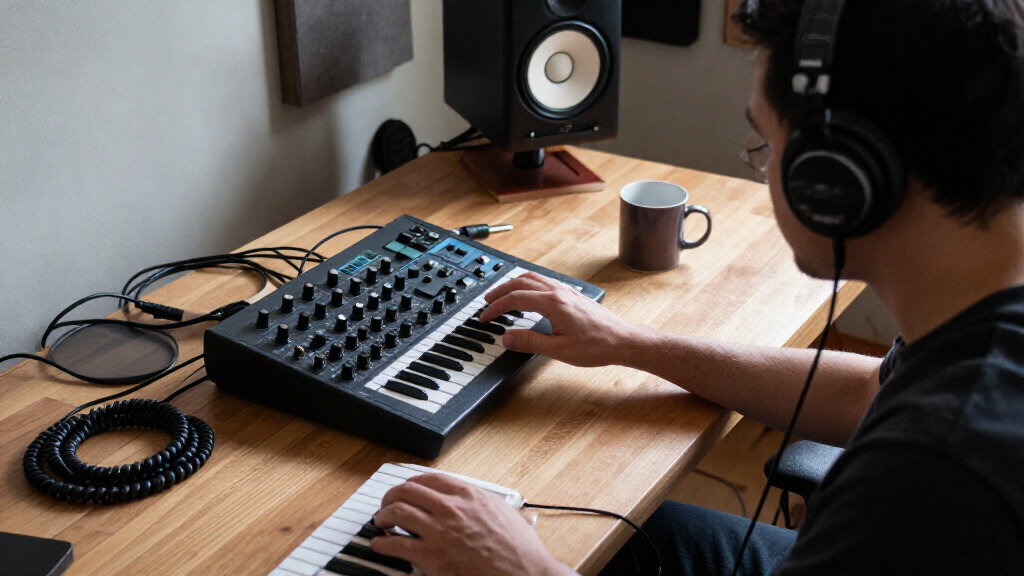
How We Picked
I ranked these headphones around the jobs music producers actually need them to do: hear edits and mix details, monitor during recording without excessive leakage, and remain comfortable through extended sessions. I weighed design type, stated impedance, likely source compatibility, build and handling features, and how clearly each model’s strengths map to a production task. Closed-back models gained an advantage for tracking and shared spaces; open-back models were judged on their suitability for quiet-room mixing rather than treated as universal studio choices.
The order reflects versatility for production first, then specialization. The ATH-M40x leads because it strikes a useful balance for common studio work; headphones with a narrower role rank lower even when their design may suit a particular buyer better. Premium or newer models were not placed higher simply for their positioning, and DJ-focused options were judged by how well their monitoring-oriented features translate to editing and mixing. Since headphone fit and tonal preference are personal, I also call out where a model’s limits may outweigh its strengths for a specific workflow.
| studio headphones for music production | Design |
|---|---|
| Audio-Technica ATH-M20x Profes | — |
| V-MODA M-10 Over-Ear DJ Headph | — |
| Sennheiser HD 280 Pro Closed-B | Closed-back, dynamic, around-ear |
| beyerdynamic DT 990 Pro 250 Oh | Open-back, over-ear |
| Sony MDR-7506 Professional Clo | Closed-back, foldable |
| Audio-Technica ATH-M40x Profes | — |
| FiiO FT1 Over-Ear Headphones w | — |
| Audio-Technica ATH-M50x Profes | — |
| beyerdynamic DT 990 Pro X Open | Open-back, over-ear |
| Audio-Technica ATH-M30x Profes | — |
| Sennheiser HD 25 Monitor Headp | Over-ear monitor headphones |
| Neumann NDH 30 Open-Back Studi | Open-back, over-ear |
| OneOdio Pro-10 Wired Over-Ear | Wired over-ear |
| ADAM Audio H200 Closed-Back St | Closed-back studio headphones |
| Linsoul Kiwi Ears Altruva Open | Open-back, over-ear |
Factors to Consider When Choosing Studio Headphones For Music Production
Before choosing a model, decide what decisions you expect to make on headphones. A pair used to track vocals in a small room has different needs from one used to edit in a quiet space or check a mix while traveling. These factors can help you avoid paying for features that do not match your workflow—or buying a specialist pair that cannot cover your everyday tasks.
1. Match Open or Closed Back to Your Recording Setup
Closed-back headphones reduce sound escaping into microphones and limit outside noise, which makes them a safer choice for recording vocals or instruments in the same room. They can also feel warmer during long sessions, and isolation does not guarantee a neutral mix reference. Open-back headphones allow more air to move through the earcups and can suit focused listening in a quiet room, but they leak sound in both directions. A common mistake is buying an open-back pair as the only studio headphone when tracking is part of the routine. If you record and mix in one room, a closed-back model is usually the more flexible first purchase; add an open-back pair only if you can use it in a quiet space.
2. Treat Headphones as One Mix Reference, Not the Whole Studio
Even headphones marketed for monitoring can present bass, treble, and stereo width differently from speakers. That matters because a mix that sounds balanced on headphones may translate poorly to earbuds, car speakers, or nearfields. Use familiar reference tracks, check mono compatibility, and listen on another playback system before committing to major tonal changes. Open-back designs can help with extended listening, but they do not remove the need to learn how a particular pair presents sound. Avoid choosing a model based only on claims of accuracy; fit, hearing, and playback level affect what you perceive. If possible, make the final decision after comparing candidates with the same tracks and source.
3. Check Impedance Against Your Interface or Headphone Output
Impedance affects how easily a headphone reaches a useful listening level from a given source, though it is not a complete measure of sound quality or loudness. A higher-impedance model may work well with a capable studio interface yet sound too quiet from a laptop or phone. Check the output guidance for your interface and consider how often you will listen away from it. Portable use favors easier-to-drive choices, while a dedicated headphone amp can broaden compatibility for demanding models. Do not assume that turning the volume up solves every pairing issue; a source pushed near its limit can leave less clean headroom. Match the headphone to the device you will use most.
4. Prioritize Fit for the Length of Your Sessions
Clamping force, pad material, earcup depth, and weight can matter as much as a spec sheet when sessions run for hours. A firm seal can improve isolation and bass consistency, but too much pressure may become distracting. Glasses, hair, and ear shape can affect both comfort and fit, so a design that suits another producer may not suit you. Replaceable or serviceable pads can also matter because worn cushions change comfort and may affect the seal. If you often edit for long stretches, treat comfort as a production feature rather than an afterthought. When shopping remotely, check the return policy and pad replacement availability before deciding.
5. Separate Tracking Needs from Mixing Needs
One headphone can cover several tasks, but every design brings compromises. Tracking calls for isolation, secure fit, and low leakage; editing benefits from clear detail and comfort; mix checks call for a tonal presentation you have learned to interpret. Do not assume one pair must do everything if your work regularly includes both microphone recording and quiet-room mixing. A practical route is to start with a closed-back pair for recording and daily work, then add an open-back model if you have a quiet place to use it. For occasional production, the second pair may add less value than room treatment or reliable monitoring habits.
6. Pay for Useful Build Features, Not a Studio Label
Foldable cups, detachable cables, included adapters, and replaceable pads can make headphones easier to maintain and move between rooms. Their value depends on your routine: a detachable cable is useful if cables take wear, while a folding design matters more for travel than for a fixed desk. Price tier alone does not predict fit or mix suitability, and a premium model is not automatically the best first pair. Consider whether the included accessories solve a real problem and whether replacement parts are easy to find. For a beginner, reliable fit, source compatibility, and a clear use case matter more than collecting features. For frequent studio work, serviceability can make a modestly equipped model a better long-term choice.
Frequently Asked Questions
Should I choose the ATH-M40x or ATH-M50x for production?
I’d choose the ATH-M40x if you want a practical closed-back pair for routine tracking, editing, and general studio monitoring. The ATH-M50x is the more versatile alternative if its broader use case and handling features better fit how you move between studio and everyday listening. Neither replaces checking mixes on speakers or other playback devices. Think about whether you value a focused production tool or a more adaptable pair. If you are unsure, base the choice on comfort and the tracks you know well rather than model name alone.
Can I use open-back headphones to record vocals?
You can, but sound from open-back headphones may leak into a vocal microphone, especially at higher monitoring levels. That can create unwanted headphone bleed in a recording and make punch-ins harder to manage. For a singer recording in the same room, a closed-back pair such as the HD 280 Pro or MDR-7506 is generally the safer choice among this lineup. Open-back models make more sense for editing or mixing when microphone bleed is not a concern. If you still prefer an open-back sound, test leakage at your usual listening level before using it for takes.
Do I need a headphone amplifier for the 250-ohm DT 990 Pro?
Not in every setup, but the answer depends on the headphone output you plan to use. Some interfaces can drive the 250-ohm DT 990 Pro to a suitable level, while weaker laptop or portable outputs may leave limited volume headroom. Check the output specifications of your actual device and listen for whether you can reach a comfortable level without maxing it out. The 48-ohm DT 990 Pro X is an easier pairing to investigate if you switch between studio and portable sources. Choose based on your equipment, not impedance alone.
Is a DJ headphone a good choice for mixing music?
A DJ-oriented model can work for cueing, monitoring, and some editing, but those strengths do not automatically make it a dependable mix reference. Some DJ designs prioritize isolation, portability, or handling over a presentation that helps you judge tonal balance across a full mix. In this roundup, the V-MODA M-10, OneOdio Pro-10, and HD 25 each have a more specialized use profile than the leading all-round production picks. If mixing is your main task, compare familiar reference tracks and check the result on other playback systems. Choose a DJ model when its practical features matter more to your work than using one pair for every decision.
Is it better to buy one versatile pair or separate tracking and mixing headphones?
For a first studio pair, one versatile closed-back model usually covers more everyday situations, especially if you record in a small room. Separate pairs make more sense when tracking leakage is a regular concern and you also have a quiet place for open-back listening. A second pair can provide a useful cross-check, but it will not fix poor monitoring habits or replace speakers. In this lineup, the closed-back ATH-M40x is the strongest general starting point, while the open-back NDH 30 is better viewed as a specialized quiet-room option. Add a second model only when its different role solves a recurring problem.
Conclusion
For a single pair to cover common production tasks, I’d choose the Audio-Technica ATH-M40x as best overall; it offers the most balanced fit for tracking and day-to-day monitoring in this group. The ATH-M20x is my best value-minded and beginner-friendly starting point for producers who want a straightforward closed-back design, while the Sony MDR-7506 is a strong fit for compact, detail-focused monitoring. For a premium open-back choice in a quiet room, I’d look to the Neumann NDH 30; for a lower-impedance open-back alternative, consider the DT 990 Pro X. If vocal recording and isolation are the priority, favor the Sennheiser HD 280 Pro or ATH-M40x over open-back or DJ-focused models. Your best match depends on where you record, what device drives the headphones, and whether tracking or mixing takes up more of your work.