Soundproof curtains can help improve your home studio’s acoustics, but they won’t fully block out all noise or turn your space into a soundproof zone. They’re most effective at muffling high-frequency sounds like voices and electronic noise, while low-frequency sounds like bass rumble may still get through. Proper installation and combining them with other acoustic treatments will give you better results. Want to know how to maximize their benefits? Keep exploring for more tips.

Get audio and creator gear delivered free with Prime
- Fast, free delivery on millions of items
- Prime Video, Amazon Music and more included
- Member-only deals all year
Key Takeaways
- Soundproof curtains primarily dampen high-frequency sounds; they are less effective against low-frequency noises like bass.
- They help reduce sound leakage and external noise but do not fully soundproof a room.
- Proper installation, such as covering entire walls or windows, enhances their effectiveness.
- Combining curtains with other acoustic treatments yields better noise control.
- Expect noticeable noise reduction but not complete soundproofing—manage expectations accordingly.
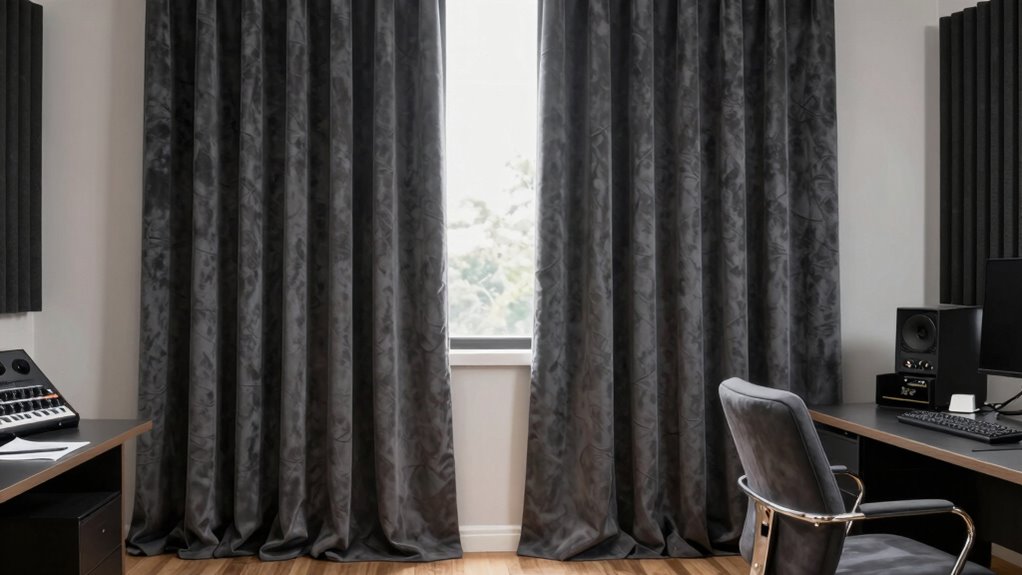
Soundproof curtains are designed with dense, heavy fabrics that dampen sound vibrations. Unlike regular curtains, these are constructed with multiple layers of sound-absorbing materials, making them more effective at muffling noise. They are particularly useful for blocking high-frequency sounds, such as voices or electronic noise, that often penetrate thin barriers. However, they are less effective at absorbing low-frequency sounds like bass or deep rumbling noises because those require specialized acoustic treatment. Still, for most home studio environments, soundproof curtains serve as a practical and affordable way to improve acoustics without the need for costly modifications. Additionally, their effectiveness can be influenced by factors like fabric density and installation method, which are important considerations when aiming for better sound isolation.
You should set realistic expectations about what soundproof curtains can achieve. They won’t turn your room into a completely soundproof space, but they can make a noticeable difference. If you’re trying to keep external noise out or prevent sound leakage from your recordings, these curtains help create a more isolated environment. To maximize their effectiveness, hang them properly—covering the entire window or wall surface—and consider using double layers or thicker fabrics. Combining them with other noise reduction techniques, like sealing air gaps around doors and windows, further enhances their performance. Keep in mind that the placement and the quality of the curtains directly influence how well they work, so invest in high-density options if noise control is a priority. Recognizing the role of acoustic treatment in conjunction with soundproof curtains is key to achieving optimal results.
Set realistic expectations: curtains improve noise control but won’t make your room fully soundproof.
Ultimately, soundproof curtains are a convenient, stylish solution for improving your home studio’s acoustics. They’re easy to install and remove, making them ideal for temporary or adjustable setups. While they won’t eliminate all sounds, they considerably contribute to a quieter, more focused environment. When paired with other acoustic barriers and noise reduction techniques, these curtains help you create a space where your recordings sound clearer and more professional. Managing noise in a home studio is about layering solutions, and soundproof curtains are an essential part of that toolkit.
soundproof curtains for home studio
As an affiliate, we earn on qualifying purchases.
As an affiliate, we earn on qualifying purchases.
Frequently Asked Questions
Do Soundproof Curtains Eliminate All Noise?
No, soundproof curtains don’t eliminate all noise. They provide some noise reduction and help improve your room’s acoustics, but they won’t block out loud sounds completely. You’ll notice a decrease in noise, which enhances your space’s aesthetic appeal, but for total soundproofing, consider additional measures like insulation or double-glazed windows. These curtains are a great aesthetic addition that can make your home studio more comfortable and stylish.
How Long Do Soundproof Curtains Last?
Soundproof curtains typically last around 3 to 5 years, depending on their durability lifespan and how well you maintain them. To extend their life, clean them regularly according to the manufacturer’s instructions and avoid excessive exposure to sunlight or moisture. Proper maintenance helps preserve their acoustic properties and fabric integrity, ensuring you get the most out of your investment for years to come.
Can Soundproof Curtains Improve Sound Clarity?
Yes, soundproof curtains can improve sound clarity by enhancing acoustic absorption in your space. They help reduce echoes and dampen background noise, creating a clearer listening environment. While they aren’t a complete solution, their acoustic enhancement makes audio more precise and intelligible. Keep in mind, for ideal results, combine curtains with other soundproofing techniques to maximize sound clarity in your home studio.
Are Soundproof Curtains Suitable for Outdoor Use?
Soundproof curtains aren’t ideal for outdoor use because they lack outdoor durability and weather resistance. You might find they fade, tear, or get damaged easily when exposed to rain, wind, or sun. If you want to block noise outdoors, look for curtains specifically designed with weather-resistant fabrics and outdoor durability. These are built to withstand the elements and provide better noise reduction in your outdoor space.
Do Soundproof Curtains Affect Room Temperature?
Yes, soundproof curtains can affect your room temperature by providing thermal insulation, helping to keep heat in during winter and out during summer. They can also add to your aesthetic options, enhancing your space’s look while improving energy efficiency. Keep in mind that while they offer some temperature control, they aren’t a substitute for proper insulation, but they do contribute to a more comfortable environment overall.
Conclusion
While soundproof curtains can help reduce noise and improve your home studio environment, they won’t eliminate all sound. They’re a great addition for creating a quieter space, but realistic expectations are key. Are you ready to embrace these curtains as part of your acoustic solution, knowing they’ll make a difference without promising complete silence? By combining them with other treatments, you’ll get closer to the soundproofing you desire—without breaking the bank.
Halloween Picks
halloween
As an affiliate, we earn on qualifying purchases.