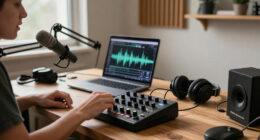
A mini MIDI keyboard saves desk space while giving you a hands-on way to play and control music software. My best overall pick is the Akai Professional MPK Mini IV, which balances 25 keys with pads and performance controls; the Arturia MiniLab 3 stands out for hands-on software control, while the Akai MPK Mini Play MK3 adds built-in sounds for playing without a computer. The main tradeoffs are between compact size and a wider playing range, and between simple portability and extra controls that take more setup. This roundup compares all 15 options by those practical differences. Read on for the full breakdown and help choosing the right keyboard for your setup.

Get audio and creator gear delivered free with Prime
- Fast, free delivery on millions of items
- Prime Video, Amazon Music and more included
- Member-only deals all year
Complete the kit


Key Takeaways
- The Akai MPK Mini IV is the most balanced pick: it combines a 25-key layout with pads and performance controls without moving into the larger footprint of the 37-key models.
- Arturia’s MiniLab models prioritize controller versatility: MiniLab 3 adds a fuller set of hands-on controls, while MiniLab 37 gives players more keys at the cost of desk space.
- The MPK Mini Play MK3 is the distinct standalone option: its built-in sounds suit practice away from a computer, unlike the computer-dependent controllers in this lineup.
- Key count changes how these keyboards feel in use: the M-Audio Keystation Mini 32 offers a few more notes than most 25-key picks, while the MPK Mini Plus and MiniLab 37 provide more room for two-handed parts.
- Simple, compact models make different compromises: the Korg nanoKEY2 and Akai LPK25 focus on portability, while pad-equipped Donner and Akai models offer more control surfaces to learn and configure.
| Akai Professional MPK Mini IV 25-Key USB-C MIDI Keyboard Controller, White |  | Best Overall | Keys: 25 velocity-sensitive mini keys | Pads: 8 RGB MPC pads; velocity- and pressure-sensitive | Encoders: 8 endless rotary encoders | VIEW ON AMAZON | See Our Full Breakdown |
| DaierTek 25-Key Portable MIDI Keyboard Controller with Bluetooth & USB |  | Best for Wireless Portability | Keys: 25 velocity-sensitive keys | Connectivity: Bluetooth, USB | Pads: 8 RGB-backlit drum pads | VIEW ON AMAZON | See Our Full Breakdown |
| Akai Professional MPK Mini IV 25-Key USB-C MIDI Keyboard Controller, Black |  | Best for Dark Setups | Keys: 25 velocity-sensitive keys | Connectivity: USB-C | Pads: RGB MPC drum pads | VIEW ON AMAZON | See Our Full Breakdown |
| Arturia MiniLab 3 Universal MIDI Controller, White |  | Best for Hands-On Expression | Keys: 25 velocity-sensitive keys | Pads: 2 banks of 8 velocity- and pressure-sensitive RGB pads | Encoders: 8 rotary encoders | VIEW ON AMAZON | See Our Full Breakdown |
| Akai Professional MPK Mini Plus 37-Key MIDI Keyboard Controller |  | Best for More Playing Range | Keys: 37-key dynamic keybed | Pads: 8 RGB-backlit pads | Knobs: 8 assignable knobs | VIEW ON AMAZON | See Our Full Breakdown |
| Korg 25-Key MIDI Controller NANOKEY2BK, Black |  | Best for a Low-Profile Setup | Keys: 25 | Connectivity: USB | Supported software: Ableton Live | VIEW ON AMAZON | See Our Full Breakdown |
| Akai Professional MPK Mini MK3 25-Key USB MIDI Keyboard Controller |  | Best for Beat-Making Controls | Keys: 25 | Connectivity: USB 2.0 Type B | Drum pads: MPC-style, velocity-sensitive pads | VIEW ON AMAZON | See Our Full Breakdown |
| Akai Professional MPK Mini Play MK3 25-Key USB MIDI Keyboard Controller |  | Best for Playing Without a Computer | Keys: 25 | Connectivity: USB | Built-in sounds: Yes | VIEW ON AMAZON | See Our Full Breakdown |
| Akai Professional LPK25 25-Key USB MIDI Keyboard Controller |  | Best for a Simple Songwriting Controller | Keys: 25 | Power source: USB | Compatibility: Mac and PC | VIEW ON AMAZON | See Our Full Breakdown |
| Donner USB-C MIDI Keyboard Controller, 25-Key Portable Mini MIDI Keyboard with 8 Drum Pads, OLED Display, 16 Smart Scales, Arpeggio, Replay, 4 DAW Software, and 40 Teaching Courses |  | Best for Guided Learning and Scale Help | Keys: 25 | Drum pads: 8 | Display: OLED | VIEW ON AMAZON | See Our Full Breakdown |
| M-AUDIO Keystation Mini 32 MK3 USB MIDI Controller |  | Best for Extra Octave Range in a Slim Controller | Keys: 32 velocity-sensitive keys | Connectivity: USB | Dimensions: 4.2 x 16.44 x 0.72 inches | VIEW ON AMAZON | See Our Full Breakdown |
| Arturia MiniLab 3 Limited Edition Mint Green 25-Key USB MIDI Keyboard Controller |  | Best for Hands-On Control in a Mini Footprint | Keys: 25 velocity-sensitive keys | Drum pads: 8 multicolor pads | Connectivity: USB | VIEW ON AMAZON | See Our Full Breakdown |
| Donner N-25 Mini MIDI Keyboard, 25 Velocity-Sensitive Keys, Beginner-Friendly Controller with Light-Up Buttons and Software |  | Best for Mobile-Minded Beginners | Keys: 25 velocity-sensitive keys | Connectivity: USB | Supported platforms: Android, iOS, Mac, and Windows | VIEW ON AMAZON | See Our Full Breakdown |
| Arturia MicroLab Mk3 Universal MIDI Controller, White |  | Best for a Minimal Mobile Setup | Keys: 25 velocity-sensitive keys | Connectivity: USB Type-C | Controls: Touch strips and buttons | VIEW ON AMAZON | See Our Full Breakdown |
| Arturia MiniLab 37 MIDI Keyboard Controller |  | Best for Two-Handed Playing in a Compact Controller | Keys: 37 | Connectivity: USB | Controls: DAW-integrated pads and faders | VIEW ON AMAZON | See Our Full Breakdown |
| mini midi keyboard | Keys | Connectivity | Color |
|---|---|---|---|
| Akai Professional MPK Mini IV | 25 velocity-sensitive mini keys | USB-C, full-size MIDI Out | White |
| DaierTek 25-Key Portable MIDI | 25 velocity-sensitive keys | Bluetooth, USB | Black |
| Akai Professional MPK Mini IV | 25 velocity-sensitive keys | USB-C | Black |
| Arturia MiniLab 3 Universal MI | 25 velocity-sensitive keys | USB | — |
| Akai Professional MPK Mini Plu | 37-key dynamic keybed | USB, MIDI I/O, CV/Gate | Black |
| Korg 25-Key MIDI Controller NA | 25 | USB | Black |
| Akai Professional MPK Mini MK3 | 25 | USB 2.0 Type B | — |
| Akai Professional MPK Mini Pla | 25 | USB | — |
| Akai Professional LPK25 25-Key | 25 | USB | — |
| Donner USB-C MIDI Keyboard Con | 25 | USB-C | — |
| M-AUDIO Keystation Mini 32 MK3 | 32 velocity-sensitive keys | USB | — |
| Arturia MiniLab 3 Limited Edit | 25 velocity-sensitive keys | USB | Mint Edition |
| Donner N-25 Mini MIDI Keyboard | 25 velocity-sensitive keys | USB | Black |
| Arturia MicroLab Mk3 Universal | 25 velocity-sensitive keys | USB Type-C | White |
| Arturia MiniLab 37 MIDI Keyboa | 37 | USB | — |
More Details on Our Top Picks
Akai Professional MPK Mini IV 25-Key USB-C MIDI Keyboard Controller, White
I’d put the MPK Mini IV first for buyers who want a mini controller that covers keys, beat programming, and parameter control without growing much beyond a 25-key footprint. Its full-color display and eight endless encoders make sound selection and adjustments easier to follow than on a simpler controller such as the DaierTek 25-Key, while the pressure-sensitive pads add expressive control for finger drumming. USB-C suits a current laptop setup, and full-size MIDI Out gives it a useful route to compatible hardware. The included instrument collection and DAW tools also give new producers material to start with. The tradeoff is the familiar one for this size: 25 mini keys restrict two-handed parts and broad chord voicings. I’d choose the MPK Mini Plus instead if extra playing range and sequencing matter more than the smaller footprint.
Pros:- Eight velocity- and pressure-sensitive RGB pads support expressive beat input.
- Full-color display and endless encoders provide clear, hands-on control.
- USB-C and full-size MIDI Out suit both computer and compatible hardware setups.
- Includes a 1,000-plus-sound instrument collection and DAW-related software.
Cons:- The 25-key mini layout limits playing range and comfortable two-handed parts.
- Its many controls and software options may take time for a first-time producer to learn.
Best for: Laptop-based producers who want a compact all-in-one control surface, included sounds, and the option to connect compatible MIDI hardware.
Not ideal for: Pianists who need room for two-handed parts or players who want a built-in sequencer; the MPK Mini Plus offers 37 keys and sequencing.
- Keys:25 velocity-sensitive mini keys
- Pads:8 RGB MPC pads; velocity- and pressure-sensitive
- Encoders:8 endless rotary encoders
- Display:Full-color screen
- Connectivity:USB-C, full-size MIDI Out
- Included software:Ableton Live Lite 12, Studio Instrument Collection, 30-day Melodics trial, 2 months of Splice
- Compatibility:Windows, macOS, iOS, Android
- Color:White
Our verdict“Choose the white MPK Mini IV for a feature-rich 25-key setup with strong visual feedback and flexible MIDI connectivity.”
DaierTek 25-Key Portable MIDI Keyboard Controller with Bluetooth & USB
The DaierTek’s defining advantage in this group is Bluetooth connectivity: it can suit a tablet or phone setup where a cable would get in the way. Its 25 velocity-sensitive keys, eight RGB pads, and eight assignable knobs cover the core jobs of a small production controller, while arpeggio and scale modes offer useful guidance for sketching ideas. Compared with the USB-C Akai MPK Mini IV, though, the DaierTek’s appeal is mobility rather than a more developed visual workflow or the same documented collection of bundled instruments. Bluetooth setup can also vary across devices, so USB remains the safer choice when a session needs a dependable connection. Like the other 25-key options, it won’t provide much room for extended piano parts, and it needs music software to make sound; there are no built-in speakers.
Pros:- Bluetooth and USB connection options support different portable setups.
- Velocity-sensitive keys, RGB pads, and assignable knobs cover basic production control.
- Arpeggio and scale modes can help users sketch parts and stay within a chosen scale.
- Lists compatibility with common DAWs and laptop, tablet, and smartphone devices.
Cons:- Bluetooth setup may be more involved or less dependable on some devices than a wired connection.
- Requires music software or a DAW for sound and has no built-in speakers.
- Its 25-key mini range is restrictive for advanced piano playing.
Best for: Tablet- and smartphone-based producers who want a cable-free 25-key controller for portable music-making and guided scale or arpeggio features.
Not ideal for: Players who need a predictable wired studio connection, standalone sound, or a wider keyboard for piano parts.
- Keys:25 velocity-sensitive keys
- Connectivity:Bluetooth, USB
- Pads:8 RGB-backlit drum pads
- Knobs:8 assignable knobs
- Smart functions:Arpeggio and scale modes
- Supported software:Ableton Live, FL Studio, GarageBand, Cubase
- Compatible platforms:Android, Windows, iOS
- Color:Black
Our verdict“Pick the DaierTek if wireless use with a compatible mobile device matters more than the Akai MPK Mini IV’s display and documented sound bundle.”
Akai Professional MPK Mini IV 25-Key USB-C MIDI Keyboard Controller, Black
The black MPK Mini IV offers the same compact, control-heavy approach as the white version: 25 velocity-sensitive keys, RGB MPC pads, a full-color display, and an arpeggiator in a portable controller. Its strongest case is for a producer who wants a small keyboard with visual feedback and hands-on beat controls, rather than a bare-bones key input device. Compared with the Arturia MiniLab 3, the Akai’s display and included virtual instrument collection make it a compelling choice for browsing sounds and getting started with production; the MiniLab 3 counters with touch sensors for pitch and modulation. This black listing specifies USB-C but does not list the full-size MIDI Out found in the white MPK Mini IV description, so I wouldn’t assume that connection is included. The shared limitation remains 25 mini keys, and its feature set may feel busy to a beginner.
Pros:- Compact 25-key design is suited to travel and crowded workspaces.
- RGB MPC pads and full-color display provide hands-on, visible control.
- Includes a virtual instrument collection and DAW templates.
- Built-in arpeggiator adds a way to generate patterns from short key presses.
Cons:- The 25-key range limits chord shapes and two-handed playing.
- Its controls and software features may be a lot for a first-time user.
- The supplied specs list USB-C but do not specify a full-size MIDI Out.
Best for: Producers who prefer a black controller and want a portable 25-key keyboard with pads, a display, and bundled virtual instruments.
Not ideal for: Pianists needing a wider key range, beginners who want a very simple control layout, or hardware-focused players who require a confirmed MIDI Out port.
- Keys:25 velocity-sensitive keys
- Connectivity:USB-C
- Pads:RGB MPC drum pads
- Display:Full-color digital display
- Additional feature:Built-in arpeggiator
- Supported software:DAWs compatible with Windows and macOS
- Platform:Mac, Windows
- Color:Black
Our verdict“Choose this black MPK Mini IV for a compact, display-equipped production controller, but favor the MPK Mini Plus if you need more keys and built-in sequencing.”
Arturia MiniLab 3 Universal MIDI Controller, White
I’d choose the white Arturia MiniLab 3 when tactile control matters more than a screen-led workflow. Its 25 velocity-sensitive keys are paired with eight RGB pads, eight rotary encoders, and two capacitive touch sensors for pitch and modulation, giving players expressive controls that differ from the MPK Mini IV’s display-and-encoder emphasis. The built-in arpeggiator and included Analog Lab Intro, Ableton Live Lite, and UVI Model D software also make it a well-rounded starting point. Compared with the DaierTek, it has a clearly described software bundle and a more specific touch-control layout, but it connects by USB rather than Bluetooth. The compact key count still restricts piano-style playing, and its plastic construction may not suit buyers seeking a more substantial-feeling instrument. It’s a controller, not a standalone keyboard, so it depends on a connected computer and software.
Pros:- Two capacitive touch sensors provide pitch-bend and modulation control.
- Eight RGB pads and eight encoders give a broad range of hands-on controls.
- Built-in arpeggiator supports quick pattern creation.
- Includes Ableton Live Lite, Analog Lab Intro, and UVI Model D.
Cons:- USB connection is required; it has no standalone sound functionality.
- The 25-key range is limiting for extended piano parts.
- Plastic construction may feel less substantial than some buyers prefer.
Best for: Mac or Windows producers who want touch-based pitch and modulation control, RGB pads, and included instruments in a compact 25-key controller.
Not ideal for: Mobile users who need Bluetooth, players seeking standalone operation, or pianists who want more than 25 mini keys.
- Keys:25 velocity-sensitive keys
- Pads:2 banks of 8 velocity- and pressure-sensitive RGB pads
- Encoders:8 rotary encoders
- Touch controls:2 capacitive pitch-bend and modulation sensors
- Additional features:Built-in arpeggiator, mini display, clickable browsing knob
- Connectivity:USB
- Included software:Ableton Live Lite, Analog Lab Intro, UVI Model D
- Color and material:White plastic
- Warranty:5-year limited warranty
Our verdict“Pick the MiniLab 3 if touch-based pitch and modulation control appeal more than the MPK Mini IV’s full-color display and USB-C connection.”
Akai Professional MPK Mini Plus 37-Key MIDI Keyboard Controller
The MPK Mini Plus is the pick here for buyers who find a 25-key mini keyboard too cramped but still need a portable controller. Its 37-key dynamic keybed gives melodies and chord parts more room, while eight RGB pads and eight knobs preserve the hands-on production controls found on smaller options such as the MPK Mini IV. The biggest distinction is the 64-step sequencer: it can support composing patterns without a computer, a capability the listed 25-key contenders don’t match. USB, MIDI, and CV/Gate connections also make it better suited to a mixed hardware-and-software setup. The tradeoff is size: it takes up more space than a 25-key MiniLab 3 or MPK Mini IV, though it remains a compact three-octave controller. Its many controls may also take longer to learn, and the specs list no dedicated audio outputs.
Pros:- 37 keys provide more melodic and chord-playing room than the 25-key controllers.
- Built-in 64-step sequencer supports composing patterns without a computer.
- USB, MIDI I/O, and CV/Gate support a range of compatible hardware setups.
- Eight RGB pads, eight knobs, and NKS integration add hands-on production control.
Cons:- Larger than the 25-key MPK Mini IV and Arturia MiniLab 3.
- Its extensive controls may present a learning curve for beginners.
- The listed specs do not include dedicated audio outputs.
Best for: Producers who want three octaves, step sequencing, and connections for compatible MIDI or CV/Gate hardware in a portable controller.
Not ideal for: Buyers prioritizing the smallest possible footprint, or beginners who want a simple keyboard with few controls to learn.
- Keys:37-key dynamic keybed
- Pads:8 RGB-backlit pads
- Knobs:8 assignable knobs
- Sequencer:64-step sequencer
- Connectivity:USB, MIDI I/O, CV/Gate
- Additional features:Built-in arpeggiator, digital display
- Software and access:MPC Beats software, 2 months of Splice access
- Color:Black
Our verdict“Choose the MPK Mini Plus over the 25-key MPK Mini IV if extra playing range and standalone step sequencing are worth the larger footprint.”
Korg 25-Key MIDI Controller NANOKEY2BK, Black
The Korg NANOKEY2BK suits buyers who want a particularly slim controller for laptop-based music making. Its low-profile 25-key design takes up less vertical space than the pad-and-knob layout of the Akai MPK Mini MK3, while the included sustain button adds a useful piano-style control that is absent from many stripped-down mini keyboards. Velocity-sensitive keys allow changes in playing intensity, but the compact key layout is better for entering parts than for playing wide-ranging piano passages. Compared with the Donner DMK 25 Pro, the Korg is simpler: it has no listed pads, display, or scale-assist functions. That simplicity keeps the setup focused, but buyers who want hands-on beat controls or guided features should choose another option. It also depends on a USB-connected computer and has no onboard sounds.
Pros:- Low-profile, lightweight body is easy to fit beside a laptop.
- Velocity-sensitive keys support expressive MIDI input.
- Sustain button adds a practical piano-style performance control.
- USB connectivity supports computer-based music production.
Cons:- The 25-key range limits playing across multiple octaves.
- No built-in sounds, drum pads, or listed onboard production controls.
- Requires a USB-connected computer to produce sound.
Best for: Laptop musicians who need a slim, lightweight 25-key controller with velocity response and a sustain button.
Not ideal for: Players who want drum pads, onboard sounds, advanced controls, or enough keys for full two-handed piano parts.
- Keys:25
- Connectivity:USB
- Supported software:Ableton Live
- Control method:Touch
- Dimensions:3.7 × 14.6 × 1.6 inches
- Weight:16 ounces
- Color:Black
- Warranty:1 year
Our verdict“Choose the NANOKEY2BK if a slim footprint and basic expressive input matter more than pads, extra controls, or standalone sounds.”
Akai Professional MPK Mini MK3 25-Key USB MIDI Keyboard Controller
The Akai MPK Mini MK3 makes more sense than a bare-bones mini keyboard for producers who want to shape beats and melodies from one compact surface. Its 25 velocity-sensitive keys are paired with MPC-style drum pads, knobs, and an arpeggiator, giving it more performance control than the simpler Korg NANOKEY2BK. That combination can reduce trips between the keyboard and mouse when sketching ideas in a DAW. It remains a 25-key controller, though, so it is less suited to extended piano parts than a longer option such as the Akai MPK Mini Plus with 37 keys. The software and sound-library bundle adds useful starting tools, but full use involves software installation and registration. There is no onboard display or sound engine, so this is a computer-centered controller rather than a standalone instrument.
Pros:- Combines 25 velocity-sensitive keys with MPC-style drum pads.
- Knobs and a built-in arpeggiator expand hands-on production control.
- Works with DAWs compatible with Windows and Mac.
- Includes production software and sound-library tools.
Cons:- The 25-key range can constrain longer or two-handed parts.
- Full software features require installation and registration.
- No onboard display or built-in sounds.
Best for: Beat-makers and laptop producers who want keys, drum pads, assignable knobs, and an arpeggiator in one portable controller.
Not ideal for: Pianists needing a wider playing range or musicians who want onboard sounds and standalone operation.
- Keys:25
- Connectivity:USB 2.0 Type B
- Drum pads:MPC-style, velocity-sensitive pads
- Arpeggiator:Built in
- Programmable:Yes
- Platforms:Mac and Windows
- USB ports:1
Our verdict“Pick the MPK Mini MK3 if beat-making controls matter more than a larger keyboard range or standalone sounds.”
Akai Professional MPK Mini Play MK3 25-Key USB MIDI Keyboard Controller
The Akai MPK Mini Play MK3 stands apart from the other 25-key controllers here because it includes built-in sounds and a speaker. That makes it useful for trying musical ideas away from a computer, while the Akai MPK Mini MK3 relies on external software for sound. Onboard sounds, drum pads, velocity-sensitive keys, and an arpeggiator give this model more than a basic portable keyboard, and its display adds a point of feedback missing from simpler options such as the Korg NANOKEY2BK. The tradeoff is that a small built-in speaker and onboard sound selection cannot replace a full DAW or external sound setup. Its 25 keys also limit range, and battery operation may mean carrying separate batteries. Choose it for portable sketching, not as a substitute for a larger production rig.
Pros:- Built-in sounds and speaker allow standalone playing.
- Includes MPC drum pads and velocity-sensitive keys.
- Arpeggiator and digital display add useful onboard functions.
- Can also connect to Mac and Windows music software.
Cons:- The 25-key range is restrictive for extended keyboard parts.
- Onboard sounds may not match the variety or depth of external instruments.
- Battery operation may require separate batteries.
Best for: Songwriters and beat-makers who want to play onboard sounds through a built-in speaker when a computer is not at hand.
Not ideal for: Producers who need a broad piano range, extensive DAW control, or the depth of a full external sound library.
- Keys:25
- Connectivity:USB
- Built-in sounds:Yes
- Speaker:Built in
- Built-in features:Arpeggiator, digital display, and integrated effect
- Pads:Touch-sensitive pads
- Supported software:MPC Beats, Hype, Stage Piano, and Electric from AIR Music Tech
- Platforms:Mac and Windows
Our verdict“Choose the MPK Mini Play MK3 if standalone sound and portability outweigh a wider keyboard or deeper software-based control.”
Akai Professional LPK25 25-Key USB MIDI Keyboard Controller
The Akai LPK25 is a compact choice for musicians who want core keyboard input and a few creative tools without the larger control set of the Akai MPK Mini MK3. Its built-in arpeggiator, programmable presets, and sustain button support quick idea generation, while USB power and Mac/PC compatibility keep the setup straightforward. The key tradeoff is that the supplied data does not list velocity-sensitive keys; buyers seeking nuanced dynamics should look to the velocity-sensitive MPK Mini MK3 or Akai MPK Mini Play MK3. The LPK25 also omits drum pads, a display, and onboard sounds, so it is less suited to all-in-one beat production or playing away from a computer. For songwriting at a desk or adding a compact MIDI input to a small setup, its simpler feature mix may be an advantage rather than a limitation.
Pros:- Compact design fits small desks and portable setups.
- Built-in arpeggiator supports quick melodic experimentation.
- Programmable presets allow customized settings.
- USB power and Mac/PC compatibility simplify computer-based use.
Cons:- Velocity-sensitive keys are not listed, limiting control over playing dynamics.
- No drum pads, onboard display, or built-in sounds.
- A 25-key layout limits range for complex piano parts.
Best for: Songwriters with a Mac or PC who want a small USB-powered keyboard for entering notes, using an arpeggiator, and saving presets.
Not ideal for: Players who need velocity-sensitive dynamics, drum pads, a built-in display, or sounds without a computer.
- Keys:25
- Power source:USB
- Compatibility:Mac and PC
- Features:Arpeggiator, programmable presets, and sustain button
- Design:Compact
- Connectivity:USB
Our verdict“The LPK25 suits straightforward computer-based songwriting if you can do without velocity response and beat-making pads.”
Donner USB-C MIDI Keyboard Controller, 25-Key Portable Mini MIDI Keyboard with 8 Drum Pads, OLED Display, 16 Smart Scales, Arpeggio, Replay, 4 DAW Software, and 40 Teaching Courses
The Donner DMK 25 Pro offers the most explicit learning and note-assistance features among these picks: 16 smart scales, an OLED display, and 40 teaching courses give beginners more guidance than the control-focused Akai MPK Mini MK3. Eight drum pads, arpeggio, replay, transport controls, and four wheels also make it a feature-rich mini setup for production. That breadth may appeal to learners who want a controller that can support both practice and beat-making, but the 25-key range remains the same constraint found on the Korg and Akai 25-key models. Unlike the Akai MPK Mini Play MK3, the Donner requires a connected computer or mobile device to produce sound. Mobile use may also call for an adapter, so its USB-C connection does not automatically mean every device is ready to connect.
Pros:- Sixteen smart scales can help guide note choices during practice and production.
- OLED display provides onboard visual feedback.
- Eight drum pads, four wheels, and transport controls offer varied hands-on input.
- Includes four DAW software options and 40 teaching courses.
Cons:- Requires a connected computer or mobile device to produce sound.
- Mobile compatibility may require additional adapters.
- The 25-key range is limiting for extended or two-handed parts.
Best for: Beginning producers who want scale guidance, teaching material, drum pads, and a display in a compact controller.
Not ideal for: Musicians who want standalone sounds, a wider keyboard, or guaranteed direct connection to a mobile device without adapters.
- Keys:25
- Drum pads:8
- Display:OLED
- Smart scales:16
- Connectivity:USB-C
- Compatibility:PC and mobile devices
- Included software:4 DAW software options
- Teaching courses:40
- Additional controls:Arpeggio, replay, light scale touch bar, 4 wheels, and 6 transport controls
Our verdict“Choose the DMK 25 Pro if guided learning and varied controls matter more than standalone sound or a larger key range.”
M-AUDIO Keystation Mini 32 MK3 USB MIDI Controller
The Keystation Mini 32 MK3 gives you seven more keys than the common 25-key format without moving up to the larger Arturia MiniLab 37. That extra range can make short melodies and simple two-handed parts less dependent on octave buttons, while its 454 g weight and slim body suit a bag or cramped desk. Velocity sensitivity and customizable response offer useful control over how notes trigger, and the included MPC Beats software gives new users a starting point for making music. The tradeoff is a stripped-back controller: unlike the MiniLab 3, it lacks drum pads, knobs, and sliders for hands-on control. It also has no built-in sounds or speakers, and operation depends on a USB connection to a computer.
Pros:- 32 velocity-sensitive keys provide more playing range than 25-key alternatives
- Lightweight 454 g body is easy to carry
- Customizable key response and octave controls support basic expressive playing
- MPC Beats software is included for getting started
Cons:- No drum pads, knobs, or sliders for direct software control
- Requires USB connection and has no built-in sounds or speakers
Best for: Laptop-based musicians who want more than 25 mini keys while keeping a lightweight, simple controller for travel.
Not ideal for: Performers who need onboard sounds, wireless use, or pads and knobs for controlling instruments and effects.
- Keys:32 velocity-sensitive keys
- Connectivity:USB
- Dimensions:4.2 x 16.44 x 0.72 inches
- Weight:454 g
- Supported platforms:Mac and Windows
- Software:MPC Beats included; supports digital audio workstations
Our verdict“Choose this if you want a particularly light mini controller with more key range than the MiniLab 3, and can do without its extra hands-on controls.”
Arturia MiniLab 3 Limited Edition Mint Green 25-Key USB MIDI Keyboard Controller
The MiniLab 3 is the most control-rich 25-key option in this group: its keys are joined by eight multicolor drum pads, knobs, and sliders, giving you more direct ways to play beats and adjust software than the pared-back Arturia MicroLab Mk3. That matters if you want one compact device for entering notes and shaping a session, rather than reaching for a mouse after every phrase. Its arpeggiator, chord and hold modes add creative tools, while the included software and broad DAW compatibility give beginners room to explore. The limit is still the 25-key range, so longer two-handed parts will feel cramped compared with the 32-key M-AUDIO Keystation Mini 32 or 37-key MiniLab 37. It also requires USB and its software choices may take time to sort through.
Pros:- Eight multicolor drum pads support beat entry without a separate controller
- Knobs and sliders provide hands-on DAW control
- Arpeggiator, chord mode, and hold mode expand performance options
- Software bundle and broad DAW compatibility suit varied setups
Cons:- 25 keys constrain two-handed parts and wider melodies
- USB connection is required, so it does not offer wireless flexibility
- The range of included software and controls may be more than a first-time user needs
Best for: Bedroom producers and beginners who want pads and multiple controls alongside a compact keyboard for DAW work.
Not ideal for: Players who need a wider key range, wireless operation, or a minimal controller with few controls to learn.
- Keys:25 velocity-sensitive keys
- Drum pads:8 multicolor pads
- Connectivity:USB
- Controls:Knobs, sliders, pitch bend and modulation sensors
- Performance features:Arpeggiator, hold mode, and chord mode
- Supported platforms:Mac and Windows
- Color:Mint Edition
Our verdict“Pick the Mint MiniLab 3 if hands-on pads and controls matter more to you than the wider key range of the Keystation Mini 32 or MiniLab 37.”
Donner N-25 Mini MIDI Keyboard, 25 Velocity-Sensitive Keys, Beginner-Friendly Controller with Light-Up Buttons and Software
The Donner N-25 puts a straightforward 25-key layout in a compact controller with light-up buttons and programmable controls. Its stated compatibility with Android, iOS, Mac, and Windows makes it a flexible candidate for beginners who want to try music-making across devices, while velocity-sensitive keys help vary note dynamics rather than producing an entirely uniform performance. Compared with the Arturia MiniLab 3, the N-25 is less focused on a pad-and-knob workflow; its appeal is a simpler, beginner-oriented setup. That simplicity also limits advanced control, and the 25-key range is no better suited to extended two-handed parts than other compact models. The listed Ableton Live support is narrower than the MiniLab 3’s software range, and the 90-day warranty is a short coverage period.
Pros:- Velocity-sensitive keys add variation to note dynamics
- Compact, lightweight format suits mobile setups
- Light-up buttons and programmable controls offer accessible basic operation
- Listed compatibility spans Android, iOS, Mac, and Windows
Cons:- 25 keys limit range for longer or two-handed parts
- Basic control set offers less hands-on DAW operation than the Arturia MiniLab 3
- 90-day warranty is relatively short
Best for: New producers who want an uncomplicated mini keyboard to connect with a computer or compatible mobile device.
Not ideal for: Experienced beatmakers seeking dedicated drum pads and extensive DAW controls, or buyers who want a longer warranty.
- Keys:25 velocity-sensitive keys
- Connectivity:USB
- Supported platforms:Android, iOS, Mac, and Windows
- Supported software:Ableton Live
- Controls:Light-up buttons and programmable controls
- Color:Black
- Warranty:90 days
Our verdict“The N-25 makes sense for a beginner seeking a compact, mobile-compatible starting point, but advanced users may prefer the MiniLab 3’s pads and broader control set.”
Arturia MicroLab Mk3 Universal MIDI Controller, White
The MicroLab Mk3 is the minimalist pick here: its 25 velocity-sensitive keys, slim keybed, touch strips, and buttons cover basic note input without the pads, knobs, and sliders found on the Arturia MiniLab 3. That simpler layout suits a small desk or mobile setup where a compact keyboard matters more than hands-on mixing controls. The listed USB Type-C connection keeps the connection format current, and integration with software such as Ableton Live Lite and Analog Lab Intro gives it a clear entry point for computer-based music making. Compared with the M-AUDIO Keystation Mini 32, though, it offers fewer keys, so octave changes may be needed more often. Its basic controls also leave more detailed sound shaping to software, and it has no built-in sounds or speakers listed.
Pros:- Compact, lightweight design fits mobile and space-constrained setups
- Slim, velocity-sensitive keybed supports expressive note entry
- Touch strips and buttons add basic control without a bulky layout
- USB Type-C connection and listed software integration suit computer-based production
Cons:- 25 keys provide less range than the M-AUDIO Keystation Mini 32
- Basic controls are less suited to hands-on DAW work than the MiniLab 3
- No built-in sounds or speakers are specified
Best for: Mobile producers and small-studio users who want a compact, uncomplicated keyboard with touch controls for software instruments.
Not ideal for: Players who need extra key range, dedicated drum pads, or a broad set of physical controls for DAW mixing.
- Keys:25 velocity-sensitive keys
- Connectivity:USB Type-C
- Controls:Touch strips and buttons
- Supported platforms:Mac and Windows 10 or Windows 11
- Supported software:Ableton Live; Ableton Live Lite and Analog Lab Intro integration listed
- Materials:Plastic and rubber
- Color:White
Our verdict“Choose the MicroLab Mk3 if minimal size and a simple control layout matter more than the MiniLab 3’s pads or the Keystation Mini 32’s extra keys.”
Arturia MiniLab 37 MIDI Keyboard Controller
For buyers who want a mini MIDI keyboard that can handle more than short phrases, the MiniLab 37 is the strongest fit in this batch. Its 37-key slim keybed gives noticeably more room for two-handed playing than the 25-key Arturia MiniLab 3 and the 32-key M-AUDIO Keystation Mini 32. DAW-integrated pads and faders, a real-time mini display, an arpeggiator, and chord mode add performance and control options without stepping up to a full-size keyboard. The compromise is a larger, heavier body than the smallest mini controllers, so it is less suited to the tightest travel setup; the listed dimensions and 1.17 kg weight make that tradeoff clear. It remains USB-powered and has no built-in sounds or speakers.
Pros:- 37 keys offer the widest playing range among these five products
- Slim expanded keybed is suited to two-handed parts
- DAW-integrated pads, faders, and mini display provide direct control
- Arpeggiator and chord mode support performance and idea generation
Cons:- Larger and heavier than 25-key mini controllers such as the MiniLab 3
- USB connection is required for power and operation
- No built-in sounds or speakers
Best for: Songwriters and mobile producers who want a compact controller with enough keys for basic two-handed parts and integrated DAW controls.
Not ideal for: Travelers prioritizing the smallest, lightest keyboard, or players who need full-size keys, built-in sounds, or speaker playback.
- Keys:37
- Connectivity:USB
- Controls:DAW-integrated pads and faders
- Display:Real-time mini display
- Performance features:Arpeggiator and chord mode
- Dimensions:20.98 x 7 x 3.11 inches
- Weight:1.17 kg
- Supported platforms:Mac OS X and Windows
Our verdict“Pick the MiniLab 37 if playing range and integrated controls outweigh the smaller carry size of 25-key models.”

How We Picked
I compared these keyboards as compact MIDI controllers, focusing on the choices that affect daily use: key count and playing range, available pads and knobs, portability, connection options, and whether a model can produce sound without a computer. I also weighed setup demands and likely fit for different users, from first-time producers to players who want more control over a DAW or a small live rig. Product names and color variants were treated as distinct listings, but color alone did not earn a higher place.
The ranking favors useful features in a manageable footprint. Models with a broad mix of playable keys and practical controls rise above options that focus on a narrower task; extra keys matter when they add a meaningful playing range, while standalone sounds matter for users who want to practice without a laptop. Smaller or simpler controllers remain good choices for tight desks and travel, but rank lower as all-purpose picks when their focused layout leaves out controls or flexibility found elsewhere in this group.
Factors to Consider When Choosing Mini Midi Keyboard
A compact keyboard is a compromise between reach, control, and room on your desk. I’d start by deciding what you want your hands to do most often, then match the key layout and control surface to that routine rather than chasing the longest feature list.
Choose Key Count for the Parts You Play
A mini keyboard is convenient partly because its range is limited, so think about your usual playing before choosing one. Short bass lines, melodies, and step-by-step input can work well on 25 keys, while chords that span several octaves may force frequent octave changes. A 32-key model adds some room without taking as much desk space as a 37-key controller. The extra keys are most useful when you actually play parts live rather than enter notes one phrase at a time. Common mistake: choosing by key count alone and overlooking how much the keyboard’s controls matter to your workflow. If you rarely play with both hands, the smallest layout may remain the more practical choice.
Separate Playing Feel From Feature Count
Small keys vary in size, action, and responsiveness, so two 25-key controllers can feel quite different under your fingers. If you plan to perform melodies or dynamics-sensitive parts, check for velocity response and think about whether compact keys suit your hands. For basic note entry, a simpler keyboard may be easier to fit and operate than one packed with additional controls. Extra pads, knobs, and buttons are helpful only when they match tasks you perform regularly. A long feature list cannot compensate for a key layout you find awkward. When possible, compare the stated key type and layout against a full-size keyboard you already know.
Buy Controls for a Specific Workflow
Pads can make drum programming more immediate, while knobs help adjust software instruments and mixing parameters without constant mouse use. Those controls add value when your DAW or plugins can map them to actions you need; otherwise they may sit unused. A keyboard with fewer controls can be a better fit for note entry, travel, or a cluttered desk. Before paying for a more feature-rich controller, check which software is supported and whether you are comfortable assigning controls. A common mistake is assuming every control will work automatically with every application. Pick the surface that removes a repeated step from your own process, not simply the one with the most buttons.
Decide Whether You Need Sound Without a Computer
Most MIDI keyboards send performance data to a computer, tablet, or compatible sound module; they do not make sound on their own. A controller with built-in sounds can support quick practice when a computer is unavailable, but it serves a different purpose from a software-focused controller. If you expect to use a laptop or tablet every time, standalone sounds may matter less than the keyboard’s controls and connections. Check what power and audio connections are needed for the specific way you plan to play. Do not confuse an included software bundle with built-in sound: bundled programs still require a compatible device. This distinction can prevent a mismatch between a keyboard meant for production and one intended for independent practice.
Check Connections, Power, and Desk Fit
Measure the space where the keyboard will live, including room for your mouse, laptop, and hands. A longer 37-key unit gives you more range but can make an already crowded setup harder to use, while a slim 25-key design may leave room for other equipment. USB is common for computer-based MIDI, and Bluetooth can reduce cable clutter when supported by both the controller and your host device. Wireless connection does not remove the need to check power, compatibility, or possible setup steps. If you plan to carry the keyboard, consider how securely it will pack alongside a laptop and cables. A compact model only helps if its connections suit the devices you actually use.
Pay More for Range or Independence, Not Novelty
A more capable controller is worth choosing when extra keys, pads, software control, or standalone playback solves a real limitation in your setup. For a beginner learning notes and basic MIDI, a straightforward compact model can leave more room to learn without requiring a complex control map. For a producer who edits instruments often, dedicated knobs and pads may save repeated mouse work. For a player who wants to practice away from a computer, built-in sounds can justify prioritizing a different kind of keyboard. Color variants and bundled extras should come after layout, compatibility, and intended use. A sensible purchase matches the feature you will rely on most with the footprint you can accommodate.
Frequently Asked Questions
Can a mini MIDI keyboard make sound without a computer?
Most controllers in this category send MIDI notes and controls to another device rather than generating sound themselves. The Akai MPK Mini Play MK3 is the notable option here for playing with built-in sounds, which suits practice when a computer is not part of the setup. A software bundle does not mean a keyboard has onboard sounds; the software still needs a compatible computer or device. Check the product’s audio and power requirements if standalone use matters to you. If you always make music through a DAW, a conventional controller may be a better match.
Is 25 keys enough for learning piano?
A 25-key controller can teach note locations, basic melodies, and short musical ideas, but it is not a substitute for a full-range piano keyboard. You may need to change octaves often when playing wider pieces or using both hands. The M-Audio Keystation Mini 32 adds a little more range, while the Akai MPK Mini Plus and Arturia MiniLab 37 offer more room for parts that span several octaves. If piano technique is your main goal, a larger keyboard is usually more comfortable for sustained practice. For learning production and entering notes into software, a 25-key model can be enough.
Should I choose a keyboard with drum pads or one with more keys?
Choose pads if you regularly trigger drum sounds, samples, or clips by hand; they can make those tasks more direct than clicking around in software. Choose more keys if your work centers on melodies, chords, or playing parts in real time. This lineup makes the tradeoff clear: compact 25-key models add pads and controls, while options such as the MPK Mini Plus and MiniLab 37 offer more playing range in a larger footprint. Neither feature is automatically better, and unused controls add complexity without helping your workflow. Make the choice based on the task you repeat most often.
Will any of these mini MIDI keyboards work with my tablet or DAW?
Compatibility depends on the keyboard’s connection, your device’s ports, the operating system, and the DAW or music app. USB-C or USB connections may need an adapter on a tablet, and wireless options still require compatible Bluetooth MIDI support. Before choosing, check the manufacturer’s compatibility details for your exact device and the software you plan to use. Also confirm how the controller is powered, especially if a tablet must supply power through an adapter. Do not assume that a bundled program or a familiar DAW name guarantees support for every feature.
Is a 37-key mini controller worth the extra desk space?
A 37-key controller makes sense when the extra range reduces octave switching or lets you play fuller parts. It is less compelling if you mainly tap in short melodies, program drums, or need a keyboard that disappears into a small bag. In this group, the Akai MPK Mini Plus and Arturia MiniLab 37 are the larger-range choices, while 25-key models preserve a smaller footprint. Measure your workspace before buying, since the keyboard competes with a mouse, laptop, and other controllers for room. If you rarely use the added notes, a compact 25-key layout may suit you better.
Conclusion
For most compact production setups, I’d choose the Akai Professional MPK Mini IV as the best overall balance of keys and hands-on controls. The Akai MPK Mini MK3 is a sensible best-value alternative for buyers who want a familiar 25-key controller layout without stepping up to a larger model. Beginners who want more guidance and accessible controls can compare the Donner N-25 or the feature-rich Donner USB-C controller, while buyers seeking a polished software-control surface should look at the Arturia MiniLab 3 as the best premium-style pick. For specific needs, choose the MPK Mini Play MK3 for onboard sounds, the M-Audio Keystation Mini 32 for a little extra range in a compact design, or the MPK Mini Plus and MiniLab 37 when more keys matter more than the smallest footprint. My final advice: choose by the part you play and the space you have, then treat color and bundled extras as secondary.