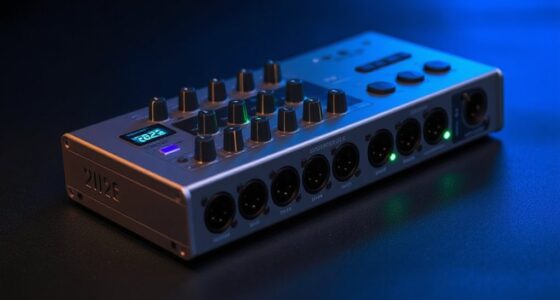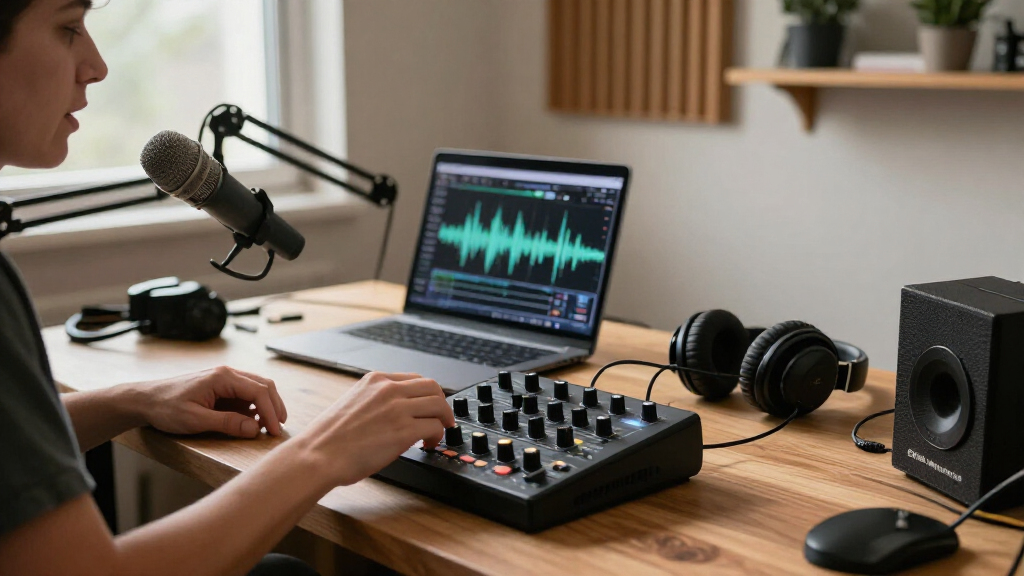
The best USB audio mixer for podcasting depends on how many people you record and how much hands-on control you want. I name the MAONO E2 Gen2 Podcast Audio Interface and Mixer Bundle my best overall pick for its podcast-focused setup, while the Aveek 5-Channel Audio Mixer stands out for flexible connections and the Focusrite Scarlett Solo 4th Gen for a straightforward solo recording chain. The main tradeoff is between dedicated podcast controls and multiple inputs on one side, and the simpler, potentially cleaner setup of a compact audio interface on the other. Gaming mixers and all-in-one bundles can add convenient controls or accessories, but may not match a traditional mixer’s mic-input flexibility. Read on for the full comparison and help matching each option to your recording setup.

Get audio and creator gear delivered free with Prime
- Fast, free delivery on millions of items
- Prime Video, Amazon Music and more included
- Member-only deals all year
Complete the kit


Key Takeaways
- The MAONO E2 Gen2 is the clearest podcast-first choice in this lineup; many other picks are general-purpose interfaces, gaming mixers, or bundles rather than conventional podcast mixers.
- The Aveek and Zenolix mixers put channel count and hands-on mixing ahead of simplicity, making them more relevant for multi-source setups than solo interfaces such as the Scarlett Solo.
- Scarlett Solo 4th Gen, Scarlett Solo 3rd Gen, M-Track Duo, and M-Track Solo are interface-style picks: better suited to direct mic or instrument recording than to a host needing several independent mic channels.
- FIFINE SC8, FIFINE SC3, and PUPGSIS T12 emphasize gaming-oriented controls; those controls may suit live commentary, but buyers should verify the required mic connections and recording features before choosing one for a podcast.
- The TENLAMP G10 and G10 Podcast Equipment Bundle sell a ready-to-start approach, while the Cubilux CB5 and MAONO P1 are more compact choices; bundled accessories or portability matter only if they fit the buyer’s actual workflow.
| 4-Channel Bluetooth Audio Mixer with USB Interface |  | Best for Flexible Small-Group Setups | Channels: 4 | Inputs: Microphone, XLR, 6.5 mm, MP3, Bluetooth, USB | Outputs: USB, XLR, 1/4-inch | VIEW LATEST PRICE | See Our Full Breakdown |
| Aveek 5-Channel Audio Mixer with USB Recording Interface |  | Best for Onboard USB Recording | Channels: 5 | Inputs: 3 XLR; 1/4-inch, RCA, USB, Bluetooth | Main outputs: RCA and 1/4-inch | VIEW LATEST PRICE | See Our Full Breakdown |
| M-Audio M-Track Duo USB Audio Interface |  | Best for Simple Two-Mic Recording | Inputs: 2 combo XLR/1/4-inch line/instrument inputs | Preamps: Crystal preamps with phantom power | Audio resolution: 48 kHz | VIEW LATEST PRICE | See Our Full Breakdown |
| Focusrite Scarlett Solo 4th Gen USB-C Audio Interface |  | Best for Solo Hosts Seeking Recording Headroom | Channels: 2 | Microphone input: 1 XLR mic preamp | Instrument input: 1 Hi-Z instrument input | VIEW LATEST PRICE | See Our Full Breakdown |
| FIFINE SC8 Gaming Audio Mixer with Virtual 7.1 Surround Sound |  | Best for Gaming-Style Podcast Streams | Channels: 5 | Microphone support: XLR or 6.35 mm microphones; USB microphones not supported | Phantom power: 48V | VIEW LATEST PRICE | See Our Full Breakdown |
| Zenolix RM06 6-Channel Audio Mixer with Bluetooth and USB Audio Interface |  | Best for Multi-Mic Podcast Setups | Channels: 6 | Mono combo inputs: 4 XLR/6.35 mm | Stereo line input: 1 × 6.35 mm | VIEW LATEST PRICE | See Our Full Breakdown |
| Focusrite Scarlett Solo 3rd Gen USB-C Audio Interface |  | Best for Solo Podcast Hosts | Channels: 2 | Audio inputs: XLR microphone and instrument | Recording resolution: 24-bit | VIEW LATEST PRICE | See Our Full Breakdown |
| MAONO E2 Gen2 Podcast Audio Interface and Mixer Bundle |  | Best for Portable, Effects-Heavy Podcasting | XLR combo inputs: 2 | Maximum preamp gain: 60 dB | Maximum sample rate: 48 kHz | VIEW LATEST PRICE | See Our Full Breakdown |
| Cubilux CB5 USB Audio Interface with Microphone, Line-In, Line-Out, and Headphone Jacks |  | Best Compact USB-Powered Pick | Inputs and outputs: 2 stereo microphone jacks, line-in, line-out, headphone jack | Channels: 3 | Recording capability: Up to 96 kHz/24-bit | VIEW LATEST PRICE | See Our Full Breakdown |
| FIFINE AmpliGame SC3 Gaming Audio Mixer with Individual Faders and Volume Control |  | Best for Podcast-Style Livestreaming | Channels: 4 | Microphone input: XLR | Phantom power: 48V | VIEW LATEST PRICE | See Our Full Breakdown |
| M-Audio M-Track Solo USB Audio Interface |  | Best Compact Starter Interface | Recording channels: 2-channel | Maximum audio resolution: Up to 48 kHz | Inputs: 1 combo XLR/line input with phantom power; 1 switchable line/instrument input | VIEW LATEST PRICE | See Our Full Breakdown |
| PUPGSIS T12 Gaming Audio Mixer with Independent Volume Controls |  | Best for Effects-Driven Live Shows | Channels: 4 | Connectivity: USB and Bluetooth 5.3 | Audio inputs: XLR microphone, 3.5 mm microphone, AUX, and Bluetooth | VIEW LATEST PRICE | See Our Full Breakdown |
| MAONO P1 USB Audio Interface with 70 dB Gain for PC, Phone, iPad, and Guitar |  | Best for Dynamic-Mic Soloists | Channels: 2 | Maximum recording resolution: 24-bit/192 kHz | Maximum gain: 70 dB | VIEW LATEST PRICE | See Our Full Breakdown |
| TENLAMP G10 Creator Audio Mixer Bundle with Microphone |  | Best All-in-One Starter Bundle | Channels: 2 | Connectivity: Auxiliary, Bluetooth, and USB | Audio input: TRS/XLR | VIEW LATEST PRICE | See Our Full Breakdown |
| G10 Podcast Equipment Bundle with Audio Mixer and Microphone |  | Best for Effects-Rich Creator Kits | Channels: 2 | Connectivity: 3.5 mm, 6.35 mm, XLR/48V, Bluetooth, and Type-C | Audio inputs: XLR, TRS, and 3.5 mm | VIEW LATEST PRICE | See Our Full Breakdown |
| USB audio mixers for podcasting | Channels | Connectivity |
|---|---|---|
| 4-Channel Bluetooth Audio Mixe | 4 | — |
| Aveek 5-Channel Audio Mixer wi | 5 | — |
| M-Audio M-Track Duo USB Audio | — | — |
| Focusrite Scarlett Solo 4th Ge | 2 | — |
| FIFINE SC8 Gaming Audio Mixer | 5 | USB-C |
| Zenolix RM06 6-Channel Audio M | 6 | USB-C, USB drive, Bluetooth |
| Focusrite Scarlett Solo 3rd Ge | 2 | USB |
| MAONO E2 Gen2 Podcast Audio In | — | AUX, Bluetooth, USB-C, 3.5 mm audio |
| Cubilux CB5 USB Audio Interfac | 3 | USB |
| FIFINE AmpliGame SC3 Gaming Au | 4 | — |
| M-Audio M-Track Solo USB Audio | — | — |
| PUPGSIS T12 Gaming Audio Mixer | 4 | USB and Bluetooth 5.3 |
| MAONO P1 USB Audio Interface w | 2 | — |
| TENLAMP G10 Creator Audio Mixe | 2 | Auxiliary, Bluetooth, and USB |
| G10 Podcast Equipment Bundle w | 2 | 3.5 mm, 6.35 mm, XLR/48V, Bluetooth, and Type-C |
More Details on Our Top Picks
4-Channel Bluetooth Audio Mixer with USB Interface
For podcast teams that need several types of sources on a compact mixer, the Kaschun 4-Channel Bluetooth Audio Mixer offers more hands-on routing than the M-Audio M-Track Duo. Its XLR and 1/4-inch inputs accommodate microphones and instruments, while USB recording and playback can connect the setup to a computer. Bluetooth is handy for bringing in a remote audio clip or music, but it is input-only, not a way to send the mix to a wireless speaker. The 99 DSP effects and 7-band EQ offer plenty of sound shaping, though they may be more than a straightforward spoken-word show needs. One operational limit matters: USB/Bluetooth playback should be switched off when channels 3 and 4 are in use. I’d pick it for a flexible desktop setup, not a friction-free, dedicated podcast interface.
Pros:- Four channels with XLR and 1/4-inch inputs handle a mix of microphones and instruments.
- USB interface supports computer playback and recording.
- Bluetooth provides a way to bring wireless audio into the mix.
- 99 DSP effects and a 7-band EQ give more sound shaping than the M-Audio M-Track Duo.
Cons:- Bluetooth is input-only and cannot transmit the mix to a speaker.
- USB/Bluetooth playback must be turned off when channels 3 and 4 are in use.
- The effects and routing options may add complexity for a simple one-microphone podcast.
Best for: Small podcast teams that connect microphones, instruments, and occasional Bluetooth audio to one compact mixer.
Not ideal for: Podcasters who need wireless audio output or want to use USB/Bluetooth playback alongside channels 3 and 4.
- Channels:4
- Inputs:Microphone, XLR, 6.5 mm, MP3, Bluetooth, USB
- Outputs:USB, XLR, 1/4-inch
- USB:Computer playback and recording
- Bluetooth:Audio input only
- DSP effects:99
- Equalizer:7-band
- Phantom power:+48V
Our verdict“Choose the Kaschun when you need four flexible inputs and onboard sound shaping, but skip it if wireless output or unrestricted channel use matters.”
Aveek 5-Channel Audio Mixer with USB Recording Interface
The Aveek 5-Channel Mixer earns its place for podcasters who want more than a computer connection: it can record to a USB drive as well as send audio to a PC. That gives it a different role from the Focusrite Scarlett Solo 4th Gen, which is a streamlined interface for recording through compatible software. Aveek also offers three XLR inputs, 48V phantom power, headphone monitoring, and RCA and 1/4-inch main outputs, making it more accommodating for a small multi-mic desk. The tradeoff is that its source modes are constrained: Bluetooth, USB, and channels 4 and 5 cannot be used simultaneously. Bluetooth range is listed at up to 15 feet, and the output setup requires active devices. I’d favor it for a modest, self-contained recording station, but not for a show that needs every source live at once.
Pros:- Three XLR inputs and 48V phantom power support multiple microphone setups.
- Can record to a computer or USB drive.
- Headphone output supports monitoring while recording.
- RCA and 1/4-inch main outputs offer more connection choices than the Focusrite Scarlett Solo 4th Gen.
Cons:- Bluetooth, USB, and channels 4 and 5 cannot all be used simultaneously.
- Bluetooth range is limited to a stated maximum of 15 feet.
- Bluetooth output devices are not supported, and connected output devices must be active.
Best for: Solo hosts or small teams who want multiple XLR inputs and the option to record directly to a USB drive.
Not ideal for: Podcasters who need USB, Bluetooth, and all mixer channels available simultaneously, or who require wireless audio output.
- Channels:5
- Inputs:3 XLR; 1/4-inch, RCA, USB, Bluetooth
- Main outputs:RCA and 1/4-inch
- Recording:USB-B connection to PC or USB-drive recording
- Playback:USB drive and Bluetooth
- Phantom power:48V
- Audio controls:2-band EQ, gain, echo, and delay
- Headphone output:3.5 mm
Our verdict“Pick Aveek if direct USB-drive recording and several mic inputs suit your workflow; choose a simpler interface if you need fewer mode restrictions.”
M-Audio M-Track Duo USB Audio Interface
The M-Audio M-Track Duo is the straightforward choice here for a host and co-host recording into a computer. Its two combo inputs accept XLR microphones or 1/4-inch sources, and zero-latency direct monitoring lets speakers hear their signals without the distracting delay that can come from software monitoring. Unlike the Kaschun 4-Channel Mixer, it does not offer Bluetooth, onboard DSP effects, or a larger set of channels; in return, its USB-powered design keeps a basic recording rig compact. The 48 kHz resolution is suited to common podcast workflows, though it lacks the higher stated sample-rate ceiling of the Focusrite Scarlett Solo 4th Gen. Headphone fit can require a 1/4-inch adapter, and iOS use needs a separate Apple Lightning to USB 3 Camera Adapter. This is a practical interface, not a full control surface.
Pros:- Two combo inputs support microphones, instruments, and line-level sources.
- USB-powered design suits a compact recording setup.
- USB/Direct switch enables zero-latency monitoring.
- Works with Mac and PC and includes MPC Beats software.
Cons:- Only two inputs, with no onboard mixer effects or Bluetooth audio input.
- Some headphones may need a 1/4-inch adapter.
- iOS use requires a separate Apple Lightning to USB 3 Camera Adapter.
Best for: Two-person podcast teams recording to Mac or PC who want simple mic connections and direct headphone monitoring.
Not ideal for: Shows needing more than two input sources, onboard effects, Bluetooth playback, or a mixer-style set of controls.
- Inputs:2 combo XLR/1/4-inch line/instrument inputs
- Preamps:Crystal preamps with phantom power
- Audio resolution:48 kHz
- Outputs:Stereo 1/4-inch outputs and 1/4-inch headphone output
- Monitoring:USB/Direct switch for zero-latency monitoring
- Power:USB-powered
- Computer compatibility:Mac and PC
- Included software:MPC Beats
Our verdict“Choose the M-Track Duo for uncomplicated two-source recording and direct monitoring, not for a multi-input mixer workflow.”
Focusrite Scarlett Solo 4th Gen USB-C Audio Interface
For a solo host who wants one microphone input and a polished computer-recording workflow, the Focusrite Scarlett Solo 4th Gen is the most focused pick in this group. Its single XLR preamp is paired with a separate Hi-Z instrument input, so a host can record a mic and instrument source without stepping up to the Kaschun’s broader mixer layout. The stated 24-bit/192 kHz conversion and 120 dB dynamic range provide a higher recording specification than the M-Audio M-Track Duo’s 48 kHz resolution, while Air modes offer a way to add presence to voice or guitar. That simplicity also sets a limit: there is only one XLR mic preamp, so it is a poor fit for a two-host show using separate microphones. It depends on a compatible device and recording software, rather than offering standalone USB-drive recording like Aveek.
Pros:- 24-bit/192 kHz conversion and a stated 120 dB dynamic range.
- Air modes can add presence to vocals and guitars.
- Separate XLR microphone and Hi-Z instrument inputs suit a solo mic-and-instrument setup.
- Includes recording software and plugins.
Cons:- Only one XLR microphone preamp for recording voices.
- Requires a compatible computer or iOS device and recording software.
- Offers fewer physical inputs and mixer-style controls than the Aveek 5-Channel Mixer.
Best for: Solo podcasters recording one microphone to Mac, Windows, or iOS who also want a dedicated instrument input and included software.
Not ideal for: Two-host or panel podcasts that need multiple XLR microphone preamps or standalone recording without a computer or mobile device.
- Channels:2
- Microphone input:1 XLR mic preamp
- Instrument input:1 Hi-Z instrument input
- Bit depth:24-bit
- Maximum sample rate:192 kHz
- Dynamic range:120 dB
- Operating systems:Mac OS, Windows OS, iOS
- Included software:Pro Tools Intro+, Ableton Live Lite, Cubase LE, Focusrite Hitmaker Expansion
Our verdict“Choose the Scarlett Solo 4th Gen for a one-host computer-recording setup with a strong stated recording specification, but not for multi-mic sessions.”
FIFINE SC8 Gaming Audio Mixer with Virtual 7.1 Surround Sound
The FIFINE SC8 is the specialist pick for podcasters who stream while gaming and want separate control of microphone, game, and background audio. Its 48V phantom-powered XLR input, mic monitoring, and Game/Chat balance dial cater to a live desk setup more than the conventional recording workflow offered by the Focusrite Scarlett Solo 4th Gen. The SC8 adds three EQ modes, eight voice effects, customizable sound buttons, and virtual 7.1 surround; those features can be useful for a lively stream, but they are less relevant to a clean, edited podcast recording. It connects over USB-C to supported devices, though it does not accept USB microphones, and the XLR cable is not included. I’d choose it for interactive gaming streams that include podcast-style conversation, not as a general-purpose interface for a studio show.
Pros:- 48V phantom power supports compatible condenser microphones.
- Dedicated controls separate microphone, game, and background audio.
- Three EQ modes, eight voice effects, and four customizable sound buttons support interactive streams.
- USB-C plug-and-play connectivity is listed for PC, PS5, Nintendo Switch, and mobile devices.
Cons:- Not compatible with USB microphones.
- XLR cable is not included.
- Gaming-oriented surround and voice effects offer less value for a straightforward recorded podcast than the M-Audio M-Track Duo’s direct-monitoring workflow.
Best for: Gaming podcasters and live streamers using an XLR or 6.35 mm microphone who want separate mic, game, and background audio controls.
Not ideal for: Podcasters using a USB microphone or those prioritizing conventional multi-mic recording and studio-style audio workflows.
- Channels:5
- Microphone support:XLR or 6.35 mm microphones; USB microphones not supported
- Phantom power:48V
- Connectivity:USB-C
- Outputs:3.5 mm audio jack and USB
- Virtual surround sound:7.1-channel
- EQ modes:Game, Music, Movie
- Voice effects and sound buttons:8 voice effects; 4 customizable sound buttons
Our verdict“Choose the SC8 for an XLR-mic gaming stream with live audio controls, but skip it if you need USB-mic support or a conventional podcast interface.”
Zenolix RM06 6-Channel Audio Mixer with Bluetooth and USB Audio Interface
The Zenolix RM06 is the most flexible choice here for a podcast with several people around the table: its four XLR combo inputs give each mic a connection, while separate headphone outputs make monitoring more adaptable. Per-channel EQ, pan, and FX send offer more hands-on mixing than the Focusrite Scarlett Solo 3rd Gen, which is built around one mic preamp rather than a group. The RM06 also adds Bluetooth and USB-drive playback, plus USB-C recording with loopback, so callers or prerecorded clips can fit into a session without relying on a separate playback device. The tradeoff is a larger, cord-powered mixer with many controls to learn; its 99 reverb effects are less useful for clean spoken-word production than careful mic technique. Choose it for input flexibility, not a minimal desk setup.
Pros:- Four XLR/6.35 mm combo inputs accommodate multiple microphones.
- Per-channel EQ, pan, and FX send provide hands-on mix control.
- Bluetooth and USB-drive playback simplify adding music or prerecorded clips.
- USB-C recording supports 24-bit/192 kHz audio and loopback.
Cons:- Requires corded electric power, limiting use away from a powered setup.
- Its broad effects and channel controls may be more complexity than a solo host needs.
- The software update support date is not specified.
Best for: Small podcast teams recording several XLR microphones and needing flexible headphone monitoring, playback, and loopback.
Not ideal for: Solo hosts seeking a small, simple interface, or mobile podcasters who need battery-powered operation.
- Channels:6
- Mono combo inputs:4 XLR/6.35 mm
- Stereo line input:1 × 6.35 mm
- Headphone outputs:6.35 mm and 3.5 mm
- Main outputs:Balanced XLR and 6.35 mm
- Recording resolution:24-bit/192 kHz
- Connectivity:USB-C, USB drive, Bluetooth
- Weight:3.9 lb
Our verdict“Choose the RM06 for a multi-mic podcast that needs onboard mixing and flexible playback; skip it if you want a compact solo interface.”
Focusrite Scarlett Solo 3rd Gen USB-C Audio Interface
The Scarlett Solo 3rd Gen is a better fit for a host who records one microphone at a time than for a roundtable. Its single mic preamp keeps the recording path straightforward, and the gain indicators help show when a voice is approaching clipping before it becomes a distracting recording problem. Switchable Air mode adds brightness to vocals, while the separate instrument input lets a host record guitar or bass without giving up the mic connection. Compared with the Zenolix RM06, this Focusrite is far smaller and simpler, but it cannot handle four mic inputs or offer the same onboard mixer controls and playback options. It supports up to 24-bit/192 kHz recording and includes software, though that bundle requires registration and download. Choose it for a focused computer-based recording setup, not for several live mics.
Pros:- Air mode offers an option for adding vocal and acoustic-instrument brightness.
- Gain indicators help monitor recording levels.
- High-headroom instrument input supports direct guitar or bass recording.
- Balanced outputs connect to compatible studio monitors.
Cons:- Only one microphone preamp limits multi-person recording.
- The bundled software requires registration and download.
Best for: Solo podcasters recording one XLR microphone alongside guitar or bass on a Mac, PC, or supported iOS device.
Not ideal for: Interview hosts who need multiple microphone preamps or a mixer with onboard effects and several headphone outputs.
- Channels:2
- Audio inputs:XLR microphone and instrument
- Recording resolution:24-bit
- Maximum sample rate:192 kHz
- Connectivity:USB
- Compatible operating systems:Mac OS, Windows OS, iOS
- Dimensions:1.71 × 5.65 × 3.77 in
- Weight:12.32 oz
Our verdict“Pick the Scarlett Solo for a streamlined one-mic podcast and instrument setup, but choose the Zenolix RM06 for multiple hosts.”
MAONO E2 Gen2 Podcast Audio Interface and Mixer Bundle
The MAONO E2 Gen2 suits creators who want podcast-style controls and multiple ways to connect, rather than a traditional mixer focused on a large mic count. Two XLR combo inputs with up to 60 dB of preamp gain cover a host and guest, while loopback, customizable sound buttons, pitch effects, and six reverbs make it easier to add live production touches. Its built-in battery, rated for up to eight hours, also makes this more portable than the cord-powered Zenolix RM06. That convenience comes with limits: the maximum sample rate is 48 kHz, below the RM06’s stated 192 kHz recording support, and the sound buttons hold only up to 20 seconds each. It can connect to phones and tablets, but it does not charge them. This is a creator-focused choice, not the best fit for a clean, effects-free workflow.
Pros:- Two XLR combo inputs and up to 60 dB of preamp gain support a host-and-guest setup.
- Loopback and multiple connection types suit live streaming and remote content workflows.
- Eight customizable sound buttons can store short audio clips.
- Built-in battery is rated for up to 8 hours of use.
Cons:- Maximum sample rate is 48 kHz, below the Zenolix RM06’s stated 192 kHz recording support.
- Sound-effect recordings are limited to 20 seconds per button.
- USB-C does not provide phone charging or power delivery.
Best for: Mobile podcasters and livestreamers recording a host and guest who want loopback, sound buttons, and battery operation.
Not ideal for: Podcasters who need more than two XLR microphones, higher sample rates, or phone charging from the mixer.
- XLR combo inputs:2
- Maximum preamp gain:60 dB
- Maximum sample rate:48 kHz
- Connectivity:AUX, Bluetooth, USB-C, 3.5 mm audio
- Sound-effect buttons:8 customizable buttons; up to 20 seconds per button
- Battery life:Up to 8 hours
- Compatible devices:Computer, smartphone, tablet
- Weight:0.89 kg
Our verdict“Choose the E2 Gen2 for portable two-person shows with live effects and loopback, not for larger mic teams or phone-powered charging.”
Cubilux CB5 USB Audio Interface with Microphone, Line-In, Line-Out, and Headphone Jacks
The Cubilux CB5 takes a connection-first approach: it adds microphone, line-in, line-out, and headphone jacks in a very small USB-powered unit, without requiring an external power source. That makes it a convenient option for a podcaster who needs to connect audio devices to a computer and wants a compact alternative to the larger MAONO E2 Gen2 mixer. The CB5 also lists independent device names for multi-track recording, which can help separate sources in a compatible computer workflow. Its limits matter for podcasting, though: the product data does not describe the channel-by-channel mixing, effects, or XLR preamp controls offered by the Zenolix RM06. Also, line-out and audio-output jacks cannot be used at the same time. Treat its high-resolution output figures separately from recording: the listed recording capability is up to 96 kHz/24-bit, while output reaches 192 kHz/32-bit.
Pros:- Compact USB-powered design needs no external power source.
- Provides microphone, line-in, line-out, and headphone connections.
- Independent device names support multi-track recording in compatible workflows.
- Supports recording up to 96 kHz/24-bit and output up to 192 kHz/32-bit.
Cons:- Line-out and audio-output jacks cannot be used simultaneously.
- It lacks the described per-channel mixing and effects controls found on the Zenolix RM06.
- The listed 96 kHz frequency response is lower than the maximum output sample rate.
Best for: Computer-based podcasters who need a tiny, USB-powered way to connect several audio sources and headphones.
Not ideal for: Hosts who need a full mixer with multiple XLR preamps, hands-on channel controls, or simultaneous line-out and audio output.
- Inputs and outputs:2 stereo microphone jacks, line-in, line-out, headphone jack
- Channels:3
- Recording capability:Up to 96 kHz/24-bit
- Maximum output:192 kHz/32-bit
- Connectivity:USB
- Power:USB-powered; no external power source required
- Compatible operating systems:Windows, macOS
- Weight:0.11 kg
Our verdict“Pick the CB5 when compact USB-powered connectivity matters more than the hands-on mixing controls of a podcast mixer.”
FIFINE AmpliGame SC3 Gaming Audio Mixer with Individual Faders and Volume Control
The FIFINE AmpliGame SC3 is aimed at streamers who want quick control over a mic, headset, and other live audio, rather than podcasters building a multi-mic recording desk. Its independent controls, mute button, and monitoring function make common live tasks accessible without navigating a larger mixer like the Zenolix RM06. It also includes 48V phantom power for a compatible condenser microphone, plus sound effects, voice-changing modes, and auto-tune options for more produced or playful streams. Those features are less compelling for a straightforward spoken-word recording, and the SC3 accepts only one XLR microphone. It is not compatible with USB microphones, and the included cables do not include an XLR lead. For a host who records and streams from a computer and values fast, tactile controls, it is more appropriate than a basic interface; for a two-host podcast, choose a model with more mic inputs.
Pros:- XLR input with 48V phantom power supports compatible condenser microphones.
- Independent controls provide quick adjustment of microphone and other audio levels.
- Mute and monitoring buttons suit live recording and streaming.
- Custom sound effects, voice modes, and auto-tune options add live production choices.
Cons:- Only one XLR microphone input limits multi-host podcasting.
- Not compatible with USB microphones.
- An XLR cable is not included.
Best for: Solo livestreaming podcasters using an XLR microphone who want physical mute, monitoring, and separate level controls.
Not ideal for: Two-host shows, USB-microphone users, or podcasters seeking a straightforward mixer without gaming-oriented voice effects.
- Channels:4
- Microphone input:XLR
- Phantom power:48V
- Power:USB-C
- Output interfaces:Headphones, line out, headset
- Compatibility:Windows and Mac
- Dimensions:4.44 × 6.45 × 1.6 in
- Weight:0.5 kg
Our verdict“Choose the SC3 for solo podcast livestreaming with tactile controls and effects; skip it for multi-mic recording or USB-mic setups.”
M-Audio M-Track Solo USB Audio Interface
The M-Track Solo is a straightforward choice for a podcaster recording one microphone while keeping a second input available for an instrument or line source. Its combo XLR input with phantom power accommodates a condenser mic, and direct monitoring lets you hear the input without the distracting delay that can complicate spoken recording. Compared with the M-Track Duo, it has fewer recording channels, so it is less suited to interviews with two separate microphones; its smaller footprint and simple layout make more sense for a solo desk or mobile kit. The limits are real: recording tops out at 48 kHz, and the headphone jack is 1/8-inch rather than a full-size connector. I’d pick it for basic voice recording, not a setup expected to grow into a multi-host show.
Pros:- USB-powered compact design suits small desks and portable recording.
- Combo XLR/line input includes phantom power for compatible condenser microphones.
- Zero-latency direct monitoring helps you hear your voice while recording.
- Switchable line/instrument input adds flexibility for a guitar or other source.
Cons:- Only one combo microphone input, limiting separate-mic podcast recording.
- Recording supports up to 48 kHz, below the MAONO P1’s stated 192 kHz maximum.
- The 1/8-inch headphone output may require an adapter for common headphones.
Best for: Solo podcasters who want a compact USB interface for one microphone, with an extra input for an instrument or line source.
Not ideal for: Two-host shows that need separate microphone channels, or creators who want higher sample-rate recording and a full-size headphone jack.
- Recording channels:2-channel
- Maximum audio resolution:Up to 48 kHz
- Inputs:1 combo XLR/line input with phantom power; 1 switchable line/instrument input
- Outputs:Stereo RCA; 1/8-inch headphone output
- Monitoring:Zero-latency direct monitoring with USB/Direct switch
- Power:USB-powered
- Compatibility:Mac and PC; iOS with a separate Apple Lightning to USB 3 Camera Adapter
- Included software:MPC Beats; Ableton Live Lite
Our verdict“Choose the M-Track Solo for simple, portable solo podcast recording; choose a two-mic interface if you host with a guest.”
PUPGSIS T12 Gaming Audio Mixer with Independent Volume Controls
The PUPGSIS T12 suits podcasters who want hands-on control and performance effects more than a conventional recording interface. Its independent controls cover microphone, headset mic, auxiliary/Bluetooth, and line-out levels, while one-touch mute and zero-latency monitoring make it easier to manage a live conversation. Up to three microphone inputs are listed, giving it a more host-focused layout than the single-mic M-Track Solo. The tradeoff is that its appeal leans toward interactive streams: voice-changing modes, reverb, soundpads, and RGB lighting may be unnecessary for a clean, edited interview show. It also requires corded power, and the product details don’t spell out operating-system support for every feature. I’d choose it for a lively live format, but not if predictable compatibility and plain spoken-word recording are the main priorities.
Pros:- Independent controls provide hands-on adjustment of microphone, auxiliary/Bluetooth, and line-out levels.
- Supports up to three microphone inputs, offering more live-host flexibility than a single-mic interface.
- 48V phantom power supports compatible condenser microphones.
- One-touch mute and zero-latency monitoring are useful during live sessions.
Cons:- Corded electric power makes it less convenient for portable recording.
- Operating-system and device support for individual features is not specified.
- Voice effects, RGB lighting, and soundpads may add clutter for straightforward podcast production.
Best for: Live podcasters and streamers who want independent level controls, quick muting, and sound effects for audience-facing segments.
Not ideal for: Editors seeking a simple, clearly documented USB recording interface for a quiet, effects-free podcast workflow.
- Channels:4
- Connectivity:USB and Bluetooth 5.3
- Audio inputs:XLR microphone, 3.5 mm microphone, AUX, and Bluetooth
- Microphone capacity:Supports up to 3 microphones
- Phantom power:48V
- Monitoring:Zero-latency
- Sound features:6 voice-changing modes, 4 customizable soundpads, and 3 reverb presets
- Power:Corded electric
Our verdict“Pick the T12 for a live, effects-heavy podcast or stream with multiple voices, not for a minimal recording setup.”
MAONO P1 USB Audio Interface with 70 dB Gain for PC, Phone, iPad, and Guitar
For a solo podcaster using a gain-hungry dynamic microphone, the MAONO P1 has a persuasive combination: up to 70 dB of gain, a stated -130 dB EIN, direct monitoring, and loopback. Loopback can route computer audio into a stream or recording, a practical advantage for commentary and remote content. Its 24-bit/192 kHz specification also exceeds the M-Track Solo’s 48 kHz ceiling, though that difference matters less to many spoken-word workflows than the P1’s gain and routing options. This remains a two-channel interface for solo creators, not a mixer for a multi-mic panel, and its broad mobile compatibility still depends on the specific device and connection. Choose it for a flexible one-person recording rig; skip it if your podcast needs several separately controlled microphones.
Pros:- Up to 70 dB of gain is suited to gain-hungry dynamic microphones.
- Loopback and direct monitoring support voice recording alongside computer audio.
- 24-bit/192 kHz recording specification exceeds the M-Track Solo’s stated maximum sample rate.
- Metal housing and listed Android, ChromeOS, Windows, and iOS compatibility support a flexible creator setup.
Cons:- Two-channel design is not built for large podcast sessions or full-band recording.
- 48V phantom power is for compatible condenser microphones, not a substitute for a multi-mic mixer.
- The product data does not detail connection requirements for every listed mobile device.
Best for: Solo podcasters using a dynamic microphone who want substantial gain, loopback, and the option to record or stream from compatible mobile devices.
Not ideal for: Panel and interview podcasters who need several microphone inputs and independent channel controls.
- Channels:2
- Maximum recording resolution:24-bit/192 kHz
- Maximum gain:70 dB
- Equivalent input noise:-130 dB EIN
- Phantom power:48 V
- Features:Direct monitoring and loopback
- Compatibility:Android, ChromeOS, Windows, and iOS
- Housing and dimensions:Metal; 5.9 × 5.98 × 3.46 in (D × W × H)
Our verdict“Choose the P1 for a solo dynamic-mic setup with loopback and broad device options, but look elsewhere for a multi-host mixer.”
TENLAMP G10 Creator Audio Mixer Bundle with Microphone
The TENLAMP G10 bundle is aimed at new creators who want a mixer and condenser microphone in one package rather than assembling a podcast kit piece by piece. Its noise reduction and real-time bass, treble, reverb, and pitch controls offer immediate ways to shape a voice, while compatibility is listed for Windows, Mac, iOS, and Android. Compared with the MAONO P1, this package emphasizes included recording gear and effects instead of documented gain, bit depth, and sample-rate figures. That makes it less compelling for buyers choosing by audio-interface specifications, and the listed TRS, XLR, and OTG/Type-C connections deserve a compatibility check against your actual setup. Software update support is also unknown. I’d view it as an entry point for casual streaming and podcasting, not a clearly specified upgrade path for a growing production.
Pros:- Bundle includes a condenser microphone and accessories alongside the mixer.
- Noise reduction and real-time tone controls offer basic voice shaping.
- Voice effects support interactive streaming and casual creator content.
- Compatibility is listed for Windows, Mac, iOS, and Android.
Cons:- Listed input and output connectors may require checking against the buyer’s devices and cables.
- Software update support is listed as unknown.
- The provided specifications do not state bit depth or maximum sample rate for comparing recording quality.
Best for: First-time creators who want a microphone, mixer, and basic voice effects in one bundle for casual podcasting or streaming.
Not ideal for: Podcasters who need clearly documented recording resolution, reliable software-update information, or a known connection match for existing gear.
- Channels:2
- Connectivity:Auxiliary, Bluetooth, and USB
- Audio input:TRS/XLR
- Output connectors:3.5 mm TRS, 6.35 mm TRS, and OTG/Type-C
- Power:Battery powered
- Compatibility:Windows, Mac, iOS, and Android
- Dimensions and weight:10.9 × 2.28 × 7.67 in; 4.2 lb
- Included equipment and features:Condenser microphone and accessories; noise reduction and voice effects
Our verdict“Choose the G10 bundle if you want a ready-to-start creator kit, but choose a better-documented interface for a long-term podcast setup.”
G10 Podcast Equipment Bundle with Audio Mixer and Microphone
This G10 podcast bundle pairs a sound board with a 3.5 mm condenser microphone and boom arm, making it a fuller desk kit than the TENLAMP G10, which is also bundled with a microphone but has different listed accessories. The mixer adds multiple input types, noise reduction, customizable EQ and reverb, 12 sound effects, and voice-changing modes. Those options suit creators who want to add performance elements to a live show without buying each accessory separately. The tradeoff is specification clarity: the reverb information lists both five preset modes and 19 additional presets, so the total is ambiguous, and the mobile-device compatibility details are not specific. Its two-channel design also remains a poor fit for a panel with several separately managed microphones. I’d favor it for a single creator’s effects-oriented desk setup, not a scaling interview studio.
Pros:- Includes a 3.5 mm condenser microphone and boom arm.
- Noise reduction, customizable EQ, and reverb provide voice-shaping options.
- Multiple input and output connector types support varied creator gear.
- Plug-and-play use is listed for PC, Mac, and mobile devices.
Cons:- Reverb preset information is inconsistent, listing five modes and 19 additional presets.
- Mobile-device compatibility is not specified by device or operating system.
- Two-channel design does not suit a larger podcast panel needing separate microphone control.
Best for: Solo streamers and podcasters who want a bundled microphone and boom arm plus sound effects and voice-shaping controls.
Not ideal for: Multi-host podcast teams or buyers who need precise, consistent documentation of effects and mobile-device support.
- Channels:2
- Connectivity:3.5 mm, 6.35 mm, XLR/48V, Bluetooth, and Type-C
- Audio inputs:XLR, TRS, and 3.5 mm
- Output connectors:TRS, USB Type-C, and XLR
- Power and voltage:Battery powered; 5 V
- Included microphone:3.5 mm condenser microphone
- Sound features:12 built-in effects; noise reduction, voice changing, EQ, and reverb
- Dimensions and weight:11.73 × 5.51 × 8.58 in (D × W × H); 4.6 lb
Our verdict“Pick this bundle for a solo creator who wants a mic, boom arm, and built-in effects, but not for a multi-person podcast studio.”
How We Picked
I compared these 15 options by how well their connection layouts and controls fit common podcast setups: solo recording, two-person conversations, multiple audio sources, and live commentary. I gave more weight to clear mic-input needs, practical monitoring and level control, computer connectivity, and the likelihood that a beginner could set up a reliable recording chain without buying unnecessary accessories. I also separated traditional mixer-style products from USB audio interfaces and gaming-focused controllers, since the names can sound interchangeable even when their workflows differ.
The ranking favors options with a clear podcast use case and enough flexibility to support the stated setup, rather than channel count or bundled extras alone. Podcast-focused designs rank ahead of gaming mixers for conventional spoken-word recording; interface-style models place well for straightforward mic or instrument capture, but not as substitutes for multi-mic mixers. I treat bundles as convenience picks, not automatic upgrades, and call out where product naming or feature descriptions leave a buyer needing to confirm compatibility before purchase.
Factors to Consider When Choosing USB Audio Mixers For Podcasting
Before choosing, map the recording chain you need rather than starting with the word “mixer.” A USB interface, a traditional mixer with USB output, and a gaming audio controller can all connect to a computer, but their inputs, monitoring, and control options serve different jobs.
Count microphones, not just channels
Start with the number of people who need separate microphones at the same time. A two-person show recorded in one room usually needs two appropriate mic inputs, while a solo host may be well served by a one-input interface such as the Scarlett Solo or M-Track Solo. A mixer’s advertised channel count may include stereo line inputs, Bluetooth, or playback channels rather than several mic preamps. Check the input list and connector types before buying, and leave room for a guest or co-host if your format may grow. Buying extra channels can add size and setup complexity, but choosing too few can force you into awkward adapters or a second device.
Choose between a mixer workflow and an interface workflow
A mixer gives you physical controls for balancing sources before or during a session; an interface is usually built to send microphone or instrument signals into recording software with fewer on-device decisions. That difference matters most when you want to manage several sources live without reaching for a computer. For edited, one- or two-mic podcasts, recording separate tracks through an interface can make later cleanup and level changes easier. Buyers sometimes choose a mixer for its knobs without checking whether its USB output records each channel separately or combines them into one mix. Confirm the routing and recording mode in the product documentation if post-production flexibility matters to you.
Check mic compatibility and gain needs
Microphones do not all connect the same way: an XLR dynamic mic, a condenser mic requiring phantom power, and a USB mic each have different requirements. Verify the mixer or interface supports your chosen mic type, including phantom power when needed, and check whether its inputs are XLR, 1/4-inch, or a combination. A gain figure by itself does not tell you whether a device is a good match; noise performance, input design, and the sensitivity of your mic also matter. Avoid assuming that an included microphone will work with every input or that an adapter turns a USB mic into an XLR mic. If you have not bought a microphone yet, choose the interface and mic as a compatible pair.
Plan monitoring and remote-guest routing
Headphone monitoring helps you catch clipping, room noise, and connection problems before they become part of a recording. For a host and in-room guest, check how many headphone outputs are available and whether each person can control their own level. Remote guests add another routing question: you may need a way to send computer audio to headphones without feeding that audio back into the recording as an echo. Bluetooth playback can be convenient for music or casual audio, but it is not a replacement for a reliable, low-latency monitoring path. Think through the full signal route—mic, computer, guest audio, headphones, and recording software—before choosing a device based on a single feature.
Treat gaming controls and bundles as workflow choices
Gaming-oriented mixers often put mute buttons, faders, effects, or voice controls within easy reach, which can help with live streaming and commentary. Those controls do not automatically make a unit a better podcast recorder, especially if the product has limited microphone connections or relies on features aimed at game chat. Bundles can save setup time when their included mic and accessories match your needs, but a kit is not a bargain if you plan to replace most of it. Check what is actually included, how it connects, and whether the mixer can support a later microphone upgrade. Pay for convenience when it removes a real setup hurdle; otherwise, a simpler interface and separately chosen mic may be a better fit.
Leave room for recording software and future growth
The USB device is only one part of a podcast setup: your computer, recording software, operating system, and chosen workflow all affect what you can capture. Confirm the product’s compatibility with your computer and the software you plan to use, especially if you need multitrack recording or phone and tablet connectivity. A compact interface may be easier to carry and store, while a larger mixer can offer more immediate control but take up desk space. Consider whether you expect to add a second host, instruments, phone audio, or a remote guest; the cheapest setup today can become restrictive if it has no practical expansion path. A modest amount of spare input capacity is useful, but buying features you will never use can make setup more complicated without improving your recordings.
Frequently Asked Questions
Can I record a two-person podcast with a Scarlett Solo or M-Track Solo?
These are compact, interface-style options aimed mainly at simple recording chains, so do not assume either can connect two XLR microphones at once. Check the exact input types and count for the model, then compare them with the microphones you plan to use. If both speakers need separate mics, an interface or mixer with two suitable mic inputs is usually the more direct fit. You can share one microphone, but that often makes placement and level balance harder. Choose based on simultaneous mic connections, not the product’s overall input or channel number.
Is a gaming audio mixer suitable for recording a podcast?
It can work for a podcast when its mic connection, USB routing, and recording compatibility match your setup. Gaming-oriented models such as the FIFINE SC8, FIFINE SC3, and PUPGSIS T12 focus on convenient live controls, which may suit commentary or streaming. Those features do not tell you whether the unit supports multiple XLR microphones or separate recording tracks. Check how it handles computer audio and whether it can send the signals you need to your recording software. For a conventional host-and-guest show, a podcast-focused mixer or multi-input interface may be a more straightforward match.
Should I choose a podcast bundle or buy the mixer and microphone separately?
A bundle can reduce setup decisions when it includes a microphone and accessories that match the way you plan to record. The MAONO E2 Gen2, TENLAMP G10, and G10 Podcast Equipment Bundle take different all-in-one approaches, but included items should not be treated as proof of better recording quality. Review the exact contents, connection types, and whether the mic can be replaced or upgraded later. Buying separately gives you more control over each component, though it requires checking compatibility yourself. Pick a bundle for convenience only when its included parts solve real needs rather than adding pieces you will not use.
What should I check before using Bluetooth audio in a podcast setup?
Check whether Bluetooth is intended for playback, recording input, or both; those functions are not interchangeable. Wireless audio can be useful for feeding music or a phone source into a session, but added latency can make live monitoring and timing less predictable. Ask whether the source can also connect by cable if reliable sync matters. For music or effects, test the routing with your recording software before a live session. Keep the microphone path wired when consistent timing and monitoring are a priority.
When is it worth choosing a mixer with more channels than I need now?
Extra channels make sense if you expect to add a co-host, in-room guest, phone audio, or another source and the mixer provides the right type of inputs for them. The Aveek 5-Channel and Zenolix RM06 may suit buyers who value multiple sources and hands-on balancing, but the advertised channel count alone does not prove they offer several microphone preamps. More controls can also mean a larger footprint and more routing decisions. If your show is likely to remain a one-mic recording, a compact interface may be easier to operate. Choose spare capacity only when you can name a likely source you will connect to it.
Conclusion
For most podcast buyers seeking a purpose-built starting point, I recommend the MAONO E2 Gen2 as the best overall option in this group. The Aveek 5-Channel Audio Mixer is my best value-style pick for buyers who need more source flexibility, while the Focusrite Scarlett Solo 4th Gen is the better fit for a clean, uncomplicated solo setup—not a multi-mic show. For beginners who want a ready-to-start kit, compare the TENLAMP G10 and G10 Podcast Equipment Bundle by their included components and connection needs. Choose the Zenolix RM06 for a multi-source mixer layout, the FIFINE or PUPGSIS options for gaming-style live controls, and the Cubilux CB5 or MAONO P1 when compact connectivity matters most. I would pay more attention to suitable mic inputs, monitoring, and routing than to extra buttons or a long feature list.