
When searching for studio monitor speakers, the goal is to find a pair that offers accurate sound reproduction, durability, and good value. The Yamaha HS5 stands out as the best overall choice due to its reliable performance and balanced sound. For those on a budget, the PreSonus Eris E4.5 offers impressive clarity at an affordable price, while the JBL 305P MkII provides a larger soundstage for more immersive mixing. Buyers often face a tradeoff between size, power, and accuracy—more powerful speakers tend to cost more and require more space, while smaller models might lack depth. Continue reading for a detailed comparison and help narrowing down your ideal studio monitors.
Complete the kit



Key Takeaways
- The Yamaha HS5 combines accuracy and build quality, making it the top overall pick for most users.
- Larger woofer sizes like the 5-inch in the JBL 305P MkII deliver broader sound and deeper bass, suitable for bigger rooms.
- Budget models such as the PreSonus Eris E4.5 offer surprising clarity but may lack the volume headroom of pricier options.
- Size and power are key tradeoffs—smaller monitors save space but might compromise on low-frequency reproduction.
- Build quality and room compatibility significantly impact long-term satisfaction, especially for critical listening or mixing.
| M-Audio BX3 3.5″ Wired Studio Monitor Speakers (Pair) |  | Best Compact Option for Versatile Desktop Use | Woofer Size: 3.5 inches (Kevlar) | Tweeter Type: Natural silk dome | Power: 120W | VIEW ON AMAZON | See Our Full Breakdown |
| PreSonus Eris E4.5 2-Way 4.5-inch Near-Field Studio Monitors (Pair) |  | Best for Accurate, Small-Scale Production | Speaker Type: 2-way near-field studio monitor | Woofer: 4.5-inch woven-composite | Tweeter: 1-inch silk dome | VIEW ON AMAZON | See Our Full Breakdown |
| Yamaha HS3 Powered Studio Monitor, Pair |  | Best Compact Monitor for Entry-Level Professional Use | Type: 2-way bass-reflex powered speaker | Woofer: 3.5 inches | Tweeter: 0.75 inches | VIEW ON AMAZON | See Our Full Breakdown |
| Yamaha HS5 Powered Studio Monitor (Pair) |  | Best for Flat Response and Critical Mixing | Woofer Size: 5 inches | Tweeter Size: 1 inch | Frequency Response: 54 Hz – 30 kHz | VIEW ON AMAZON | See Our Full Breakdown |
| Edifier R1280T Powered Bookshelf Speakers – 2.0 Near Field Studio Monitor |  | Best for High-Quality Stereo Listening in Home Environments | Type: Bookshelf stereo speakers | Power: 42 Watts RMS | Frequency Response: 80 Hz and up | VIEW ON AMAZON | See Our Full Breakdown |
| Yamaha HS4 Powered Studio Monitor (Pair) in Black |  | Best Compact for Limited Spaces | Packaging: Pair | Speaker Type: Monitor | Color: Black | VIEW ON AMAZON | See Our Full Breakdown |
| Mackie CR3.5 Creative Reference Powered Studio Monitors (Pair), 3.5″ Woofers, Black | 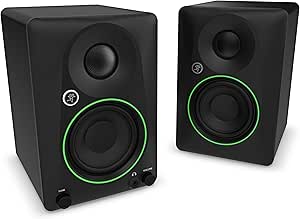 | Best for Desk and Small Studio Use | Woofer Diameter: 3.5 inches | Tweeter Diameter: 1 inch | Audio Output Mode: Stereo | VIEW ON AMAZON | See Our Full Breakdown |
| PreSonus Eris 3.5 Powered Studio Monitors (Pair) |  | Best Budget-Friendly Studio Sound | Power: 50 watts | Woofer Size: 3.5 inches | Frequency Response: 80 Hz–20 kHz | VIEW ON AMAZON | See Our Full Breakdown |
| Edifier MR4 Powered Studio Monitor Speakers, 4-inch Active Near-Field Pair |  | Best for Accurate Near-Field Monitoring | Tweeter: 1-inch silk dome | Woofer: 4-inch composite | Cabinet: MDF wood | VIEW ON AMAZON | See Our Full Breakdown |
| JBL 305P MkII 5″ 2-Way Active Powered Studio Reference Monitors (Pair) |  | Best for Precise Imaging and Room Tuning | Woofer Size: 5 inches | Tweeter Size: 1 inch | Amplifiers: Dual 41-Watt Class-D | VIEW ON AMAZON | See Our Full Breakdown |
| studio monitor speaker | Inputs | Frequency Response |
|---|---|---|
| M-Audio BX3 3.5" Wired Studio | 1/4-inch, 1/8-inch, RCA (rear); 1/8-inch AUX and headphone (front) | — |
| PreSonus Eris E4.5 2-Way 4.5-i | TRS balanced, RCA, AUX | — |
| Yamaha HS3 Powered Studio Moni | XLR/TRS, RCA | 70 Hz – 22 kHz |
| Yamaha HS5 Powered Studio Moni | XLR and TRS | 54 Hz – 30 kHz |
| Edifier R1280T Powered Bookshe | — | 80 Hz and up |
| Yamaha HS4 Powered Studio Moni | — | 60 Hz – 22 kHz (-10 dB) |
| Mackie CR3.5 Creative Referenc | — | — |
| PreSonus Eris 3.5 Powered Stud | Balanced TRS, RCA, front-panel aux | 80 Hz–20 kHz |
| Edifier MR4 Powered Studio Mon | 1/4-inch balanced TRS, unbalanced RCA, AUX | — |
| JBL 305P MkII 5" 2-Way Active | Balanced XLR and TRS | — |
More Details on Our Top Picks
M-Audio BX3 3.5″ Wired Studio Monitor Speakers (Pair)
The M-Audio BX3 stands out for its compact form factor combined with studio-grade components like Kevlar woofers and silk dome tweeters, making it a strong choice for desktop setups where space is limited. Unlike the larger Yamaha HS5 or PreSonus Eris E4.5, its 3.5-inch woofers deliver punchy sound without overwhelming a small room. Its wired connection and included MPC Beats software appeal to content creators and casual producers who prioritize low-latency monitoring and integrated music tools. However, the small woofers limit deep bass reproduction, and the wired-only design might restrict flexibility for some users. This pick makes the most sense for those needing reliable, space-saving monitors that handle streaming, gaming, or podcasting without sacrificing audio clarity.
Pros:- Compact size ideal for desktop setups
- High-quality Kevlar woofers and silk dome tweeters
- Multiple wired input options plus front headphone jack
- Includes bundled MPC Beats software for music creation
Cons:- Limited bass response due to small 3.5-inch woofers
- No wireless or Bluetooth connectivity
Best for: Desktop producers, podcasters, and gamers who need reliable, space-efficient monitors with minimal latency.
Not ideal for: Large-room mixing or bass-heavy music production—its small woofers can’t deliver deep bass and lacks Bluetooth connectivity.
- Woofer Size:3.5 inches (Kevlar)
- Tweeter Type:Natural silk dome
- Power:120W
- Cabinet Material:MDF (acoustically-inert, bass reflex)
- Inputs:1/4-inch, 1/8-inch, RCA (rear); 1/8-inch AUX and headphone (front)
- EQ Controls:Rear High and Low EQ dials
Our verdict“Best suited for users who need space-efficient monitors for casual or content creation tasks without deep bass requirements.”
PreSonus Eris E4.5 2-Way 4.5-inch Near-Field Studio Monitors (Pair)
The PreSonus Eris E4.5 excels as a near-field monitor with precise sound reproduction suited for mixing and multimedia editing. Its 4.5-inch woven-composite woofer and 1-inch silk dome tweeter produce clear, balanced audio that rivals larger monitors like the Yamaha HS5 but with a more neutral sound profile. The 50W Class AB amplification provides enough power for small studios or home setups, and the room-tuning controls allow for easy adaptation to different spaces. Compared with the Edifier R1280T, which emphasizes stereo listening for casual use, the Eris E4.5 prioritizes accuracy over aesthetic or bass depth, though it may require adding an external subwoofer for full-range bass. It’s ideal for producers or musicians who want dependable monitors with flexible connectivity.
Pros:- Accurate, studio-grade sound for mixing and editing
- Room-tuning controls for adaptable sound
- Flexible inputs including balanced TRS and RCA
- Built-in headphone amplifier for private monitoring
Cons:- Deep bass may require an external subwoofer
- Tuning may need adjustment for optimal placement
Best for: Home studio musicians, mixing engineers, and multimedia creators focused on accuracy and detailed sound.
Not ideal for: Large-room applications or bass-heavy genres—its 4.5-inch woofers and modest power limit deep bass and volume for big spaces.
- Speaker Type:2-way near-field studio monitor
- Woofer:4.5-inch woven-composite
- Tweeter:1-inch silk dome
- Amplification:50W Class AB (25W per side)
- Inputs:TRS balanced, RCA, AUX
- Controls:Volume, HF and LF tuning
Our verdict“Best suited for those needing precise audio monitoring in a small space, with room to expand bass capabilities via subwoofers.”
Yamaha HS3 Powered Studio Monitor, Pair
The Yamaha HS3 provides a compact, reliable option for users needing straightforward, professional audio monitoring. Its 2-way design with a 3.5-inch cone woofer and 0.75-inch dome tweeter offers a balanced frequency response from 70Hz to 22kHz, suitable for small studios and critical listening. Compared to the Yamaha HS5, the HS3 has a lower power output at 26W, which limits its use in larger rooms or louder environments. The multiple input options—including XLR/TRS combo and RCA—make it versatile for various setups. While it delivers clean, transparent sound, the limited power and small size might restrict its performance in demanding mixing tasks or larger spaces. It’s ideal for beginners or those with limited space who want accurate sound at an affordable price.
Pros:- Accurate sound with clear high and low frequencies
- Multiple input options for different gear
- Includes accessories like speaker cables and pads
- Compact size fits small spaces
Cons:- Limited to 26W output power
- Small size restricts deep bass response
Best for: Beginners or small-scale home studios requiring dependable, straightforward monitoring.
Not ideal for: Large-room mixing or bass-heavy genres—its limited power may not fill bigger spaces or handle deep bass well.
- Type:2-way bass-reflex powered speaker
- Woofer:3.5 inches
- Tweeter:0.75 inches
- Frequency Response:70 Hz – 22 kHz
- Power Output:26 W
- Inputs:XLR/TRS, RCA
Our verdict“Ideal for entry-level users seeking reliable monitoring in small spaces without the need for high volume or deep bass.”
Yamaha HS5 Powered Studio Monitor (Pair)
The Yamaha HS5 offers a step up in size and power from the HS3, making it a favorite for serious mixing and production. Its 5-inch woofer and 1-inch dome tweeter deliver a flat, uncolored response across 54Hz to 30kHz, ensuring accurate translation of your mixes. Compared with the Edifier R1280T, which is geared more toward casual listening, the HS5’s bi-amped 70W system provides enough headroom for detailed editing and mastering. The balanced XLR and TRS inputs accommodate professional audio gear, and its reputation for transparency makes it a staple in many studios. The main tradeoff involves size and cost—it’s less compact and pricier, which could be a concern for very tight spaces or budget-limited setups. It’s best for those who prioritize sonic accuracy above all else.
Pros:- Flat, transparent sound ideal for critical mixing
- Bi-amp configuration with dedicated LF and HF amps
- Versatile XLR and TRS inputs for professional setup
- Trusted Yamaha build quality and durability
Cons:- Larger size may not fit compact setups
- Higher price point compared to smaller monitors
Best for: Professional or semi-professional mixers and producers who need pinpoint accuracy and flat response.
Not ideal for: Casual listeners or those with limited space—its size and price are less justifiable for simple stereo playback or small desks.
- Woofer Size:5 inches
- Tweeter Size:1 inch
- Frequency Response:54 Hz – 30 kHz
- Power Amplification:70W total
- Inputs:XLR and TRS
- Type:2-way bass reflex
Our verdict“Best suited for users who need highly accurate monitoring and can accommodate its size and cost.”
Edifier R1280T Powered Bookshelf Speakers – 2.0 Near Field Studio Monitor
The Edifier R1280T provides a balanced, warm stereo sound ideal for home studios, casual listening, or multimedia use. Its 4-inch woofer and 13mm tweeter deliver a full-range audio experience with a frequency response starting at 80Hz, making it less suitable for bass-heavy genres but excellent for detailed music listening or light production. Compared to the nearfield monitors like the Yamaha HS3 or HS5, the R1280T emphasizes natural sound over flat response, complemented by its remote control, bass and treble adjustments, and wood finish that blends into home decor. Its 42W RMS power is modest, limiting volume and bass depth, but it remains a popular choice for users prioritizing style and sound quality in a less demanding environment. It’s an excellent addition for home studios or multimedia setups.
Pros:- Warm, natural sound reproduction
- Multiple input and control options including remote
- Stylish wooden finish complements home decor
- Easy to set up and operate
Cons:- Limited to stereo sound with only two speakers
- Bass response limited by 4-inch woofer
Best for: Home audio enthusiasts and multimedia creators seeking quality stereo sound with aesthetic appeal.
Not ideal for: Professional studio mixing or bass-heavy music production—its limited power and bass response restrict critical audio work.
- Type:Bookshelf stereo speakers
- Power:42 Watts RMS
- Frequency Response:80 Hz and up
- Woofer Diameter:4 inches
- Connectivity:Aux, RCA, PC audio
- Control Method:Remote
Our verdict“Ideal for users who want attractive, reliable stereo speakers for casual listening or multimedia applications in a home setting.”
Yamaha HS4 Powered Studio Monitor (Pair) in Black
The Yamaha HS4 stands out for its compact size, making it an excellent choice for small studios or editing setups where space is tight. Its 4.5-inch woofer and 1-inch dome tweeter deliver accurate, wide-ranging sound that rivals larger monitors, especially when compared to the smaller 3.5-inch options like Mackie CR3. While it provides versatile connectivity options like XLR, TRS, and RCA, its limited 26W maximum output means it’s less suited for large rooms or loud mixing environments. Unlike the JBL 305P MkII, which offers deeper bass and more room-filling volume, the HS4 prioritizes clarity and precision over raw power. This monitor makes the most sense for producers working in tight spaces who prioritize accuracy over volume.
Pros:- Compact size ideal for limited spaces
- Versatile connectivity including XLR, TRS, and RCA
- High-quality sound with broad frequency response
Cons:- Limited maximum output power restricts use in large rooms
- No wireless or digital connectivity options
- Requires external power source and desktop placement
Best for: Small studio owners or video editors needing detailed sound in confined spaces
Not ideal for: Engineers working in large, open rooms requiring high volume levels and deeper bass
- Packaging:Pair
- Speaker Type:Monitor
- Color:Black
- Enclosure Material:Stainless Steel
- Frequency Response:60 Hz – 22 kHz (-10 dB)
- Maximum Output Power:26 W
- Woofer Diameter:4.5 inches
- Connectivity:XLR, TRS, RCA
Our verdict“This monitor is perfect for those with space constraints who need accurate, detailed sound for editing or mixing.”
Mackie CR3.5 Creative Reference Powered Studio Monitors (Pair), 3.5″ Woofers, Black
The Mackie CR3.5 excels as a compact monitor with a focus on versatility and user-friendly features. Its 3.5-inch woofers and included tone and bass switches allow quick voicing adjustments, making it ideal for streaming, podcasting, or casual mixing. Compared to the JBL 305P MkII, which offers more refined imaging and deeper bass, the CR3.5 provides straightforward controls that suit beginners or those who prefer quick, on-the-fly adjustments. Its limited bass response and basic connectivity (RCA and TRS only) mean it’s less suited for larger rooms or critical audio production, but the included accessories like isolation pads and cables add value. This monitor makes the most sense for desktop users who want an affordable, adaptable setup without sacrificing sound clarity.
Pros:- Accurate, unflattering sound ideal for mixing and streaming
- Tone knob and bass switch for easy voicing adjustments
- Includes isolation pads and necessary cables
Cons:- Limited bass depth due to small 3.5″ woofers
- Restricted connectivity options (RCA, TRS)
Best for: Beginners or content creators needing compact monitors with easy adjustments
Not ideal for: Professional studio engineers requiring deep bass and advanced connectivity for large setups
- Woofer Diameter:3.5 inches
- Tweeter Diameter:1 inch
- Audio Output Mode:Stereo
- Speaker Type:Monitor
- Mounting Type:Tabletop Mount
- Enclosure Material:Metal, Plastic
- Connectivity:RCA, TRS
Our verdict“This monitor suits entry-level users who need straightforward, adjustable sound in small spaces.”
PreSonus Eris 3.5 Powered Studio Monitors (Pair)
The PreSonus Eris 3.5 offers impressive clarity and balanced sound at a budget price point, making it a solid choice for home studios, gaming, or content creation. Its 50W power output provides enough volume for most desktop environments, outperforming smaller monitors like Mackie CR3. Unlike the Edifier MR4’s near-flat response, the Eris 3.5 emphasizes versatility with adjustable tone controls and multiple inputs such as TRS, RCA, and front aux. While its small woofer limits deep bass compared to larger monitors like the JBL 305P MkII, the Eris 3.5 delivers reliable, distortion-free audio suitable for critical listening in small rooms. Its straightforward setup and affordable price make it a compelling entry point for those starting with studio monitoring or needing versatile speakers for casual use.
Pros:- Affordable price for quality sound
- Multiple inputs and tone controls for customization
- Compact size fits easily on any desk
Cons:- Limited bass response due to small woofer
- Best suited for small rooms; not ideal for large spaces
Best for: Budget-conscious home producers or gamers needing clear sound with minimal setup
Not ideal for: Professionals requiring extended bass or large-room monitoring
- Power:50 watts
- Woofer Size:3.5 inches
- Frequency Response:80 Hz–20 kHz
- Inputs:Balanced TRS, RCA, front-panel aux
- Features:Built-in tone controls, headphone output
Our verdict“This monitor offers excellent value for beginners or casual users seeking balanced sound on a budget.”
Edifier MR4 Powered Studio Monitor Speakers, 4-inch Active Near-Field Pair
The Edifier MR4 provides near-flat frequency response ideal for precise music production, comparable in accuracy to the PreSonus Eris 3.5 but with a larger 4-inch woofer that offers slightly better bass extension. Its MDF cabinet helps reduce resonance, ensuring cleaner sound, while multiple inputs including balanced TRS and RCA increase flexibility. The dual monitor and music modes allow quick switching between professional monitoring and casual listening, making it a versatile choice for small studios and multimedia setups. However, the front headphone output, while convenient, limits rear connectivity options, and the unbalanced inputs may introduce noise in some complex setups. Compared to the JBL 305P MkII, the MR4 emphasizes neutrality for critical listening, making it ideal for serious creators working in near-field environments.
Pros:- Near-flat response for critical audio work
- Multiple input options including balanced TRS
- Dual mode functionality for monitoring and casual listening
Cons:- Front headphone output lacks rear connectivity
- Unbalanced inputs may pick up noise in complex setups
Best for: Music producers and audio engineers needing accurate, near-flat response in small spaces
Not ideal for: Users seeking deep bass or larger room coverage, or those needing digital inputs
- Tweeter:1-inch silk dome
- Woofer:4-inch composite
- Cabinet:MDF wood
- Inputs:1/4-inch balanced TRS, unbalanced RCA, AUX
- Outputs:Front headphone output
- Modes:Monitor mode, Music mode
Our verdict“This monitor set is ideal for professionals focused on precision and neutrality in near-field environments.”
JBL 305P MkII 5″ 2-Way Active Powered Studio Reference Monitors (Pair)
The JBL 305P MkII stands out for its patented Image Control Waveguide, which delivers precise imaging and a wide sweet spot, making it highly suitable for mixing and mastering. Its dual 41-Watt Class-D amplifiers power a 5-inch woofer and 1-inch tweeter, producing deep bass and crisp highs with clarity. When compared to the smaller Edifier MR4, the 305P MkII offers more low-end depth and higher SPL capacity, making it better suited for larger rooms or louder environments. The inclusion of Boundary EQ and HF Trim controls allows room-specific tuning, a feature absent in most competitors like the PreSonus Eris 3.5. However, the compact size means it might lack the low-end fullness of larger monitors, and it doesn’t include digital inputs or remote volume control. It’s a great choice for those who want professional-grade imaging and flexibility in a compact form.
Pros:- Excellent imaging and wide sweet spot via Waveguide
- Room-tuning flexibility with Boundary EQ and HF Trim
- Versatile balanced XLR/TRS inputs for professional setups
Cons:- Limited low-end depth due to 5-inch woofer
- No built-in digital inputs or remote volume control
Best for: Producers and mix engineers needing precise spatial imaging in small to medium rooms
Not ideal for: Users requiring extended low-end response or digital control features
- Woofer Size:5 inches
- Tweeter Size:1 inch
- Amplifiers:Dual 41-Watt Class-D
- Peak SPL:108 dB
- Inputs:Balanced XLR and TRS
- Dimensions:11.7 x 7.3 x 9.1 inches
Our verdict“This monitor excels for critical listening and mixing where imaging and room tuning are priorities.”
How We Picked
To determine the best studio monitor speakers, I evaluated each model based on sound accuracy, build quality, power output, size, and value. Performance was prioritized to ensure the speakers offer a flat frequency response suitable for mixing and mastering. Usability factors like connectivity options and size also played a role, as well as user reviews and brand reputation. The ranking emphasizes a balanced approach, favoring models that deliver reliable performance across different use cases without excessive cost. This method results in a lineup that caters to beginners, hobbyists, and professionals alike, with clear distinctions based on features and price points.Factors to Consider When Choosing Studio Monitor Speakers
Choosing the right studio monitor speakers involves weighing several factors that directly impact your audio quality and workflow. Beyond raw specifications, understanding your room size, intended use, and budget can help narrow your options. The right monitor should provide a flat frequency response, consistent volume, and build quality that withstands regular use. Selecting monitors without considering room acoustics or connectivity can lead to sound issues or compatibility problems. This guide breaks down key factors to consider so you can identify the best fit for your studio setup.Sound Accuracy and Frequency Response
The primary role of studio monitors is to deliver accurate sound, especially flat frequency response that reveals the true character of your recordings. Monitors with a wide, balanced frequency range help you identify issues in bass, mids, and highs. Cheaper models often boost certain frequencies to mask deficiencies, which can mislead mixing decisions. It’s worth investing in monitors that reproduce sound faithfully to avoid costly mistakes later in production.
Size and Power Output
The size of the woofer directly influences bass response and overall soundstage. Larger drivers like 5 inches tend to produce fuller sound, useful in larger rooms, but they require more power and space. Conversely, smaller monitors such as 3.5 inches are more compact and suitable for desktops or small studios but may struggle with deep bass or high volume levels. Matching your monitor size with your room size and listening habits is essential for optimal performance.
Room Acoustics and Placement
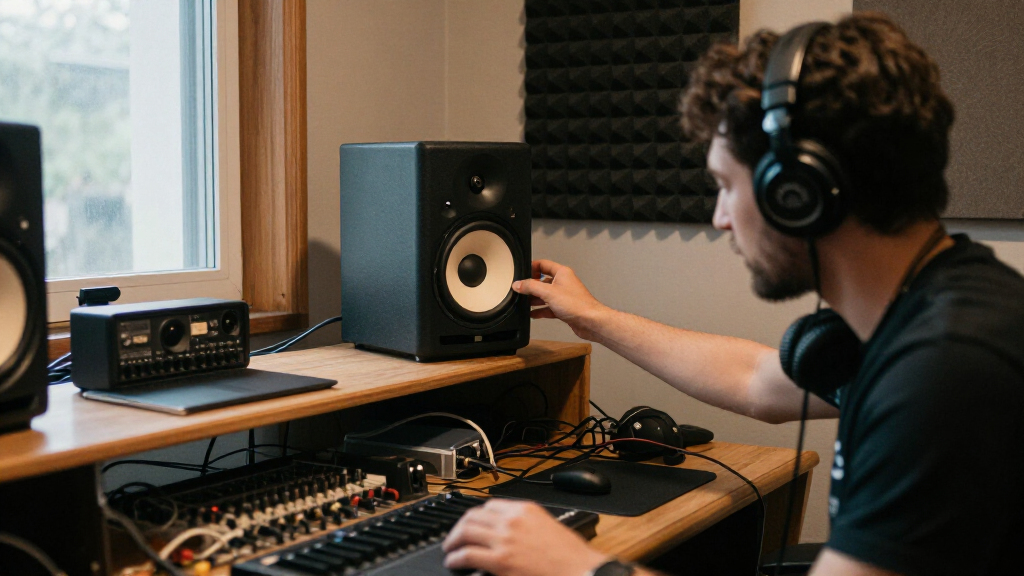
Even the best monitors can underperform if your room isn’t properly treated. Reflections, standing waves, and background noise all influence how sound is perceived. Proper placement—such as positioning monitors at ear level and forming an equilateral triangle with your listening position—can greatly improve accuracy. Consider investing in acoustic treatment or choosing monitors with built-in features like room correction if your space is less ideal.
Connectivity and Compatibility
Ensure your monitors support your existing gear, whether that’s XLR, TRS, or RCA inputs. Some models offer multiple connection options, increasing flexibility, especially if you plan to expand your setup. Compatibility with your audio interface and other equipment reduces hassle and ensures a clean signal path. Additionally, consider whether you need active monitors with built-in amplifiers or passive ones that require external amplification.
Price and Long-Term Value
Higher-priced monitors often provide better accuracy, build quality, and features that justify the investment for professional use. However, budget options can still serve well for hobbyists or beginners, especially if space and budget are limited. Think about your long-term goals: investing in quality now can save money and frustration later, but it’s wise to balance features with your current needs. Always consider warranty and brand reputation to gauge longevity and support.
Frequently Asked Questions
How do I choose the right size monitor for my room?
Choosing the right size depends primarily on your room dimensions and the type of work you do. Larger rooms benefit from bigger monitors, such as 5-inch drivers, which produce fuller sound and better bass response. Smaller monitors, around 3 to 4 inches, work well in compact spaces or desktop setups, offering a more focused sound without overwhelming the room. Remember, larger monitors also require more power and space, so balance size with your available room and workflow needs.
Are active monitors better than passive monitors for home studios?
Active monitors, which include built-in amplifiers, are generally more convenient for home studios because they require fewer components and simplify setup. They are designed to work seamlessly with typical audio interfaces. Passive monitors, on the other hand, need external amplification, offering more flexibility but adding complexity and cost. For most home users, active monitors tend to be the better choice due to ease of use and integrated design, though professionals with custom setups might prefer passive models for customization.
What should I look for in a monitor’s frequency response?
A flat frequency response is essential for accurate mixing, meaning the monitor reproduces all audio frequencies evenly without boosting or cutting certain ranges. Look for monitors with a response that covers at least 50Hz to 20kHz, which encompasses most of the audible spectrum. Narrow or uneven response curves can hide issues or misrepresent your recordings, leading to mixes that sound unbalanced on other systems. Investing in monitors with wide, flat response curves helps you make better, more reliable decisions.
Is it worth paying more for premium monitor speakers?
Higher-end monitors typically offer improved accuracy, better build quality, and features like room correction, which can be worthwhile for professional or serious hobbyist use. They tend to have a flatter response, more power, and longer durability, reducing the need for upgrades later. However, for beginners or casual users, budget models often suffice and can still deliver solid results. The key is matching your monitor choice to your ambitions and room conditions to ensure your investment pays off.
How important is room treatment when using studio monitors?
Room treatment is vital for getting the most out of your monitors, especially if you work in a space with hard walls or reflective surfaces. Proper placement and acoustic treatment help reduce echoes, standing waves, and frequency resonances that can skew your perception of sound. Even high-quality monitors will struggle to deliver accurate audio in untreated spaces. Combining good monitors with some acoustic treatment results in a more truthful listening environment, essential for mixing and mastering.
Conclusion
For most users, the Yamaha HS5 offers a balanced mix of accuracy, durability, and value, making it the best overall choice. Beginners or those on a budget should consider the PreSonus Eris E4.5 for its affordability and clarity, while professionals seeking top-tier performance might lean toward the JBL 305P MkII for its larger soundstage and power. Smaller setups or desktop users will find models like the M-Audio BX3 or Edifier R1280T suitable, though with some compromises on bass depth. Ultimately, your choice depends on your room size, budget, and the critical listening quality you need to succeed.