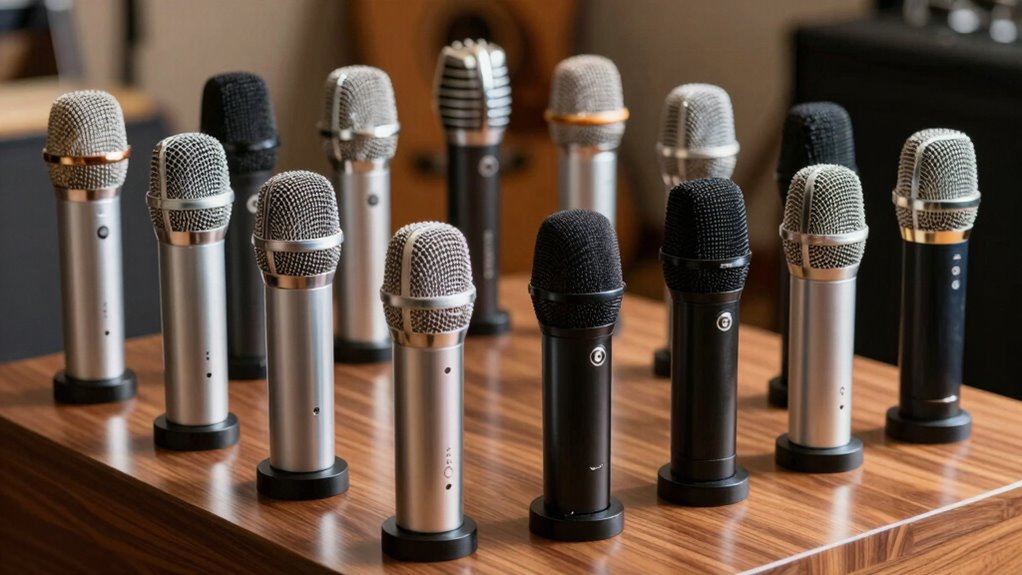

The best microphone for acoustic guitar recording for most home studios is the RØDE NT1 Signature Series: its large-diaphragm condenser design suits detailed, full-bodied takes, provided your room is quiet. The sE Electronics sE7 matched pair is a strong choice for stereo recording, while the Shure SM57 can be a more forgiving fit in untreated rooms. The main tradeoffs are stereo detail versus simple setup, room sensitivity versus rejection, and studio versatility versus a guitar-specific installation. Your interface, playing space, and preferred recording style matter as much as the microphone type. Read on for how all eight options differ and which one fits your recording setup.

Get audio and creator gear delivered free with Prime
- Fast, free delivery on millions of items
- Prime Video, Amazon Music and more included
- Member-only deals all year
Complete the kit

Key Takeaways
- The NT1 Signature Series is the strongest general studio pick when a quiet room and an XLR interface are available; its condenser format favors detailed acoustic capture.
- The sE7 pair has a distinct stereo advantage over single-microphone options, but using two mics adds placement, phase, and mixing decisions.
- The SM57 is the lineup’s practical dynamic alternative for players who want to limit room sound, though it may call for more preamp gain than a condenser.
- The LR Baggs LYRIC-C serves a different recording need: it is designed for classical guitar and internal installation, not as a conventional stand-mounted studio microphone.
- The AT2020, AKG P170, Monoprice Stage Right pair, and Blucoil offer different entry points, so buyers should compare their stereo needs, setup details, and room conditions rather than choosing by condenser label alone.
| sE Electronics sE7 Small Diaphragm Cardioid Condenser Microphone, Factory Matched Pair |  | Best for Stereo Acoustic Guitar Recording | Microphone type: Small-diaphragm condenser | Polar pattern: Unidirectional | Frequency range: 20 Hz–20,000 Hz | VIEW ON AMAZON | See Our Full Breakdown |
| Audio-Technica AT2020 Cardioid Condenser Studio XLR Microphone |  | Best for a First Home-Studio Condenser | Microphone type: Condenser | Polar pattern: Cardioid | Frequency response: 20 Hz–20 kHz | VIEW ON AMAZON | See Our Full Breakdown |
| Shure SM57 XLR Dynamic Instrument Microphone |  | Best Dynamic Mic for a Lively Room | Microphone type: Dynamic | Polar pattern: Unidirectional (cardioid) | Frequency response: 40 Hz–15 kHz | VIEW ON AMAZON | See Our Full Breakdown |
| LR Baggs LYRIC-C Lyric Classical Guitar Microphone |  | Best for Live Nylon-String Guitar | Microphone type: Condenser | Intended guitar: Nylon-string classical guitar | Polar pattern: Unidirectional | VIEW ON AMAZON | See Our Full Breakdown |
| Monoprice Stage Right Series Small Pencil Condenser Microphones (625907) |  | Best Value Small-Diaphragm Flexibility | Microphone type: Small pencil condenser | Polar patterns: Interchangeable omni and cardioid capsules | Connectivity: XLR | VIEW ON AMAZON | See Our Full Breakdown |
| AKG P170 Professional Instrumental Microphone |  | Best Small-Diaphragm Detail | Form factor: Small-diaphragm condenser | Polar pattern: Unidirectional | Frequency response: 20 Hz–20 kHz | VIEW ON AMAZON | See Our Full Breakdown |
| RØDE NT1 Signature Series Studio Condenser Microphone, Black |  | Best for Quiet, Detailed Studio Takes | Form factor: Large-diaphragm condenser | Polar pattern: Unidirectional | Audible noise: 4 dB | VIEW ON AMAZON | See Our Full Breakdown |
| Blucoil Studio Cardioid Condenser XLR Microphone for Voiceovers, Acoustic Guitars, Woodwind, Home Studio Recording, Streaming, and Podcasting |  | Best Accessory Bundle for Home Studios | Diaphragm size: 16 mm low-mass | Polar pattern: Cardioid | Frequency response: 30 Hz–18 kHz | VIEW ON AMAZON | See Our Full Breakdown |
| microphone for acoustic guitar recording | Polar pattern | Signal-to-noise ratio | Microphone type | Frequency response |
|---|---|---|---|---|
| sE Electronics sE7 Small Diaph | Unidirectional | 87 dB | Small-diaphragm condenser | — |
| Audio-Technica AT2020 Cardioid | Cardioid | 74 dB | Condenser | 20 Hz–20 kHz |
| Shure SM57 XLR Dynamic Instrum | Unidirectional (cardioid) | 78 dB | Dynamic | 40 Hz–15 kHz |
| LR Baggs LYRIC-C Lyric Classic | Unidirectional | 75 dB | Condenser | — |
| Monoprice Stage Right Series S | — | 60 dB | Small pencil condenser | — |
| AKG P170 Professional Instrume | Unidirectional | 75 dB | — | 20 Hz–20 kHz |
| RØDE NT1 Signature Series Stud | Unidirectional | 78 dB | — | — |
| Blucoil Studio Cardioid Conden | Cardioid | — | — | 30 Hz–18 kHz |
More Details on Our Top Picks
sE Electronics sE7 Small Diaphragm Cardioid Condenser Microphone, Factory Matched Pair
For guitarists who want the body, pick attack, and room sound to sit naturally in a stereo image, I’d put the sE7 matched pair ahead of the single-microphone options here. Two factory-matched small-diaphragm condensers make it easier to capture a consistent stereo picture, while the 20 Hz–20 kHz response covers the instrument’s broad detail. Its high SPL handling also leaves room for close placement without quickly running out of headroom. Compared with the single AT2020, this set is purpose-built for stereo techniques rather than a simpler one-mic setup. The tradeoff is that a pair needs two suitable preamp inputs, careful placement, and 48V phantom power; it is less convenient for a quick, minimal home setup. I’d skip it if mono recording is all you need.
Pros:- Factory-matched pair supports consistent stereo recording.
- Wide frequency response captures both low body and high string detail.
- High maximum SPL allows close placement on forceful playing.
- Compact metal construction suits careful studio use.
Cons:- Requires 48V phantom power.
- Stereo use needs two preamp channels and more setup than a single microphone.
- A matched pair is unnecessary for buyers who only record mono.
Best for: Home and project-studio guitarists recording fingerstyle or layered acoustic parts in stereo who have two XLR inputs and phantom power available.
Not ideal for: Beginners seeking a simple one-mic setup, or anyone without phantom power and two available preamp channels.
- Microphone type:Small-diaphragm condenser
- Polar pattern:Unidirectional
- Frequency range:20 Hz–20,000 Hz
- Sensitivity:19 mV/Pa
- Maximum SPL:136/156 dB SPL
- Signal-to-noise ratio:87 dB
- Power:48V phantom power
- Connectivity:XLR
Our verdict“Choose the sE7 pair if stereo acoustic guitar recording is your priority and your interface can power and record two condensers.”
Audio-Technica AT2020 Cardioid Condenser Studio XLR Microphone
The AT2020 is my straightforward pick for a guitarist starting with one condenser and a standard XLR interface. Its cardioid pattern favors the guitar in front of the mic, helping reduce some sound from the sides, while the broad frequency response and strong SPL handling suit close acoustic placement. Compared with the matched-pair sE7, the AT2020 is simpler to position and record as a single mono source; compared with the dynamic SM57, it is a better fit when you want condenser sensitivity to capture quieter finger noise and string detail. The compromise is that it still needs phantom power and does not connect by USB, so a compatible interface or mixer is part of the setup. It is also a single-mic solution, not a shortcut to stereo recording.
Pros:- Cardioid pickup pattern helps limit some off-axis room sound.
- 20 Hz–20 kHz response suits detailed acoustic guitar capture.
- High SPL handling supports close placement on louder playing.
- Metal construction is suited to regular studio use.
Cons:- Requires phantom power and an XLR preamp.
- Records a single channel, unlike the matched-pair sE7 set.
- Less suited than the SM57 to rough handling and mobile use.
Best for: New home-studio guitarists with an XLR audio interface who want one versatile condenser for solo acoustic parts and other recording tasks.
Not ideal for: Players recording without an interface or phantom power, and guitarists who want a matched stereo pair or a microphone they can plug directly into USB.
- Microphone type:Condenser
- Polar pattern:Cardioid
- Frequency response:20 Hz–20 kHz
- Impedance:200 ohms
- Signal-to-noise ratio:74 dB
- Power:Phantom power
- Connector:XLR
- Construction:Metal
Our verdict“Pick the AT2020 for a practical first condenser if you already have an XLR interface with phantom power.”
Shure SM57 XLR Dynamic Instrument Microphone
The SM57 makes the most sense when room noise, nearby instruments, or a demanding recording space matters more than capturing every delicate string overtone. Its cardioid dynamic design and contoured response can give an acoustic guitar a focused, present sound, and its rugged build is a practical advantage for musicians who also need a live instrument mic. Compared with the AT2020, it is less dependent on a quiet, controlled room, but its 40 Hz–15 kHz response gives up some of the extended detail the condenser may capture. It is also a single mic, unlike the stereo-ready sE7 pair. The dynamic design avoids the phantom-power requirement, though the supplied data lists a nonstandard battery requirement, so check the exact configuration before buying. This is a workhorse choice, not my first pick for subtle studio fingerstyle.
Pros:- Cardioid pattern helps focus pickup on the guitar and reduce some background sound.
- Rugged design suits transport and mixed studio/live use.
- Useful presence contour can help guitar parts cut through a mix.
- Dynamic design does not require phantom power.
Cons:- 40 Hz–15 kHz response is narrower than the condenser options listed.
- May capture less delicate string and finger detail than the AT2020 or sE7.
- Product data lists a nonstandard battery requirement that buyers should verify.
Best for: Guitarists recording in untreated or noisy rooms who want a durable XLR mic that can also handle live instruments.
Not ideal for: Players prioritizing airy, extended high-frequency detail or quiet fingerstyle capture, especially if their preamp has limited gain.
- Microphone type:Dynamic
- Polar pattern:Unidirectional (cardioid)
- Frequency response:40 Hz–15 kHz
- Connector:XLR
- Signal-to-noise ratio:78 dB
- Channels:1
- Weight:10 ounces
- Dimensions:6.19 × 1.25 × 1.25 inches
Our verdict“Choose the SM57 when room control and durability matter more than the extended detail of a condenser.”
LR Baggs LYRIC-C Lyric Classical Guitar Microphone
The LYRIC-C is the specialist option in this group: it is designed for nylon-string classical guitar and live amplification, rather than serving as a general-purpose studio mic. Its onboard volume and mic-presence controls give performers a way to shape the amplified signal without reaching for a separate stand-mounted mic, while the described noise-canceling approach is aimed at reducing feedback onstage. Compared with the AT2020 or sE7, it trades the flexibility of a conventional studio XLR microphone for a guitar-specific setup that stays with the instrument. That makes it less compelling for recording steel-string guitars or building a general home studio. It also requires a 9V battery and connects through a 3.5 mm jack, so check compatibility with your amplification chain before choosing it for a recording rig.
Pros:- Designed specifically for nylon-string classical guitar.
- Onboard volume and mic-presence controls support quick performance adjustments.
- Noise-canceling design is intended to help manage feedback onstage.
- Lightweight system avoids relying on a stand-mounted microphone.
Cons:- Focused on classical nylon-string guitar rather than general acoustic use.
- Requires a 9V battery.
- 3.5 mm connection may not suit standard XLR studio setups.
Best for: Classical guitarists who need an instrument-mounted microphone system for amplified performance and want onboard level and presence controls.
Not ideal for: Steel-string players or studio recordists seeking a standard XLR condenser for flexible mic placement and use across multiple instruments.
- Microphone type:Condenser
- Intended guitar:Nylon-string classical guitar
- Polar pattern:Unidirectional
- Connector:3.5 mm jack
- Impedance:600 ohms
- Power:9V battery
- Signal-to-noise ratio:75 dB
- Weight:80 g
Our verdict“Choose the LYRIC-C for amplified nylon-string performance, not as a general-purpose studio microphone.”
Monoprice Stage Right Series Small Pencil Condenser Microphones (625907)
The Stage Right SC100 set appeals to guitarists who want to experiment with microphone placement and pickup pattern without committing to a fixed-pattern single mic. Its interchangeable cardioid and omni capsules let you favor direct guitar sound or include more room ambience, giving it a different role from the AT2020’s fixed cardioid pattern. Small-diaphragm condensers can be a useful fit for acoustic guitar because their fast response helps preserve pick attack and string articulation. Compared with the matched sE7 pair, the supplied data does not establish factory matching, so I would not treat it as an equivalent stereo pair for precise stereo work. It also needs an XLR connection and powered recording setup, and its stated 60 dB signal-to-noise ratio is lower than the sE7’s listed figure. Choose it for capsule flexibility, not the quietest possible chain.
Pros:- Interchangeable cardioid and omni capsules allow different room and source balances.
- Small-pencil format suits targeted acoustic-instrument placement.
- Condenser design is suited to capturing pick attack and string detail.
- Metal enclosure supports regular studio handling.
Cons:- Requires an XLR recording setup rather than direct USB connection.
- Listed 60 dB signal-to-noise ratio is lower than the sE7’s listed 87 dB.
- Product data does not specify factory matching for stereo recording.
Best for: Home recordists who want to try close cardioid placement and roomier omni pickup with a small-diaphragm condenser setup.
Not ideal for: Buyers seeking a confirmed factory-matched pair, low-noise specifications, or a USB microphone that works without an XLR recording chain.
- Microphone type:Small pencil condenser
- Polar patterns:Interchangeable omni and cardioid capsules
- Connectivity:XLR
- Signal-to-noise ratio:60 dB
- Channels:1
- Enclosure material:Metal
- Weight:1.7 pounds
- Dimensions:10.9 × 8.2 × 4 inches
Our verdict“Pick the Stage Right set if experimenting with cardioid and omni pickup matters more than matched-pair certainty or the lowest listed noise.”
AKG P170 Professional Instrumental Microphone
The AKG P170 is a strong fit when the aim is to capture pick attack, finger noise, and the quick transients of strumming with a compact instrument mic. Its small-diaphragm design gives it a different role from the large-diaphragm RØDE NT1 Signature Series, which is better suited to a fuller, quieter studio setup for guitar and vocals. The P170’s 155 dB maximum SPL also leaves room for loud playing, while its metal body is suited to regular studio use. The tradeoff is a relatively bare-bones setup: it needs an XLR connection and phantom-powered preamp, and its small diaphragm can pick up handling noise if the mount is poorly isolated. I’d choose it for focused acoustic-guitar recording, not as an all-in-one recording solution.
Pros:- Small-diaphragm design captures crisp pick attack and string detail.
- 155 dB maximum SPL accommodates forceful playing and other loud sources.
- Rugged all-metal enclosure suits frequent studio handling.
- XLR connection works with standard audio interfaces and studio preamps.
Cons:- Requires phantom power and an external preamp or audio interface.
- Can be sensitive to handling and stand noise without a secure, isolated mount.
- Offers fewer included setup accessories than the RØDE NT1 Signature Series.
Best for: Players and home-studio recordists who want a small-diaphragm XLR mic for detailed acoustic-guitar transients and already have phantom power.
Not ideal for: Beginners seeking a plug-and-play setup or guitarists who need a microphone with included recording accessories and minimal mounting sensitivity.
- Form factor:Small-diaphragm condenser
- Polar pattern:Unidirectional
- Frequency response:20 Hz–20 kHz
- Maximum SPL:155 dB
- Sensitivity:75 dB
- Signal-to-noise ratio:75 dB
- Connector:XLR
- Enclosure material:Metal
Our verdict“Choose the AKG P170 if acoustic-guitar attack and a durable small-diaphragm build matter more than included accessories or a self-contained setup.”
RØDE NT1 Signature Series Studio Condenser Microphone, Black
For acoustic guitar recorded in a quiet room, the RØDE NT1 Signature Series stands out for its reported 4 dB audible noise and large-diaphragm condenser design. That low noise can help preserve soft fingerstyle passages and room detail that a louder recording chain may obscure. Compared with the AKG P170, the NT1 is the more complete studio package: it includes a shock mount, pop filter, and XLR cable, though the P170’s smaller form is a more focused choice for instrument placement and loud sources. The NT1 is also a versatile option if the same mic will handle vocals alongside guitar. Its tradeoffs are practical: it requires an interface or mixer, takes more setup space, and may be more microphone than a casual guitarist needs.
Pros:- 4 dB audible noise is suited to capturing quiet passages with less microphone self-noise.
- Large-diaphragm design serves both acoustic guitar and vocal recording.
- Includes a shock mount, pop filter, and XLR cable.
- Metal enclosure provides a sturdy studio-oriented build.
Cons:- Requires an audio interface or mixer rather than connecting directly by USB.
- Larger body needs more space for placement than the AKG P170.
- Included accessories and broad use may be unnecessary for guitarists recording casually.
Best for: Home-studio guitarists recording quiet fingerstyle or vocals alongside acoustic guitar who want a low-noise XLR condenser and included mounting accessories.
Not ideal for: Casual players without an audio interface, or recordists who need a compact mic dedicated to close placement around a guitar.
- Form factor:Large-diaphragm condenser
- Polar pattern:Unidirectional
- Audible noise:4 dB
- Signal-to-noise ratio:78 dB
- Connectivity:XLR
- Enclosure material:Metal
- Weight:313 g
- Included accessories:Shock mount, pop filter, and XLR cable
Our verdict“Pick the RØDE NT1 Signature Series for quiet, detailed guitar takes and vocal versatility if you have room for a full XLR studio setup.”
Blucoil Studio Cardioid Condenser XLR Microphone for Voiceovers, Acoustic Guitars, Woodwind, Home Studio Recording, Streaming, and Podcasting
The Blucoil Studio XLR is the practical bundle pick for a first acoustic-guitar recording setup: it includes an XLR cable, shock mount, windscreen, and protective pouch, so fewer basic accessories need to be sourced separately. Its cardioid pattern helps focus capture toward the guitar and reduce sound arriving from behind the mic, a useful advantage in a shared or untreated room. Compared with the RØDE NT1 Signature Series, Blucoil gives you more listed accessories, while the RØDE’s reported 4 dB audible noise makes it the stronger choice for especially quiet passages. Blucoil’s 15 dB self-noise and 125 dB SPL limit are workable for general guitar recording, but leave less headroom for very loud sources than the AKG P170. It also needs +48 V phantom power, so it is not a USB plug-in mic.
Pros:- Includes an XLR cable, shock mount, windscreen, and protective pouch.
- Cardioid pattern helps limit pickup from behind the microphone.
- 16 mm low-mass diaphragm is specified for natural acoustic-instrument capture.
- 15 dB self-noise supports general home-studio recording.
Cons:- Needs +48 V phantom power and cannot connect directly by USB.
- 125 dB maximum SPL is lower than the AKG P170’s 155 dB rating.
- No built-in headphone monitoring jack.
Best for: New home-studio recordists who want an XLR condenser with basic mounting and connection accessories for acoustic guitar and voice work.
Not ideal for: Guitarists without a phantom-powered interface or mixer, and players recording very loud sources who want more SPL headroom than 125 dB.
- Diaphragm size:16 mm low-mass
- Polar pattern:Cardioid
- Frequency response:30 Hz–18 kHz
- Maximum SPL:125 dB
- Self-noise:15 dB
- Power requirement:+48 V phantom power
- Included accessories:3-pin XLR cable, shock mount, windscreen, and protective pouch
Our verdict“Choose Blucoil if you want a bundled XLR starting point for guitar recording and already have access to +48 V phantom power.”

How We Picked
I ranked these microphones by how well their design matches real acoustic-guitar recording situations: close-miked home takes, stereo recordings, less controlled rooms, and guitar-specific setups. I weighed microphone type and polar pattern, whether the package supports mono or stereo recording, connection and power requirements, ease of placement, and how useful the microphone could be beyond guitar. A microphone that fits a common recording setup earns a higher place than one that needs a more specialized installation, even if that specialist option suits a narrower player better.
The ranking also reflects tradeoffs, not a claim that one microphone sounds best for every guitar or room. Condensers can capture fine playing detail but may reveal room noise; a dynamic mic can be less sensitive to the room but needs suitable gain and careful placement. I separated general-purpose studio picks from stereo pairs and the internal LYRIC-C, then considered how much additional setup or decision-making each asks of the buyer. Since room acoustics, instrument, and technique affect results, these placements are intended as practical matches, not universal sound-quality verdicts.
| microphone for acoustic guitar recording | Microphone type | Polar pattern |
|---|---|---|
| sE Electronics sE7 Small Diaph | Small-diaphragm condenser | Unidirectional |
| Audio-Technica AT2020 Cardioid | Condenser | Cardioid |
| Shure SM57 XLR Dynamic Instrum | Dynamic | Unidirectional (cardioid) |
| LR Baggs LYRIC-C Lyric Classic | Condenser | Unidirectional |
| Monoprice Stage Right Series S | Small pencil condenser | — |
| AKG P170 Professional Instrume | — | Unidirectional |
| RØDE NT1 Signature Series Stud | — | Unidirectional |
| Blucoil Studio Cardioid Conden | — | Cardioid |
Factors to Consider When Choosing Microphone For Acoustic Guitar Recording
Choosing a microphone for acoustic guitar starts with the recording situation, not a promise of a particular tone. These broader factors can help narrow the field before you compare individual models.
Match the microphone to the room
A microphone captures the space around the guitar as well as the instrument, so a reflective bedroom can make a sensitive condenser sound less flattering than it does in a treated room. Listen for flutter echoes, computer fans, traffic, and HVAC noise before spending more on a microphone. Moving the recording position or adding soft furnishings can help, though neither turns a noisy room into a silent booth. A dynamic microphone may reduce some ambient pickup, but it is not a substitute for controlling loud reflections or background noise. Avoid choosing solely on the assumption that a condenser automatically gives a better recording. Your quietest usable room may matter more than a small difference between microphones.
Choose mono or stereo before buying a pair
A single microphone is simpler to position, troubleshoot, and mix, making it a sensible starting point for a centered guitar part. Stereo can add width and a sense of space, but it also asks you to manage microphone spacing, phase relationships, and room sound. Two microphones do not automatically create a better recording; poor placement can make the guitar sound unfocused or thin when summed to mono. Check that your audio interface has two suitable inputs if you plan to record a pair at once. A matched pair is most useful when you have the space and patience to experiment with placement. If you mainly record layered parts for a dense mix, a clean mono track may be easier to place.
Understand condenser power and preamp needs
Many studio condenser microphones need phantom power from an interface or mixer, while dynamic microphones typically do not. Confirm your recording hardware can supply the power and has the right connection before buying; an XLR microphone alone cannot record directly into most computers. Dynamic designs can also need more preamp gain, and some compact interfaces may not provide enough clean gain for a quiet fingerstyle performance. A gain booster can add cost and another device to the setup, so check your interface specifications first. Do not assume that a higher sensitivity rating removes the need to set levels carefully. Leave headroom for louder strums, which can peak well above a gentle test passage.
Plan placement around the sound you want
Pointing a microphone directly at the soundhole often produces excess low-frequency emphasis, especially at close range. Aiming near the 12th fret or the area where the neck meets the body can capture a more balanced blend of string attack and body resonance, though each guitar responds differently. Moving the microphone farther away brings in more room sound and a more blended perspective; moving it closer increases direct sound and can expose pick or finger noise. Make small position changes while listening through headphones rather than relying on a single diagram. Keep the player’s posture and instrument position consistent between takes. A stand, clip, and cable routing that stay secure can matter more than an elaborate placement method that is difficult to repeat.
Decide whether you need a studio mic or an installed system
A stand-mounted microphone is flexible: it can record different instruments and be repositioned between sessions. An internally installed guitar microphone is aimed at players who need a guitar-specific setup, such as capturing a classical guitar without placing a stand mic in the same way. Installation changes the decision because it can involve compatibility, fitting, and a more permanent commitment to the instrument. It also does not remove every performance or monitoring concern. If you record at home and can set up a stand, a conventional XLR microphone is usually easier to move between sources. If your use case is specialized, compare installation requirements and guitar compatibility before prioritizing portability.
Pay for capabilities you will actually use
A matched pair, a premium studio condenser, and a single entry-level microphone solve different problems, so the most expensive route is not automatically the best match. Spend more when you have a quiet recording space, a capable interface, and a clear need for stereo capture or broader studio use. If you are still learning mic placement, a straightforward single-mic setup may teach you more without adding phase and routing variables. Check what comes in the package, including clips, mounts, cables, and any power or installation needs, rather than assuming every accessory is included. Consider whether you will also record vocals, percussion, or other instruments; versatility can justify a general-purpose mic. If guitar is the only source and installation suits your playing, a specialist option may make more sense than buying studio features you will not use.
Frequently Asked Questions
Should I choose one microphone or a matched pair for acoustic guitar?
Choose one microphone if you want a simple setup, are recording in a small or untreated room, or need a guitar track that will sit neatly in a mix. A matched pair can capture stereo width, but it requires two inputs and careful placement to avoid phase problems. Stereo is most useful when the guitar is a featured part and the room contributes a sound you want to keep. If you are unsure, start with a mono recording and add a second microphone only when you can identify what the first track is missing. A pair does not guarantee more natural tone.
Can I connect an XLR microphone directly to my computer?
Most XLR studio microphones need an audio interface or mixer to connect to a computer. The interface converts the microphone signal and supplies a preamp; condenser models may also require phantom power. Check that it has enough inputs for your plan, especially if you intend to use a stereo pair. A USB adapter or cable may not provide the same microphone preamp and power functions as an interface. Before purchasing a mic, confirm the connections and power your current recording setup supports.
Is a condenser or dynamic microphone better for a noisy room?
A dynamic microphone can be a practical choice when you want to reduce the amount of room sound captured, but placement and distance still matter. Condensers often suit detailed acoustic recording, yet they can make computer noise, reflections, and nearby sounds more apparent. Neither type cancels a bad room, and a close position can change the guitar’s tonal balance. Try recording a short passage with the microphone near the 12th fret and listen for both room noise and instrument detail. If noise is the main problem, first move away from the source or reduce it at the room level.
Will one microphone work for fingerstyle and strumming?
Often, yes, but the best position and gain setting may change between quiet fingerstyle and forceful strumming. Fingerstyle can benefit from enough sensitivity and a placement that captures string articulation without excess finger noise. Strumming produces stronger peaks, so leave recording headroom and avoid setting the input level based only on a quiet passage. A versatile studio microphone can handle both, but the room and guitar still shape the result. Record a sample of your loudest playing before committing to a final level or placement.
Does the LR Baggs LYRIC-C replace a regular studio microphone?
The LYRIC-C is a guitar-specific internal microphone system, so it serves a different role from the stand-mounted XLR options in this roundup. It can suit a classical guitarist who wants an installed setup, but it is less flexible for recording other instruments or repositioning a microphone around the room. Installation and compatibility are part of the decision, not minor setup details. If you record mostly at a desk and can place a stand, a conventional studio microphone is easier to repurpose. Choose the internal option for its specialized use, rather than expecting it to replace every studio recording method.
Conclusion
For a general home-studio setup, I would choose the RØDE NT1 Signature Series as best overall if the room is quiet and the interface supports a condenser. The sE Electronics sE7 matched pair is my best pick for stereo recording, while the Shure SM57 is the practical alternative for buyers prioritizing a dynamic mic. For a more accessible starting point, compare the Audio-Technica AT2020, AKG P170, Monoprice Stage Right pair, and Blucoil against your interface, package needs, and whether you want one mic or two; none is a universal best-value choice without that context. Beginners who want a conventional stand-mounted setup should start with one microphone and learn placement before adding stereo complexity. For a specialized classical-guitar installation, the LR Baggs LYRIC-C is the specific-use pick. The clearest decision is to match the mic to your room, recording style, and hardware before paying for capabilities you may not use.
Halloween Picks
halloween
As an affiliate, we earn on qualifying purchases.