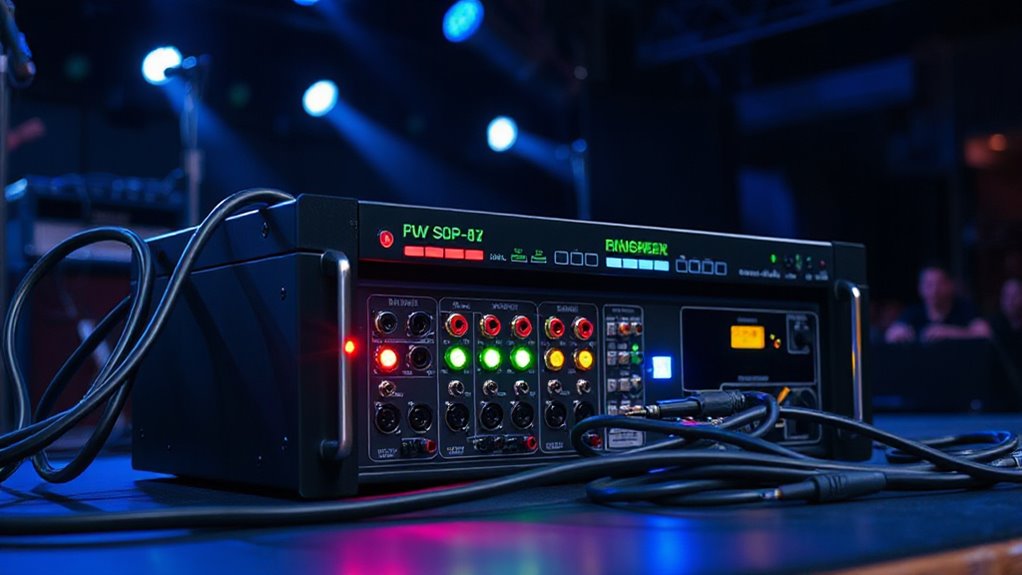

When selecting a digital stage box for live mixing, it’s essential to balance sound quality, connectivity, and ease of setup. The PreSonus NSB 16.8 stands out as the best overall choice for its versatile AVB networking and robust build, making it suitable for most professional setups. The Midas DL32 offers superior preamp quality for those prioritizing sound fidelity, while the Behringer SD16 provides excellent value with Midas preamps at a more accessible price. These options highlight the key tradeoffs: higher-end models often come with more features and better build but at a steeper cost, while budget-friendly picks may lack some advanced connectivity options. Continue reading for a detailed breakdown of each product and how they compare.

Get audio and creator gear delivered free with Prime
- Fast, free delivery on millions of items
- Prime Video, Amazon Music and more included
- Member-only deals all year
Key Takeaways
- Networking capabilities like AVB or ULTRANET are critical for integrating stage boxes into larger live sound systems.
- Preamp quality significantly impacts overall sound fidelity; Midas preamps are a common benchmark for professional-grade clarity.
- Ease of setup and control varies, with some models offering remote controllability via software or apps.
- Build robustness and reliability are vital for frequent touring or demanding live environments.
- Pricing often reflects feature sets; more advanced options tend to include additional I/O, digital interfaces, or integrated mixers.
| PreSonus NSB 16.8 16×8 AVB Networked Stage Box |  | Best Overall for Versatile Live Networked Setups | Inputs: 16 mic/line | Outputs: 8 XLR | AVB ports: 2 | VIEW ON AMAZON | See Our Full Breakdown |
| Behringer SD16 I/O Stage Box with 16 Remote-Controllable MIDAS Preamps Bundle with 2x 25′ XLR Microphone Cables |  | Best Value for High-Quality Preamps and Complete Bundle | Number of Preamps: 16 | Preamp Brand: MIDAS | Connectivity: AES50, ULTRANET, USB | VIEW ON AMAZON | See Our Full Breakdown |
| StudioLive Series III SE 16 Digital Console Mixer with Fender Studio Pro |  | Best for Advanced Live and Recording Applications | Channels: 40 | Mix Buses: 26 | Preamp: 16 XMAX-R | VIEW ON AMAZON | See Our Full Breakdown |
| Midas DL32 32 Input, 16 Output Stage Box with 32 Midas Microphone Preamplifiers, ULTRANET and ADAT Interfaces |  | Best for Large-Scale Live Sound and Studio Integration | Number of Channels: 32 | Connectivity Technology: AES50, ADAT, AES-3 | Power Source: Corded Electric | VIEW ON AMAZON | See Our Full Breakdown |
| PreSonus NSB32.16 AVB Networked Stage Box |  | Best for Seamless Large-Scale AVB Integration | Number of Channels: 32 | Connectivity Technology: AVB | Power Source: Corded Electric | VIEW ON AMAZON | See Our Full Breakdown |
| Behringer SD16 I/O Stage Box with 16 Midas Preamps, 8 Outputs, AES50 Networking, and ULTRANET Hub |  | Best Overall for Professional Digital Stage Networking | Number of Channels: 16 | Connectivity Technology: AES50, Ultranet | Output Connector Type: XLR | VIEW ON AMAZON | See Our Full Breakdown |
| PreSonus StudioLive Series III 24R Digital Rack Mixer with Studio One Pro Software |  | Best for Versatile Live Recording and Complex Mixing | Channels: 32 | Inputs: 24 mic/line + 8 digital | USB Recording Interface: 40×40 | VIEW ON AMAZON | See Our Full Breakdown |
| StudioLive Series III SE 24 Digital Console Mixer with Fender Studio Pro |  | Best for Large-Scale Portable Digital Mixing with Deep Integration | Channels: 40 | Mix buses: 26 | Connectivity: AVB, USB 2.0, Ethernet | VIEW ON AMAZON | See Our Full Breakdown |
| PreSonus StudioLive Series III 16R Digital Rack Mixer with Studio One Pro Software |  | Best Compact Rack-Mount Solution with Extensive Connectivity | Channels: 16 | Inputs: 16 combo mic/line, 2 RCA | Effects Buses: 2 | VIEW ON AMAZON | See Our Full Breakdown |
| Mackie DL16SE 16-Channel Digital Rack Mixer |  | Best for Wireless Control and Ease of Setup | Number of Inputs: 16 | Mic Preamps: Onyx+ | Input Types: 8 XLR, 8 combo (2 Hi-Z) | VIEW ON AMAZON | See Our Full Breakdown |
More Details on Our Top Picks
PreSonus NSB 16.8 16×8 AVB Networked Stage Box
The PreSonus NSB 16.8 excels as the most versatile option for live sound environments that rely on AVB networking. Its rugged build and remote-controllable preamps make it a reliable centerpiece for complex setups, especially when paired with compatible StudioLive mixers. Compared with the Midas DL32, it offers more user-friendly integration within PreSonus ecosystems, but it requires a compatible AVB network infrastructure, which can add complexity. Its straightforward setup and control make it ideal for professional venues that prioritize durability and remote management, though it isn’t suited for users without existing AVB networks.
- Durable, rugged enclosure with handles
- Remote-controllable preamps and AVB networking
- Easy integration with compatible mixers and software
- Requires compatible AVB network infrastructure
- Limited to professional users with existing AVB setups
- No included rack ears as standard
Verdict: This stage box is perfect for professional sound engineers needing rugged durability and network flexibility in AVB environments.
Pros:- Durable and rugged enclosure with handles
- Remote-controllable preamps and AVB networking
- Easy setup with compatible mixers and software
Cons:- Requires compatible AVB network infrastructure
- Limited to professional audio users
- No included rack ears as standard
Best for: Pro audio engineers working in established AVB networks requiring durable, remote-controlled stage boxes
Not ideal for: Small or portable setups without existing AVB infrastructure or users new to networked audio systems
- Inputs:16 mic/line
- Outputs:8 XLR
- AVB ports:2
- Preamp channels:16 direct + 16 gain compensated
- Power:Locking IEC power jack
- Indicators:+48V, lock status
Our verdict“This choice is best suited for professionals seeking a dependable, network-ready stage box within established AVB setups.”
Behringer SD16 I/O Stage Box with 16 Remote-Controllable MIDAS Preamps Bundle with 2x 25′ XLR Microphone Cables
The Behringer SD16 is a compelling option for those needing professional-grade preamps at a budget-friendly price. Its 16 MIDAS-designed preamps deliver crisp, transparent sound, rivaling more expensive units like the Midas DL32. The included bundle of cables and accessories adds value, making it ideal for quick setups. However, its reliance on network configuration—using AES50, ULTRANET, and USB—means users must be comfortable with digital audio networking. While it’s perfect for smaller, self-contained setups, larger venues will need multiple units, which can complicate management. Its low latency of 1.1 ms is a plus for live performance, but setup complexity is a potential hurdle for beginners.
- High-quality MIDAS-designed preamps
- Extensive connectivity including AES50 and ULTRANET
- Complete bundle with cables and accessories
- Requires familiarity with networked audio setup
- Limited to 16 inputs per unit, needing multiple units for bigger setups
Verdict: This stage box offers excellent sound quality and value for small to medium live setups with some networking experience.
Pros:- High-quality MIDAS-designed preamps for pristine sound
- Extensive connectivity options including AES50 and ULTRANET
- Low latency performance suitable for live and studio use
- Complete bundle with essential cables and accessories
Cons:- Requires knowledge of networked audio setup
- Limited to 16 inputs per unit, additional units needed for larger systems
Best for: Sound engineers seeking high-quality preamps with a budget-conscious approach in small to medium live or studio environments
Not ideal for: Beginners unfamiliar with digital networking or venues needing extensive input capacity without multiple units
- Number of Preamps:16
- Preamp Brand:MIDAS
- Connectivity:AES50, ULTRANET, USB
- Outputs:8 XLR line outputs
- Latency:1.1 ms
- Included Accessories:Power Cord, Rack Ears, Protection Bumpers, 2x 25′ XLR Cables
Our verdict“This pick makes the most sense for smaller venues or studio setups where high-quality preamps and value are priorities.”
StudioLive Series III SE 16 Digital Console Mixer with Fender Studio Pro
The StudioLive Series III SE 16 combines a digital mixer with extensive routing, recording, and networking features, making it ideal for users who need a portable, all-in-one solution. Its 40 channels and built-in recording software surpass typical stage boxes by providing mixing, virtual soundcheck, and remote control capabilities, especially when used with compatible PreSonus software. Compared to the PreSonus NSB 16.8, this unit offers a more integrated mixing experience, but its complex setup and high price mean it’s suited for tech-savvy professionals or larger venues. It excels in live sound and recording scenarios but might overwhelm users looking simply for a stage box.
- Extensive 40-channel capacity with multiple buses
- Built-in recording and virtual soundcheck software
- Remote control via internet and tablets
- Complex setup requiring technical expertise
- Premium price point for advanced features
Verdict: This comprehensive digital mixer is best for professionals needing detailed control and recording capabilities in live and studio environments.
Pros:- Highly versatile with extensive routing and networking options
- Built-in recording and virtual soundcheck software
- Remote control capability via internet and tablet
Cons:- Complex setup may require technical expertise
- Premium price point for advanced features
Best for: Experienced sound engineers or live venues requiring integrated mixing, recording, and remote control features
Not ideal for: Beginners or small setups that only need simple stage box connectivity without advanced software features
- Channels:40
- Mix Buses:26
- Preamp:16 XMAX-R
- EQ:7 State-Space modeled
- Connectivity:Milan AVB, USB 2.0, SD card
- USB Interface:64×64 bidirectional
- Recording Software:PreSonus Capture, Studio One Pro
- Remote Control:Universal Control, internet
Our verdict“This product suits users who need a powerful, all-in-one digital mixing and recording solution for live and studio use.”
Midas DL32 32 Input, 16 Output Stage Box with 32 Midas Microphone Preamplifiers, ULTRANET and ADAT Interfaces
The Midas DL32 stands out for its high-end Midas preamplifiers and extensive digital connectivity, making it a top choice for large venues or recording studios that demand top sound quality. Its 32 Midas preamps provide exceptional transparency, easily rivaling higher-priced analog gear. Compared with the Behringer SD16, it offers more preamp channels and superior build quality, but it is heavier and requires external power, which can limit portability. Its cascading ability with multiple units makes it suitable for expansive systems, though setup complexity might be a barrier for less experienced users. This unit is best suited for users who need a robust, scalable solution with premium sound quality.
- High-quality Midas preamps with phantom power
- Multiple digital interfaces including ADAT and ULTRANET
- Cascading capability for system expansion
- Relatively heavy at 5.7 kg, less portable
- Requires external power source
Verdict: This stage box is ideal for professionals seeking premium sound quality and scalable digital connectivity in large setups.
Pros:- High-quality Midas microphone preamplifiers with phantom power
- Multiple digital connectivity options including ULTRANET, ADAT, and AES50
- Cascading capability for system expansion
Cons:- Relatively heavy at 5.7 kg, less portable
- Requires external power source and technical setup
Best for: Large-scale live sound engineers or studios needing high-quality preamps and expandable digital interfacing
Not ideal for: Small venues or portable applications where weight and setup complexity are concerns
- Number of Channels:32
- Connectivity Technology:AES50, ADAT, AES-3
- Power Source:Corded Electric
- Output Connector Type:XLR
- Audio Input:XLR
- Item Weight:5.7 kg
Our verdict“This stage box is perfect for users who require top-tier sound quality and scalable digital networking in large or complex systems.”
PreSonus NSB32.16 AVB Networked Stage Box
The PreSonus NSB 32.16 is designed for large, complex live sound setups that rely on AVB networking. Its 32 combo mic/line inputs with remote-controlled preamps and 16 XLR outputs provide extensive inputs and outputs in a compact 3U rack form factor. While it offers seamless integration with StudioLive Series III mixers, its dependence on compatible equipment makes it less flexible for users outside the PreSonus ecosystem. The built-in AVB switch allows daisy-chaining multiple units, ideal for expanding systems in large venues. Setup can be challenging for beginners, especially those unfamiliar with AVB networks, but it excels in professional, scalable environments. Its rugged steel chassis ensures durability for touring and fixed installations.
- Remote control of preamp gain from mixers and software
- Flexible multi-unit daisy chaining via AVB switch
- Rugged steel chassis for durability
- Requires compatible StudioLive Series III mixers for full functionality
- Complex setup for AVB networks may deter beginners
Verdict: Best suited for large-scale, professional AVB systems where remote control and expandability are priorities.
Pros:- Remote control of preamp gain from mixers and software
- Flexible installation with multi-position rack ears
- Daisy-chain multiple units via built-in AVB switch
- Rugged steel chassis for durability
Cons:- Requires compatible StudioLive Series III mixers for full features
- Setup complexity can be daunting for newcomers
Best for: Large venues or fixed installations needing scalable AVB networking with remote preamp control
Not ideal for: Small setups or users without compatible StudioLive Series III mixers or AVB experience
- Number of Channels:32
- Connectivity Technology:AVB
- Power Source:Corded Electric
- Output Connector Type:XLR
- Audio Input:XLR
Our verdict“This stage box is ideal for large, professional AVB installations demanding remote control and expandability.”
Behringer SD16 I/O Stage Box with 16 Midas Preamps, 8 Outputs, AES50 Networking, and ULTRANET Hub
The Behringer SD16 stands out for delivering high-quality Midas-designed preamps combined with robust AES50 networking, making it ideal for complex professional setups. Compared to the PreSonus StudioLive 16R, the SD16 offers more extensive connectivity options, especially with Ultranet integration, though it is bulkier and heavier, which can be a downside for portable applications. Its remote control capability adds flexibility, but the lack of detailed price info might be a concern for budget-conscious buyers. This model suits sound engineers seeking reliable, high-fidelity sound and extensive digital connectivity in a rack-mount form factor. Pros: Superior preamp quality, multiple digital and analog outputs, remote controllability, durable build. Cons: Heavier and bulkier, requires familiarity with digital networking, no pricing details available.
Verdict: Ideal for professionals prioritizing high sound quality and advanced networking over portability or simplicity.Pros:- High-quality Midas-designed preamps for clear sound
- Multiple connectivity options including AES50 and Ultranet
- Remote controllability for flexible setup
Cons:- Relatively heavy and bulky for portable setups
- Requires familiarity with digital audio networking
Best for: Live sound engineers needing high-quality preamps and extensive network options for large-scale professional events.
Not ideal for: Musicians or small venues without digital networking infrastructure who need portability and simplicity.
- Number of Channels:16
- Connectivity Technology:AES50, Ultranet
- Output Connector Type:XLR
- Item Dimensions:15.35″D x 8.45″W x 7.75″H
- Item Weight:3.2 kg
Our verdict“This stage box is best suited for professionals who need high-fidelity, networked audio solutions in fixed installations.”
PreSonus StudioLive Series III 24R Digital Rack Mixer with Studio One Pro Software
The PreSonus StudioLive 24R offers a comprehensive 32-channel digital mixing solution with recallable preamps and onboard recording, making it highly versatile for both live and studio applications. Compared to the Mackie DL16SE, the 24R provides more input channels and advanced scene management, but its complex interface can challenge less experienced users. The included software enhances control and recording capabilities, yet the setup might seem daunting for smaller venues or solo performers. This mixer is ideal for professional sound crews needing extensive routing, recording, and scene control in one package. Pros: Large channel count, professional recording features, flexible routing options, integrated software control. Cons: Steep learning curve, bulky for portable use, price not specified for budget-conscious buyers.
Verdict: Well-suited for users who require a powerful, feature-rich mixer capable of handling complex live and recording tasks.Pros:- High-quality, recallable preamps
- Includes professional recording and control software
- Multiple input and output options for versatile setups
Cons:- Complex interface with a learning curve
- Heavy and less portable
Best for: Professional live sound engineers and recording setups requiring extensive inputs, scene management, and onboard recording.
Not ideal for: Small bands or venues needing a simple, lightweight solution with minimal setup and learning curve.
- Channels:32
- Inputs:24 mic/line + 8 digital
- USB Recording Interface:40×40
- AVB Recording Interface:55×55
- Scene Management:Yes
- Effects Buses:4
Our verdict“This mixer is ideal for professionals demanding extensive processing, recording, and scene capabilities in a single unit.”
StudioLive Series III SE 24 Digital Console Mixer with Fender Studio Pro
The StudioLive Series III SE 24 combines portability with an impressive array of features, including 40 channels and 26 mix buses, making it a strong choice for versatile live events. Its advanced audio networking and professional-grade EQ and compression outperform smaller models like the Mackie DL16SE, especially in larger, complex setups. The inclusion of comprehensive software and remote control features facilitate deep integration with PreSonus ecosystems. However, its setup complexity and higher price tag may deter casual users or small-scale operators. This pick makes the most sense for touring sound teams or venues needing a portable yet powerful digital mixer. Pros: Extensive channels and buses, advanced AVB networking, professional software suite, deep remote control capabilities. Cons: Complex initial setup, higher cost for casual users, potentially overwhelming for beginners.
Verdict: Best for professionals who need a portable, feature-rich digital mixer capable of handling large and complex live performances.Pros:- High channel and bus count
- Advanced networking for seamless connectivity
- Includes professional recording software
- Deep remote control options
Cons:- Complex setup process
- Price and complexity may be overkill for casual users
Best for: Touring sound engineers or large venue operators needing a portable, high-capacity digital mixer with deep control features.
Not ideal for: Small bands or solo performers who prefer a simple setup or minimal control features.
- Channels:40
- Mix buses:26
- Connectivity:AVB, USB 2.0, Ethernet
- Includes:PreSonus Capture, Universal Control
- EQ:7 State-Space modeled
- Compressors:8 vintage-inspired
Our verdict“This mixer suits professionals who require a portable, highly capable system for large-scale live sound and multi-track recording.”
PreSonus StudioLive Series III 16R Digital Rack Mixer with Studio One Pro Software
The PreSonus StudioLive 16R offers a balanced mix of size, features, and connectivity, with 16 channels, AVB stage box integration, and onboard recording. It compares favorably with the Mackie DL16SE in terms of software support and scene management but involves a somewhat complex setup that might challenge less experienced users. Its AVB interface provides reliable networked audio, yet its price may be prohibitive for beginners or small-scale applications. This model makes the most sense for users who need a professional digital rack solution that fits into smaller spaces but still offers advanced features. Pros: 16 channels with high-quality preamps, AVB networking, onboard recording, comprehensive software support. Cons: Setup complexity, potentially high cost for entry-level buyers, requires familiarity with networked audio.
Verdict: Ideal for professionals needing a compact yet powerful digital stage box with integrated recording and advanced control options.Pros:- High-quality 16-channel digital mixer
- Includes professional recording software
- Versatile scene and routing management
- Reliable AVB connectivity
Cons:- Complex setup process
- Potentially high cost for beginners
Best for: Sound engineers and venues seeking a space-saving, networked digital stage box with professional recording capabilities.
Not ideal for: Entry-level users or small setups that do not require extensive networking or onboard recording features.
- Channels:16
- Inputs:16 combo mic/line, 2 RCA
- Effects Buses:2
- FlexMixes:6
- Recording Interface:18×18 USB 2.0, 32×32 AVB
- Additional Features:AVB stage box, onboard SD card recording
Our verdict“This stage box is best suited for professionals who need a compact, networked, and versatile digital solution with onboard recording.”
Mackie DL16SE 16-Channel Digital Rack Mixer
The Mackie DL16SE offers a straightforward 16-channel digital mixing experience with Onyx+ preamps and wireless control via the Master Fader SE app. Compared to the PreSonus options, it simplifies remote operation and setup, making it appealing for venues or acts that prioritize quick adjustments over extensive networking features. Its USB interface supports multitrack recording, but the wireless setup can be tricky for beginners and may introduce latency issues if not configured properly. This pick is ideal for smaller venues or mobile setups where ease of use and remote control are more important than deep networking integrations. Pros: Versatile 16 inputs with quality preamps, wireless control via app, built-in USB for multitrack recording, simple setup. Cons: Wireless network setup can be complex, limited to rack-mount form factor, less extensive routing options than larger mixers.
Verdict: Perfect for small venues or mobile setups that need quick, remote control with reliable multitrack recording capabilities.Pros:- Quality Onyx+ preamps
- Wireless control via mobile and desktop apps
- Built-in USB interface for multitrack recording
- Simple, user-friendly operation
Cons:- Wireless network setup can be challenging
- Limited routing complexity compared to larger units
Best for: Small to medium venues or mobile acts requiring quick setup and remote control with multitrack recording.
Not ideal for: Large-scale or complex installations needing extensive networking or integrated multitrack recording beyond basic USB interface.
- Number of Inputs:16
- Mic Preamps:Onyx+
- Input Types:8 XLR, 8 combo (2 Hi-Z)
- Outputs:8 line-level XLR
- Wireless Control:Yes
- App Compatibility:iOS, Android, MacOS, Windows
Our verdict“This mixer suits users who prioritize ease of control, portability, and reliable multitrack recording in smaller venues.”
How We Picked
These products were evaluated based on key criteria such as audio performance, connectivity options, build quality, ease of use, and value for money. Priority was given to models that support standard networking protocols, offer high-quality preamps, and provide reliable control interfaces. We also considered user flexibility, expandability, and the reputation of the brand within live sound environments. The ranking reflects a balance of performance and practicality, emphasizing options suitable for a range of professional and semi-professional applications.Factors to Consider When Choosing Digital Stage Box For Live Mixing
Choosing the right digital stage box involves understanding several critical factors that influence your live sound setup’s performance and flexibility. Beyond basic features, it’s important to consider how well a stage box integrates with your existing equipment, the quality of its preamps, and its control options. Making the right choice can improve sound clarity, streamline your workflow, and reduce setup time. This guide highlights key considerations to help you select a model that fits your specific needs and budget.Connectivity and Networking Protocols
How the stage box connects to your digital mixer or control surface is fundamental. Look for models supporting industry-standard protocols like AVB, AES50, or ULTRANET, which ensure compatibility and reliable data transfer. If you plan to expand your system later, choosing a device with network scalability is wise. Avoid models with proprietary protocols unless you’re committed to a closed ecosystem, as this can limit future expandability and integration options.
Preamp Quality and I/O Count
The quality of preamps directly affects your sound clarity, particularly for critical live performances. Midas preamps are widely regarded for their transparency and low noise. Consider how many inputs and outputs you need now, but also whether the device can handle future growth. Overspending on I/O if you don’t need it can be wasteful, while under-specifying limits your flexibility.
Control and Usability
Ease of control—whether through software, mobile apps, or physical interfaces—can make a significant difference during live shows. Some stage boxes offer remote control features, which allow adjustments without moving to the front of the house. Be mindful of the learning curve and how intuitive the controls are; complex setups might require additional training or software familiarity.
Build Quality and Reliability
Live environments demand durable, well-built gear that withstands transport, setup, and tear-down. Look for metal enclosures, solid connectors, and positive reviews on long-term reliability. Investing in a rugged device reduces the risk of failures during critical moments, but often comes with a higher price tag. Balance durability with budget constraints based on your usage frequency and environment.
Price and Value
Pricing varies widely, with higher-end models offering advanced features and better build, but at a premium. Consider what features are essential for your operation—networking, preamp quality, control options—and weigh these against your budget. Sometimes, investing a bit more upfront saves money later by avoiding upgrades or replacements, especially for professional use.
Frequently Asked Questions
Can I use a digital stage box with any mixer?
Most digital stage boxes are designed to work with specific protocols like AVB, AES50, or ULTRANET, so compatibility depends on your mixer’s supported interfaces. Before purchasing, verify that your mixer can connect to the chosen stage box through the same protocol. Many models also support standard digital audio interfaces, but a mismatch can lead to setup issues or limited functionality.
Is it better to choose a stage box with built-in DSP or external processing?
Stage boxes with integrated DSP can simplify setup and reduce latency, especially for smaller or mobile setups. However, external processing units often offer greater flexibility and processing power, which might be necessary for complex mixes. Consider your workflow: if simplicity and portability are priorities, built-in DSP makes sense; for larger, more intricate systems, external processors may be preferable.
How many I/O channels do I really need for live mixing?
The required I/O count depends on your typical setup—how many microphones, instruments, and monitors you use. For small venues, 16 channels might suffice, but larger productions often need 32 or more. It’s wise to choose a stage box with some room to grow, ensuring you won’t need a replacement as your setup expands or becomes more complex.
What’s the advantage of networking over analog connections?
Networking allows multiple stage boxes to be synchronized and controlled via a single interface, simplifying cable management and reducing setup time. Digital networks also ensure better signal integrity over long distances compared to analog cables, which are more susceptible to noise. This makes networking essential for larger, more complex live sound systems.
Should I prioritize preamp quality or I/O quantity?
Both are important, but the priority depends on your specific needs. High-quality preamps are critical for clear, transparent sound, especially for vocals and acoustic instruments. If you frequently work with many sources simultaneously, I/O quantity may take precedence. Ideally, look for a balance—get enough I/O to handle your current setup with good preamp quality for professional sound clarity.
Conclusion
For most professionals seeking a reliable, feature-rich setup, the PreSonus NSB 16.8 offers an excellent balance of connectivity, build, and expandability—making it the best overall pick. Those prioritizing superior preamp quality and more extensive I/O should consider the Midas DL32 despite its higher price. Budget-conscious users will find the Behringer SD16 provides great value with Midas preamps at a more accessible cost. Beginners or smaller setups will benefit from simpler models like the Mackie DL16SE, which combines ease of use with solid performance. Tailor your choice to your current needs and future growth plans, and you’ll find a digital stage box that elevates your live sound experience.
Fall Picks
fall essentials
As an affiliate, we earn on qualifying purchases.