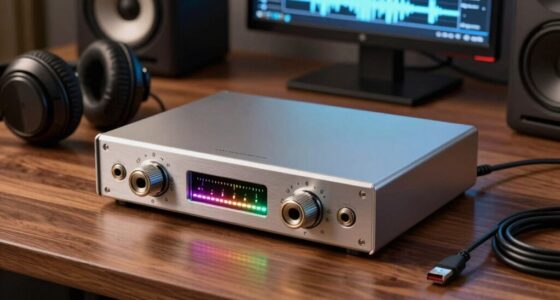

Music production demands speakers that tell you the truth about your mix, and most computer speakers simply flatter the sound instead of revealing it. After comparing ten options side by side, the Yamaha HS3 stands out as the best overall pick because it brings Yamaha’s respected HS monitoring philosophy to a compact, desktop-friendly size with honest midrange and controlled low end. The PreSonus Eris 3.5 is a close runner-up thanks to its acoustic tuning controls and balanced sound at a friendlier price, while the Edifier MR3 offers Hi-Res certification and Bluetooth convenience without abandoning monitor-grade accuracy. The main tradeoff in this category is between true flat-response monitors and multimedia speakers that are more enjoyable for casual listening but less trustworthy for mixing. If you produce on a small desk, size and bass extension also compete against each other. Keep reading for the full breakdown of each pair and who each one suits best.

Get audio and creator gear delivered free with Prime
- Fast, free delivery on millions of items
- Prime Video, Amazon Music and more included
- Member-only deals all year
Complete the kit


Key Takeaways
- Only four of the ten pairs — the Yamaha HS3, PreSonus Eris 3.5, Edifier MR3, and Ortizan C7 — are true studio monitors with tuning controls; the rest are multimedia or bookshelf speakers that color the sound to some degree.
- The Yamaha HS3 separates itself from the compact competition by keeping its bass tight and its midrange honest at low listening volumes, which matters for late-night mixing in untreated rooms.
- The PreSonus Eris 3.5 delivers the best tuning flexibility per dollar, with highpass and EQ controls usually reserved for larger, pricier monitors.
- Duplicate entries in this roundup (the Sanyun SW208 and Ortizan C7 appear twice in different colors) reflect how common rebranded or colorway-variant speakers are in this market — always check the model number before buying.
- 3-inch models like the Sanyun SW208 work well for small desks and travel rigs but bottom out around 60–70 Hz, so pairing them with headphones for low-end checks is almost mandatory.
- The Edifier R1280T and M60 sound pleasant but lack any tuning controls, making them better as secondary listening speakers than as a primary production pair.
| Edifier R1280T Powered Bookshelf Speakers |  | Best Classic Bookshelf Pick for Warm Listening | Driver configuration: 4-inch full range + 13mm silk dome tweeter per speaker | Inputs: 2 x AUX (3.5mm / dual RCA) | EQ controls: Bass and treble knobs on side panel | VIEW ON AMAZON | See Our Full Breakdown |
| Edifier M60 Multimedia Speaker |  | Best Compact Desktop Workhorse | Power output: 66W RMS total (18W x2 mid-low, 15W x2 treble) | Drivers: 3-inch aluminum diaphragm mid-bass + 1-inch silk dome tweeter | Inputs: USB-C, AUX, Bluetooth 5.3 | VIEW ON AMAZON | See Our Full Breakdown |
| Sanyun SW208 3″ Active Bluetooth 5.0 Bookshelf Speakers |  | Best Budget Starter Pair | Drivers: 3-inch carbon fiber woofer with multi-layer voice coil | Power: 30W x 2 (60W total) | Inputs: USB (24-bit DAC), 3.5mm AUX, Bluetooth 5.0 | VIEW ON AMAZON | See Our Full Breakdown |
| Ortizan C7 Powered Studio Monitor Speakers (Pair) |  | Best Connectivity for the Money | Drivers: 3.5-inch carbon fiber mid-bass + 0.75-inch silk dome tweeter | Inputs: Bluetooth 5.3, RCA, 3.5mm AUX, USB, 6.35mm TRS balanced | DAC: Built-in 24-bit via USB | VIEW ON AMAZON | See Our Full Breakdown |
| Yamaha HS3 Powered Studio Monitor, White (Pair) |  | Best True Studio Monitor | Driver configuration: 3.5-inch cone woofer + 0.75-inch dome tweeter, 2-way | Power output: 26W + 26W | Frequency response: 70 Hz – 22 kHz (-10 dB) | VIEW ON AMAZON | See Our Full Breakdown |
| NSY Audio Powered Computer Speakers for Desktop PC and Music, White Pair |  | Best for Casual Desk Audio, Not Serious Mixing | Power Output: 60W max | Drivers: 3-inch full-range | Enclosure: MDF wood | VIEW ON AMAZON | See Our Full Breakdown |
| Edifier MR3 Powered Studio Monitor, Hi-Res Active Bluetooth Speaker |  | Best Overall for Music Production | Frequency Response: 52 Hz – 40 kHz (Hi-Res certified) | Power Output: 18W × 2 RMS, 92.5 dB peak SPL | Drivers: 3.5-inch mid-woofer, 1-inch tweeter | VIEW ON AMAZON | See Our Full Breakdown |
| PreSonus Eris 3.5 Powered Studio Monitors (Pair) |  | Best for Beginners Building a First Studio | Drivers: 3.5-inch woven-composite woofer, 1-inch silk-dome tweeter | Amplification: 50 watts total | Frequency Response: 80 Hz – 20 kHz | VIEW ON AMAZON | See Our Full Breakdown |
| Ortizan C7 Powered Studio Monitors Pair with Bluetooth 5.3, White |  | Best Value for a Full Studio Connection Set | Drivers: 3.5-inch carbon fiber woofer, 0.75-inch silk-dome tweeter | DAC: Built-in 24-bit via USB | Inputs: 6.35mm TRS balanced, RCA, 3.5mm AUX ×2 | VIEW ON AMAZON | See Our Full Breakdown |
| Sanyun SW208 3″ Active Bluetooth 5.0 Bookshelf Speakers, Built-in 24bit DAC | 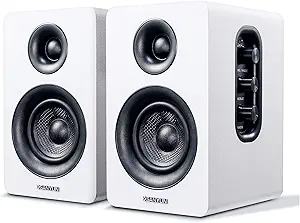 | Best Compact Second Pair for Reference Checking | Power Output: 30W × 2 | Drivers: 3-inch carbon fiber with multi-layer voice coil | DAC: Built-in 24-bit via USB | VIEW ON AMAZON | See Our Full Breakdown |
| computer speakers for music production | Inputs | Drivers | Power output |
|---|---|---|---|
| Edifier R1280T Powered Bookshe | 2 x AUX (3.5mm / dual RCA) | — | — |
| Edifier M60 Multimedia Speaker | USB-C, AUX, Bluetooth 5.3 | 3-inch aluminum diaphragm mid-bass + 1-inch silk dome tweeter | 66W RMS total (18W x2 mid-low, 15W x2 treble) |
| Sanyun SW208 3" Active Bluetoo | USB (24-bit DAC), 3.5mm AUX, Bluetooth 5.0 | 3-inch carbon fiber woofer with multi-layer voice coil | — |
| Ortizan C7 Powered Studio Moni | Bluetooth 5.3, RCA, 3.5mm AUX, USB, 6.35mm TRS balanced | 3.5-inch carbon fiber mid-bass + 0.75-inch silk dome tweeter | — |
| Yamaha HS3 Powered Studio Moni | — | — | 26W + 26W |
| NSY Audio Powered Computer Spe | USB-C, RCA, 3.5mm AUX | 3-inch full-range | 60W max |
| Edifier MR3 Powered Studio Mon | Balanced TRS, RCA, AUX | 3.5-inch mid-woofer, 1-inch tweeter | 18W × 2 RMS, 92.5 dB peak SPL |
| PreSonus Eris 3.5 Powered Stud | Balanced TRS, RCA, front-panel aux | 3.5-inch woven-composite woofer, 1-inch silk-dome tweeter | — |
| Ortizan C7 Powered Studio Moni | 6.35mm TRS balanced, RCA, 3.5mm AUX ×2 | 3.5-inch carbon fiber woofer, 0.75-inch silk-dome tweeter | — |
| Sanyun SW208 3" Active Bluetoo | — | 3-inch carbon fiber with multi-layer voice coil | 30W × 2 |
More Details on Our Top Picks
Edifier R1280T Powered Bookshelf Speakers
The Edifier R1280T earns its place as the most traditional entry here: a passive-looking, wood-finished powered bookshelf pair built around a 4-inch full-range driver and 13mm silk dome tweeter. Compared with the Yamaha HS3, which is voiced for clinical accuracy, the R1280T leans warmer and more forgiving — pleasant for long production sessions and casual listening alike, but less honest as a mixing reference. Dual AUX inputs mean a laptop and interface can stay connected simultaneously, and side-panel bass and treble knobs let you shape the sound to your room. The tradeoff is connectivity: no USB, no Bluetooth, no balanced inputs, and no headphone jack. For producers who mostly work through an audio interface’s RCA outputs and want speakers that double as living-room furniture, this pick makes sense.
Pros:- Warm, natural voicing that stays comfortable across long sessions
- Dual AUX inputs let you keep two sources connected at once
- MDF wood build with a classic finish that suits any room
- Physical bass and treble knobs for quick room-matching adjustments
- Included remote for volume control from the desk chair
Cons:- No USB, Bluetooth, or balanced inputs — analog RCA/3.5mm only
- Not a flat-response monitor, so mixes may translate unpredictably to other systems
Best for: Producers on an analog setup who want warm, furniture-grade bookshelf speakers that double as everyday listening speakers
Not ideal for: Anyone needing digital USB input, Bluetooth streaming, or a flat mixing reference — the analog-only connections and colored sound work against desk-centric production workflows
- Driver configuration:4-inch full range + 13mm silk dome tweeter per speaker
- Inputs:2 x AUX (3.5mm / dual RCA)
- EQ controls:Bass and treble knobs on side panel
- Build:MDF cabinet with wood-effect vinyl finish
- Type:Powered 2.0 bookshelf pair
- Remote:Included wireless remote for volume
- Connectivity (digital):None — analog only
Our verdict“A great fit if you value musicality and looks over clinical accuracy, and your gear connects over RCA or 3.5mm.”
Edifier M60 Multimedia Speaker
The Edifier M60 is the tech-forward compact option in this lineup. At roughly the footprint of a large phone per speaker, it still pushes 66W RMS through a proper two-way design with a 3-inch aluminum mid-bass driver and 1-inch silk dome tweeter — more structured power than the similar-sized Sanyun SW208. Where the SW208 keeps things simple, the M60 adds full digital signal processing, Hi-Res certified USB-C input, and Bluetooth 5.3 with LDAC for 24-bit/96kHz streaming from Android. The bundled 15-degree aluminum stands aim the tweeters at ear level, a small touch that genuinely tightens imaging on a desk. The catch: DSP tuning and a consumer-forward character mean the M60 flatters rather than reveals, so it sits closer to a premium multimedia speaker than a true studio monitor. Producers wanting brutally honest mids should look at the Yamaha HS3 instead.
Pros:- 66W RMS output with dedicated two-way drivers and active crossover
- Hi-Res certified USB-C input plus Bluetooth 5.3 with LDAC codec
- Included angled aluminum stands direct sound to ear level
- Compact footprint fits cramped desks without sacrificing stereo separation
- Touch controls with proximity backlight and app extension
Cons:- DSP-tuned consumer sound signature is not a neutral mixing reference
- Touch-panel controls can be fiddly for quick volume changes mid-session
Best for: Desktop producers and hybrid creators who want sleek, space-saving speakers with hi-res digital input and wireless streaming for reference listening
Not ideal for: Mixing engineers who need a flat, uncolored reference — the DSP tuning is designed to sound good, not to expose flaws
- Power output:66W RMS total (18W x2 mid-low, 15W x2 treble)
- Drivers:3-inch aluminum diaphragm mid-bass + 1-inch silk dome tweeter
- Inputs:USB-C, AUX, Bluetooth 5.3
- Bluetooth codec:LDAC up to 990 kbps, 24-bit/96kHz
- Amplification:Class-D closed-loop with built-in DSP
- Dimensions per speaker:100mm W x 168mm H x 147mm D
- Stands:Bundled aluminum stands at 15-degree angle
- Controls:Capacitive touch panel plus EDIFIER ConneX app
Our verdict“The best pick if desk space is scarce and you want modern digital connectivity, as long as reference-grade accuracy isn’t the priority.”
Sanyun SW208 3″ Active Bluetooth 5.0 Bookshelf Speakers
The Sanyun SW208 is the entry point of this roundup, and it earns that spot by delivering the essentials — a two-way design, a built-in 24-bit DAC over USB, and tone controls — at a level where most competitors give you a single plastic soundbar. The carbon fiber 3-inch drivers produce a warmer, fuller midrange than the price suggests, and the USB connection pulling a clean digital signal straight from the computer is genuinely useful for beginners without an audio interface. Side-mounted volume, bass, and treble knobs mirror what the Edifier R1280T offers, though the SW208’s tone controls matter more here because the stock tuning is less refined. Against the Ortizan C7, it loses the balanced TRS input and flatter response, but it undercuts it on cost. Expect polite bass, a slightly soft top end, and quiet standby thanks to the noise-filtering chip.
Pros:- Built-in 24-bit DAC delivers clean digital audio over USB
- Carbon fiber drivers offer warmer mids than typical budget speakers
- Physical bass and treble knobs for tuning to your room
- Bluetooth 5.0 plus AUX and USB covers every common source
- Quiet standby circuitry with no hiss between sessions
Cons:- Limited low-end reach makes bass-heavy mixing unreliable
- Build quality and refinement fall short of the Edifier and Yamaha options
Best for: First-time producers and home recordists who want real stereo speakers with USB input before committing to an interface and monitors
Not ideal for: Anyone mixing bass-heavy genres — the 3-inch drivers and modest low-end extension will hide problems below roughly 70Hz
- Drivers:3-inch carbon fiber woofer with multi-layer voice coil
- Power:30W x 2 (60W total)
- Inputs:USB (24-bit DAC), 3.5mm AUX, Bluetooth 5.0
- EQ controls:Volume, bass, and treble knobs on main speaker
- Enclosure:Compact bookshelf, direct/reflective design
- Bluetooth range:10 meters
- Standby:Noise-elimination system, EU ER2 energy standard
Our verdict“The smartest first pair for a producer on a tight budget who needs digital USB input and adjustable tone without monitor-level pricing.”
Ortizan C7 Powered Studio Monitor Speakers (Pair)
The Ortizan C7 stakes its claim on input flexibility: Bluetooth 5.3, RCA, 3.5mm AUX, USB with a built-in 24-bit DAC, and — unusually at this size — a 6.35mm TRS balanced input for pro gear. That TRS jack is the differentiator. Neither the Sanyun SW208 nor the Edifier M60 offers balanced connections, so the C7 is the only compact option here that plays nicely with an audio interface’s monitor outputs without adapters or noise risk. Ortizan tunes it for a flat response curve, putting it closer in spirit to the Yamaha HS3 than to the consumer-flavored Edifiers, and the front-panel headphone jack is a thoughtful touch for late-night referencing. Realistically, the 3.5-inch carbon fiber drivers won’t shake a room, and there’s no room correction, but for a small treated space the accuracy-per-dollar argument is strong.
Pros:- Balanced 6.35mm TRS input for noise-free interface connections
- Professionally tuned flat response suitable for mixing decisions
- Five input options covering analog, digital, and wireless sources
- Front-panel headphone output for quick monitoring switches
Cons:- 3.5-inch drivers limit bass depth for low-end-critical work
- No room correction or DSP features to adapt to untreated spaces
Best for: Producers with an audio interface who need balanced TRS monitoring plus wireless and USB flexibility in one compact pair
Not ideal for: Producers in larger or untreated rooms — limited bass output and no room-correction features make low-end judgment difficult
- Drivers:3.5-inch carbon fiber mid-bass + 0.75-inch silk dome tweeter
- Inputs:Bluetooth 5.3, RCA, 3.5mm AUX, USB, 6.35mm TRS balanced
- DAC:Built-in 24-bit via USB
- Crossover:Electronic 2-way
- Tuning:Flat response curve for studio monitoring
- Headphone output:Yes, front panel
- Color:Black
Our verdict“The best-value pick if balanced connectivity and a flat tuning top your checklist and your room is small.”
Yamaha HS3 Powered Studio Monitor, White (Pair)
The Yamaha HS3 is the only entry here descended from an actual studio-monitor lineage, and it behaves like it. Its Room Control switch compensates for bass buildup when speakers sit against a wall — a real-world feature none of the Edifier, Sanyun, or Ortizan options match — and the high-trim control lets you dial back an overbright room. At 26W + 26W into a bass-reflex cabinet it plays cleaner and more controlled than its wattage suggests, with a 70Hz–22kHz response aimed at honesty rather than excitement. Compared with the Ortizan C7, the HS3 gives up Bluetooth and USB convenience for a more disciplined, neutral character that translates. The tradeoffs are real: fewer inputs, a utilitarian look, and a bottom end that stops short of what larger HS models deliver. But if the goal is mixes that survive on other systems, this is the reference point of the five.
Pros:- Room Control feature tames wall-proximity bass buildup
- High trim response control for matching room acoustics
- Neutral, trusted tuning from Yamaha’s monitor heritage
- Bass-reflex cabinet extends low end beyond typical compact speakers
Cons:- No Bluetooth, USB, or digital inputs — analog connections only
- 26W per side limits maximum volume for larger rooms
- Plain, utilitarian design compared with lifestyle-oriented rivals
Best for: Producers and mixers who want trustworthy, flat translation from a name-brand monitor lineage in a compact treated room
Not ideal for: Creators who prioritize convenience — no Bluetooth, no USB DAC, and no consumer-friendly tone shaping make it less versatile as an all-in-one desktop speaker
- Driver configuration:3.5-inch cone woofer + 0.75-inch dome tweeter, 2-way
- Power output:26W + 26W
- Frequency response:70 Hz – 22 kHz (-10 dB)
- Cabinet:Bass-reflex powered speaker
- Room controls:Room control and high trim response switches
- Color:White
- Packaging:Sold as a pair
Our verdict“The closest thing to a real studio monitor in this lineup — buy it for translation accuracy, not features.”
NSY Audio Powered Computer Speakers for Desktop PC and Music, White Pair
Let me be direct about where this fits: the NSY Audio 60W pair is a consumer desktop upgrade, not a true monitoring tool. The MDF wood enclosure genuinely helps here — it avoids the hollow plastic resonance that plagues cheap desktop cubes, and the 3-inch drivers deliver tighter bass than any laptop speaker has a right to expect. Compared with the Edifier MR3, though, the picture changes fast: there is no flat tuning mode, no acoustic-tailoring EQ, and no published frequency response, so what you hear is flavored rather than honest. For sketching ideas, playing reference tracks, or general listening between sessions, that coloration is fine — even pleasant. For judging a mix, it will lie to you.
Pros:- MDF enclosure avoids the plastic-box resonance of cheaper desktop speakers
- Bluetooth 5.3 plus USB-C, RCA, and AUX covers every common source
- Front-panel volume dial keeps adjustments quick during long sessions
- Plug-and-play setup with all cables included
- Compact footprint fits under a monitor or beside a dual-screen rig
Cons:- No flat-response tuning or EQ modes, so mixes won’t translate reliably
- 3-inch drivers with no subwoofer reach leave the low end thin for bass-heavy genres
- Frequency response is unpublished, making accuracy impossible to verify
Best for: Producers who want a warm, budget-friendly pair for casual listening, reference playback, and desk multimedia — not final mixing decisions
Not ideal for: Anyone mixing or mastering — the untuned response and lack of any monitor mode make translation to other systems unreliable
- Power Output:60W max
- Drivers:3-inch full-range
- Enclosure:MDF wood
- Wireless:Bluetooth 5.3, 33 ft range
- Inputs:USB-C, RCA, 3.5mm AUX
- Controls:Front-panel power/volume dial
- Color:White
Our verdict“A pleasant, versatile desk speaker for listening — just don’t trust it to tell you the truth about a mix.”
Edifier MR3 Powered Studio Monitor, Hi-Res Active Bluetooth Speaker
This is the pick I’d point most home producers toward first. The MR3’s Hi-Res certification and 52Hz–40kHz flat response mean it’s actually built for the job this roundup is about — hearing what’s in your recording, not a flattering version of it. What separates it from the PreSonus Eris 3.5 is flexibility: the Monitor, Music, and Custom modes let one pair serve double duty as honest near-fields during work and enjoyable speakers afterward, with deeper EQ control through the ConneX app. The Eris counters with onboard acoustic tuning knobs, but the MR3 reaches lower (52Hz vs 80Hz), which matters enormously when you’re chasing kick-drum fundamentals. The tradeoff is modest output — 18W per side — so in a large, untreated room it may feel underpowered compared with the Edifier M60.
Pros:- Hi-Res certified flat response from 52Hz to 40kHz for accurate monitoring
- Monitor, Music, and Custom modes plus app-based EQ for precise tuning
- Multiple inputs (TRS, RCA, AUX) with multi-point Bluetooth and headphone out
- MDF cabinet keeps distortion low at working volumes
Cons:- Only 18W RMS per side — modest headroom for larger rooms
- App-dependent customization; physical controls are limited
- 52Hz low-end reach still omits the deepest sub-bass frequencies
Best for: Home producers who want genuinely flat monitoring at close range, with the option to switch to a fun listening mode after the session ends
Not ideal for: Producers working in large or bass-heavy untreated rooms — the 18W per channel output won’t fill the space or expose low-end problems
- Frequency Response:52 Hz – 40 kHz (Hi-Res certified)
- Power Output:18W × 2 RMS, 92.5 dB peak SPL
- Drivers:3.5-inch mid-woofer, 1-inch tweeter
- Inputs:Balanced TRS, RCA, AUX
- Wireless:Bluetooth with multi-point
- Sound Modes:Music, Monitor, Custom via ConneX app
- Cabinet:MDF
Our verdict“The best balance of accuracy, flexibility, and price in this lineup for producers who mix at a desk.”
PreSonus Eris 3.5 Powered Studio Monitors (Pair)
The Eris 3.5 earns its spot because PreSonus builds actual studio tools — these ship with the acoustic-tuning mindset of their larger Eris line, not a repurposed bookshelf speaker. That’s the real divide between this and the NSY Audio pair: both are compact and affordable, but the Eris offers balanced TRS inputs and high/low acoustic-tuning controls, so you can wire an audio interface properly and compensate for a desk pressed against a wall. The front-panel headphone jack is a quieter win than it sounds — beginners bounce between speakers and headphones constantly, and reaching behind cabinets to re-plug gets old immediately. Its honest limitation is the 80 Hz floor: against the Edifier MR3’s 52 Hz reach, kick tails and bass lines simply disappear, and nothing onboard fixes that.
Pros:- 50W total amplification with clean, balanced sound at desk distances
- Balanced TRS inputs for proper audio-interface connectivity
- High- and low-frequency acoustic tuning adapts output to room placement
- Front-panel headphone jack simplifies speaker/headphone switching
Cons:- Frequency response stops at 80 Hz, so sub-bass content is invisible
- Tuning controls are basic compared with app-driven EQ on the Edifier MR3
- No Bluetooth — wired sources only
Best for: First-time producers pairing monitors with a small audio interface in a bedroom or dorm studio
Not ideal for: Anyone producing bass-forward electronic or hip-hop tracks — the 80 Hz low-end limit hides the frequencies that matter most
- Drivers:3.5-inch woven-composite woofer, 1-inch silk-dome tweeter
- Amplification:50 watts total
- Frequency Response:80 Hz – 20 kHz
- Inputs:Balanced TRS, RCA, front-panel aux
- Headphone Jack:Front panel
- Acoustic Tuning:High- and low-frequency controls
- Quantity:Pair (2 speakers)
Our verdict“The safest first pair of real studio monitors for a small desk setup, as long as your music doesn’t live below 80 Hz.”
Ortizan C7 Powered Studio Monitors Pair with Bluetooth 5.3, White
The Ortizan C7 wins its place on connectivity alone: a 24-bit DAC over USB, 6.35mm balanced TRS input, dual AUX inputs, and a front headphone jack — that’s more routing than anything else at this price point in the lineup. You can run an interface into the TRS input, keep a keyboard plugged into AUX, and check mixes on headphones without touching a cable. Compared with the Sanyun SW208, which shares the USB-DAC trick, the C7 pulls ahead for production because of that balanced input and lab-tuned flat curve; the Sanyun leans warmer and more HiFi-flavored. Its weak spot versus the PreSonus Eris 3.5 is brand credibility in the pro-audio world — Ortizan is a consumer brand, so long-term support and replacement parts are less certain.
Pros:- 24-bit DAC via USB keeps digital signal path clean without an external interface
- Balanced TRS input accepts mixers, interfaces, and instruments directly
- Front-panel headphone output plus multiple simultaneous inputs
- Lab-tuned flat response aimed squarely at monitoring rather than hype
Cons:- Consumer-brand support network pales next to PreSonus or Yamaha
- ABS and wood hybrid cabinet is less rigid than full MDF designs like the MR3
- Bass extension from a 3.5-inch woofer won’t satisfy bass-driven production
Best for: Budget producers building a small setup with a mixer, keyboard, or interface who need multiple inputs without a patchbay
Not ideal for: Buyers who prioritize established pro-audio support and resale value — this is a consumer brand without a studio-legacy reputation
- Drivers:3.5-inch carbon fiber woofer, 0.75-inch silk-dome tweeter
- DAC:Built-in 24-bit via USB
- Inputs:6.35mm TRS balanced, RCA, 3.5mm AUX ×2
- Headphone Output:Front panel
- Wireless:Bluetooth 5.3
- Crossover:Electronic 2-way
- Cabinet:ABS, metal, and wood
- Color:White
Our verdict“The most connection-flexible budget monitors here — ideal if your desk hosts more gear than just a laptop.”
Sanyun SW208 3″ Active Bluetooth 5.0 Bookshelf Speakers, Built-in 24bit DAC
The Sanyun SW208 is the smallest serious-sounding option here, and I mean that as a compliment. The carbon fiber 30W×2 drivers with multi-layer voice coils produce a warmth that cheap plastic minis simply can’t, and the built-in 24-bit DAC over USB means your laptop feeds them a clean digital signal without an interface in the chain. Where the Ortizan C7 is the better primary monitor thanks to its balanced input, the SW208 plays a different role: an honest, small second pair for checking how a mix sounds on modest speakers — something every serious producer eventually does. The side-mounted treble and bass knobs allow tone shaping, but that’s also the trap: leave them centered if you want a trustworthy reference. The noise-free standby design is a genuine quality-of-life touch on a shared desk.
Pros:- Carbon fiber drivers deliver warm mids and clean highs from a tiny footprint
- Built-in 24-bit DAC over USB gives a clean digital path from any computer
- Independent treble and bass controls for adapting to room and material
- Quiet standby with intelligent noise filtering — no hiss between sessions
Cons:- No balanced input, so professional interface hookups are limited to AUX
- Tone controls invite coloring the sound, undermining reference accuracy
- 3-inch woofers roll off well before true bass territory
Best for: Producers in tight spaces, or anyone wanting a compact second pair to sanity-check mixes on modest speakers
Not ideal for: Anyone’s only pair for mixing bass-heavy music — 3-inch drivers physically cannot reproduce sub frequencies
- Power Output:30W × 2
- Drivers:3-inch carbon fiber with multi-layer voice coil
- DAC:Built-in 24-bit via USB
- Wireless:Bluetooth 5.0
- Controls:Volume, treble, and bass knobs on main speaker
- Design:Direct/reflective bookshelf system, wood finish
- Standby:Noise-elimination system, EU ER2 energy standard
Our verdict“A smart little USB-connected pair best used as a secondary reference or a space-constrained producer’s starter monitors.”
How We Picked
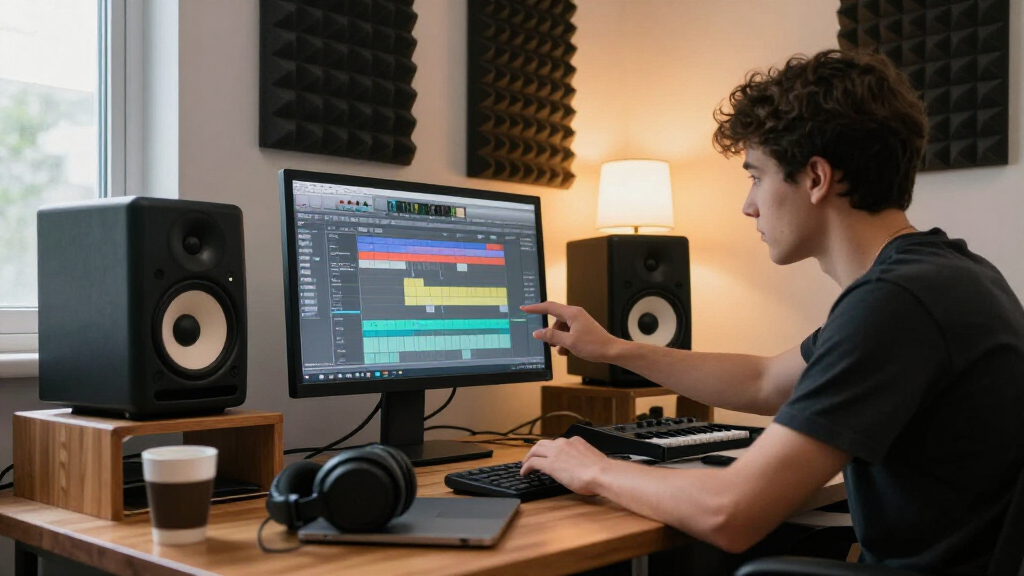
I evaluated each pair through a single lens: can you make trustworthy mixing decisions on these speakers? That starts with frequency response — not flatness for its own sake, but a predictable, even balance so a mix that sounds good here translates to headphones and cars. I prioritized models with acoustic tuning controls (highpass filters, treble and bass trim), because desktop setups against walls and in corners always color the low end, and monitors that let you compensate for that consistently ranked higher than fixed-response multimedia speakers.
From there, I weighed build and connectivity — rear-panel inputs, wired remote versus front-panel volume, Bluetooth as a convenience rather than a core feature — and value relative to role. A pair doesn’t need to be perfect to rank well; it needs to be honest about what it is. That’s why the ranking places true monitors like the Yamaha HS3 and PreSonus Eris 3.5 above pleasant-sounding bookshelf speakers like the Edifier R1280T, even though the latter are lovely for simply enjoying music. Duplicates in the lineup are kept for colorway availability but judged on identical performance.
Factors to Consider When Choosing Computer Speakers For Music Production
Before settling on a pair, it helps to understand what actually separates a production-capable speaker from a good listening speaker — and where most first-time buyers overspend or underspend. These are the factors I weighed most heavily, plus the mistakes I see people make when equipping a home studio desk.Flat Response Is Not a Marketing Term
The single biggest mistake in this category is buying speakers designed to sound exciting rather than accurate. Consumer speakers boost bass and treble because that sells in a showroom; production speakers aim for a neutral balance so flaws in your mix become audible. A mix made on hyped speakers tends to sound thin and harsh elsewhere because you unconsciously compensated for the boost. Look for the words studio monitor backed by actual tuning controls, not just a brand aesthetic. That said, perfectly flat response doesn’t exist at any price — the goal is a speaker whose character you can learn. This is why models like the Yamaha HS3 and PreSonus Eris 3.5 outrank prettier-sounding bookshelf pairs in this roundup.
Room and Placement Matter More Than Driver Size
A pair of well-placed small monitors will outperform large speakers crammed against a wall. Desktop setups almost guarantee boundary reinforcement: bass builds up when speakers sit close to walls or the desk surface, often by several decibels. This is why rear-panel EQ and highpass controls are worth real money — they let you correct for placement instead of buying acoustic panels on day one. Aim for tweeters at ear level, pulled a foot or more from the wall if possible, and toed in toward your listening position. If your desk forces speakers into corners, prioritize models with a low-end trim switch, which is a cheaper fix than room treatment.
Size Your Bass Expectations to Your Room
Three-inch woofers, common in this price range, typically roll off somewhere between 60 and 70 Hz. That covers most of the audible mix but hides sub-bass content in electronic and hip-hop production. Buyers often assume bigger woofers automatically fix this, but a 5-inch or larger driver in a tiny untreated bedroom can create more problems than it solves, with boomy, undefined low end. The pragmatic move for most desktop producers is a compact pair paired with decent headphones for sub-bass checking, rather than stretching the budget for extension you can’t accurately hear in your room anyway. Match the speaker to the room before matching it to the genre.
Connectivity: Wired First, Bluetooth Second
For production, a wired connection is non-negotiable — Bluetooth adds compression and latency that make it fine for reference listening but poor for tracking and mixing. Treat Bluetooth as a bonus for casual streaming from your phone, not a feature worth paying extra for. What matters more is the input layout: a pair with multiple inputs lets you keep your interface and a phone connected simultaneously, and a front-mounted headphone jack plus volume knob saves constant reaching. Also check whether volume is controlled on the front panel, a wired pod, or only the rear — rear-only volume knobs get old quickly on a production desk.
When to Pay More — and When Not To
The meaningful quality jump in this category happens between generic multimedia speakers and entry-level true monitors, not between entry monitors and midrange ones. If your budget forces a choice, spend on the monitors and skip accessories; a basic accurate pair will serve you for years. Paying more gets you tighter bass, better off-axis response, and higher resale value, but those gains matter most once your ears are trained. Beginners often over-invest in the speakers and under-invest in learning them — spending ten hours listening to reference tracks on any decent pair beats upgrading hardware at this stage. The exceptions where more money clearly pays off: treated rooms and mixes intended for commercial release.
Watch for Duplicates and Rebrands
This roundup itself contains two pairs listed twice in different colors, and that pattern is common across the market: identical electronics sold under multiple listings, slight model-number variants, and white-versus-black versions priced differently. Before buying, compare the exact model number and spec sheet rather than the product photo. Sometimes the colorway is the only difference; sometimes a suffix hides a revised amplifier or older Bluetooth version. Reading the fine print on driver size, RMS wattage, and input types protects you from paying for what is essentially the same speaker twice — a real risk when outfitting a studio on a spreadsheet.
Frequently Asked Questions
Can I realistically mix music on 3-inch speakers like the Sanyun SW208 or PreSonus Eris 3.5?
Yes, with a caveat you should take seriously. Three-inch monitors handle vocals, guitars, drums, and most mix balance decisions very well, and their limited bass can actually help in an untreated room by masking less low-frequency clutter. What they can’t do is show you what’s happening below roughly 60 Hz, which is where 808s, sub-bass drops, and kick-drum weight live. The practical workflow is to mix on the small speakers for clarity and translation, then check the low end on a decent pair of headphones. Producers who skip that second step are the ones who end up with bass that disappears on some systems and overwhelms others.
Are the Edifier R1280T good enough for production, or are they just listening speakers?
They sit in a gray zone, and being honest about that gray zone is why they rank lower here. The R1280T has a pleasant, slightly warm balance with a gentle treble roll-off — enjoyable for long sessions, but it hides harshness in the upper frequencies that you’d want to catch before release. It also has only basic treble and bass controls rather than proper acoustic tuning, so you can’t correct for desk and wall placement. If you already own them, you can absolutely learn their character and produce respectable work. But if you’re buying specifically for production accuracy, the same money spent on the Eris 3.5 or a similar true monitor buys you a more honest tool.
Does Bluetooth matter for studio monitors?
As a production tool, no — and it’s worth understanding why so you don’t overpay for it. Bluetooth audio is compressed and adds slight latency, which is fine for background listening but works against critical mixing decisions and makes it unusable for recording while monitoring. Where Bluetooth genuinely helps is convenience: streaming a playlist from your phone to hear how your references sound on the same speakers, without crawling behind your desk to swap cables. If two models differ mainly in Bluetooth support, weigh how you actually work. Producers who do everything through an audio interface can safely treat it as optional.
Is the Yamaha HS3 worth choosing over cheaper options in this lineup?
The case for the HS3 comes down to consistency rather than raw excitement. Yamaha’s HS line is built around a philosophy of revealing flaws, and the HS3 carries that into a compact size — the midrange stays honest, and the low end stays controlled even at quiet volumes, which is exactly when cheap monitors start lying to you. Compared with the Ortizan C7 or Edifier MR3, you give up Bluetooth convenience and some listening pleasure, but you gain a speaker whose character is predictable session after session. If your mixes need to translate to other systems — the core job of a monitor — that predictability is what you’re paying for. For hobby listening plus occasional editing, the cheaper pairs are the smarter spend.
Do I need an audio interface to use these speakers, or can I plug them straight into my computer?
Every powered pair in this roundup can connect directly to a computer’s headphone output, and that’s a legitimate way to start — the speakers have built-in amplification, so no interface is required for sound. What an interface adds is a cleaner signal path, a proper volume knob within reach, and low-latency monitoring when you record vocals or instruments. The weak link with direct connection is usually the computer’s output stage, which can introduce a faint hiss on some laptops. If you’re only arranging and mixing, run direct and upgrade later. If you record anything live into your DAW, an interface should come before any speaker upgrade.
Conclusion
Matching the right pair to your situation is easier than it looks once you sort buyers into a few camps. For the best overall choice, the Yamaha HS3 earns it with the most trustworthy, translation-friendly sound in the group — buy it if your mixes need to hold up outside your room. The PreSonus Eris 3.5 is my best value pick, giving you genuine monitor tuning controls at the friendliest price, and the Edifier MR3 is the best premium option here, layering Hi-Res playback and Bluetooth onto an accurate core. Beginners should start with the Sanyun SW208: it’s affordable, compact, and honest enough to train your ears before you commit more money. For small desks and minimal setups, the Ortizan C7 fits the same niche with a slightly different voicing. And for producers who also want enjoyable everyday listening, the Edifier R1280T or M60 make sense — just know they’re a pleasant second pair, not your main mixing tool. Whatever you choose, spend time learning your speakers’ character; that habit improves your mixes more than any upgrade in this price range.
Halloween Picks
halloween
As an affiliate, we earn on qualifying purchases.