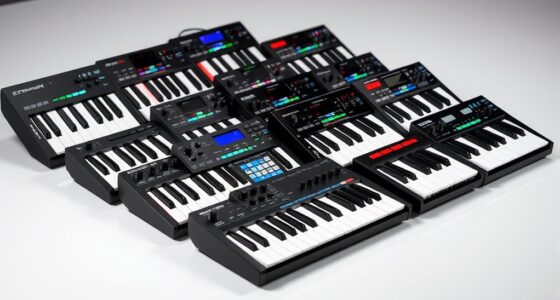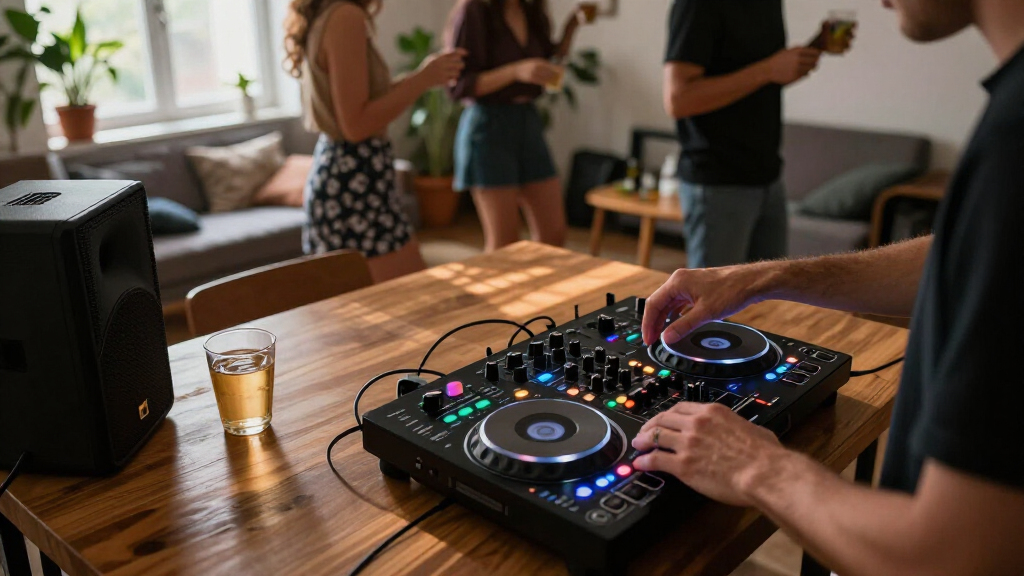

For most home parties, I’d start with the Pioneer DJ DDJ-FLX4: its two-channel layout and flexible software support make it a strong all-around choice for learning and mixing for a crowd. The Numark Party Mix Live is a more self-contained option, with built-in speakers and party lights, while the Hercules DJControl Inpulse 500 suits buyers who want more hands-on controls and room to grow. The main tradeoff is between portability and built-in convenience on one side, and fuller controls and a separate sound system on the other. I compare all 15 controllers by setup, party suitability, and learning curve below. Keep reading for the full breakdown and guidance on matching a controller to your room, gear, and plans.

Get audio and creator gear delivered free with Prime
- Fast, free delivery on millions of items
- Prime Video, Amazon Music and more included
- Member-only deals all year
Complete the kit


Key Takeaways
- The DDJ-FLX4 is the most balanced pick: it pairs a familiar two-channel layout with software flexibility, making it a better all-rounder than the light-show-focused Party Mix models.
- Built-in sound and lights solve different problems: the Party Mix Live adds speakers as well as lights, while the Party Mix II and Party Mix III focus on lighting and still need a suitable sound system for the room.
- The Inpulse 500 models favor hands-on growth: their larger-format controls are more suited to learning and longer sets than compact options such as the DJ2GO2 Touch or DJControl Starlight.
- Bundles are not automatically better values: the FLX4 and Inpulse 500 bundles add accessories, but buyers should check that the included headphones and other extras fit their setup before choosing a bundle over the controller alone.
- Phone-first and laptop-first setups lead to different picks: the DJControl Mix is designed around smartphone control, while controllers such as the DDJ-REV1 and Roland DJ-202 make more sense for laptop-based mixing.


| DJ controllers for home partie | Weight | Connectivity | Channels | Dimensions |
|---|---|---|---|---|
| Hercules DJControl Inpulse 200 | 2.84 pounds | USB | 2 | 15.6 x 10.3 x 3.7 inches |
| Roland DJ-202 DJ Controller Bu | 4.63 pounds | — | 2 | 11.69 x 18.82 x 2.44 inches |
| Numark Party Mix II 2-Deck DJ | 1.76 pounds | USB Type B | — | — |
| Pioneer DJ DDJ-FLX4 2-Channel | 2.8 kg | USB, Bluetooth | 2 | — |
| Hercules DJControl Inpulse 500 | 11.6 pounds | USB | 2 | 10.54 x 20.26 x 5.12 inches |
| The Next Beat by Tiësto DJ Con | 14.62 pounds | — | — | 6.5 × 17 × 1 inches |
| Hercules DJControl Inpulse 500 | — | — | — | — |
| Pioneer DJ DDJ-FLX4 2-Channel | 4.63 pounds | — | 2 | — |
| Numark DJ2GO2 Touch Compact DJ | 12 ounces | — | — | 3.39 × 12.36 × 1.3 inches |
| Numark Party Mix Live 2-Deck D | 2.69 pounds | USB Type B | — | — |
| Numark Party Mix III Bluetooth | 2.42 pounds | Bluetooth MIDI, USB-C | — | 8.07 x 13.31 x 1.85 inches |
| Hercules DJControl Mix Bluetoo | 2.1 pounds | Bluetooth, USB | — | — |
| AlphaTheta Pioneer DJ DDJ-FLX2 | 2.7 pounds | USB-C; Bluetooth | 2 | 18 x 11.7 x 4.4 inches |
| Hercules DJControl Starlight C | 1.1 pounds | USB | 2 | — |
| Pioneer DJ DDJ-REV1 2-Deck Ser | 5 pounds | Auxiliary, USB | 2 | 10.6 x 20.7 x 2.33 inches |
More Details on Our Top Picks
Hercules DJControl Inpulse 200 MK2 DJ Controller
For a first home-party setup, the Inpulse 200 MK2 puts learning tools ahead of elaborate performance controls. Its light guides offer visual help with beatmatching, while access to DJ Academy tutorials gives new DJs a path to practice before taking requests at a party. The eight pads cover Hot Cue, Stems, FX, and Sampler modes, adding ways to shape a mix without moving to a larger controller. Compared with the Numark Party Mix II, this model puts more emphasis on guided learning than on built-in room lighting. It supports both Serato DJ Lite and DJUCED, but its two-channel layout and plastic construction keep it firmly in beginner territory. Choose it for skill-building; skip it if party lighting or a sturdier feel matters more.
Pros:- Light guides provide visual support for learning beatmatching
- Works with Serato DJ Lite and DJUCED
- Eight pads offer Hot Cue, Stems, FX, and Sampler modes
- DJ Academy video tutorials support self-guided practice
Cons:- Plastic construction may feel less substantial than sturdier controllers
- Two-channel layout limits more complex mixing
- No built-in party lighting is listed
Best for: New DJs who want visual beatmatching guidance and tutorials while learning to mix music for small home gatherings.
Not ideal for: Hosts who want built-in light effects, a more substantial-feeling controller, or room to grow into complex multi-deck mixes.
- Channels:2
- Compatible software:Serato DJ Lite, DJUCED
- Pads:8; Hot Cue, Stems, FX, and Sampler modes
- Outputs:Master speaker output and headphone monitoring output
- Connectivity:USB
- Compatible computers:Mac, PC
- Dimensions:15.6 x 10.3 x 3.7 inches
- Weight:2.84 pounds
- Material:Plastic
Our verdict“Choose the Inpulse 200 MK2 if learning to beatmatch is more important than built-in lights or advanced mixing capacity.”
Roland DJ-202 DJ Controller Bundle with Case and Headphones
The Roland DJ-202 suits a home-party DJ who wants to add original rhythmic flourishes instead of relying only on track-to-track transitions. Its two-channel, four-deck design works with Serato DJ Lite, and the built-in TR-909, TR-808, TR-707, and TR-606 drum kits pair with an onboard sequencer for creating beats during a set. That gives it a more performance-oriented role than the Hercules DJControl Inpulse 200 MK2, which is better focused on teaching core mixing skills. Responsive platters also make the Roland a stronger fit for scratching. The bundle adds a case and headphones, useful for carrying and monitoring, though the listed software is limited to Serato DJ Lite and the description does not clarify any additional software. It is a distinctive pick, but less straightforward for someone seeking guided beginner lessons.
Pros:- Four-deck capability on a two-channel controller supports flexible track handling
- Four built-in Roland TR-series drum kits enable live rhythmic additions
- Onboard sequencer supports beat creation and remixing
- Bundle includes a protective case and headphones
Cons:- Designed for Serato DJ Lite, with no other included software specified
- Live drum and sequencer features may be unnecessary for basic party mixing
- Bundle listing does not specify further accessories beyond the case, headphones, and polishing cloth
Best for: Home-party DJs who want to scratch, trigger drum patterns, and remix tracks live, with a case and headphones included.
Not ideal for: Beginners who want built-in beatmatching lessons or buyers who need confirmed software options beyond Serato DJ Lite.
- Channels:2
- Decks:4
- Software:Serato DJ Lite
- Built-in drum kits:TR-909, TR-808, TR-707, TR-606
- Bundle includes:Case, headphones, polishing cloth
- Dimensions:11.69 x 18.82 x 2.44 inches
- Weight:4.63 pounds
- Model:DJ-202
Our verdict“Pick the DJ-202 if live drum programming and scratching matter more to your party sets than guided learning.”
Numark Party Mix II 2-Deck DJ Controller with Built-In Lights
The Party Mix II makes the most sense when the controller itself should contribute to the room’s party feel. Its beat-synced RGB lights add a visual effect without requiring a separate lighting setup, while touch-sensitive jog wheels, filter knobs, pads, and a crossfader provide the basic hands-on controls a beginner needs. Compared with the Hercules DJControl Inpulse 200 MK2, Numark prioritizes on-device spectacle over guided beatmatching lessons. A built-in audio interface and separate headphone and main outputs make it practical to cue tracks while sending sound to speakers, but that main output is only 1/8 inch, so check that it suits the party’s audio connection needs. The lightweight plastic body is easy to move, though it is less substantial than the Hercules DJControl Inpulse 500.
Pros:- Beat-synced RGB lighting adds visual effects without separate lights
- Touch-sensitive jog wheels and filter knobs offer hands-on mixing controls
- Built-in audio interface supports headphone monitoring and speaker output
- Lightweight design is easy to move and store
Cons:- Plastic construction feels less substantial than the Inpulse 500’s metal-backed design
- Main output uses a 1/8-inch connection that may not suit every speaker setup
- Two-deck layout is aimed at basic mixing rather than more involved sets
Best for: Beginner hosts who want a portable two-deck controller with built-in synchronized lights for casual home parties.
Not ideal for: DJs who need a more substantial build, extensive learning aids, or a main output connection larger than 1/8 inch.
- Decks:2
- Jog wheels:Touch-sensitive
- Performance pads:4 per deck
- Built-in lighting:Beat-synced RGB LED lights
- Audio interface:Built-in
- Outputs:1/8-inch main output and headphone output
- Software:Serato DJ Lite
- Connectivity:USB Type B
- Weight:1.76 pounds
Our verdict“Choose the Party Mix II if built-in synchronized lighting and simple controls are your main priorities for casual parties.”
Pioneer DJ DDJ-FLX4 2-Channel DJ Controller, White
The DDJ-FLX4 is my most flexible pick for home parties because it balances approachable mixing tools with broad device and software compatibility. Smart Fader and Smart CFX can make transitions and effects more accessible to newer DJs, while 16 performance pads provide more ways to trigger cues and samples than the Inpulse 200 MK2’s eight. Its built-in sound card and microphone mixing support also make it a better fit for parties where the DJ may need to speak or livestream. Compared with the Numark Party Mix II, the FLX4 trades built-in lighting for broader connectivity and a more adaptable setup; it connects with computers and mobile devices and supports rekordbox, Serato DJ Pro, and djay. Its main limit is the two-channel, two-deck layout, which may frustrate DJs who want more complex layering.
Pros:- Smart Fader and Smart CFX offer accessible tools for transitions and effects
- Sixteen performance pads provide flexible cue and sampler control
- Supports computers and mobile devices, including iPhone, iPad, and Android
- Built-in sound card and microphone mixing support livestreaming and MCing
Cons:- Two-channel, two-deck layout may restrict advanced layering
- No built-in party lighting is specified
- USB and Bluetooth connectivity may still require planning around the chosen device setup
Best for: Home-party DJs who want an approachable controller that can work with a range of computers, mobile devices, and supported DJ software.
Not ideal for: DJs who need more than two channels or decks, or party hosts who want built-in light effects on the controller.
- Channels:2
- Decks:2
- Performance pads:16
- Connectivity:USB, Bluetooth
- Compatible devices:PC, Mac, iPhone, iPad, Android
- Supported software:rekordbox, Serato DJ Pro, djay
- Weight:2.8 kg
- Material:Stainless steel
- Included components:USB cable
Our verdict“Choose the DDJ-FLX4 for a versatile, beginner-friendly party setup if two decks are enough for your mixing style.”
Hercules DJControl Inpulse 500 2-Deck DJ Controller for Serato and DJUCED
For a home-party DJ who wants more room to shape a mix by hand, the Inpulse 500 offers a step up from the Inpulse 200 MK2 in control layout and physical heft. Large touch-detection jog wheels, 16 RGB pads, and a dedicated filter and FX area give scratching and performance moves more space, while the built-in audio interface and hardware input mixer expand its role beyond a basic laptop controller. Like the smaller Hercules, it includes light guides and works with Serato and DJUCED, but this model is the better fit for someone who has moved past the basics. Retractable feet and a metal backing plate add a sturdier feel than the plastic-bodied Numark Party Mix II. The tradeoff is its 11.6-pound weight and corded power, making it less appealing for frequent transport or quick, cable-light setups.
Pros:- Large touch-detection jog wheels support hands-on scratching
- Built-in audio interface and hardware input mixer broaden connection options
- Sixteen backlit RGB pads and a dedicated filter and FX area support performance mixing
- Metal backing plate and retractable feet offer a more substantial setup
Cons:- At 11.6 pounds, it is heavier to carry than the Inpulse 200 MK2 or Party Mix II
- Requires corded power
- Two-deck layout may not suit DJs who want more complex multi-deck sets
Best for: Home DJs who want larger jog wheels, dedicated FX controls, and a sturdier controller for regular mixing and scratching.
Not ideal for: Highly mobile party hosts or beginners seeking a lightweight, simple setup with minimal power requirements.
- Decks:2
- Channels:2
- Software compatibility:Serato, DJUCED
- Pads:16 backlit RGB pads
- Connectivity:USB
- Power source:Corded electric
- Dimensions:10.54 x 20.26 x 5.12 inches
- Weight:11.6 pounds
- Warranty:1 year manufacturer
Our verdict“Pick the Inpulse 500 if sturdier construction and expanded hands-on controls matter more than portability.”
The Next Beat by Tiësto DJ Controller SX1 Portable Control Deck
The SX1 suits a home-party host who wants room to build mixing skills as well as play music. Its 13cm oil-braked jog wheels, full-featured mixer, and auto sync and master tempo offer more hands-on control than the ultra-compact Numark DJ2GO2 Touch. Built-in tutorials and VirtualDJ LE give newcomers a learning path, while Beatport/Beatsource access can help hosts find tracks without relying only on a local library. For party setups, the dual-headphone output supports monitoring, but this controller still needs a computer for full functionality. At 14.62 pounds, it is also a heavier carry than its portable framing suggests. I’d choose it over the Pioneer DDJ-FLX4 bundle when guided training and its stated streaming access matter more than that bundle’s broad software compatibility.
Pros:- Built-in training tutorials provide structured help for learning to mix.
- 13cm oil-braked jog wheels and a full mixer support hands-on control.
- Beatport/Beatsource access and VirtualDJ LE provide software and music options.
- Dual-headphone output supports monitoring during a handoff or practice.
Cons:- Requires a computer for full functionality.
- At 14.62 pounds, it is relatively heavy for a controller positioned as portable.
- Its computer-dependent setup may be less convenient for quick, casual party playback.
Best for: Newer DJs who want guided lessons, streaming access, and larger jog wheels for practicing mixes before hosting home parties.
Not ideal for: Hosts seeking a standalone controller, a very light travel unit, or a computer-free setup.
- Model number:22401
- Weight:14.62 pounds
- Dimensions:6.5 × 17 × 1 inches
- Jog wheel size:13 cm
- Power source:Corded electric
- Included software:VirtualDJ LE
- Streaming service:Beatport/Beatsource
Our verdict“Choose the SX1 if you want guided DJ learning and streaming options in a computer-based home-party setup, but skip it if portability means a genuinely light or standalone rig.”
Hercules DJControl Inpulse 500 DJ Controller Bundle with HDP DJ45 Headphones and RCA Cable
This bundle is the practical choice for someone assembling a home-party DJ station from scratch: it includes headphones and an RCA cable, rather than requiring those basics as a separate purchase. The Inpulse 500’s built-in audio interface and hardware input mixer give it more connection flexibility than the Numark DJ2GO2 Touch, whose listed outputs are limited to 1/8-inch jacks. Its large touch-sensitive jog wheels, 16 RGB pads, and filter/FX area also leave more room for active mixing as guests request songs. Retractable feet add a little protection when drinks are nearby, though they are not a substitute for keeping liquid away from the controller. Compared with the Pioneer DDJ-FLX4 bundle, this package emphasizes external-source connectivity and protective design; the supplied details do not specify software, so check compatibility with your intended DJ app before buying.
Pros:- Includes HDP DJ45 headphones and a mini-to-RCA cable for a more ready-to-connect setup.
- Built-in audio interface and hardware input mixer support external sources.
- Large touch-sensitive jog wheels and 16 RGB pads provide hands-on performance controls.
- Retractable feet help lift the controller off the surface when protection from spills is useful.
Cons:- The supplied product details do not identify compatible DJ software.
- Its larger feature set is less suited to buyers prioritizing a minimal, highly portable setup.
- Included headphones and cable may not suit every host’s preferred monitoring or connection setup.
Best for: Home-party hosts who want a two-deck controller, headphones, cabling, and the option to mix in an external audio source.
Not ideal for: Buyers who need confirmed software compatibility before purchase or want a particularly compact, lightweight controller.
- Controller type:2-deck USB DJ controller
- Pads:16 backlit RGB pads
- Jog wheels:Large, touch-sensitive
- Audio interface:Built-in
- Mixer:Hardware input mixer
- Included accessories:Hercules HDP DJ45 headphones and mini-to-6-foot RCA cable
- Design:Retractable/extendable feet
Our verdict“Pick this bundle for a more connection-ready home setup with useful mixing controls, but verify software compatibility before making it your main party controller.”
Pioneer DJ DDJ-FLX4 2-Channel DJ Controller Bundle (Black) with Laptop Stand, Headphones, and Polishing Cloth
The DDJ-FLX4 bundle is a strong fit when the home-party controller also needs to work with a changing mix of DJ software. It supports rekordbox, Serato DJ Lite, Serato DJ Pro, and djay, while Smart Fader and Smart CFX help newer DJs make transitions and apply effects without mastering every control first. The included laptop stand and headphones make it easier to set up a usable station, and its built-in sound card connects to speakers or an amplifier. Compared with the Hercules DJControl Inpulse 500 bundle, it has a clearer stated software range, while the Hercules package specifies a hardware input mixer and protective feet. Streaming access depends on separate subscriptions, and the listed RCA master output may call for additional audio hardware in some larger PA setups.
Pros:- Compatible with rekordbox, Serato DJ Lite, Serato DJ Pro, and djay.
- Smart Fader and Smart CFX can make basic transitions and effects easier to manage.
- Built-in sound card supports connection to speakers or amplifiers.
- Laptop stand and headphones add useful setup pieces to the bundle.
Cons:- Streaming services require separate subscriptions.
- An external DAC is recommended in the supplied product information for optimal sound on large PA systems.
- The two-channel layout offers less deck capacity than a larger controller.
Best for: Beginner-to-intermediate hosts who want an approachable two-channel controller with several software choices and bundled setup accessories.
Not ideal for: Buyers who want subscription-free streaming, a hardware input mixer, or a setup specified for direct use with every large PA system.
- Model:DDJ-FLX4
- Channels:2
- Weight:4.63 pounds
- Sound card:16-bit/24-bit, 44.1 kHz/48 kHz
- Inputs:1 × microphone
- Outputs:Master RCA; 3.5 mm stereo mini-jack headphone output
- USB ports:2 × USB Type-C
- Compatible software:rekordbox, Serato DJ Lite, Serato DJ Pro, djay
- Included accessories:Laptop stand, headphones, polishing cloth, USB Type-C cable, quick-start guide
Our verdict“Choose the DDJ-FLX4 bundle if approachable controls and broad software compatibility matter more than built-in lights or an external-source hardware mixer.”
Numark DJ2GO2 Touch Compact DJ Controller
When space and transport matter more than a full-size mixing surface, the DJ2GO2 Touch is the most compact option here: it weighs 12 ounces and measures just over 12 inches wide. Its two touch-capacitive jog wheels and Serato DJ Lite support provide a way to cue, scratch, and mix without carrying a larger controller like the Hercules DJControl Inpulse 500. A built-in audio interface supplies separate headphone and main outputs, and the listed description names several music-streaming services it supports. The tradeoff is clear for a home party: 1/8-inch outputs only limit connection options, and its plastic construction does not suggest the sturdiness of a larger deck. I’d treat it as a compact backup or practice controller, not the most comfortable centerpiece for a host who wants a broad hands-on control layout.
Pros:- 12-ounce weight and slim dimensions make it easy to carry and store.
- Touch-capacitive jog wheels support scratching and real-time control.
- Built-in audio interface provides headphone and main outputs.
- Includes Serato DJ Lite and lists support for major streaming services.
Cons:- Both listed audio outputs use 1/8-inch connections, limiting connection flexibility.
- Plastic construction may feel less robust than larger controllers.
- Its compact control surface offers less room for hands-on mixing than the Hercules Inpulse 500.
Best for: Mobile DJs, students, or party hosts who need a tiny controller for travel, quick practice, or a backup setup.
Not ideal for: Hosts who need sturdier construction, larger performance controls, or outputs suited to a wider range of home sound systems.
- Weight:12 ounces
- Dimensions:3.39 × 12.36 × 1.3 inches
- Decks:2
- Material:Plastic
- Software:Serato DJ Lite
- Audio connections:3.5 mm headphone and main outputs
- Color:Black
Our verdict“Choose the DJ2GO2 Touch for a genuinely small travel or backup rig, but pick a larger controller for a more substantial home-party setup.”
Numark Party Mix Live 2-Deck DJ Controller with Built-In Lights and Speakers
The Party Mix Live is the most direct fit for casual gatherings where a host wants music and a bit of visual energy from one compact controller. Its 10W stereo speakers can handle nearby listening or practice, while beat-synced LED lights add a simple show without separate lighting gear. Jog wheels, performance pads, EQ controls, and Serato DJ Lite give beginners a basic mixing toolkit. Compared with the Numark DJ2GO2 Touch, it puts more emphasis on the room’s party atmosphere rather than fitting into a bag; compared with the Pioneer DDJ-FLX4, it has built-in speakers and lights but a more limited listed output connection. Those speakers are not a substitute for a larger party sound system, and the single main output is 1/8-inch, so plan on compatible external audio gear if the gathering outgrows the built-in sound.
Pros:- Built-in 10W stereo speakers allow basic playback without separate speakers.
- Beat-synced LED lights add party visuals without extra lighting equipment.
- Jog wheels, performance pads, EQ controls, and filter knobs give beginners several mixing tools.
- Works with Serato DJ Lite and supported streaming subscriptions.
Cons:- The 10W speakers are limited for larger rooms or louder gatherings.
- The listed main output is a 1/8-inch connection, restricting connection options.
- Two-deck layout may not suit DJs who want to mix across more decks.
Best for: Casual hosts and beginner DJs who want built-in sound and beat-synced lighting for small rooms, practice, or low-key gatherings.
Not ideal for: Hosts who need loud room-filling audio, flexible speaker connections, or more than two decks.
- Decks:2
- Built-in speaker output:10W stereo
- Weight:2.69 pounds
- Connectivity:USB Type B
- Outputs:Headphone output and 1/8-inch main output
- Software:Serato DJ Lite
- Model number:PARTYMIXLIVE
- Color:Black
Our verdict“Pick the Party Mix Live for small, casual gatherings where built-in lights and speakers matter more than high-volume sound or flexible outputs.”
Numark Party Mix III Bluetooth DJ Controller with Built-In Lights, Black
For a casual home party where the controller should add to the atmosphere, the Party Mix III makes the strongest case here: its beat-synchronized LED lights bring visual energy without separate lighting gear. Two decks, eight pads per deck, Stems controls, and beat-alignment indicators give a beginner practical ways to cue, trigger, and blend tracks. Its built-in audio interface and RCA main output make speaker hookup straightforward, while the headphone output supports cueing before a track goes live.
Compared with the Hercules DJControl Mix, this Numark has a direct USB-powered setup and integrated lights, while Hercules puts more emphasis on wireless smartphone mixing. The tradeoff is that the Party Mix III remains an entry-level, two-deck unit, and its compact controls may feel limiting as mixing ambitions grow. Choose it for approachable party mixing, not for a setup that needs room to expand.
Pros:- Beat-synchronized lights add party atmosphere without extra lighting equipment.
- Beat-alignment indicators and approachable controls help beginners make cleaner transitions.
- USB-C power and a compact body make it easy to move between rooms.
- Performance pads and Stems controls offer useful live-mixing options.
Cons:- Two-deck, beginner-oriented controls can constrain more advanced mixing.
- Main RCA and 1/8-inch headphone outputs offer limited connection flexibility for more elaborate sound setups.
Best for: First-time DJs who want a portable, USB-powered controller with built-in lights for informal living-room parties.
Not ideal for: DJs planning longer sets with several simultaneous sources or those who want a larger control surface and room to grow beyond two decks.
- Decks:2
- Weight:2.42 pounds
- Dimensions:8.07 x 13.31 x 1.85 inches
- Connectivity:Bluetooth MIDI, USB-C
- Power:USB
- Performance pads:8 per deck
- Audio outputs:Main RCA; 1/8-inch headphone output
- Included software:Serato DJ Lite; Algoriddim djay
Our verdict“Choose the Party Mix III if you want beginner-friendly mixing and built-in lights in a portable home-party setup.”
Hercules DJControl Mix Bluetooth Wireless DJ Controller for Smartphones (iOS and Android)
The DJControl Mix suits a home-party host who already keeps music and DJ apps on a phone or tablet. Its Bluetooth connection and foldable smartphone stand make a compact, tidy setup possible without centering the party around a laptop. Jog wheels, faders, knobs, and pads preserve familiar hands-on controls, and support for both iOS and Android gives it wider mobile-device flexibility than a controller tied to one phone platform.
Compared with the Numark Party Mix III, Hercules prioritizes wireless mobile control rather than built-in lighting and USB-powered party effects. That makes it easier to set up where space is tight, but less self-contained as an entertainment centerpiece. It is still a two-deck controller, and the phone or tablet plus compatible djay software remain part of the setup; buyers wanting a controller that feels less dependent on a mobile device should look elsewhere.
Pros:- Bluetooth operation supports a compact setup with compatible mobile devices.
- Foldable smartphone stand keeps the display visible and hands-free.
- Jog wheels, faders, knobs, and pads provide direct control rather than app-only mixing.
- Works with both iOS and Android through the djay app.
Cons:- Relies on a compatible phone or tablet and DJ software rather than operating as standalone hardware.
- Two decks limit more involved blends and multi-source mixing.
- No built-in party lighting is listed, unlike the Numark Party Mix III and Hercules DJControl Starlight.
Best for: Hosts who want to mix from an iOS or Android phone or tablet and value a small, wireless setup over built-in lighting.
Not ideal for: Laptop-first DJs or party hosts seeking integrated lights, a standalone controller, or more than two decks.
- Model:DJControl Mix
- Connectivity:Bluetooth, USB
- Compatibility:iOS, Android, PC
- Software:djay by Algoriddim
- Weight:2.1 pounds
- Color:White
- Materials:Plastic and metal
- Warranty:1 year
Our verdict“Pick the DJControl Mix if your phone or tablet is the center of your setup and wireless convenience matters more than lighting or expansion.”
AlphaTheta Pioneer DJ DDJ-FLX2 2-Channel DJ Controller
The DDJ-FLX2 is a sensible fit for a new DJ who wants help moving between songs without giving up hands-on control. Its Smart Fader assists with matching volume, BPM, and bass, reducing the number of adjustments a beginner has to manage during a party transition. USB-C bus power and compatibility with rekordbox, djay, and Serato DJ Lite let buyers choose among supported apps and compatible devices instead of committing to a single software path.
Unlike the Hercules DJControl Starlight, which emphasizes a very small, light body and synced lighting, the DDJ-FLX2 puts more of its appeal into assisted transitions and app flexibility. Its listed 3.5 mm output is compact but less accommodating for a home sound system than the Party Mix III’s RCA main output. Two channels also set a ceiling on more complex setups, so this is best for straightforward parties and practice, not an expandable booth.
Pros:- Smart Fader assists with volume, BPM, and bass matching during transitions.
- USB-C bus power supports a lightweight, portable setup.
- Works with rekordbox, djay, and Serato DJ Lite.
- Supports speaker playback and headphone cueing through its 3.5 mm output.
Cons:- Two channels limit more complex mixes and future expansion.
- A single 3.5 mm output is less flexible for home audio connections than the Party Mix III’s RCA main output.
- Streaming options depend on compatible DJ apps and services.
Best for: New DJs who want transition assistance and the choice of supported mobile or computer DJ apps for small home parties.
Not ideal for: Hosts needing flexible connections to larger sound systems or DJs who want more than two channels for layered sets.
- Channels:2
- Connectivity:USB-C; Bluetooth
- Compatible devices:Android, iOS, Windows, PC/Mac
- Supported software:rekordbox, djay, Serato DJ Lite
- Output:3.5 mm
- Dimensions:18 x 11.7 x 4.4 inches
- Weight:2.7 pounds
- Power:USB-C bus-powered
Our verdict“Choose the DDJ-FLX2 if transition guidance and software choice matter more to you than built-in lights or broader audio connections.”
Hercules DJControl Starlight Compact DJ Controller
At 1.1 pounds, the DJControl Starlight is the easiest option here to tuck away or carry to a friend’s place. It pairs a compact two-channel layout with a built-in sound card, so a DJ can cue through headphones while sending music to speakers. RGB and strobe effects sync with the rhythm, giving a small controller a party-ready touch without the larger footprint of the Numark Party Mix III.
The tradeoff is that portability takes priority over space and connections: this is a pared-down controller, and its two-channel layout leaves little room for more elaborate sets. It runs with Serato DJ Lite and uses USB, while the stated battery-powered design means users should plan around battery life. Compared with the DDJ-FLX2, Starlight is lighter and adds lighting, but the AlphaTheta offers Smart Fader assistance and broader listed app support. Pick Starlight for occasional, compact setups rather than a main home-party station.
Pros:- Very light 1.1-pound body is easy to carry and store.
- Built-in sound card supports headphone cueing and speaker output.
- RGB and strobe lighting sync with the mix.
- Includes Serato DJ Lite and essential mixing controls.
Cons:- Two-channel layout limits layered and more advanced mixing.
- Battery-powered operation requires attention to remaining charge during a party.
- Its compact design offers fewer controls and less room to work than larger options such as the DDJ-REV1.
Best for: Mobile beginner DJs who need a very light controller with headphone cueing and built-in lighting for small gatherings.
Not ideal for: Hosts who need a full-sized, connection-rich home setup or want more than two channels for complex mixes.
- Channels:2
- Connectivity:USB
- Power source:Battery powered
- Output connector:RCA
- Weight:1.1 pounds
- Included software:Serato DJ Lite
- Lighting:RGB and strobe effects
- Jog wheels:Pressure-sensitive
Our verdict“Choose the DJControl Starlight if easy transport and synced lights outweigh the benefits of a larger, more flexible controller.”
Pioneer DJ DDJ-REV1 2-Deck Serato DJ Controller
The DDJ-REV1 is the specialist in this group: its battle-style layout, tall pitch faders, and scratch routines favor hip-hop, scratching, and open-format mixing over simple playlist control. For a home party where the DJ wants to shape transitions with quick effects or scratch techniques, those controls offer a more focused feel than the beginner-oriented Party Mix III. Serato DJ Lite support also gives new users a defined software starting point.
That layout is less universal than the AlphaTheta DDJ-FLX2, whose Smart Fader helps with routine song transitions. The REV1 weighs five pounds and is wider than the compact mobile picks, while its computer requirement means it is not a phone-first solution. Its two channels and beginner-oriented software also leave limits for advanced setups. It makes the most sense when scratching is part of the party style, not when the priority is the simplest possible mix.
Pros:- Battle-style layout suits scratching and open-format mixing.
- Tall pitch faders give direct control for pitch adjustments.
- Quick effect controls and scratch routines support more expressive party sets.
- Works with Serato DJ Lite.
Cons:- Requires a PC or Mac, unlike the smartphone-focused DJControl Mix.
- Two channels and beginner-oriented software can limit more advanced setups.
- Wider and heavier than compact options such as the DJControl Starlight.
Best for: Beginning hip-hop and open-format DJs who want to practice scratching and use a battle-style layout at home parties.
Not ideal for: Phone-first hosts, DJs who prefer guided transitions, or buyers who need a highly portable controller that works without a PC or Mac.
- Channels:2
- Software:Serato DJ Lite
- Connectivity:Auxiliary, USB
- Compatible devices:PC, Mac
- Operating systems:Mac OS X, Windows
- Dimensions:10.6 x 20.7 x 2.33 inches
- Weight:5 pounds
- Color:Black
Our verdict“Pick the DDJ-REV1 if scratching and open-format control matter more to your home-party sets than mobile convenience or guided mixing.”

How We Picked
I ranked these DJ controllers for home parties by how well they balance setup simplicity, usable controls, software fit, and the ability to play music through a real room. I gave weight to clear two-deck layouts and features that help a newer DJ manage a set, but also considered portability, built-in speakers or lights, and whether a controller leaves room to develop beyond casual mixing. A feature only counted as a benefit when it solved a likely party problem: lights can add atmosphere, for example, but they do not replace speakers that can fill the space.
The ranking favors versatility and practical party setup over novelty or the longest feature list. The DDJ-FLX4 leads as a balanced starting point; the Inpulse 500 ranks highly for buyers who value roomier, more hands-on control, while the Party Mix Live earns a distinct place for its built-in speakers and lights. Compact, phone-oriented, and bundle options rank according to the specific setup they serve, not as universal upgrades. I also weighed tradeoffs such as dependence on a laptop or phone, the need for external audio gear, and whether a smaller layout might feel limiting during longer sets.
Factors to Consider When Choosing DJ Controllers For Home Parties
Before choosing a controller, I’d plan the whole party setup rather than shop by controller features alone. The laptop or phone, DJ software, speakers, cables, and room size all affect whether a rig is easy to use once guests arrive. These points help separate a convenient first setup from one that can handle a bigger room or longer sets.
Match the controller to the sound system
Start with the speakers, because a controller’s headphone output or small built-in speakers may not be enough to cover a busy living room. Check what audio connections your intended speaker system accepts, then confirm the controller can feed it without a chain of adapters you have not planned for. Built-in speakers can simplify casual listening or a small gathering, but they are not a substitute for room-filling sound. A common mistake is to buy a controller first and discover that the speakers lack a compatible input or adequate output. If you already own powered speakers, a controller with the right outputs may be a better use of your budget than a model with speakers you will rarely use.
Choose laptop or phone control before choosing software
Controllers differ in which software and devices they are designed to work with, so decide whether you want to mix from a laptop or a smartphone before narrowing the list. A phone-first rig can be compact and quick to set up, but a small screen may make browsing a large library and managing a set less comfortable. Laptop setups take more space and require a stable place for the computer, yet can make track selection and preparation easier. Check current software compatibility and any included access conditions before purchase; support can change, and a product name alone does not confirm what is included. If more than one person may use the controller, broad compatibility can be more useful than a specialized workflow.
Buy enough controls for the sets you plan to play
A two-deck layout is a practical starting point for mixing one track into another, but the number of decks is only part of the decision. Jog wheels, cue controls, channel faders, and accessible EQ make it easier to correct a mix without reaching for the computer constantly. Compact controllers save table space, which matters in crowded homes, but their smaller controls can be awkward during a long set or when several guests are watching. Avoid paying for advanced features you are unlikely to use, yet do not choose a layout so cramped that basic tasks become fiddly. Think about where the controller will sit and whether you can comfortably reach its main controls while monitoring the crowd.
Treat lights as atmosphere, not audio
Built-in lights can make a small gathering feel more like a party without adding another piece of equipment. Their value depends on the room: lighting is easier to notice in a dim space than in a bright one, and it does not help guests hear the music. If the controller includes lights, check whether you can control or disable them to suit the setting. A frequent buying mistake is to choose a light-equipped model while overlooking speaker needs, cable routing, or a safe place for the equipment. If you already have lighting or plan to play in a bright room, prioritize control layout and audio connections instead.
Plan for setup, placement, and portability
Measure the table or counter where you intend to DJ, leaving room for a laptop, headphones, and cables as well as the controller itself. Small models are easier to store or carry between rooms, but a light, compact unit may need careful placement so it stays steady during use. Larger controllers can offer more comfortable controls while taking up more surface area. For parties at different homes, check what has to travel with the controller: a phone or laptop, power connection, audio cable, headphones, and speakers may all be part of the real kit. A setup that is quick to pack and reconnect can matter more than an extra control you rarely touch.
Separate useful bundles from extra gear
A bundle can save time when it includes items that match your planned setup, but the word bundle alone says little about whether those items are useful. Check the exact contents and confirm that headphones, cables, stands, and other accessories suit the devices you already own. If you have headphones or a laptop stand already, a controller-only package may avoid duplicate gear. On the other hand, a complete starter kit can reduce the chance of reaching party day without a needed cable. Compare the bundle’s practical contents against your actual equipment list rather than treating every included accessory as an upgrade.
Frequently Asked Questions
Can I use a DJ controller for a home party without buying separate speakers?
Some controllers in this roundup include built-in speakers, while others are intended to connect to an external sound system. Built-in speakers can work for a small, close-up gathering, but they may not provide enough volume or coverage for a larger room. Before relying on them, consider the room size, background noise, and how many people will be listening. If you already own powered speakers, check the controller’s audio connections and use the existing system. For a party where sound coverage matters, plan speakers as part of the setup rather than assuming the controller can fill the room.
Is a phone-based DJ controller a good choice for a first home party?
It can be a sensible first choice if you want a small, quick setup and are comfortable preparing music on a phone. The tradeoff is screen space: searching tracks, viewing waveforms, and managing a library can feel more constrained than on a laptop. Check that the controller works with your phone, operating system, and intended DJ app before buying, and plan how you will connect audio to the party speakers. For a short, casual set, the compact workflow may be enough. If you expect to practice often or manage a large library, a laptop-based setup may be easier to grow into.
Should I choose built-in lights or a controller with more hands-on controls?
Choose based on the part of the party setup you still need to solve. Built-in lights add visual atmosphere with less gear, but they do not improve your ability to cue tracks, adjust levels, or shape transitions. Roomier controls are more useful if you plan to learn mixing and play longer sets, especially when you want to work without relying heavily on the laptop screen. If your room already has lighting, hands-on controls may deliver more practical value. If you are making a simple setup for occasional gatherings, lights can be a fun convenience as long as audio is covered.
Do I need a bundle with headphones and a laptop stand?
Not if you already own compatible headphones and have a stable, comfortable place for your computer. Headphones are useful for cueing the next track without sending it to the speakers, while a stand can improve screen visibility and free up table space. Check the bundle contents carefully, including connection types and whether the stand fits your laptop. If an included accessory would sit unused, a controller-only option may suit your setup better. If you are starting from scratch, a bundle can make preparation simpler, but it still may not include the speakers or cables your party requires.
Which matters more for home parties: software compatibility or the controller’s features?
Software compatibility should come first, because the controller needs to work with the device, app, and music workflow you plan to use. Once that is confirmed, compare the physical controls and party-oriented features that affect your set. A controller with attractive lights or many buttons is a poor fit if it does not support your preferred setup. Also check whether the software access is included or requires a separate account, plan, or purchase. For shared home use, a familiar, supported workflow can be more useful than a longer feature list.
Conclusion
For most buyers, I’d choose the Pioneer DJ DDJ-FLX4 as the best overall option: it balances a familiar two-channel layout with flexibility for different home-party setups. The Numark Party Mix Live is my best value-style pick for someone who wants built-in speakers and lights in one compact package, while the Hercules DJControl Inpulse 500 is the stronger choice for buyers who want more room to practice and build skills. For beginners who want guided learning and straightforward controls, I’d look at the Hercules DJControl Inpulse 200 MK2 before paying for a larger setup. Choose the DJControl Mix for a phone-first rig, the DJ2GO2 Touch or DJControl Starlight when portability matters most, and the DDJ-REV1 if its Serato-oriented layout suits your mixing style. Before deciding, match the controller to your device and speakers; that choice will have more effect on party readiness than lights or included extras alone.