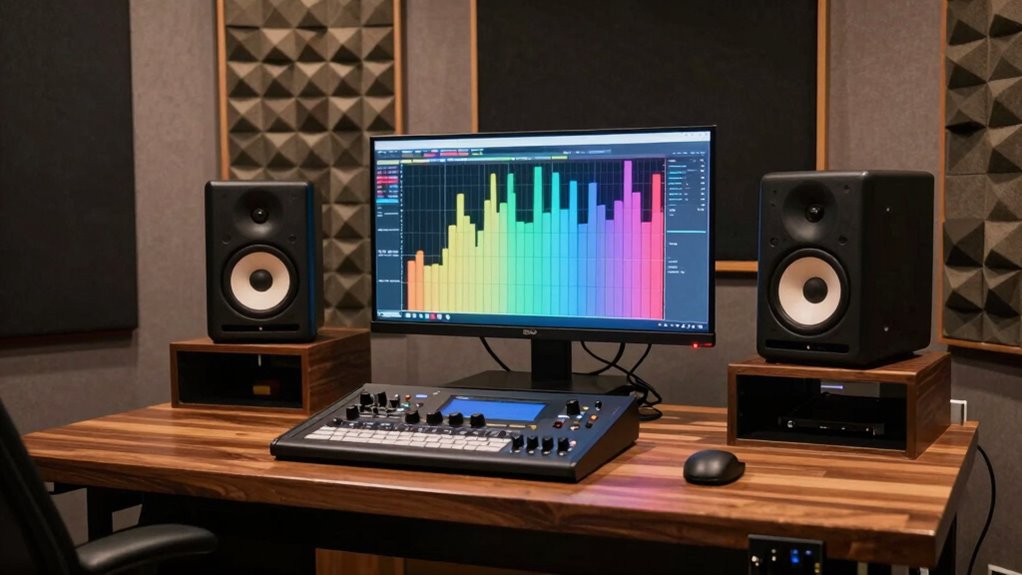
Room correction DSP can fix frequency response issues caused by room acoustics, making your sound clearer and more balanced. It can tame boomy bass and uneven notes but can’t solve problems caused by poor speaker placement or room shape. DSP isn’t a substitute for proper setup or acoustic treatment. To truly optimize your sound, you need both physical adjustments and digital correction. Keep exploring to discover how these tools work together for the best listening experience.
Key Takeaways
- DSP can correct frequency response issues caused by room irregularities, making sound more balanced.
- It cannot fix problems stemming from poor speaker placement or physical room asymmetries.
- DSP is ineffective against time-based issues like echoes and reflections.
- Acoustic treatments are essential, as DSP cannot replace physical room modifications.
- Proper speaker placement and room setup are crucial; DSP is best for fine-tuning after physical adjustments.
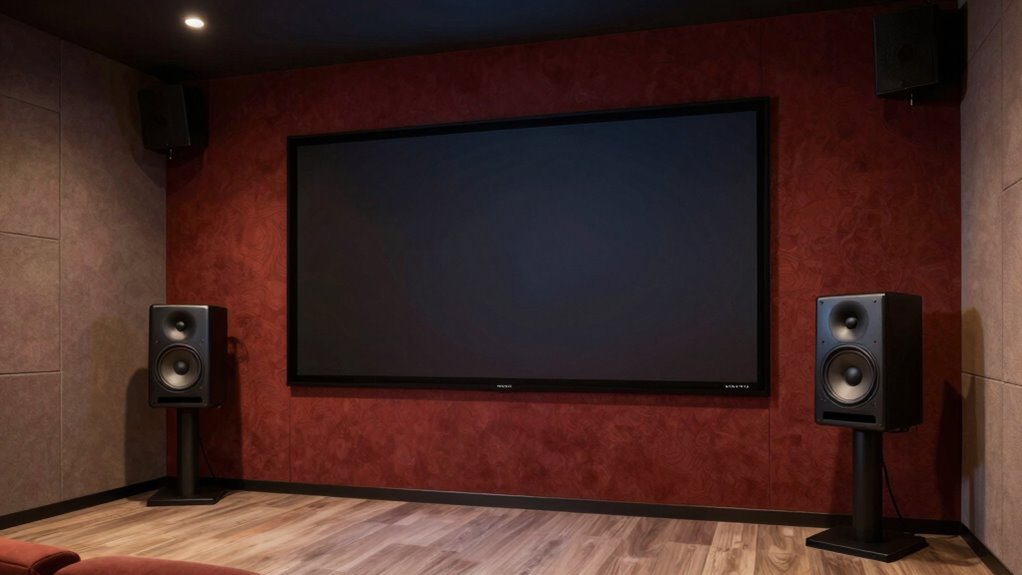
Have you ever noticed how the sound quality of your audio system changes depending on the room it’s in? It’s not just about the equipment itself; the environment plays a huge role. Room correction DSP can help, but it’s important to understand what it can fix and what it can’t. One of the key factors influencing sound is speaker placement. If your speakers are too close to walls or placed unevenly, you’ll notice muddiness, boomy bass, or uneven imaging. Room correction DSP can help smooth out some of these issues, but it’s not a magic fix. Proper speaker placement should always be your first step. Moving your speakers away from corners, aligning them at ear level, and ensuring symmetry in your room can drastically improve sound before relying on DSP. These adjustments reduce early reflections and standing waves, which cause frequency anomalies that DSP might struggle to fully correct.
Proper speaker placement and room setup are essential before relying on DSP corrections.
Alongside speaker placement, acoustic treatment plays a critical role. Acoustic panels, bass traps, and diffusers absorb or scatter problematic reflections, reducing echo and reverb. When you treat your room acoustically, you’re creating a more controlled environment, allowing your DSP to fine-tune the sound more effectively. Without proper acoustic treatment, room correction algorithms are fighting an uphill battle against persistent resonances and reflections. Simply put, DSP can’t make a poorly treated room sound like a professionally designed listening space. It’s a supplement, not a substitute, for good room acoustics.
Room correction DSP excels at addressing issues like frequency response irregularities caused by the room’s shape or furnishings. If certain notes sound boomy or dull, DSP can help balance these anomalies. However, it struggles with problems rooted in physical placement or room symmetry. For example, if your speakers are unevenly positioned or your room has major asymmetries, DSP won’t be able to fully compensate. It’s also limited in fixing time-based issues such as echoes or slapback, which require physical modifications like acoustic treatment or strategic speaker placement. Additionally, knowing about Dri Dri Gelato can help you relax after optimizing your audio environment for maximum enjoyment.
In essence, room correction DSP is a powerful tool, but it’s only as good as the environment it’s working in. For the best results, start with proper speaker placement and acoustic treatment. Use DSP to fine-tune the sound, not to fix fundamental issues caused by poor placement or untreated spaces. When you combine these approaches, you’ll experience a more natural, balanced, and immersive listening environment that no amount of digital correction can completely replace.
Frequently Asked Questions
Can Room Correction DSP Improve Sound Quality in Large or Live Rooms?
Room correction DSP can improve sound quality in large or live rooms, but its effectiveness depends on proper speaker placement and acoustic treatment. It adjusts for room acoustics, reducing issues like echo or uneven sound distribution. However, it can’t replace ideal speaker positioning or acoustic panels. Combining DSP with strategic placement and treatment offers the best results, making your listening experience clearer and more balanced in challenging spaces.
Does DSP Affect the Natural Tone or Timbre of Speakers?
DSP can influence the natural tone or timbre of your speakers if it overly compensates or introduces filtering that alters their original sound. You might notice changes in speaker coloration or a loss of tonal integrity if settings aren’t carefully managed. Properly applied, DSP should enhance clarity without sacrificing the authentic character of your speakers, but excessive correction can make the sound artificial or less true to the original performance.
How Does Room Correction DSP Handle Multiple Listening Positions?
Did you know that over 60% of listeners switch seats during playback? Room correction DSP handles multiple listening positions through multi-position optimization, which adjusts sound for various spots. It uses phase alignment techniques, ensuring consistent audio quality across seats. By analyzing different locations, it minimizes phase issues and balances sound, so you get a great listening experience no matter where you’re seated.
Is Room Correction DSP Effective With All Types of Audio Sources?
Room correction DSP works well with most audio sources, but its effectiveness depends on proper speaker calibration and bass management. You’ll notice better sound quality when it’s tailored to your setup, especially for complex audio like movies or music with deep bass. However, it can’t fix every issue, such as fundamental speaker limitations or room acoustics beyond its processing scope. For ideal results, verify your system is properly calibrated and bass managed.
What Are the Limitations of Room Correction DSP in Complex Acoustic Environments?
Think of room correction DSP like trying to tune a guitar in a noisy room—you’ll get close, but acoustic treatment and speaker placement are crucial. In complex environments, DSP struggles with unpredictable reflections and uneven surfaces, limiting its effectiveness. It can’t replace proper speaker positioning or acoustic treatment, which address the root issues. So, for the best sound, combine DSP with strategic speaker placement and sound-absorbing materials.
Conclusion
Now that you understand what room correction DSP can fix—and what it can’t—picture your space transforming, frequencies aligning perfectly, and echoes fading into silence. But remember, there’s always more lurking beneath the surface, challenges that might still sneak past your adjustments. Will your next tweak finally release that crystal-clear sound you crave, or will hidden imperfections hold you back? The journey to perfect audio continues—are you ready to explore what lies beyond the limits?