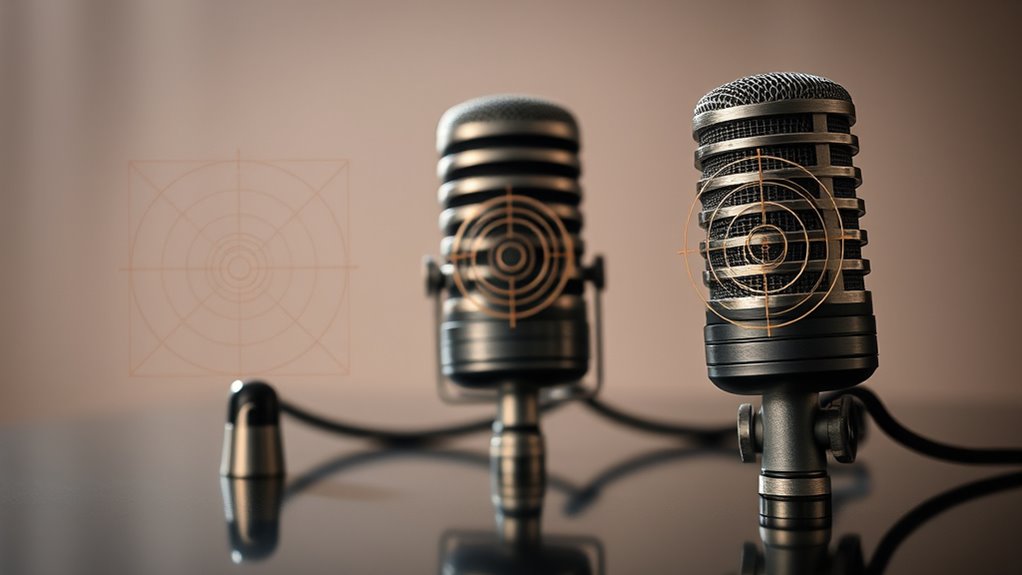

Choosing the right microphone polar pattern and placement is key to capturing clear, focused sound and reducing background noise. For vocals or instruments, a cardioid pattern works well by picking up sound mainly from the front. Omnidirectional mics are better for ambient recordings, while supercardioid and hypercardioid patterns help in noisy environments. Proper placement based on the pattern maximizes clarity and minimizes feedback or bleed. Keep exploring to discover techniques that will enhance your sound quality even further.
Key Takeaways
- Choose appropriate polar patterns (cardioid, omnidirectional, bidirectional) based on recording environment and desired sound focus.
- Position microphones to maximize direct sound pickup and minimize unwanted noise or feedback.
- Use cardioid mics for vocals and instruments to isolate sources, while omnidirectional mics capture ambient room sound.
- In live settings, tighter patterns like supercardioid reduce bleed and help control stage sound.
- Understanding pattern characteristics aids in strategic placement to improve sound clarity and environmental noise rejection.
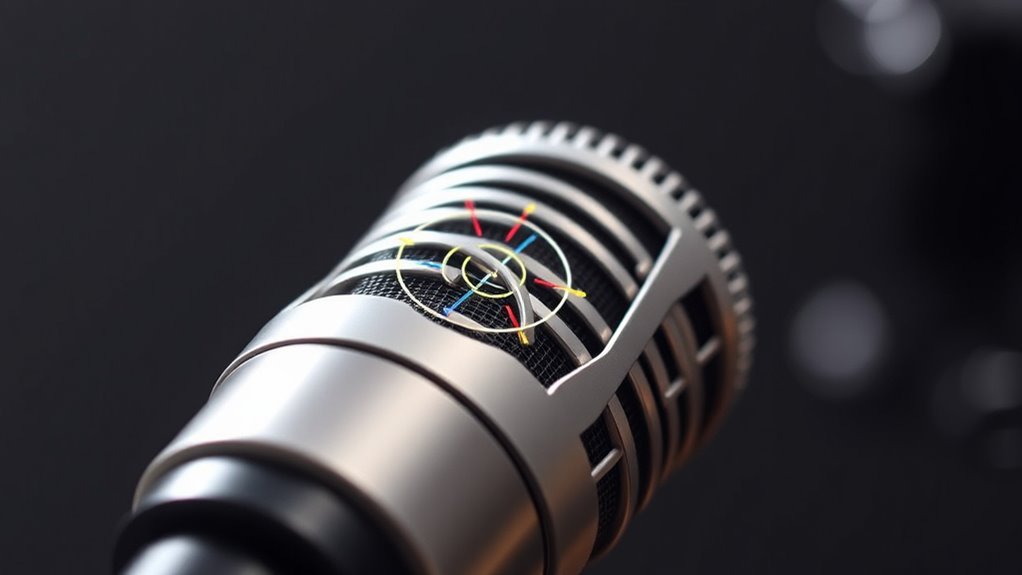
Microphone polar patterns determine how a microphone picks up sound from different directions, and understanding them helps you choose the right microphone for your recording needs. Whether you’re working on music recording or managing live sound reinforcement, knowing the polar pattern can make a significant difference in capturing clear, focused audio. Different patterns serve various purposes, so selecting the right one is essential for achieving the desired sound quality and minimizing unwanted noise.
Understanding microphone polar patterns helps you choose the best mic for clear, focused sound.
For music recording, a cardioid pattern is often preferred because it primarily captures sound from the front while rejecting noise from the sides and rear. This helps you isolate the instrument or vocalist, resulting in a cleaner recording. When recording a solo performance, a cardioid microphone ensures you get detailed sound without picking up too much background noise. On the other hand, if you’re recording a full band or ensemble, you might choose an omnidirectional pattern to capture the ambient sound of the room, providing a more natural and spacious effect. Omnidirectional microphones pick up sound equally from all directions, making them ideal for capturing the overall ambiance in a studio setting.
In live sound reinforcement, the choice of polar pattern becomes even more critical. For instance, cardioid microphones are excellent for stage performances because they focus on the performer while reducing feedback caused by sound from monitors and other stage sources. This pattern helps you control the sound environment, ensuring the audience hears only what you intend. When multiple microphones are used in a live setting, choosing patterns like supercardioid or hypercardioid can help prevent phase issues and reduce bleed between channels, maintaining clarity across the mix. These tighter patterns are especially useful when microphones need to be close to sound sources in noisy environments.
Additionally, bidirectional or figure-eight microphones are useful in specific scenarios, such as recording duets or creating stereo recordings, where capturing two sources equally from opposite sides is desired. In live applications, they are less common but can be used in certain setups for a natural, room-filling sound. Ultimately, understanding the differences between these patterns allows you to strategically position microphones to enhance clarity, reduce feedback, and create a balanced soundscape, whether you’re in the studio or on stage.
A new sentence with noise reduction technology and the rest of the sentence.
Frequently Asked Questions
How Does Room Acoustics Influence Microphone Placement?
Room acoustics greatly influence your microphone placement because reflections and reverberations can distort sound. You should position your mic to avoid capturing excessive room reflections, which can cause muddiness. Using acoustic treatment like foam panels or bass traps helps reduce unwanted echoes. Place the microphone closer to the sound source, and experiment with angles to minimize reflections, ensuring clear, natural recordings that accurately represent the source.
Can Polar Patterns Be Changed After Purchasing a Microphone?
Polar patterns can’t be changed after purchasing a microphone because they’re fixed by the microphone’s design. Interestingly, most microphones offer limited versatility in their polar patterns, which can influence your recording quality. If you’re looking for more polar pattern versatility, consider upgrading to a microphone with switchable patterns, offering more flexibility for different recording scenarios. Microphone upgrades can markedly improve your sound control without the need to alter the original polar pattern.
What Are Common Mistakes When Positioning Microphones?
You often make mistakes with microphone orientation and cable management. Keep the microphone pointed directly at the sound source to guarantee clarity. Avoid placing it too close or too far away, which can cause distortion or weak sound. Also, manage your cables carefully to prevent noise or accidental disconnections. Proper positioning and organized cables help you get the best sound quality, avoiding common pitfalls that compromise your recordings or live performances.
How Do I Choose the Best Polar Pattern for Vocals?
To choose the best polar pattern for vocals, consider your environment and desired vocal clarity. Cardioid patterns work well for focused sound and feedback prevention, making them ideal for live performances. Omnidirectional captures more natural sound but risks feedback, so use it in controlled settings. Figure-eight patterns are great for studio vocals. Select based on your space, balancing vocal clarity and feedback risk for the best sound quality.
What Maintenance Is Required for Microphones Used in Different Polar Patterns?
You should regularly maintain your microphones by cleaning the capsules gently with a soft, dry cloth to prevent dust buildup. Check connections frequently to guarantee they’re secure and free of corrosion. Avoid using harsh chemicals on the capsule and store your microphones in a dry, dust-free environment. Proper maintenance keeps your microphones in excellent condition, regardless of their polar pattern, and helps extend their lifespan and sound quality.
Conclusion
Think of microphone polar patterns as the compass guiding your sound. Just like a sailor trusts their compass to find the right course, choosing the right pattern steers your recordings toward clarity and depth. Your placement is the anchor that grounds your sound, ensuring every note is captured with purpose. Master these elements, and you’ll navigate the seas of audio with confidence, turning every session into a voyage of sonic discovery.