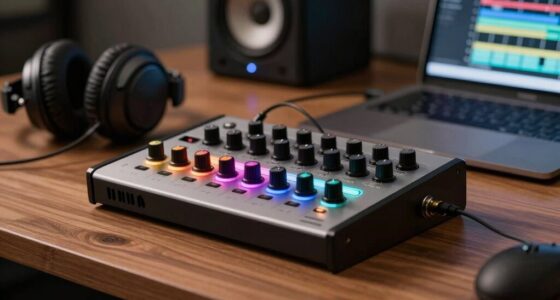
A mic preamp boosts the tiny electrical signals from your microphone to a level that’s usable for recording or mixing. It guarantees your sound remains clear and natural, preserving every detail of your performance. Good preamps reduce noise and interference, delivering cleaner recordings with warmth and character. This step is vital for capturing quality sound, and understanding how preamps work can help you get better results in your recordings—if you continue exploring, you’ll discover why this matters even more.
Key Takeaways
- Amplifies weak microphone signals to usable levels for recording and mixing.
- Ensures sound quality by preserving audio integrity during amplification.
- Uses analog circuitry to provide natural, transparent, and warm sound reproduction.
- Minimizes noise and interference through careful design and component selection.
- Creates a clean, detailed audio signal essential for professional-quality recordings.
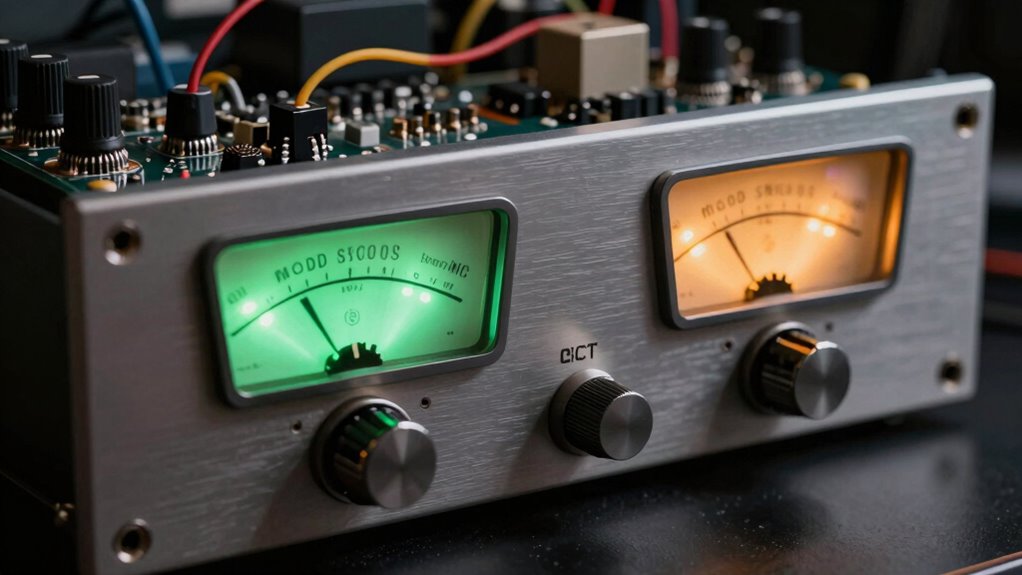
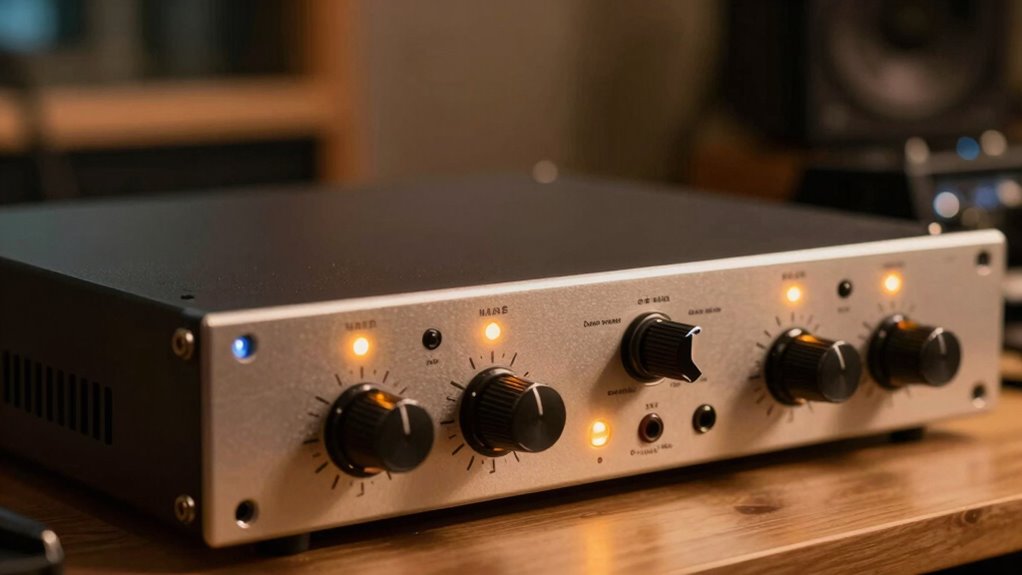
A microphone preamp is crucial for capturing clear, high-quality sound, as it amplifies the weak electrical signals from a microphone to a level suitable for recording or mixing. At its core, the preamp’s primary role is to boost these tiny signals without introducing unwanted noise or distortion. To achieve this, many preamps utilize analog circuitry, which processes the audio signal in its natural, continuous form. Analog circuitry allows for smooth, transparent amplification, preserving the integrity of the original sound. This is especially important when capturing nuanced performances or delicate vocals, where even small distortions can be noticeable.
One of the key challenges in designing a preamp is noise reduction. Because microphone signals are so weak, even minor electromagnetic interference or component imperfections can create hiss, hum, or other noise artifacts. High-quality preamps incorporate advanced noise reduction techniques within their analog circuitry to minimize these issues. This often involves carefully selecting low-noise components, implementing proper grounding and shielding, and designing circuits that reduce electromagnetic interference. The result is a cleaner, clearer audio signal that faithfully reproduces the source without added hiss or hum.
Effective noise reduction in preamps relies on selecting low-noise components and proper grounding techniques.
The importance of noise reduction in a preamp cannot be overstated. When you’re recording vocals, acoustic instruments, or any subtle sound source, even a small amount of noise can be distracting or compromise the overall mix. A well-designed preamp ensures that your recordings remain pristine, allowing the clarity of the performance to shine through. It also means you spend less time editing or trying to remove unwanted noise later, saving you valuable time in the production process.
Furthermore, the use of analog circuitry in preamps offers a natural warmth and character that many digital solutions struggle to replicate. This warmth can add a pleasing coloration to recordings, making them sound more inviting and professional. While digital processing is powerful, many engineers prefer the organic qualities of analog circuitry, especially when combined with effective noise reduction techniques. This blend of technologies results in a preamp that not only amplifies your signals efficiently but also preserves the richness and authenticity of your sound.
In essence, a good mic preamp, built with robust analog circuitry and noise reduction at its core, is essential for capturing high-quality recordings. It ensures your sound is clear, detailed, and free from distracting noise, giving you a strong foundation for any production. When you understand its role in shaping your audio, you appreciate why investing in a quality preamp can make a significant difference in your recordings. Additionally, understanding analog circuitry can help you choose equipment that best suits your sound preferences and recording needs.
Frequently Asked Questions
Can I Use Any Microphone With Any Preamp?
Not all microphones are compatible with every preamp. You need to check the microphone compatibility and preamp specifications to guarantee they work well together. Some microphones, like condenser mics, require phantom power, which not all preamps provide. Also, consider the input impedance and gain range. Matching these specs guarantees your microphone performs at its best, avoiding issues like distortion or noise, and ensuring clear, high-quality sound for your recordings.
How Does a Preamp Affect Sound Quality?
A preamp considerably impacts your sound quality by controlling gain staging and minimizing noise floor. When you turn up the gain, it boosts your microphone signal without adding unwanted noise, ensuring clarity. A quality preamp offers clean, transparent amplification, so your recordings sound professional. Poor preamps can introduce hiss or distortion, degrading your sound. As a result, choosing a good preamp helps preserve your tone and achieve a polished, high-quality result.
What Is the Difference Between a Tube and Solid-State Preamp?
A tube preamp uses vacuum tubes to add warmth and character, giving your sound that rich, tubed warmth. In contrast, a solid-state preamp relies on transistors, delivering clearer, more precise sound with solid-state clarity. If you want a vintage, warm tone, go with a tube preamp. If you prefer a clean, transparent sound, a solid-state preamp is your best choice.
Do I Need a Preamp if I Have a Mixer?
Think of your mixer as a toolbox, but sometimes you need a magnifying glass—that’s where a preamp shines. If your mixer doesn’t provide enough gain or proper impedance matching, a dedicated preamp is essential. It also supplies phantom power for condenser mics. So, if you’re recording professional-quality sound, yes, you’ll need a preamp for clean, powerful audio that a mixer alone might not deliver.
How Do I Choose the Right Preamp for My Setup?
To choose the right preamp, consider impedance matching your microphone and audio interface for ideal signal transfer. Focus on gain staging, ensuring you get enough gain without distortion. Look for a preamp with clean, transparent sound if you want natural audio, or color if you prefer character. Test different models if possible, and match the preamp’s specifications to your setup’s needs to achieve clear, balanced recordings.
Conclusion
Understanding what a mic preamp does isn’t just technical jargon—it’s the secret weapon behind every stunning vocal and instrument recording. When you grasp its importance, you realize it’s the heartbeat of your sound, transforming weak signals into powerful, clear audio. Neglecting this essential gear is like trying to paint a masterpiece with a dull brush. Invest in a quality preamp, and watch your recordings soar to heights you never thought possible—your music deserves nothing less.