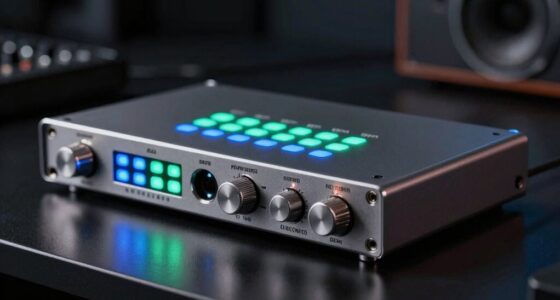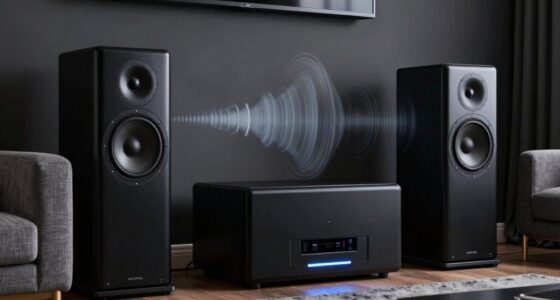

To understand frequency balance in real terms, listen for how different sounds come together naturally in music or speech. Focus on bass, midrange, and treble, noticing if any sound feels too loud or quiet. Your ears and brain work together to shape your perception, so paying attention to how these elements blend helps you recognize when something’s off. Keep exploring, and you’ll discover more ways to fine-tune what you hear for a richer listening experience.

Get audio and creator gear delivered free with Prime
- Fast, free delivery on millions of items
- Prime Video, Amazon Music and more included
- Member-only deals all year
Key Takeaways
- Listen to familiar tracks and focus on whether bass, midrange, and treble sound natural and well-blended.
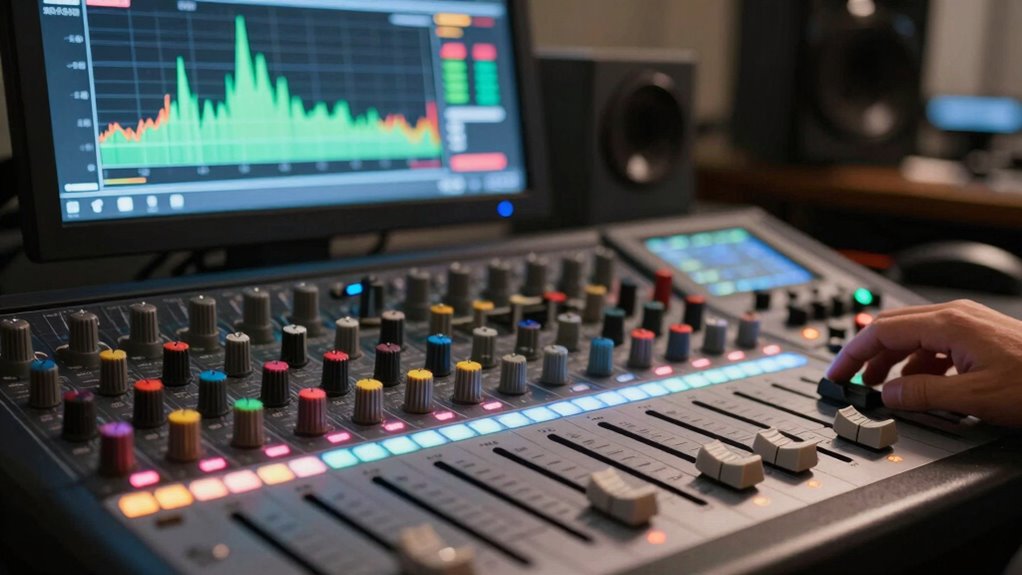
- Use visual tools like spectrum analyzers to see the distribution of frequencies in your audio.
- Adjust equalizers to emphasize or reduce specific frequency ranges and notice how it changes the sound.
- Consider your environment and equipment, as room acoustics and headphones influence perceived frequency balance.
- Develop your listening skills by actively identifying sounds and how different frequencies contribute to overall clarity.
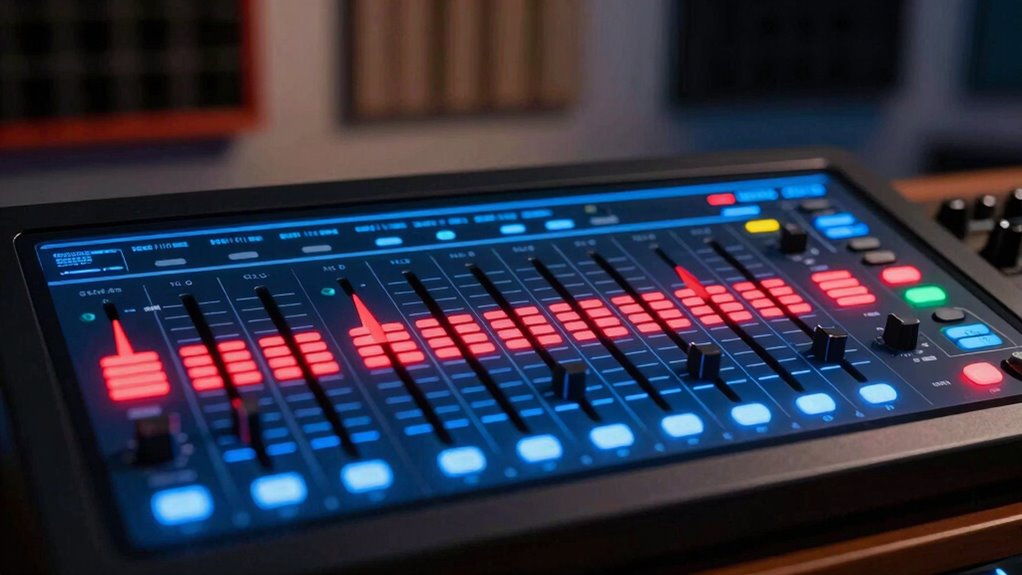
Ever wondered what “frequency balance” really means when it comes to sound? It’s a term that pops up often in audio discussions, but understanding it in real terms can feel elusive. At its core, frequency balance refers to how different sound frequencies are distributed within an audio signal, shaping the overall perception of what you’re hearing. To grasp this, you need to think about auditory perception—the way your brain interprets sounds—and how it processes the sound spectrum, which includes all the audible frequencies. Your ears don’t perceive every sound equally; instead, they’re more sensitive to some frequencies than others. This sensitivity influences how you perceive the balance in music, speech, or any audio content.
Imagine a sound spectrum like a colorful graph where each color represents a different frequency range—bass, midrange, and treble. When a track has good frequency balance, it means those colors blend harmoniously, creating a natural and pleasing listening experience. If the bass dominates, it can drown out the midrange and treble, making music feel muddy or boomy. Conversely, if the treble is too prominent, sounds might seem sharp or sibilant. Achieving proper frequency balance involves adjusting these ranges so they complement each other, allowing every element to shine without overpowering another. It’s about creating a sound profile that resembles real-world hearing, where no part of the sound spectrum is overly exaggerated or muted.
Your perception of balance is also influenced by the acoustics of your environment and your personal auditory sensitivity. For example, in a small room, certain frequencies might echo or be absorbed differently, affecting how you perceive the sound spectrum. If you’re listening through headphones, the way they reproduce different frequencies will impact your auditory perception and, consequently, your sense of balance. To truly understand this, try listening to familiar tracks and notice which parts of the sound spectrum seem enhanced or lacking. Pay attention to how different adjustments in audio equipment or equalizers shift your perception, helping you grasp how frequency balance shapes what you experience. Recognizing the sound spectrum as a fundamental element can significantly improve your ability to evaluate audio quality. Additionally, understanding the auditory perception process can help you develop a more refined ear for balanced sound.
By exploring how different sound elements interact within the spectrum, you can better identify what adjustments are needed to achieve a natural sound. Developing an awareness of how the brain interprets sound can also enhance your listening skills, allowing you to discern subtle differences in audio quality. In essence, understanding frequency balance in real terms means recognizing how the sound spectrum is distributed and how your auditory perception interprets these variations. When all the elements are aligned properly, the sound feels natural, clear, and engaging. When they’re off, the audio can sound distorted or unbalanced. By tuning into your ears and environment, you develop a more intuitive sense of what balanced sound truly means—one that’s rooted in how your brain perceives and processes the complex tapestry of frequencies that make up the sounds around you.
audio spectrum analyzer for music
As an affiliate, we earn on qualifying purchases.
As an affiliate, we earn on qualifying purchases.
Frequently Asked Questions
How Does Room Acoustics Affect Frequency Balance?
Room acoustics impact your frequency balance through phenomena like room modes, which cause certain bass frequencies to amplify or cancel. These effects can make your sound uneven or muddy. Acoustic treatment helps by diffusing or absorbing problematic frequencies, smoothing out the overall sound. By addressing room modes and installing proper acoustic treatment, you guarantee a more accurate, balanced sound profile, making your listening experience clearer and more precise.
Can Frequency Balance Be Adjusted for Different Music Genres?
Yes, you can adjust frequency balance for different music genres by applying genre-specific equalization and musical style adjustments. For example, boost bass frequencies for EDM or hip-hop, while emphasizing midrange clarity for vocals in jazz or folk. These tailored adjustments help optimize your sound, ensuring each genre sounds its best. Experimenting with these settings allows you to customize your listening experience to suit each musical style perfectly.
What Tools Are Best for Measuring Frequency Response?
If you want to impress your friends with your audio nerd skills, start with the best tools for measuring frequency response. Use a calibrated microphone and a reliable audio analyzer to guarantee measurement accuracy. Software like Room EQ Wizard or REW (Room Equalization Wizard) offers precise frequency response readings. These tools help you identify and tweak your sound system, making sure every note hits the right spot—no more guessing games.
How Often Should I Recalibrate My Audio System?
You should recalibrate your audio system whenever you notice a decline in bass clarity or increased harmonic distortion, typically every 6 to 12 months. Regular recalibration guarantees your system maintains ideal frequency balance, preventing issues like muddy sound or harsh tones. Keep an eye on your setup, and if you detect inconsistencies, don’t hesitate to recalibrate to preserve sound quality and clarity.
Does Speaker Placement Impact Perceived Frequency Balance?
Yes, speaker placement considerably impacts perceived frequency balance. If your speakers are oriented incorrectly or placed too far from your listener position, certain frequencies may be exaggerated or muted. For ideal sound, position your speakers so they face your listening area directly, and make sure they’re at ear level. Adjusting your speaker orientation and maintaining an appropriate distance from your listener position helps achieve a balanced frequency response.
Conclusion
Now that you’ve grasped the essence of frequency balance, think of it as tuning a musical instrument—every string must be just right to create harmony. When you understand how different frequencies interact, you’re akin to a maestro, orchestrating a rich, balanced sound. Remember, mastering this skill transforms your soundscape from chaos into melody, much like a poet finding the perfect rhythm. Embrace the journey, and your audio world will sing with clarity and purpose.
Halloween Picks
halloween
As an affiliate, we earn on qualifying purchases.