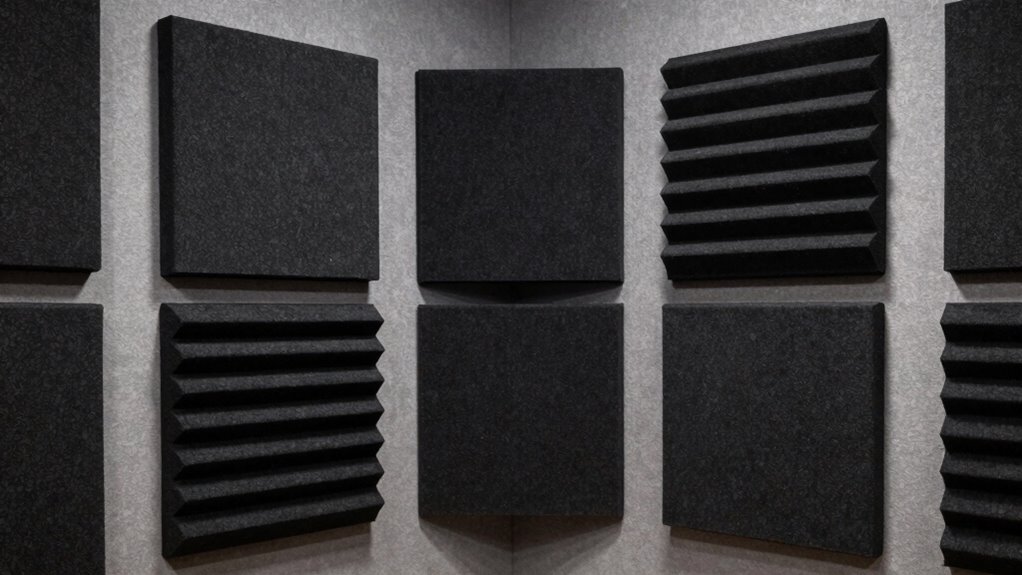

To get effective sound absorption, opt for acoustic panels that are around 2 to 4 inches thick, as this range helps trap low-frequency noises and improves overall sound quality. Choose panels with high density, like mineral wool or dense foam, which resist vibration and boost absorption across mid and high frequencies. Combining thickness and density enhances performance and durability. If you want to learn more about selecting the best panels for your space, keep exploring further.
Key Takeaways
- Optimal acoustic panels typically range from 2 to 4 inches thick for effective sound absorption.
- Higher density materials like mineral wool or dense foam enhance absorption, especially at mid and high frequencies.
- Thicker and denser panels better reduce low-frequency noise by trapping and dissipating sound waves.
- Proper placement at reflection points maximizes panel efficiency regardless of thickness and density.
- Combining adequate thickness with high-density materials ensures long-lasting, effective sound control.
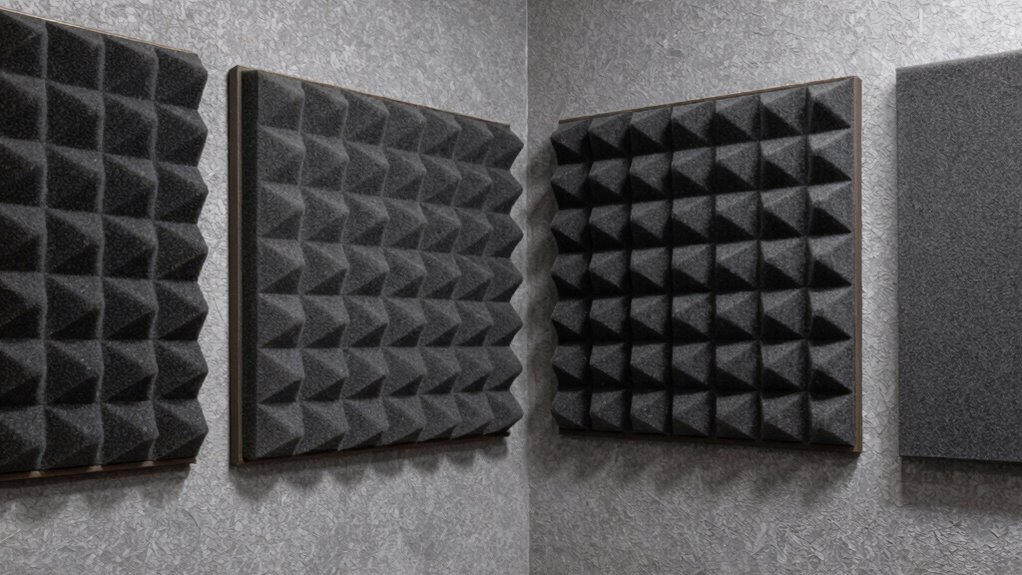
Have you ever wondered how to reduce noise and improve sound quality in a space? If so, understanding the role of acoustic panels is essential. One of the key factors influencing their effectiveness is the thickness and density of the panels. Thicker panels generally offer better sound absorption because they can trap and dissipate more sound waves, especially at lower frequencies. When sound waves hit a panel, the material’s thickness determines how much energy gets absorbed versus reflected back into the room. Denser panels tend to be more effective at absorbing sound because they resist vibration, preventing sound waves from bouncing around. This combination of thickness and density helps create a more controlled acoustic environment, reducing echo and background noise. Additionally, understanding the lifecycle and performance metrics of different materials can guide you in selecting panels that maintain their effectiveness over time. But it’s not just about blocking sound; sound diffusion also plays a crucial role. Acoustic panels with the right thickness and density can be designed to diffuse sound waves evenly throughout the space. Sound diffusion involves scattering sound waves in different directions, preventing them from bouncing straight back or creating dead spots. When you incorporate panels that balance absorption and diffusion, you get a more natural, clear sound quality. This is especially important in spaces like recording studios, conference rooms, or home theaters, where clarity matters. Properly chosen panels minimize harsh echoes and ensure sound spreads evenly, making speech intelligible and music more vibrant.
Choosing the right thickness and density for your acoustic panels depends on your specific needs. Thicker panels, typically around 2 to 4 inches, are ideal for spaces where low-frequency noise is a problem. Higher-density materials, like mineral wool or high-density foam, enhance sound absorption, especially at mid and high frequencies. Combining these materials with thoughtful placement helps maximize their effectiveness. For example, placing thicker, denser panels at primary reflection points on walls can substantially cut down unwanted echoes. Additionally, integrating panels with diffusive surfaces or irregular textures can help scatter sound waves, further improving overall sound quality.
Frequently Asked Questions
How Do Acoustic Panels Affect Room Temperature?
Acoustic panels can slightly influence your room temperature by providing some thermal insulation, especially if they are thick and dense. They help improve soundproofing effectiveness by reducing noise transfer and echo, but they may also trap heat or cold, depending on their material. While they aren’t a primary thermal insulator, their presence can contribute to a more consistent room temperature, making your space more comfortable overall.
Are There Eco-Friendly Acoustic Panel Options Available?
Yes, eco-friendly acoustic panels are available. You can choose options made from recyclable materials or biodegradable options that reduce environmental impact. These panels not only improve sound quality but also align with sustainable practices. Look for products labeled as eco-friendly or made from natural fibers like wool or recycled paper. By selecting these, you support sustainability while enhancing your space’s acoustics, making your environment greener and more responsible.
Can Acoustic Panels Be Painted or Customized?
Yes, you can paint or customize acoustic panels to match your style. Most panels are paintable, allowing you to add your own touch or create unique color options. Just use a suitable, low-VOC paint and apply it carefully to avoid damaging the material. Customization makes it easy to blend panels seamlessly into your space, giving you a personalized look that enhances both aesthetics and soundproofing.
What’s the Best Placement for Optimal Sound Absorption?
You should place acoustic panels at primary reflection points, where sound waves bounce before reaching your ears. Focus on walls opposite speakers or near your listening or working area to maximize sound absorption. Mount panels at ear level and consider covering large, flat surfaces for even sound distribution. Proper panel placement reduces echo and improves clarity, creating a better acoustic environment tailored to your space and needs.
How Do Acoustic Panels Impact Indoor Air Quality?
Acoustic panels can positively impact indoor air quality by promoting proper ventilation effects, especially when made from breathable materials like fabric or foam. These materials allow air to circulate, reducing stale air buildup. However, if panels contain volatile organic compounds (VOCs) or are poorly ventilated, they might release odors or pollutants. Choosing eco-friendly, low-VOC acoustic panel materials guarantees you maintain healthy indoor air quality while enjoying effective sound absorption.
Conclusion
Don’t let confusion hold you back from better soundproofing. Choosing the right acoustic panels isn’t about the thickest or densest options alone—it’s about finding the right balance for your space. Many think they need heavy panels to make a difference, but even thinner ones can work wonders if they have the proper density and placement. So, trust your needs, avoid overspending, and enjoy a quieter, more comfortable environment today.