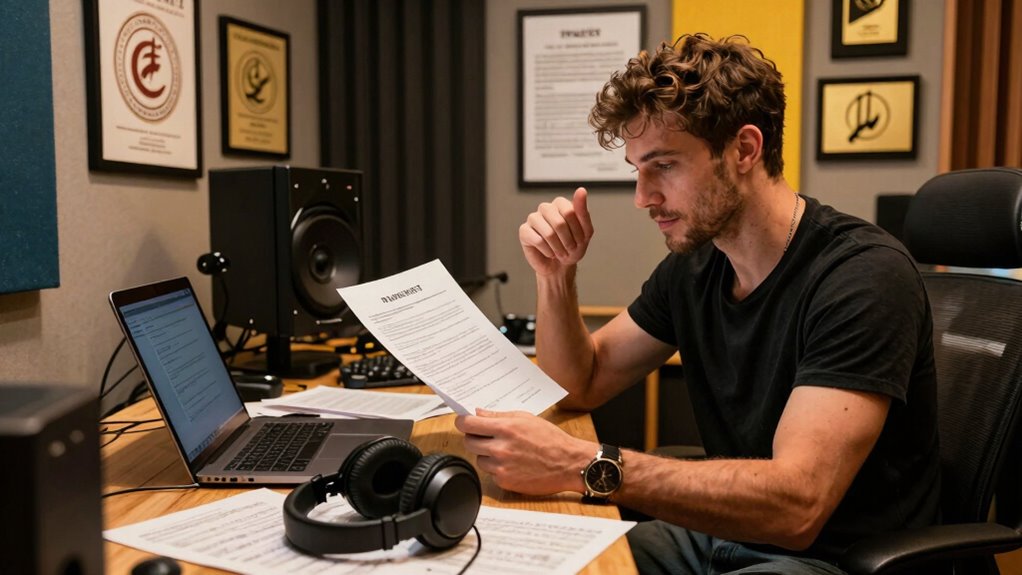

As an independent music creator, understanding your rights is essential to protect your work and earn income. You automatically gain copyright when you create and fix your music in a tangible form, giving you ownership and legal standing. Licensing your music allows others to use it legally, and proper documentation helps support your claims. Registering your copyrights and working with performance rights organizations ensures you collect royalties. To guarantee you’re fully equipped, keep exploring these key rights details.

Get audio and creator gear delivered free with Prime
- Fast, free delivery on millions of items
- Prime Video, Amazon Music and more included
- Member-only deals all year
Key Takeaways
- Copyright registration establishes legal ownership and simplifies enforcement against unauthorized use.
- Proper licensing ensures legal use, monetization, and control over your music by others.
- Maintaining detailed records supports claims of authorship and ownership in disputes.
- Registering with PROs secures performance royalties from public performances of your music.
- Understanding different licensing types (mechanical, sync, derivative) helps protect your rights and income streams.
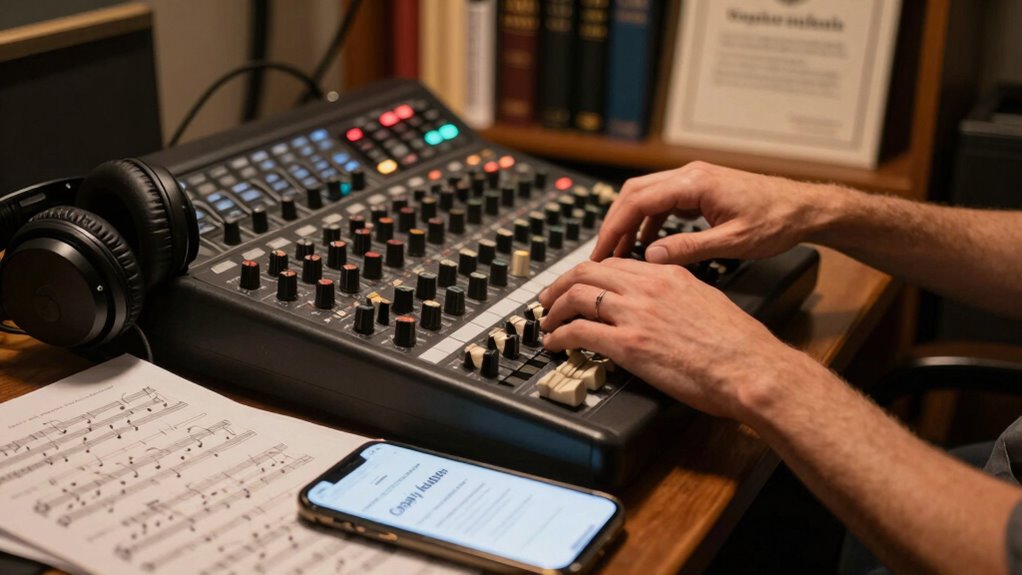
Are you aware of the rights that protect your music creations? As an independent music creator, understanding your rights is essential to safeguarding your work and making sure you benefit financially from your efforts. The foundation of your rights begins with copyright registration, which officially records your ownership of a song or composition. While copyright protection is automatic once you create a work and fix it in a tangible form, registering your work with the appropriate authority reinforces your legal standing. It provides you with a public record of your ownership and is often necessary if you need to pursue legal action against infringers or seek statutory damages and royalties in court. Think of copyright registration as a vital step to guarantee your rights are clear and enforceable.
Beyond registration, music licensing plays a key role in how you control and monetize your creations. Licensing allows others to use your music legally, whether for commercial projects, performances, or broadcasting. When someone wants to include your song in a film, ad, or playlist, they need a license from you or your representative. You, as the creator, have the right to decide how your music is used, and licensing agreements formalize those permissions. It’s important to understand that licensing can be exclusive or non-exclusive, depending on how you want your rights to be shared. By managing licenses carefully, you retain control over your music and can generate income through royalties and licensing fees. Additionally, understanding music rights management can help you maximize your earnings and protect your creative work.
As an independent artist, you must also be aware of the importance of documenting your work. Keep detailed records of your compositions, drafts, and licensing agreements. This documentation supports your claim of authorship and ownership if disputes arise. Proper documentation can be crucial in copyright disputes and verifying your rights. Additionally, consider registering your works with performing rights organizations (PROs) to collect performance royalties whenever your music is played publicly. These organizations track the usage of your songs and ensure you receive fair compensation. Having comprehensive records also helps in establishing ownership rights if challenges to your authorship occur.
Understanding your rights doesn’t end with registration and licensing. You should also familiarize yourself with the concept of derivative works, sync licenses, and mechanical licenses, which govern different types of music usage. Each license has specific rights and restrictions, and knowing the differences helps you make informed decisions about how to distribute and monetize your music.
music copyright registration kit
As an affiliate, we earn on qualifying purchases.
As an affiliate, we earn on qualifying purchases.
Frequently Asked Questions
How Do I Register My Music Rights Officially?
To register your music rights officially, start by submitting your work to a copyright office in your country. This helps you claim music royalties and protects against copyright infringement. You’ll typically need to provide a copy of your music, fill out a registration form, and pay a fee. Registering guarantees you have legal proof of ownership, making it easier to defend your rights and collect royalties if someone uses your music without permission.
What Rights Do I Automatically Hold When I Create Music?
Think of creating music as planting a tree—you automatically own its roots through your creative ownership. When you compose, you hold the rights to your music copyright, giving you control over how your work is used and shared. These rights are yours from the moment you craft your melody or lyrics, ensuring your creative ownership is protected without needing to register immediately. Your music’s foundation is yours from the start.
Can I Share My Rights With Collaborators?
Yes, you can share your rights with collaborators through sharing agreements. These agreements clearly outline each person’s collaborator rights, including rights to royalties, distribution, and ownership. By formalizing this process, you guarantee everyone’s contributions are recognized and protected. It’s essential to discuss and document these rights upfront, establishing a mutual understanding to prevent disputes and ensure smooth collaboration and fair compensation for all involved.
How Do Licensing Agreements Affect My Rights?
Licensing agreements directly impact your rights by defining how others can use your music. They influence royalty negotiations, determining how much you earn when your work is licensed. Be cautious of licensing pitfalls, such as unclear terms or overly broad rights grants, which can limit your control or earnings. Always read agreements carefully and seek clarity to protect your rights, ensuring you retain the benefits and control you deserve.
What Should I Include in a Rights Transfer Contract?
In your rights transfer contract, include clear royalty splits to specify how earnings are divided. Address copyright duration to define how long your rights last and when they revert to you. Also, specify the scope of rights transferred, such as distribution or performance, and include termination clauses. To visualize, think of it as mapping a route—each detail guarantees you control your music’s future and protect your interests.
Conclusion
Understanding your rights as a music creator empowers you to protect your work and build your career. Stay informed, ask questions, and don’t be afraid to seek professional advice when needed. Remember, knowledge is power—”A stitch in time saves nine.” By mastering the basics, you guarantee your creative efforts are respected and rewarded, so you can focus on making the music you love. Keep learning, stay vigilant, and enjoy the journey.
Halloween Picks
halloween
As an affiliate, we earn on qualifying purchases.