

Understanding song form and structure helps you see how artists guide your emotional journey. The verse sets the scene with subtle melodies, while the chorus delivers the main message with catchy, soaring tunes. The bridge offers contrast and emotional depth, often changing melodic and rhythmic patterns. These sections work together to keep your interest and create memorable music. If you keep exploring, you’ll discover even more about how these elements craft powerful songs.
Key Takeaways
- The verse introduces the theme with subtle melodies and lyrics, setting the scene for the song.
- The chorus features a memorable, often more energetic melody that delivers the main message.
- The bridge provides contrast with different melodies and rhythms, adding emotional depth and variety.
- Structure guides listener engagement by creating a narrative flow and emotional progression.
- Variations in melody and rhythm across sections enhance interest and highlight the song’s musical development.
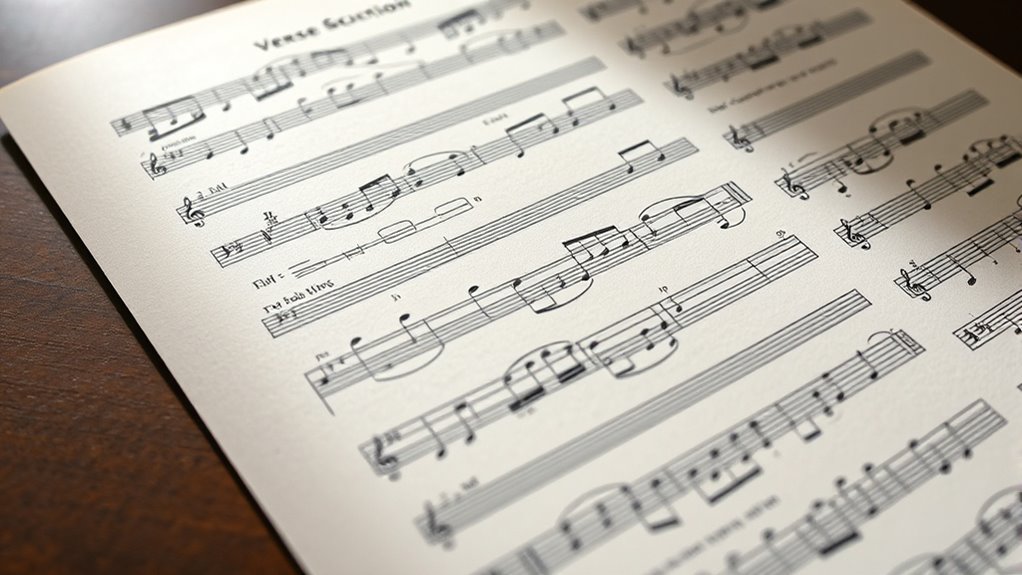
Have you ever noticed how the shape and organization of a piece of art or literature can profoundly affect your experience? When it comes to music, this idea is especially true. The way a song is structured—its form—guides your emotional journey and keeps you engaged. At the heart of this structure are elements like verse, chorus, and bridge, each serving a specific purpose. These sections are not just random parts thrown together; they work together to create a compelling narrative or feeling. One key aspect that makes this work so effectively is melodic variation. This means changing the tune slightly across different sections to keep your ear interested. For example, the melody in the verse might be more subdued or simpler, while the chorus often features a more memorable or soaring melody. These variations make each section distinct yet connected, giving your ear a sense of progression and anticipation.
The structure of music shapes your emotional journey through melodic variation and purposeful sections.
Rhythmic patterns also play a crucial role in shaping how you experience a song. They are the heartbeat of the music, driving the energy and mood forward. When a song shifts from a steady, predictable rhythm in the verse to a more syncopated or dynamic pattern in the chorus, it creates a sense of excitement or release. These rhythmic changes act as cues, signaling shifts and emphasizing emotional moments. Together with melodic variation, rhythmic patterns help define the character of each section. The verse might have a relaxed, conversational feel, while the chorus bursts with energy, making it the emotional high point of the song. Additionally, understanding the purpose of each section enhances your appreciation of the overall song structure and how it influences your emotional response.
Understanding the function of these sections can help you appreciate how they work in concert. The verse sets the scene, introduces the story or theme, often with more subtle melodic and rhythmic elements. The chorus then delivers the main message or hook, typically with a stronger melody and more pronounced rhythmic pattern to grab your attention. The bridge offers a contrasting section—sometimes more experimental or emotional—that provides variety and prevents the song from becoming monotonous. This section often features a different melodic variation and rhythmic approach, giving you a fresh perspective before returning to the familiar chorus.
In essence, the thoughtful use of structure and form, with deliberate melodic variation and rhythmic patterns, shapes your overall experience. It guides your emotional response, maintains your interest, and makes the music memorable. When you recognize these elements, you can listen more attentively and appreciate the artistry behind how a song is crafted. This understanding enhances your enjoyment, revealing the skill and intention behind each section’s design.
Frequently Asked Questions
How Does Form Influence a Listener’s Emotional Response?
Form influences your emotional response by highlighting key moments through lyrical emphasis and melodic repetition. When a chorus repeats, it reinforces the song’s main message, making you feel more connected. Changes in structure, like a bridge, create contrast and build anticipation. This variation keeps you engaged and heightens your emotional experience, as the form guides your journey through the song’s mood and message, making it more memorable and impactful.
What Are Common Variations of Song Structures Across Genres?
You’ll notice that many genres, like pop and rock, often use a standard structure with verses and choruses, but some, like jazz, favor more varied forms. For example, a pop song might include instrumental breaks and lyrical repetition to emphasize a hook, while blues songs often repeat verses to build emotion. These variations shape how you experience the music, making it more memorable and engaging.
How Do Songwriters Decide When to Include a Bridge?
You decide to include a bridge when you want to build musical tension or create narrative progression in your song. It offers a contrasting section that refreshes the listener’s interest, often introducing new melodies or emotions. Use a bridge strategically, typically after a chorus or verse, to deepen the song’s story and keep the audience engaged, making the overall structure more dynamic and compelling.
Can a Song Have Multiple Chorus Sections?
Sure, a song can have multiple chorus sections, though it might seem like overkill—kind of like repeating the same joke too many times. You can use song repetition and chorus variation to keep it fresh, giving each chorus a slight twist. This approach emphasizes key themes while maintaining familiarity, making your song engaging without feeling monotonous. Just remember, the more choruses, the more you risk losing your listener’s interest.
What Role Does Form Play in Songwriting Collaboration?
Form plays a vital role in your songwriting collaboration by providing a clear framework that guides how you develop lyrical complexity and instrumental arrangements. It helps you and your collaborators stay organized, ensuring each section flows seamlessly. By understanding form, you can craft dynamic shifts and contrasts, making your song more engaging. Ultimately, a well-defined structure enables everyone to contribute creatively while maintaining coherence throughout the piece.
Conclusion
Now that you understand the basics of verse, chorus, and bridge, you’re ready to craft songs with a clear backbone. Think of these elements as the ingredients in a recipe—each one plays a crucial role, blending smoothly to create a tasty tune. When you put them together, the song comes alive, just like a well-oiled machine. Keep experimenting, and soon you’ll see your melodies fall into place like a glove.