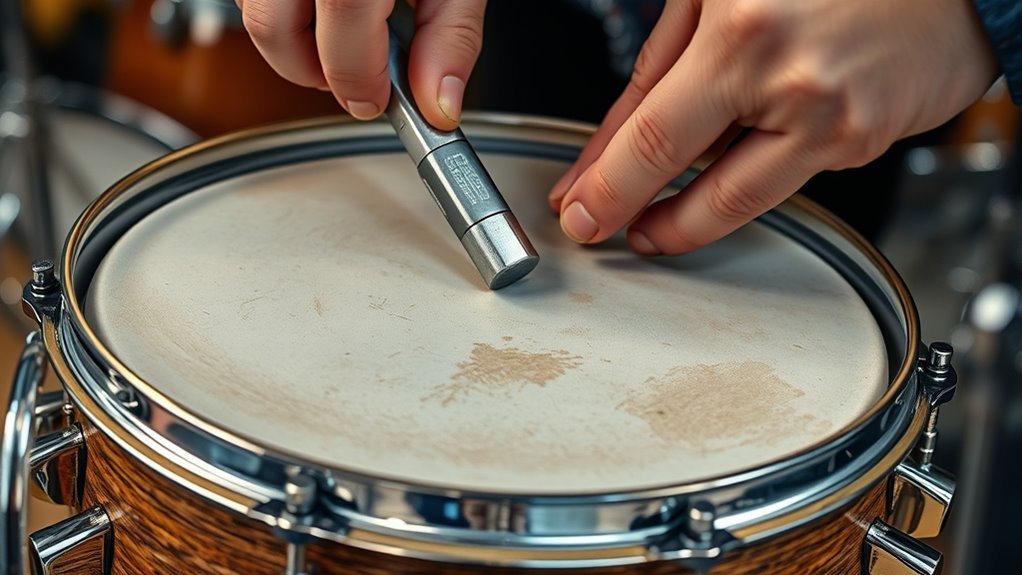

Drum replacement and augmentation let you enhance or completely transform drum tracks to achieve a professional, polished sound. You can swap out weak or imperfect hits with high-quality samples or layer additional sounds for more impact. These techniques help you shape the tone, dynamics, and timing, giving your drums a unique character while maintaining an authentic feel. To explore how these tools can elevate your mixes, keep going for detailed insights and practical tips.
Key Takeaways
- Drum replacement and augmentation enhance mix clarity and punch by replacing or layering original drums with high-quality samples.
- They allow for creative sound shaping through EQ, compression, and effects to fit the desired sonic aesthetic.
- Acoustic blending combines natural recordings with digital samples, maintaining authenticity while improving overall quality.
- These techniques enable experimentation with different textures, rhythmic variations, and sonic identities in production.
- Proper execution ensures the augmented drums complement the original performance, resulting in cohesive, professional-sounding tracks.
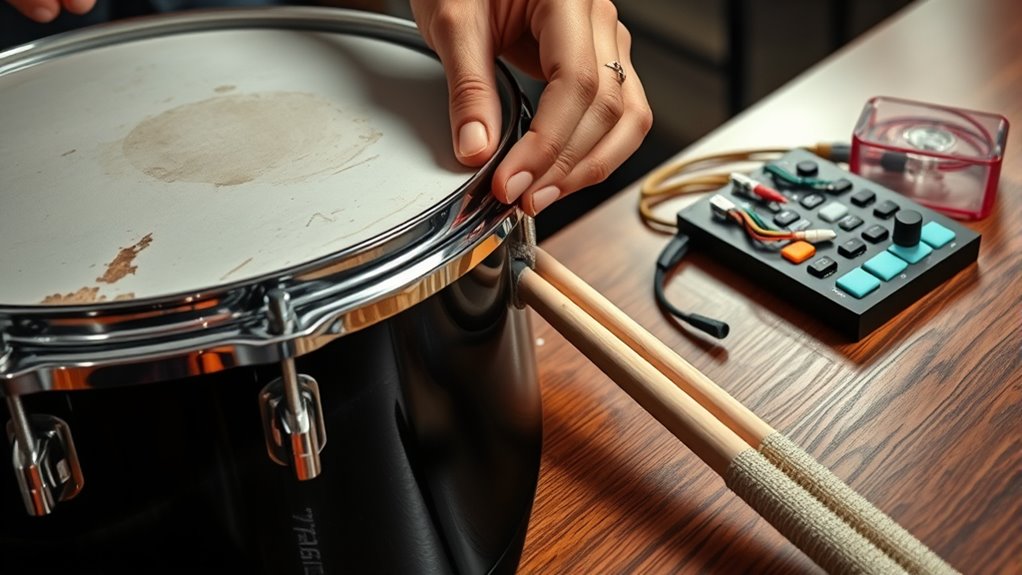
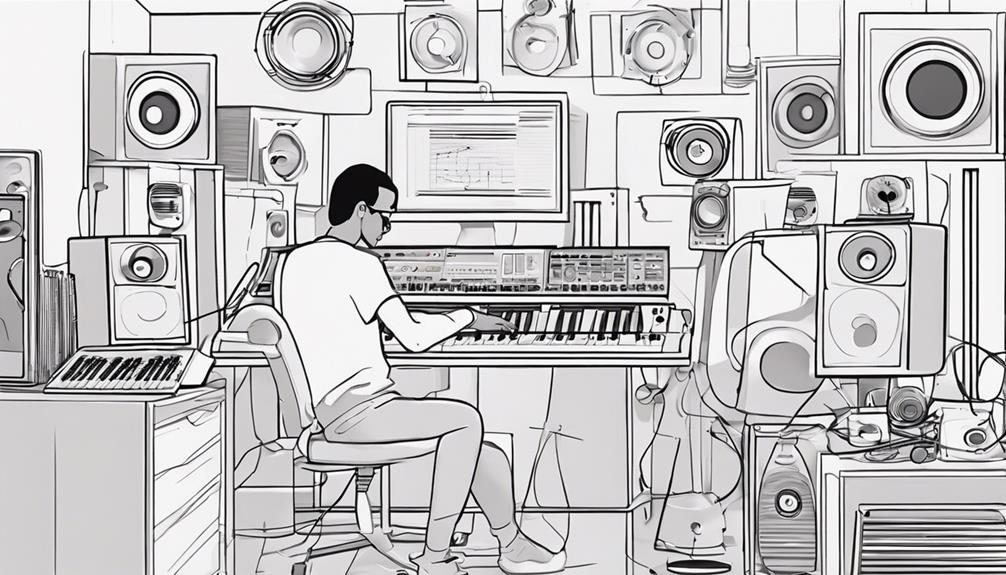
In modern music production, drum replacement and augmentation have become essential tools for achieving a polished, professional sound. These techniques allow you to enhance or completely transform drum tracks, making them fit seamlessly into your mix. One of the key aspects of this process is digital sampling, which enables you to replace or layer existing drum sounds with high-quality samples. Digital sampling gives you access to a vast array of drum sounds, from vintage acoustic kits to modern electronic hits, allowing you to craft a unique sonic identity for your track. By carefully selecting and triggering samples, you can add punch, clarity, or consistency that might be missing from the original recording.
Digital sampling transforms drum tracks with high-quality sounds, enhancing punch, clarity, and consistency for a polished mix.
When you work on drum augmentation, you often blend acoustic and sampled sounds to create a richer, more controlled drum track. Acoustic blending involves combining the natural sound of recorded drums with sampled sounds to retain the organic feel while gaining the benefits of digital precision. This approach is particularly useful when your original recording has imperfections or lacks the impact you desire. For example, you might keep the character of a live snare but layer it with a tight, processed sample to increase its presence and consistency. This blending process requires careful attention to timing, dynamics, and tone to ensure the different elements sit well together.
Using digital sampling for acoustic blending also allows you to shape the sound further with EQ, compression, and effects, giving you more control over the final result. You can emphasize certain frequencies or add subtle reverb to make the samples sit naturally within the mix. Additionally, understanding audio processing techniques can help you fine-tune your drum augmentation for a more seamless integration. The goal is to enhance the natural qualities of the original drums without making the augmentation obvious. By doing so, you maintain the authenticity of the performance while elevating the overall quality. This technique is especially valuable in genres where punch and clarity are critical, like rock, pop, and electronic music.
Furthermore, drum replacement and augmentation aren’t just about fixing problems; they’re creative tools that open new sonic possibilities. You can experiment with different sample layers, manipulate attack and decay, or even create entirely new rhythmic textures. The key is to use digital sampling and acoustic blending intentionally, ensuring the added sounds complement the original performance rather than overpower it. When done skillfully, these methods enable you to craft drums that are both dynamic and cohesive, giving your tracks a professional edge and making your mixes stand out.
Frequently Asked Questions
What Are the Best Software Tools for Drum Replacement?
You should check out software like Steven Slate Trigger, Slate’s Virtual Drum, and Toontrack’s Superior Drummer for drum sample selection and editing techniques. These tools let you easily replace or augment drums with high-quality samples, giving you precise control over timing, pitch, and dynamics. They’re user-friendly and integrate smoothly into your workflow, making it simple to achieve professional-sounding results without much hassle.
How Do I Choose Between Replacement and Augmentation?
You should choose between replacement and augmentation based on your need for drum tone consistency and your mixing workflow. If your drum recordings lack punch or clarity, replacement can give you a pristine sound. However, if you want to preserve the natural feel while improving certain hits, augmentation is better. Consider how each method integrates into your workflow, ensuring you maintain a balanced, cohesive mix without sacrificing authenticity or efficiency.
Can Drum Replacement Improve Live Recordings?
Replacing drums can improve live recordings like polishing a gem, making the sound clearer and more consistent. It helps maintain drum tone consistency amidst live performance dynamics, ensuring that the bass drum and snare hit with steady power. If your drums sound uneven or lose impact during shows, replacement can add punch and clarity, giving your live recordings a professional feel, even when the live environment challenges your sound quality.
What Are Common Challenges in Drum Augmentation?
You often face challenges like ensuring phase alignment so your augmented drums sound natural and cohesive with the original recording. Noise reduction is also essential, as unwanted artifacts can become distracting. You need to carefully match the tone and dynamics to avoid overprocessing. By paying attention to these issues, you can achieve a seamless blend, making your drum augmentation sound professional and polished without sounding artificial or disconnected.
How Does Drum Replacement Affect Overall Mix Quality?
When you replace drums, you might notice a striking shift in overall mix quality—sometimes for the better, sometimes not. It can influence drum tone consistency and challenge your mixing workflow, making the track feel less natural or more polished than before. Carefully blending the replaced drums ensures your mix remains cohesive, preserving the energy while achieving the desired clarity. But beware—overdoing it could unravel the original vibe entirely.
Conclusion
You might think drum replacement sounds overdone or unnatural, but when done skillfully, it enhances your mix without sacrificing authenticity. Instead of fearing loss of original feel, see it as a tool to elevate your sound and correct imperfections. Embrace drum augmentation to bring new energy and clarity to your tracks. With subtle tweaks, you’ll find it’s a creative way to make your drums hit harder and feel more polished—without sacrificing true vibe.