
To make your drum programming feel truly human, focus on adding subtle timing and velocity variations to mimic live performances. Avoid over-quantizing and introduce slight groove shifts or swing to create natural swing. Incorporate dynamic accents, ghost notes, and small imperfections that imitate real drummers’ nuances. By experimenting with these techniques, you’ll guarantee your beats sound organic and lively. Keep exploring these ideas, and you’ll discover even more ways to craft realistic, expressive drum patterns.
Key Takeaways
- Incorporate subtle timing variations and slight timing deviations to mimic human rhythmic imperfections.
- Use velocity dynamics and accenting to add natural variation and expressiveness.
- Apply groove templates, swing, or shuffle settings to introduce rhythmic looseness.
- Study live recordings to understand real drummer nuances and replicate their nuances.
- Avoid over-quantization; instead, manually adjust hits for a more organic, human feel.
Have you ever wondered how producers craft the perfect drum patterns in their tracks? It’s not just about programming beats that sound tight or precise; it’s about giving them a human feel. When drums hit with a natural vibe, they resonate more deeply with listeners. One of the key elements in achieving this is understanding groove variation. Instead of sticking to a rigid grid, you want your drum patterns to breathe and fluctuate, mimicking the subtle imperfections and dynamics of a live drummer. This variation keeps the rhythm interesting and ensures your track doesn’t sound mechanical or sterile.
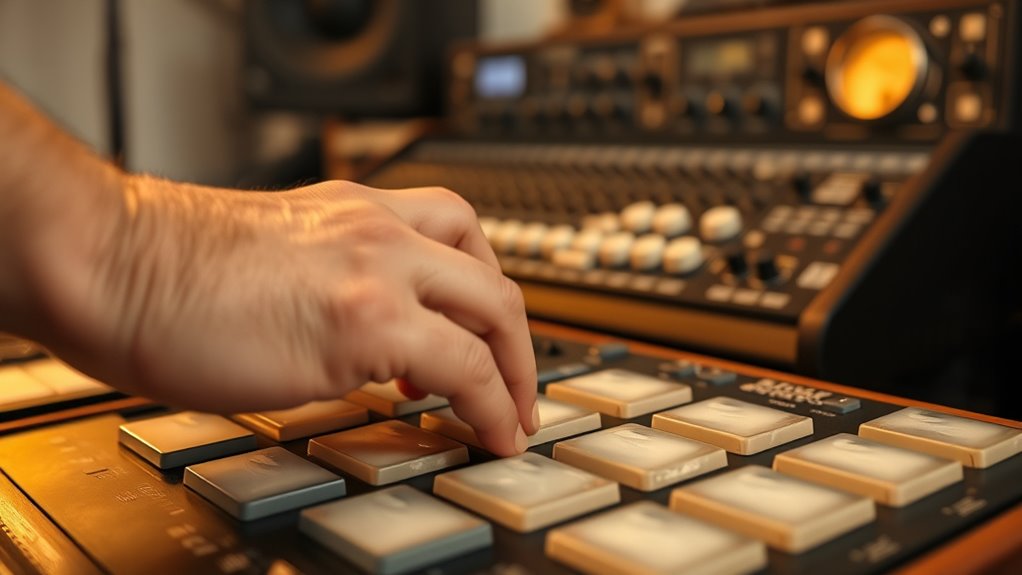
To create a human feel, you should start by avoiding perfect timing. Quantizing can make drums sound perfectly in sync, but it also strips away the natural swing and groove. Instead, try nudging some hits slightly off the grid or adjusting velocities so that certain notes hit softer or harder. This mimics how a real drummer might play, adding subtle nuances that make your pattern feel lively. Incorporate groove templates or swing settings available in your DAW; these tools are designed to introduce natural timing deviations and rhythmic looseness. Experiment with different groove variations to find what best captures the vibe you’re after. Sometimes, a slight shuffle or swing can transform a stiff pattern into something more organic.
Another way to bring a human feel into your drum programming is by varying the dynamics and accents throughout the pattern. Don’t make every kick or snare hit uniform; instead, give some hits more weight and others less. This variation creates a sense of human spontaneity, as if a drummer is improvising slightly with each beat. You can also introduce subtle ghost notes or background percussion that aren’t perfectly aligned, adding layers of complexity and realism. These small imperfections make a significant difference, as they mimic real-world drumming, where no two hits are exactly the same. Additionally, studying drum recordings can provide valuable insight into how professional drummers add feel and emotion to their playing.
Finally, listen to how drums are played in live recordings, paying close attention to the rhythmic feel and how certain hits are slightly delayed or rushed. Emulate that in your programming. By consciously implementing groove variation and avoiding overly rigid timing, you’ll craft drum patterns that breathe and move naturally, giving your tracks a more authentic, human vibe. Remember, the goal isn’t perfection but authenticity—small imperfections and variations are what make a drum pattern truly feel alive.
Frequently Asked Questions
How Can I Make Programmed Drums Sound More Emotional?
To make programmed drums feel more emotional, focus on microtiming nuances and dynamic expression. Slightly shift the timing of individual hits to mimic human imperfections, adding subtle groove. Use velocity variations to convey dynamics, making each hit feel alive. Incorporate pauses or accents where needed, emphasizing emotional peaks. These techniques help your programmed drums resonate more naturally, creating a more expressive and heartfelt rhythm that connects with listeners.
What Are Some Common Mistakes When Programming Human-Like Drums?
You might overlook subtle details, but common mistakes include relying too heavily on strict quantization, which kills natural swing timing. Avoid ignoring slight timing variations, as they add life. Over-quantizing can lead to mechanical drums, losing human feel. Instead, incorporate intentional swing and accept minor timing inconsistencies. This balance creates more realistic, emotionally engaging drums, making your programming feel less robotic and more like a genuine performance.
How Does Velocity Variation Affect Drum Realism?
Velocity variation plays a vital role in drum realism by introducing velocity dynamics, making each hit feel natural and expressive. When you vary the velocity, it prevents your drums from sounding robotic, adding subtle nuances. However, if you neglect this or create timing inconsistency, your drums can lose their human feel. So, focus on realistic velocity variation and keep your timing tight to achieve a more authentic, lively drum performance.
Can AI Assist in Creating More Human Drum Patterns?
Sure, AI improvisation can help you craft more human drum patterns, turning your rigid beats into lively drum groove masterpieces. It’s like having a robotic jazz band that never misses a beat, adding subtle imperfections and dynamic variations. With AI, you can easily experiment, refine, and humanize your drum tracks, making every hit feel more authentic. So, let AI do the heavy lifting and bring your drum programming to life!
What Genres Benefit Most From Humanized Drum Programming?
You’ll find jazz improvisation and rock dynamics benefit most from humanized drum programming. In jazz, subtle timing variations and nuanced accents mimic live performances, adding authenticity. For rock, dynamic shifts and expressive hits create a more energetic, engaging feel. By humanizing your patterns, you capture the spontaneity and emotion essential to these genres, making your drum tracks feel more natural and compelling, even when created with software or AI assistance.
Conclusion
So, there you have it—mastering drum programming that feels human is truly an art form, or perhaps a secret society’s initiation. With a sprinkle of randomness and a dash of imperfection, your beats will dance with life instead of just ticking away. Who knew that injecting a bit of chaos could elevate your music from robotic to relatable? Now go forth, defy perfection, and prove that even programmed drums can have a soul—if you’re clever enough.