
Motorized faders save you time when automating repeated volume adjustments or handling complex mixes, allowing precise control without constant manual riding. They speed up workflow and reduce fatigue during long sessions. However, if you need quick, spontaneous tweaks or rely on manual control, they can slow you down due to lag or limited responsiveness. Knowing when to optimize their use can help you improve your mixing efficiency—more tips await if you continue further.

Get audio and creator gear delivered free — and shop member deals
- Fast, free delivery on millions of items
- Access to Prime Big Deal Days deals on October 6–7
- Prime Video, Amazon Music and more included
Key Takeaways
- Motorized faders save time during automation-heavy projects by quickly executing precise volume changes.
- They may slow workflow when spontaneous manual adjustments are frequent, due to lag or system delays.
- Proper calibration ensures accurate automation, preventing delays and mismatched movements that can waste time.
- They are most effective in reducing physical strain and manual riding during long or complex mixing sessions.
- Overreliance on automation can hinder spontaneous creative tweaks, diminishing their time-saving benefits.
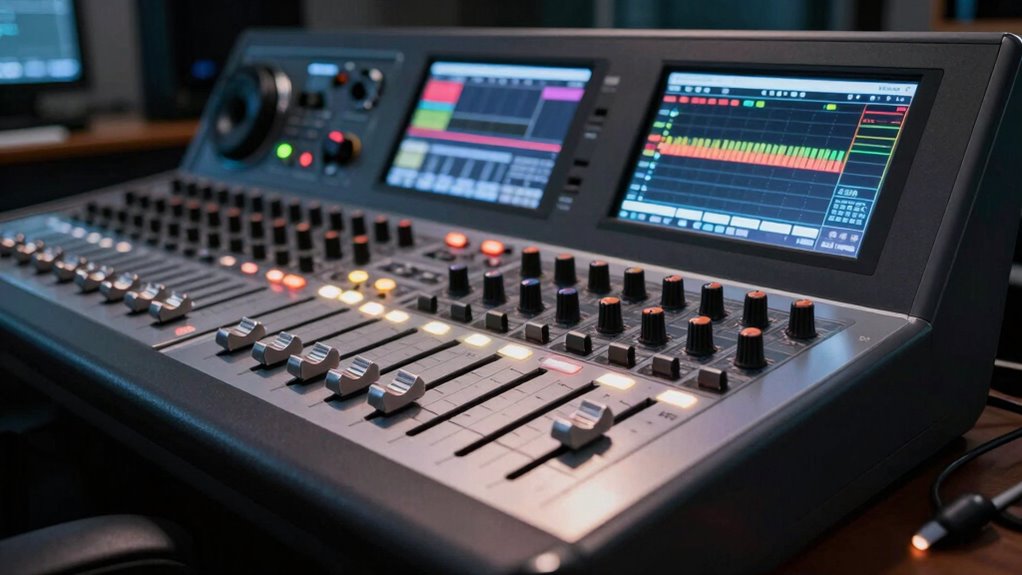
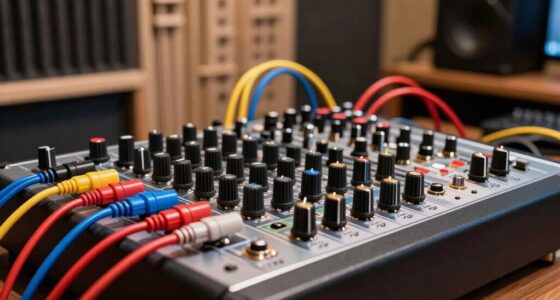
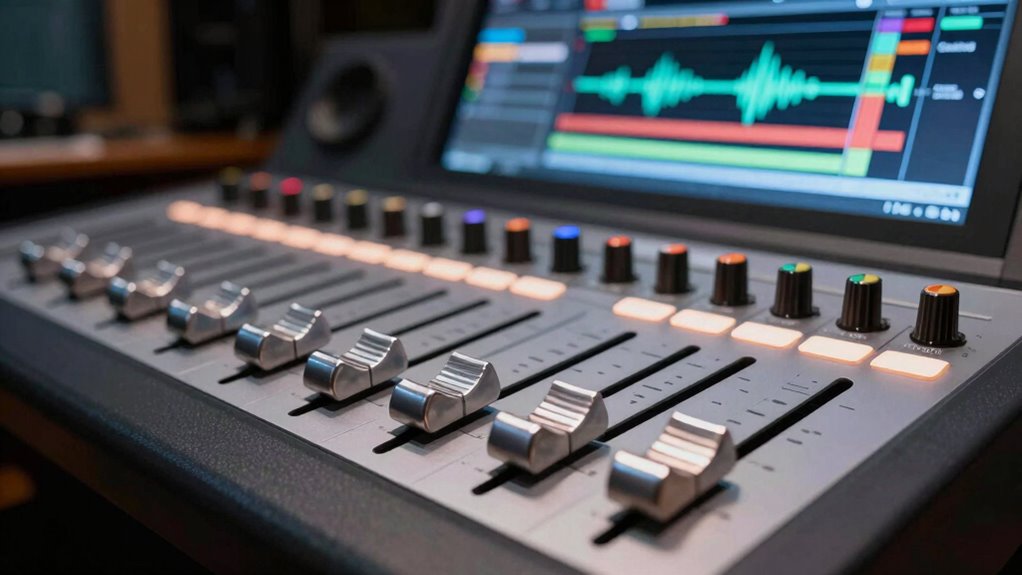
Have you ever wondered how audio engineers achieve seamless control over volume levels during mixing? One key tool they rely on is motorized faders. These faders automatically move in response to automation commands, allowing precise adjustments without manual intervention. This feature offers notable automation advantages, especially when working on complex projects with numerous tracks. Instead of manually riding each fader throughout a session, you can program volume changes that the system executes flawlessly. This not only saves time but also enhances accuracy, ensuring your mix stays true to your artistic vision. When you set up your automation, the motorized faders follow your directives precisely, giving you a visual cue that your automation is in action. This synchronization helps you make quick decisions, refine levels, and experiment with different dynamics without repeatedly touching the hardware. Additionally, connected equipment can further optimize your workflow by integrating motorized faders with other digital tools.
Motorized faders automate volume adjustments, enhancing accuracy and workflow efficiency during mixing.
Another benefit of motorized faders is their ergonomic design. They’re built to make your workflow smoother and more intuitive. With motorized controls, you don’t have to reach across your console or adjust multiple knobs manually; instead, you simply set your automation, and the faders do the work. This reduces physical strain, especially during long mixing sessions, and allows you to focus more on sound quality rather than hardware adjustments. The tactile feedback from motorized faders feels natural, mimicking traditional analog mixing, but with the added convenience of automation. Their design often includes smooth travel, sturdy construction, and a layout that’s easy to navigate, all contributing to a more ergonomic experience.
However, motorized faders aren’t always the perfect solution. They can sometimes introduce delays or inaccuracies if the system isn’t properly calibrated or if there’s a lag in communication between the control surface and the DAW. During critical mixing moments, this can be frustrating, especially if the fader movement doesn’t match your intended automation curve precisely. Additionally, in scenarios where quick manual adjustments are needed, relying on motorized faders might slow you down rather than speed things up. They excel in situations where automation is heavily used, but they can be less effective if your workflow involves frequent, spontaneous tweaks.
In essence, motorized faders are powerful tools that can considerably streamline your mixing process when used correctly. Their automation advantages and ergonomic design make them indispensable in many professional settings, saving you time and reducing fatigue. Still, it’s important to recognize their limitations and decide when manual control might serve you better. When you understand both their strengths and weaknesses, you can integrate motorized faders into your workflow to maximize efficiency and maintain creative control.
motorized fader for audio mixing
As an affiliate, we earn on qualifying purchases.
As an affiliate, we earn on qualifying purchases.
Frequently Asked Questions
Do Motorized Faders Require Special Software to Operate?
Motorized faders usually need special software integration to function properly, but it depends on your setup. You should check hardware compatibility with your digital audio workstation or mixing console. Some models come with their own control software, making setup straightforward. If not, you’ll need compatible software that supports motorized faders. Always verify that your hardware and software work seamlessly together to avoid any compatibility issues.
How Do Motorized Faders Affect Manual Mixing Precision?
Motorized faders can improve manual mixing precision by allowing you to make subtle, exact adjustments easily. They respond smoothly to your commands, giving you precise control over levels without the need for constant physical effort. However, if the faders are slow or unresponsive, your manual adjustments might become less accurate, potentially hindering your ability to achieve the desired sound. Overall, they help enhance precision control when functioning properly.
Are Motorized Faders Compatible With All Audio Interfaces?
You might think all audio interfaces support motorized fader integration, but that’s not true. Compatibility depends on the interface’s design and software support. Many professional audio interfaces are built for motorized faders, but some consumer models lack this feature. Always check the manufacturer’s specifications for audio interface compatibility before investing. Ensuring your gear supports motorized fader integration guarantees smooth operation and precise control in your mixing workflow.
What Is the Typical Lifespan of a Motorized Fader?
You can expect a typical motorized fader to last around 5 to 10 years with proper care. Regular calibration helps maintain smooth operation, but wear and tear from frequent use can affect longevity. If you notice calibration issues or inconsistent movement, it’s time to replace or service the fader. Proper handling and avoiding excessive force can extend its lifespan, ensuring reliable performance over time.
Can Motorized Faders Be Integrated Into Existing Analog Consoles?
Sure, you can retrofit motorized faders into your existing analog console, but brace yourself for the glamorous world of analog integration and retrofit challenges. You’ll need to wrestle with compatibility issues, power supplies, and possibly custom wiring. It’s like fitting a spaceship engine into a vintage bicycle—technically possible, but not exactly smooth sailing. Prepare for some patience, ingenuity, and perhaps a few surprised sighs along the way.
Conclusion
Just like a skilled conductor guides an orchestra with a gentle wave, motorized faders can effortlessly shape your soundscape, saving you time and effort. But remember, sometimes the true magic lies in your hands, not the machine’s. When used wisely, they’re your silent allies in the studio, helping you craft harmony and nuance. Yet, don’t forget, even the most advanced tools can’t replace your creative touch—trust your instincts as much as your gear.
Halloween Picks
halloween
As an affiliate, we earn on qualifying purchases.