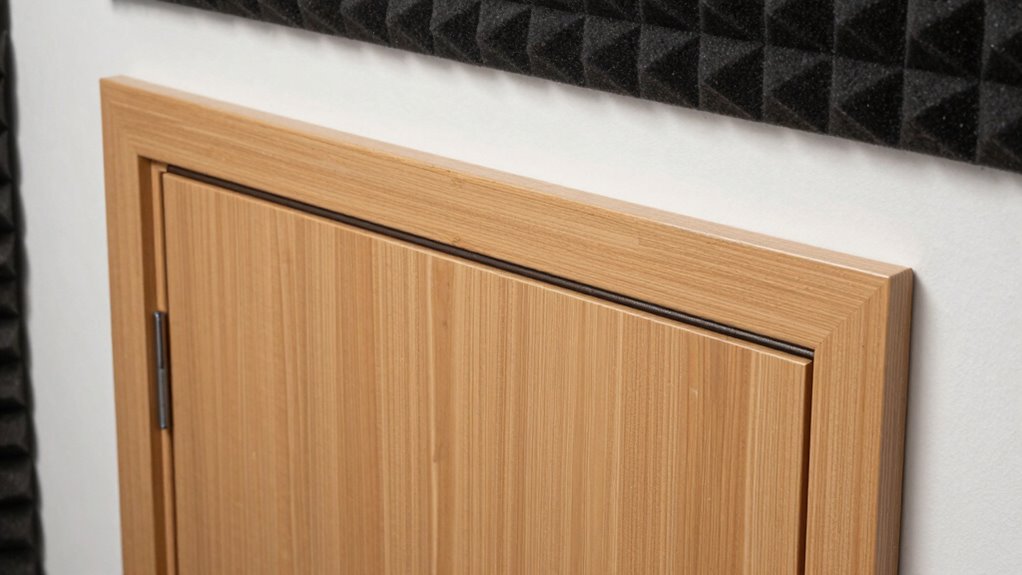

To block sound leaks and improve your studio’s acoustics, thoroughly inspect your door for gaps around the frame, hinges, and floor. Use quality weatherstripping, door sweeps, and acoustic seals to create an airtight barrier that keeps sound in or out. Proper measurement and careful installation guarantee the seals work effectively. Tackling these leaks is simple but powerful. Keep going, and you’ll discover even more tips to perfect your studio’s soundproofing.
Key Takeaways
- Conduct thorough inspections to locate all gaps around the door frame, hinges, and threshold.
- Use appropriate seal materials like weatherstripping, door sweeps, and acoustic seals for effective coverage.
- Measure door edges carefully to ensure precise fitting of sealing materials, avoiding gaps or overlaps.
- Install door sweeps tightly along the bottom and attach weatherstripping firmly along sides and top.
- Reinforce doors with additional soundproofing, such as mass loaded vinyl or solid-core upgrades, for enhanced isolation.
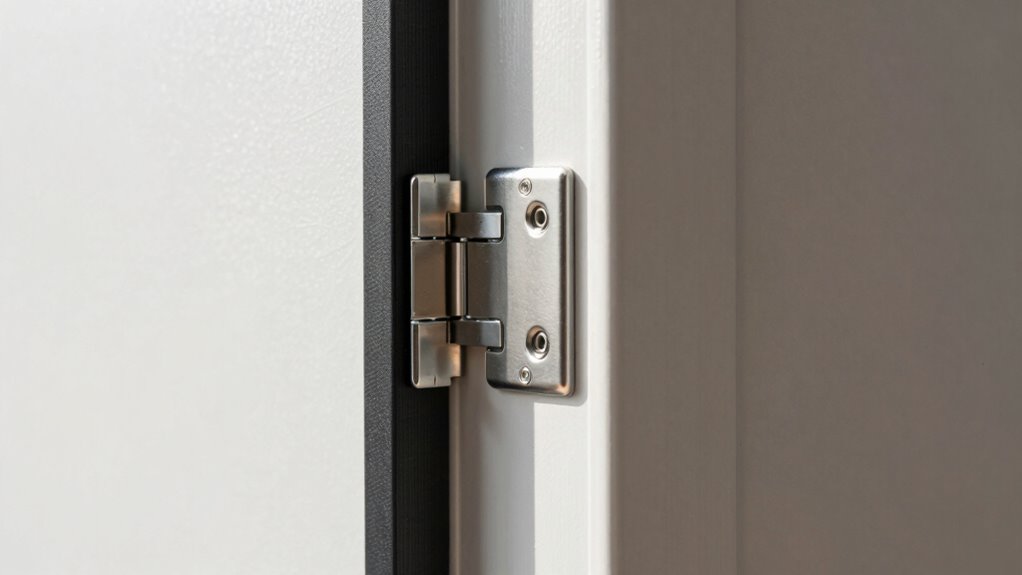
If you want your recording studio to sound professional and block out unwanted noise, sealing door leaks is essential. Small gaps around your studio door can let in a surprising amount of sound, undermining the quality of your recordings and disrupting your workflow. To achieve ideal soundproofing, you need to focus on effective soundproofing techniques and the right door seal materials. These methods are straightforward but require attention to detail to be truly effective.
Start by inspecting your door thoroughly. Identify all the potential leaks—these are often found at the edges, hinges, or where the door frame meets the wall. Once you’ve pinpointed the gaps, you can choose from a variety of door seal materials designed specifically for soundproofing. Weatherstripping, door sweeps, and acoustic seals are common options. Weatherstripping, typically made from foam, rubber, or vinyl, can be applied around the door frame to create an airtight seal. A door sweep, attached to the bottom of the door, prevents sound from leaking underneath. Acoustic seals are more specialized and often made from dense, sound-absorbing materials that help block out noise more effectively.
Applying these materials is straightforward but must be done carefully. For weatherstripping, measure the length of each side of the door frame and cut the strips accordingly. Stick them firmly in place, ensuring there are no gaps or overlaps. For door sweeps, attach the seal securely along the bottom edge of the door, making sure it makes contact with the floor when closed. When choosing door seal materials, consider their durability and effectiveness in blocking sound, as well as how well they fit your specific door type.
In addition to sealing the gaps, consider reinforcing the door itself with soundproofing techniques, such as adding mass loaded vinyl or installing a solid-core door if your current door is hollow. These upgrades, combined with proper door seal materials, dramatically improve your studio’s sound isolation. Remember, the key is to create a continuous barrier that prevents sound from escaping or entering through any opening. Take your time during installation, ensuring every gap is sealed tightly. The effort you put into sealing door leaks now will pay off with cleaner recordings, fewer distractions, and a more professional sound environment. Proper sealing techniques and understanding of soundproofing materials are essential for effective soundproofing to ensure your studio remains quiet and distraction-free.
Frequently Asked Questions
Can Door Leaks Affect Acoustic Quality in My Studio?
Yes, door leaks can definitely affect your studio’s acoustic quality. They disrupt air circulation and weaken soundproof barriers, allowing unwanted noise to seep in or escape. This compromises your sound isolation, making recordings less clear. To improve your studio’s acoustics, guarantee your doors are properly sealed, preventing leaks and maintaining a controlled environment for better soundproofing and air circulation.
What Are the Best Materials for Sealing Studio Doors?
You should use high-quality door sealants like acoustic caulk or weatherstripping to block sound leaks effectively. For door sweep options, consider flexible rubber or vinyl sweeps that create a tight seal at the bottom of your door. These materials help prevent sound from escaping and improve your studio’s acoustic quality. Make sure to choose sealants and sweeps designed specifically for acoustic treatment for the best results.
How Often Should I Inspect Door Seals for Wear?
You should inspect your door seals monthly to catch wear early. Don’t forget, door hinge maintenance and door frame alignment are key to preventing leaks. If you notice any gaps or deterioration, act fast before sound escapes or noise leaks in. Regular checks keep your seals tight, ensuring your studio remains soundproof and secure. Stay vigilant—your perfect soundproof environment depends on it.
Do Weather Conditions Influence Door Leak Severity?
Weather impact definitely influences door leak severity, especially with seasonal changes. Cold, wind, and rain can worsen leaks by causing materials to expand or contract, making seals less effective. You should inspect door seals more frequently during extreme weather seasons to catch and fix leaks early. Proper sealing helps maintain a stable studio environment, preventing noise infiltration and energy loss caused by weather fluctuations.
Are There Temporary Solutions for Door Leaks During Emergencies?
In emergencies, you can use temporary fixes like weatherstripping or draft stoppers to seal door leaks quickly. Emergency sealing options include plastic sheeting or even wrapping the door with heavy-duty tape to block drafts. These methods won’t last forever but provide immediate relief until you can implement proper sealing solutions. Always keep these supplies handy, so you’re prepared to minimize noise, temperature loss, or air leaks during urgent situations.
Conclusion
Now that you know how essential sealing your studio door is, don’t let leaks drain your soundproofing like a leaky faucet in an ocean. Take the time to seal every gap and crack—you’ll turn your space into a fortress of silence, blocking out even the loudest storms outside. Remember, a properly sealed door isn’t just a minor fix; it’s your secret weapon against noise, making your studio the sanctuary you’ve always wanted.