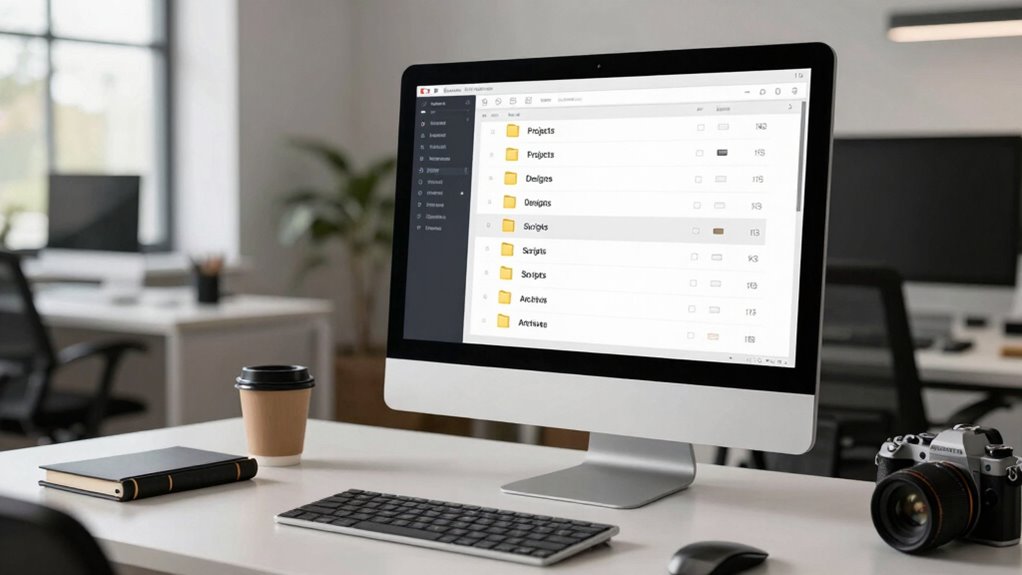

To build a clean folder structure, start by organizing files around your project’s workflow, such as documentation, assets, and source code. Use clear, descriptive names with version numbers or dates to track progress. Keep the hierarchy simple, avoiding deep nesting to ease access. Regularly clean and archive outdated files to stay organized. Following these steps helps streamline your process, and exploring further will reveal even more tips for maintaining an efficient system.

Get audio and creator gear delivered free with Prime
- Fast, free delivery on millions of items
- Prime Video, Amazon Music and more included
- Member-only deals all year
Key Takeaways
- Organize folders around the project workflow, including documentation, assets, source code, and final outputs for easy navigation.
- Use clear, consistent naming conventions with descriptive labels and version identifiers to track progress.
- Maintain a flat hierarchy with minimal nesting to facilitate quick access and reduce complexity.
- Incorporate project phases, dates, or versions into folder names for effective version control.
- Regularly clean, archive, and update folders to keep the structure organized and relevant.
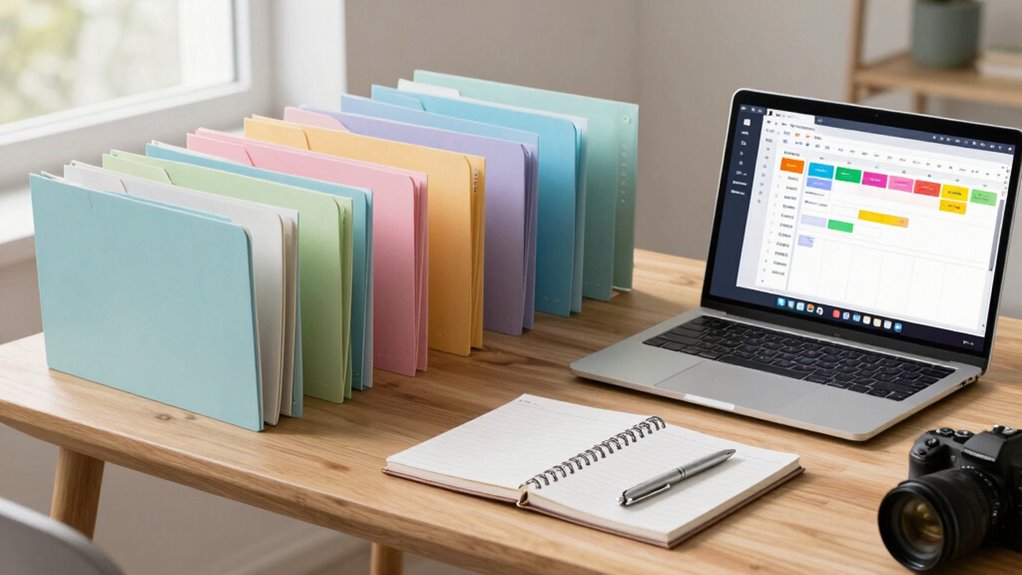
Have you ever struggled to find a file amid a cluttered folder? If so, you’re not alone. A messy folder structure can slow you down and increase the risk of losing important files. Building a clean, organized folder structure for every project is essential to stay efficient and ensure everyone on your team can easily locate what they need. Start by planning your structure around the project’s workflow, breaking it down into main categories like documentation, assets, source code, and final outputs. Keep these categories broad enough to cover all relevant files but specific enough to avoid confusion.
When creating folders, consistency is key. Implement clear naming conventions that everyone on your team understands and follows. Use descriptive names that indicate the content and purpose of each folder or file, avoiding vague labels like “misc” or “temp.” For example, name folders with dates, version numbers, or project phases to help track progress and updates. This approach simplifies navigation and ensures files are logically grouped. Speaking of updates, integrating version control into your folder structure is a game-changer. By maintaining a systematic way to manage different versions of files, you prevent overwriting important work and make it easy to revert to previous versions if needed. Use standardized naming conventions for version control, such as appending “v1,” “v2,” or dates like “2023-10-01” to filenames. This consistency helps you quickly identify the most recent files and reduces confusion when multiple versions are stored.
Avoid creating overly nested folders that require too many clicks to access a file; instead, aim for a balance between depth and accessibility. A flat hierarchy with well-organized categories makes navigation faster and reduces the chance of files getting buried. Additionally, set aside time regularly to clean up and archive outdated files to keep the structure lean. When naming files, stick to a consistent format—perhaps including project initials, date, and version—so you can identify files at a glance. Maintaining a structured folder hierarchy is crucial for efficient project management and minimizes the risk of misplaced files. Properly organizing your folders can also improve collaborative workflows by making it easier for team members to find and update files seamlessly. Furthermore, understanding the importance of file organization can help you develop best practices that adapt as your projects scale and evolve. Incorporating cloud storage solutions can enhance accessibility and collaboration, especially when working with distributed teams. To further streamline your workflow, consider automating folder organization where possible, which can save time and reduce manual errors. This disciplined approach to naming and version control ensures that your folder structure remains clear, manageable, and scalable as projects grow. Ultimately, a well-thought-out folder structure saves you time, minimizes frustration, and keeps your work environment professional and efficient.
file organization and management software
As an affiliate, we earn on qualifying purchases.
As an affiliate, we earn on qualifying purchases.
Frequently Asked Questions
How Often Should I Reorganize My Project Folders?
You should reorganize your project folders whenever you notice clutter or inefficiencies, ideally every few weeks or after major milestones. Keep your file naming consistent and your folder hierarchy logical. Regular reorganization helps you stay on top of changes, guarantees easy access, and prevents chaos. Make it part of your routine to review and tidy your folders, so your project remains streamlined and manageable.
What Tools Can Help Automate Folder Organization?
You can massively simplify your life with automated tools that organize folders effortlessly—it’s like having a personal assistant! Use folder templates to create consistent, ready-made structures for each project in seconds. Tools like Hazel, Folder Actions, or even scripting with PowerShell or Automator can automatically sort, rename, and clean your folders. Say goodbye to chaos and hello to a perfectly organized digital workspace, all with minimal effort!
How Do I Handle Version Control With Folder Structures?
You handle version control with folder structures by implementing consistent folder naming conventions that include version numbers or dates. This way, you can easily track changes and identify the latest files. Use clear, incremental naming like “v1,” “v2,” or date stamps. Regularly update and review your version tracking system to avoid confusion, ensuring every team member understands and follows the same folder naming standards for seamless collaboration.
Should Folder Structures Differ by Project Type?
Did you know that adopting project-specific folder structures boosts productivity by 30%? Yes, your folder structures should differ by project type to suit different workflows. Use consistent folder naming conventions and follow project hierarchy best practices to keep everything organized. Customizing your folder structure ensures easy navigation, faster access, and better collaboration, making each project more manageable and efficient.
How to Balance Clarity and Simplicity in Folder Naming?
To balance clarity and simplicity in folder naming, you should use consistent naming conventions that clearly describe the content without being overly detailed. Keep your folder hierarchy logical, grouping related items together, and avoid long or complex names. Use simple, descriptive words, and consider abbreviations where appropriate. This approach guarantees your folder structure remains easy to navigate, helping you find files quickly while maintaining an organized, clean system.
Conclusion
Remember, a well-organized folder structure isn’t just about neatness—it’s about efficiency and clarity. When you keep your project folders tidy, you save time and reduce stress. Think of it like a well-tended garden: with regular care, everything blooms beautifully. As the saying goes, “A place for everything, and everything in its place.” Keep your folders organized, stay consistent, and watch your projects flourish with ease.
Halloween Picks
halloween
As an affiliate, we earn on qualifying purchases.