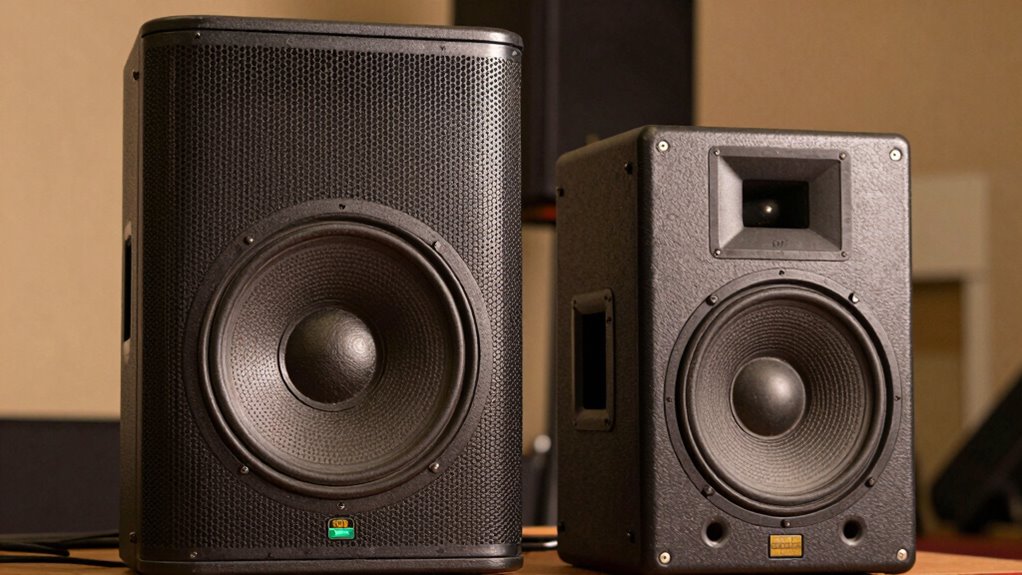

Choosing between 12-inch and 15-inch PA speakers depends on your venue size, sound needs, and portability. If you perform outdoors or in large halls, 15-inch speakers offer higher power handling and better bass, ideal for bigger spaces. For smaller indoor venues or if portability matters, 12-inch speakers are easier to transport and set up. To make the best choice, consider the specifics of your setup—more details below can help guide you.
Key Takeaways
- 15-inch speakers handle higher power and are ideal for large venues or outdoor events requiring more volume.
- 12-inch speakers are more portable and easier to set up, perfect for smaller venues or frequent gig changes.
- 15-inch speakers produce deeper bass, making them better suited for performances needing strong low-end sound.
- 12-inch speakers offer a good balance of sound quality and portability, suitable for indoor or smaller spaces.
- Consider venue size, transport logistics, and power needs to choose the speaker size that best fits your performance.
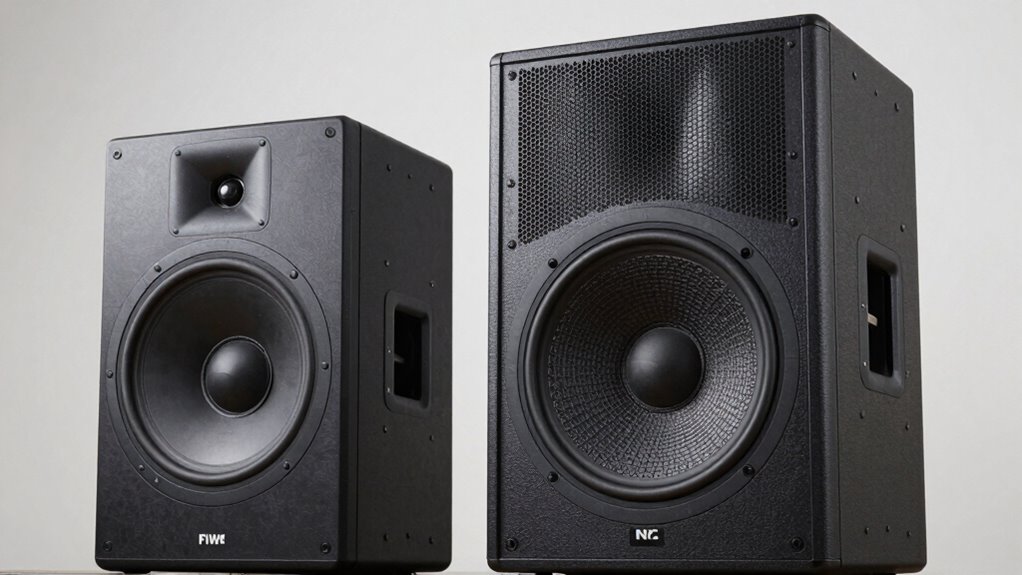
When choosing between 12-inch and 15-inch PA speakers, understanding their differences can help you make an informed decision. One of the key factors to consider is power handling. Typically, 15-inch speakers can handle more power than their 12-inch counterparts, making them better suited for larger venues or situations where you need higher volume levels. If you’re planning to use your speakers for big crowds or outdoor events, a 15-inch speaker’s ability to handle more wattage ensures you won’t run into distortion or damage at higher volumes. On the other hand, if your gigs are smaller or indoor, a 12-inch speaker may be sufficient, especially if you don’t need as much power. It’s important to match the speaker’s power handling capacity with your amplifier’s output to avoid overloading and damaging your equipment.
Portability is another critical aspect that influences your choice. Because 12-inch speakers are generally smaller and lighter, they’re easier to transport and set up. If you frequently move between venues or have limited storage space, a 12-inch model offers a significant advantage. You’ll find it easier to carry from your vehicle to the stage, and they often require less effort to lift and position. Conversely, 15-inch speakers tend to be larger and heavier, which can make transportation more challenging. They might be better suited for fixed installations or situations where portability isn’t a priority. If you’re a solo artist or a small band that needs to set up quickly in various locations, a 12-inch speaker could save you time and physical effort.
While 15-inch speakers produce more bass due to their larger size, they may sacrifice some portability and ease of handling. Their increased size can make loading in and out more cumbersome, especially if you’re working alone or in tight spaces. Conversely, 12-inch speakers strike a balance between size and sound quality, providing decent bass while maintaining easier mobility. Consider your typical venue size, how often you need to transport your gear, and your power needs. If you mostly perform in smaller venues or need a lightweight setup, a 12-inch speaker offers a practical solution. But if you often perform outdoors or in large halls where powerful sound projection is necessary, a 15-inch speaker could be worth the extra effort.
Ultimately, your choice depends on your specific needs. If you prioritize high power handling and don’t mind the extra weight, a 15-inch speaker can deliver the volume and bass you require. But if portability and ease of setup are more important, a 12-inch speaker provides a versatile and manageable option. Additionally, the sound quality of each size can influence your decision, especially if you prioritize clear audio reproduction. By weighing these factors carefully, you can select the speaker size that best aligns with your performance requirements and logistical constraints.
Frequently Asked Questions
How Do 12-Inch and 15-Inch Speakers Compare in Durability?
You’ll find that 12-inch speakers often have comparable speaker longevity to 15-inch models, especially if made with high-quality materials. Durability depends on material quality, enclosure design, and usage conditions. Both sizes can last long if built well and maintained properly. However, 15-inch speakers, due to their larger size and power handling, might endure more wear over time if pushed hard, but quality construction minimizes this difference.
Can 12-Inch Speakers Handle Larger Venues Effectively?
Yes, 12-inch speakers can handle larger venues effectively, especially if you prioritize portability and versatile sound coverage. Their subtopic relevance lies in their ability to deliver clear sound across medium to big spaces, making them suitable for various venue sizes. However, for very large venues, consider additional equipment or higher-powered models to guarantee consistent sound quality and adequate volume for your audience.
What Maintenance Is Required for Each Speaker Size?
To guarantee speaker longevity, you should follow simple cleaning routines and regular inspections. With proper maintenance, both 12-inch and 15-inch speakers perform reliably over time. Gently wipe down the cabinets, keep the vents clear, and check the wiring for wear or loose connections. While larger speakers might need a bit more care, consistent upkeep helps prevent issues and keeps your sound system running smoothly, no matter the size.
Are There Specific Genres Better Suited for Each Size?
You’ll find that 12-inch speakers excel with genres like acoustic, jazz, and small venues, offering great sound clarity and portability. Meanwhile, 15-inch speakers suit genres like rock, EDM, and larger shows, delivering powerful bass and volume. Your choice depends on genre suitability and the sound experience you want. If you prioritize clarity at intimate gigs, go for 12-inch; for bigger sound and bass, opt for 15-inch speakers.
How Do Weight and Portability Differ Between the Two?
The 12-inch speakers are generally lighter and more portable, making them easier to carry around and set up. In contrast, 15-inch speakers tend to be heavier, which can make transportation and handling more challenging. If you prioritize portability and quick setup, a 12-inch speaker offers a better weight comparison and portability difference. However, if you need more power despite the added weight, the 15-inch might be worth it.
Conclusion
Choosing between a 12-inch and a 15-inch PA speaker is like picking the right brush for a painting—you want the one that brings your vision to life. The 12-inch is nimble and perfect for smaller gigs, while the 15-inch hits harder for larger spaces. Think of it as selecting the right tool to carve out your sound. Ultimately, your choice shapes your soundscape, so pick the one that helps your music soar like a soaring bird across the sky.