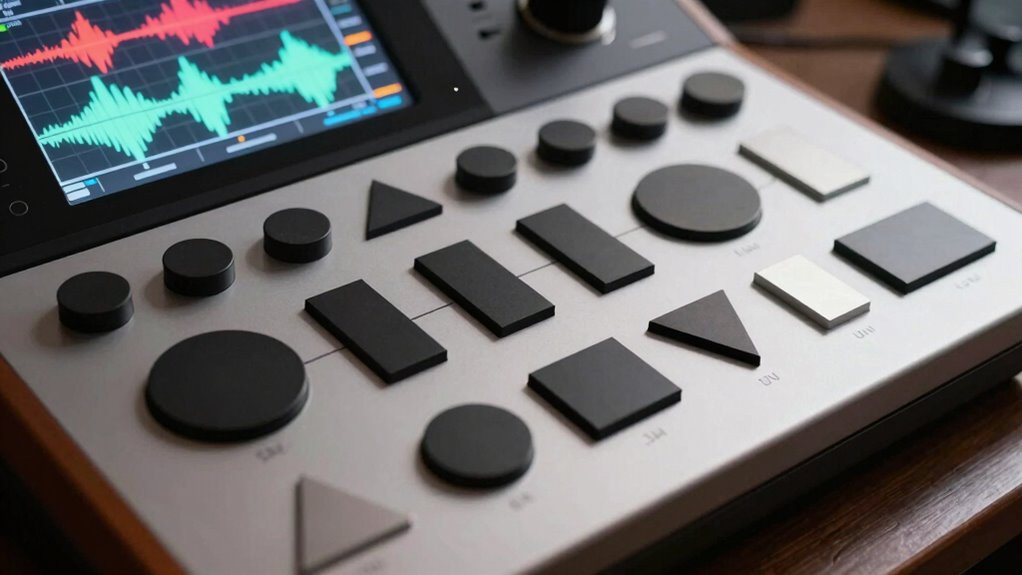

Start with basic waveforms like sine, square, and sawtooth to build your bass patch. Layer different shapes to add richness and complexity, then use EQ and filters to carve out space and keep things clear. Introduce subtle modulation, like vibrato or filter sweeps, to make the sound lively and evolving. Experiment with tuning and effects to shape your tone. Keep exploring these techniques to reveal even more powerful and dynamic bass sounds.

Get audio and creator gear delivered free with Prime
- Fast, free delivery on millions of items
- Prime Video, Amazon Music and more included
- Member-only deals all year
Key Takeaways
- Start with basic waveforms like sine, square, or sawtooth to establish a solid foundation for your bass sound.
- Layer multiple waveforms to add richness and complexity while maintaining clarity through proper tuning.
- Use EQ to carve out space and prevent frequency clashes, emphasizing fundamental tones for punch.
- Incorporate subtle modulation, such as filter sweeps or vibrato, to create movement and interest in the bass patch.
- Apply filters and effects selectively to shape character and add depth without muddying the sound.
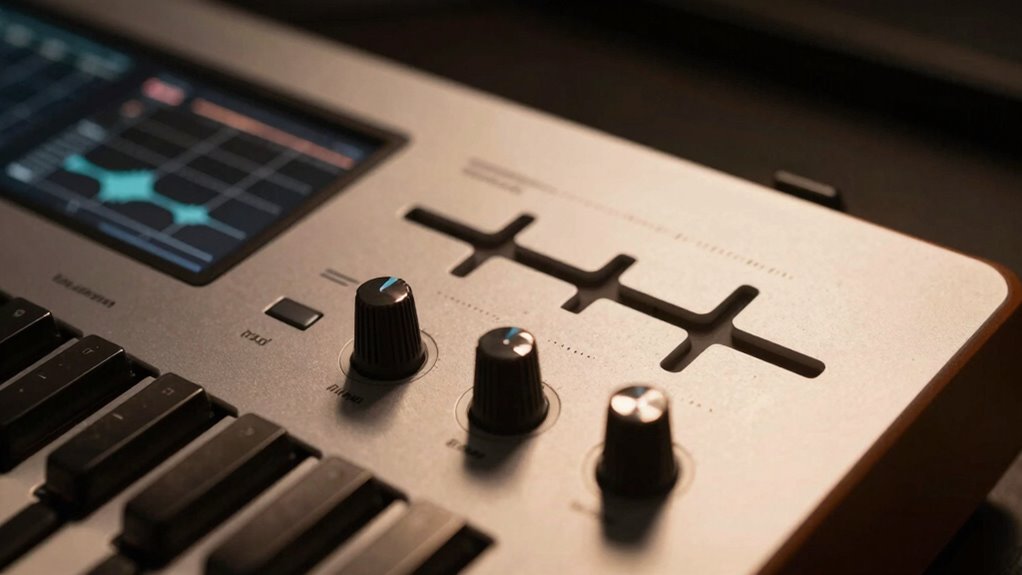
Creating compelling bass patches doesn’t have to be complicated; in fact, starting with simple shapes can lead to surprisingly rich sounds. When you approach sound design techniques for bass, focus on fundamental waveforms like sine, square, or sawtooth waves. These basic shapes form the foundation of your sound, allowing you to shape and sculpt without overwhelming complexity. By manipulating these simple waveforms, you can craft a wide range of basses, from deep sub-basses to punchy, aggressive sounds. The key is to experiment with different wave combinations and modulation, which can add character and movement to your patches.
Layering strategies are essential for building more dynamic and full-bodied bass sounds. Instead of relying on a single waveform, consider stacking multiple layers that complement each other. For example, you might combine a sine wave for sub-bass depth with a square wave to add harmonics and presence. By doing so, you create a richer sound that retains clarity even in busy mixes. When layering, pay attention to the tuning and phase relationships between the layers, as phase cancellations can diminish your sound’s impact. You can also use different filters and effects on each layer to introduce variation and avoid a flat, monotonous tone.
It’s vital to think about the frequency spectrum when layering. Use EQ to carve out space for each layer, ensuring they don’t clash or muddy your mix. For instance, you might high-pass one layer to remove unnecessary low-end rumble while emphasizing the fundamental frequencies of another. This technique enhances clarity and punch. Adding subtle modulation, like vibrato or filter sweeps, to individual layers can also introduce movement, making your bass patches more lively and engaging. Additionally, understanding the fundamental waveforms and their properties helps you make more intentional choices in your sound design. Exploring layering techniques further can help you create more complex and captivating sounds, especially when combined with an awareness of harmonic content and its role in shaping the tonal quality. Incorporating modulation effects can also add dynamic variation that keeps your patches interesting over time. Being mindful of how different modulation parameters interact can lead to more dynamic and evolving patches that hold the listener’s interest.
As an affiliate, we earn on qualifying purchases.
Frequently Asked Questions
What Types of Synthesis Are Best for Bass Patches?
You’ll find that subtractive synthesis works best for bass patches, especially when you use waveform modulation to shape your sound. Experiment with different waveforms like sawtooth or square to add richness. Don’t forget filter resonance; boosting it emphasizes certain frequencies, giving your bass more punch. Combining these techniques helps you craft powerful bass patches from simple shapes, making your sound stand out in any mix.
How Can I Make My Bass Patches More Dynamic?
Making your bass patches more dynamic is like adding vibrant brushstrokes to a painting. You should use creative modulation to vary parameters like filter cutoff and pitch, creating movement and interest. Incorporate dynamic velocity to make each note feel expressive, so your bass responds naturally to your playing. Experiment with these techniques to breathe life into your patches, making them stand out and feel more alive in your mixes.
What Effects Enhance Simple Bass Shapes Effectively?
To enhance simple bass shapes, try using frequency modulation (FM) to add movement and complexity, making your sound more lively. Incorporate harmonic distortion subtly to enrich the tone and give it more character without losing clarity. Experiment with these effects together; FM can create vibrant modulations, while harmonic distortion adds warmth and grit. This combo makes your bass patches more dynamic, engaging, and better suited to a variety of styles.
How Do I Layer Basic Shapes for Richer Bass Sounds?
To layer basic shapes for richer bass sounds, start with harmonic layering by combining shapes that emphasize different harmonic content, adding depth. Then, apply frequency modulation between these shapes to create movement and complexity. Experiment with detuning and subtle modulation depths, blending the layers smoothly. This approach enriches your bass patch, giving it a fuller, more dynamic feel while maintaining clarity and punch.
What Common Mistakes Should I Avoid in Bass Patch Design?
Avoid common mistakes like neglecting frequency masking, which can cause your bass to sound muddy or cluttered. Always check for phase cancellation, as poorly aligned layers can cancel each other out, reducing bass presence. Use EQ carefully to carve out space for each element, and guarantee your layers are phase-aligned. Don’t overlook these issues, or your bass patch may lack clarity and power, hindering your mix’s overall punch.
Conclusion
Remember, Rome wasn’t built in a day, and neither will your perfect bass patches be. By experimenting with basic shapes and understanding their characteristics, you’ll gradually craft sounds that stand out. Keep refining and combining simple elements, and you’ll discover that complex, powerful bass sounds often come from the simplest beginnings. Stay patient and persistent—you’re building a sound foundation that will support your entire track. Trust the process, and your skills will grow with each step.
Halloween Picks
halloween
As an affiliate, we earn on qualifying purchases.