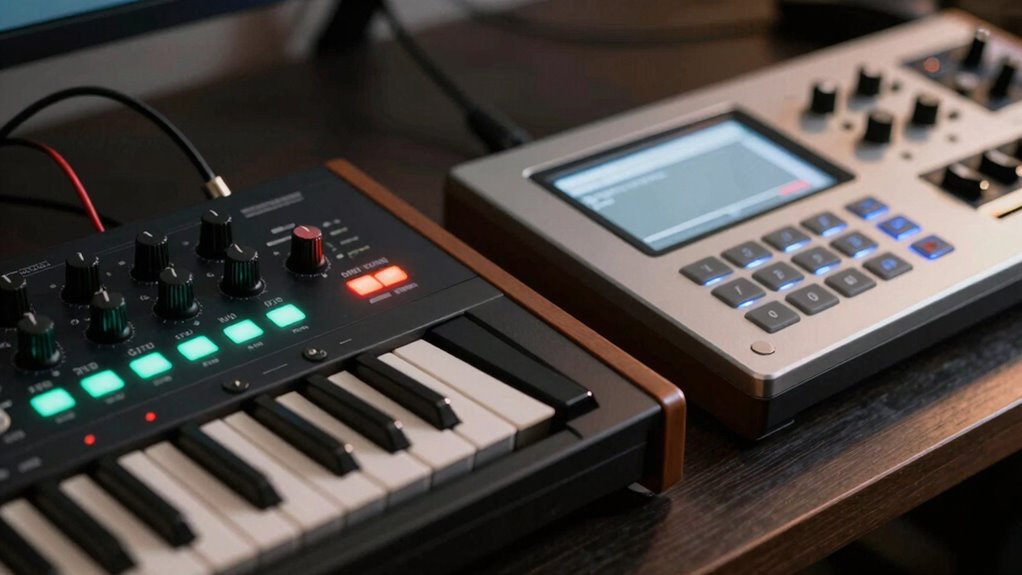

If you’re choosing between analog and digital synths, consider whether you want warm, organic sounds with tactile controls or versatile, complex tones with advanced features. Analog synths offer rich, vintage vibes and immediate hands-on interaction, perfect for authentic textures. Digital synths provide a broad palette, easy customization, and packed preset options. To find the best fit for your style and needs, explore the key differences—more details await if you keep exploring.
Key Takeaways
- Analog synths deliver warm, rich sounds with tactile controls, ideal for vintage and organic tones.
- Digital synths offer versatile sound design, complex textures, and quick preset access for modern production.
- Analog interfaces are simple and immediate, while digital synths provide extensive parameter customization via screens and menus.
- Choose analog for authentic warmth and tactile feel; choose digital for versatility, automation, and advanced features.
- Consider your preferred sound character, workflow, and performance needs to make the best choice quickly.

Have you ever wondered what sets analog and digital synths apart? The differences can seem subtle at first, but they profoundly impact your sound and workflow. When it comes to sound quality, many musicians swear by analog synths for their warm, rich tones. These synths generate sound through continuous electrical signals, which often results in a more organic, pleasing character. The sound is often described as warmer or more alive, thanks to the subtle imperfections and natural variations in their circuitry. If you’re seeking a vintage vibe or want to capture the feel of classic sounds, analog might be your best bet. Digital synths excel at versatility, offering a broad palette of sounds, from realistic instrument emulations to complex, evolving textures, all within a compact, often more affordable package. Additionally, digital synthesis allows for parameter automation, enabling complex modulation and dynamic sound shaping that is more challenging with purely analog setups.
Your user interface plays an essential role in how you interact with your synth. Analog synths typically boast straightforward controls—knobs, sliders, and switches—that allow you to tweak parameters in real time. This tactile experience can be incredibly satisfying, giving you immediate feedback and a hands-on feel that many musicians find inspiring. However, this simplicity can also mean fewer preset options and less flexibility for complex sound design. Digital synths often come with menus, screens, and more extensive parameter options, which can be intimidating at first but give you access to a vast array of sounds and features. They’re usually equipped with preset banks, automation, and modulation capabilities, making them ideal for intricate sound design or live performance setups where quick recall is essential. The user interface on digital synths can be more complex, but it offers greater control and customization once you’re familiar with the layout.
Ultimately, your choice hinges on what kind of sound quality you prefer and how you want to interact with your instrument. If you crave the warmth and tactile feel of classic, hands-on controls, analog synths deliver that experience perfectly. But if you want versatility, a broader sound palette, and advanced features, digital synths provide an efficient, powerful solution. Both have their strengths, so consider your musical style, production needs, and how you like to work when making your decision.
Frequently Asked Questions
Can Hybrid Synths Combine Analog and Digital Features Effectively?
Yes, hybrid synths can combine analog and digital features effectively. You’ll appreciate their hybrid versatility, allowing you to blend warm, classic analog tones with versatile digital sounds. This tonal blending gives you more creative control and a broader sonic palette. By integrating both worlds, you get the richness of analog and the flexibility of digital, making hybrid synths a powerful choice for musicians seeking diverse and dynamic sounds.
Which Synth Type Is Better for Live Performance?
You’ll find digital synths are the superheroes of live performance, offering unmatched performance reliability and versatility. They’re perfect for your live setup because they stay consistent under pressure, with quick patch changes and extensive sound options. While analog synths bring warmth and character, digital models handle the chaos of live gigs with ease, making them your go-to choice for a smooth, fail-proof performance every time.
Do Digital Synths Require Less Maintenance Than Analog?
Digital synths generally require less maintenance than analog ones because they have simpler circuitry and fewer moving parts. Their maintenance complexity is lower, making them more reliable over time, especially with frequent use. You won’t need to worry much about calibration or component wear. Reliability factors favor digital synths, so if you want a hassle-free setup and consistent performance, they’re the better choice for long-term use.
How Does Price Impact Long-Term Use of Analog Vs Digital Synths?
Think of your synth as a long-term friend—its price tag can be the seed you plant for future savings or expenses. Analog synths often come with a higher initial cost but can be more durable, reducing repair worries. Digital synths, being generally more cost-effective upfront, may save you money initially but could require upgrades or repairs over time. Your choice influences long-term use through durability considerations and overall cost effectiveness.
Are There Specific Genres That Favor One Synth Type Over the Other?
You’ll find that genre preferences often lean toward analog synths for their warm, rich sound characteristics, ideal for genres like jazz, funk, and classic rock. Digital synths excel in producing versatile, crisp sounds, making them popular in electronic, pop, and experimental music. If you favor deep, textured tones, go for analog; if you need flexibility and clean sounds, digital synths are your best bet.
Conclusion
Choosing between analog and digital synths is like picking between a vintage guitar and a sleek new model—you’ll love the warmth and character of analog, or the versatility and convenience of digital. I once tried both at a jam session; the analog’s rich tones felt like a storyteller, while the digital’s clarity was like a precision instrument. Ultimately, your choice shapes your sound’s personality. Trust your instincts, and let your music’s soul guide you.