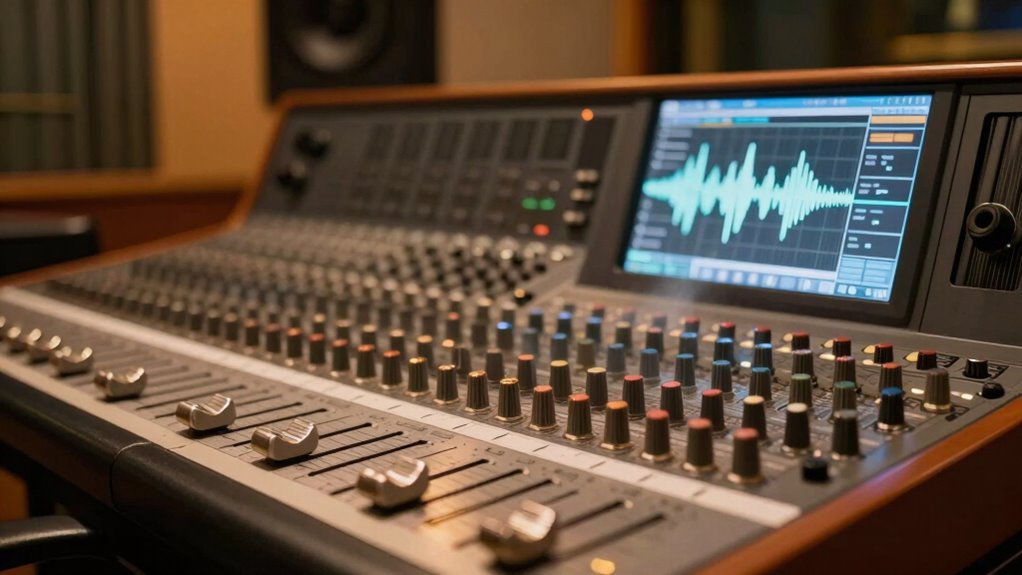

The biggest reverb time mistake is setting it too long, which causes muddiness and smears your arrangements. When reverb is too extended, it blends everything into a confusing blur, making vocals and instruments clash instead of shine. This often happens if you don’t consider your room’s acoustics or mix balance. Adjusting reverb tails and times to match your environment helps keep clarity. Continue exploring to discover how proper reverb management transforms your sound.

Get audio and creator gear delivered free with Prime
- Fast, free delivery on millions of items
- Prime Video, Amazon Music and more included
- Member-only deals all year
Key Takeaways
- Using excessive reverb time can cause reflections that blur individual instrument and vocal clarity.
- Applying reverb without considering room acoustics leads to muddy, smeared sound arrangements.
- Long reverb tails in small or untreated spaces create clutter, masking the details of arrangements.
- Ignoring room size and environment results in inconsistent reverb effects that distort the mix.
- Relying solely on digital reverb settings without room treatment can cause smearing and reduce overall clarity.

Have you ever wondered why your sound recordings or live performances feel off despite using high-quality equipment? The answer often lies in something invisible but vital: room acoustics. Even the best microphones, speakers, and mixing techniques can’t fully compensate for a space with poor acoustics. When the room’s sound characteristics aren’t right, it causes reflections, echoes, and reverb that muddle your mix, making everything sound less clear and less professional. This is especially true when it comes to reverb time—the duration reverb lingers after a sound is produced. If it’s too long or too short, it can smear arrangements and blur the clarity of individual instruments or vocals.
Many people overlook how essential room acoustics are in shaping the overall sound. It’s not just about the gear; it’s about the environment where you record or perform. Proper room treatment can help you control how sound waves behave, reducing unwanted reflections that cause muddiness. When your room has poor acoustics, even skilled mixing techniques can’t fully fix the problem. You might find yourself constantly fighting against an unbalanced sound, trying to carve out clarity that the room’s natural reverb just doesn’t allow. This is where understanding and managing reverb time becomes vital. Room acoustics play a crucial role in this process, influencing how sound behaves within the space. Recognizing the importance of room sound behavior can make a significant difference in your overall audio quality.
A common mistake is setting reverb levels based solely on the sound source without considering the room’s characteristics. You might add reverb to make a vocal sound more spacious, but if the room already has a long natural reverb, your mix will feel smeared and cluttered. Instead, you need to think about how room acoustics influence reverb time, and then adjust your effects accordingly. Some mixing techniques involve using shorter reverb times for clarity, especially in busy mixes, or tailoring reverb tails to suit the space. It’s about creating a balance where the reverb enhances the sound rather than overwhelming it. Reverb time is a key factor in achieving this balance, as it directly impacts how the sound blends within the room. Moreover, understanding the relationship between room size and reverb can help in making more informed decisions about your setup.
Getting this right means paying attention to your environment from the start. It’s not enough to rely solely on digital reverb settings; you must consider how your room’s acoustics interact with those settings. When you understand and control reverb time in relation to your space, your arrangements will sound cleaner, more cohesive, and more professional. Additionally, room treatment techniques can significantly improve how sound waves behave, ensuring your audio quality is consistent and clear. Ultimately, mastering this aspect ensures that your recordings and performances truly shine, without being compromised by an overlooked room acoustic issue.
As an affiliate, we earn on qualifying purchases.
Frequently Asked Questions
How Does Reverb Time Affect Different Music Genres?
Reverb time considerably impacts different music genres by shaping their sound. Longer reverb decay suits ambient or classical music, creating a spacious feel, while shorter reverb enhances clarity for genres like pop or rock. Genre-specific acoustics matter because they influence how reverb interacts with the mix. You should adjust reverb time carefully to match the style, ensuring it complements rather than smears your arrangement.
What Tools Can Help Measure Optimal Reverb Time?
A stitch in time saves nine, and measuring reverb is no different. You can use tools like room acoustics analyzers or software with reverb algorithms to determine the ideal reverb time for your space. These tools analyze room acoustics, helping you fine-tune reverb settings. By accurately measuring, you avoid muddy blends and preserve clarity, ensuring your arrangements shine without sounding smeared or washed out.
Can Reverb Time Be Adjusted During Live Performances?
Yes, you can adjust reverb time during live performances. Using live reverb effects and acoustic adjustments, you can modify reverb parameters on the fly to suit the room’s acoustics and performance needs. Many digital mixers and effects processors allow real-time control, giving you the flexibility to tighten or extend reverb as needed. This helps maintain clarity and balance, ensuring your sound remains clear and professional throughout the show.
How Does Room Size Influence Reverb Time Choices?
Room size, including dimensions and acoustic treatment, directly influences your reverb time choices. Larger rooms with high ceilings often need shorter reverb times to prevent muddiness, while smaller spaces might benefit from longer reverb for warmth. Adjust your acoustic treatment accordingly—adding diffusers or absorbers—to fine-tune the reverb. By considering these factors, you guarantee your reverb complements your arrangements instead of smearing them.
Are There Digital Plugins That Automatically Set Reverb Time?
Think of digital plugins as auto-pilots for your reverb. Many modern plugins use digital algorithms to automatically set reverb time, making your mix smoother. However, they do have limitations; sometimes, they can’t perfectly match your unique space or style. While they speed up your workflow, you should still tweak settings manually for best results. Trust these tools as a helpful guide, but don’t rely solely on them.
Conclusion
Remember, choosing the wrong reverb time isn’t just a technical slip—it’s like casting a shadow over your entire mix. When you let reverb linger too long, you drown your arrangements in haze, losing clarity and impact. Think of reverb as a mirror; if it’s foggy, your true sound gets lost. Master it, and your music will shine through with clarity, proving that precision in detail crafts the masterpiece, not just the notes themselves.
Fall Picks
fall essentials
As an affiliate, we earn on qualifying purchases.